VBP Pricing Strategy: Margin Risks in Stapler Bids
For finance approvers evaluating minimally invasive surgical stapler contracts, a sound VBP pricing strategy is no longer just about winning bids—it is about protecting contribution margins, cash flow, and long-term supply stability. As stapler procurement enters deeper price compression cycles, understanding the hidden margin risks behind aggressive quotations becomes essential for balancing compliance, competitiveness, and sustainable profitability.
In the stapler segment, pricing decisions increasingly sit at the intersection of procurement policy, clinical dependence, raw material volatility, and regulatory accountability. For companies serving high-value medical consumables, a low quote may secure volume for 12 to 24 months, yet still destroy earnings if rebate structures, channel compression, sterilization costs, and working capital assumptions are poorly modeled.
This is where a disciplined VBP pricing strategy matters. Finance leaders reviewing stapler bids need more than a nominal unit price comparison. They need to understand contribution by SKU mix, the break-even utilization rate of manufacturing lines, tender-linked payment cycles, and the operational risk of committing supply under compressed margins.
Why Stapler Bids Carry Special Margin Exposure Under VBP

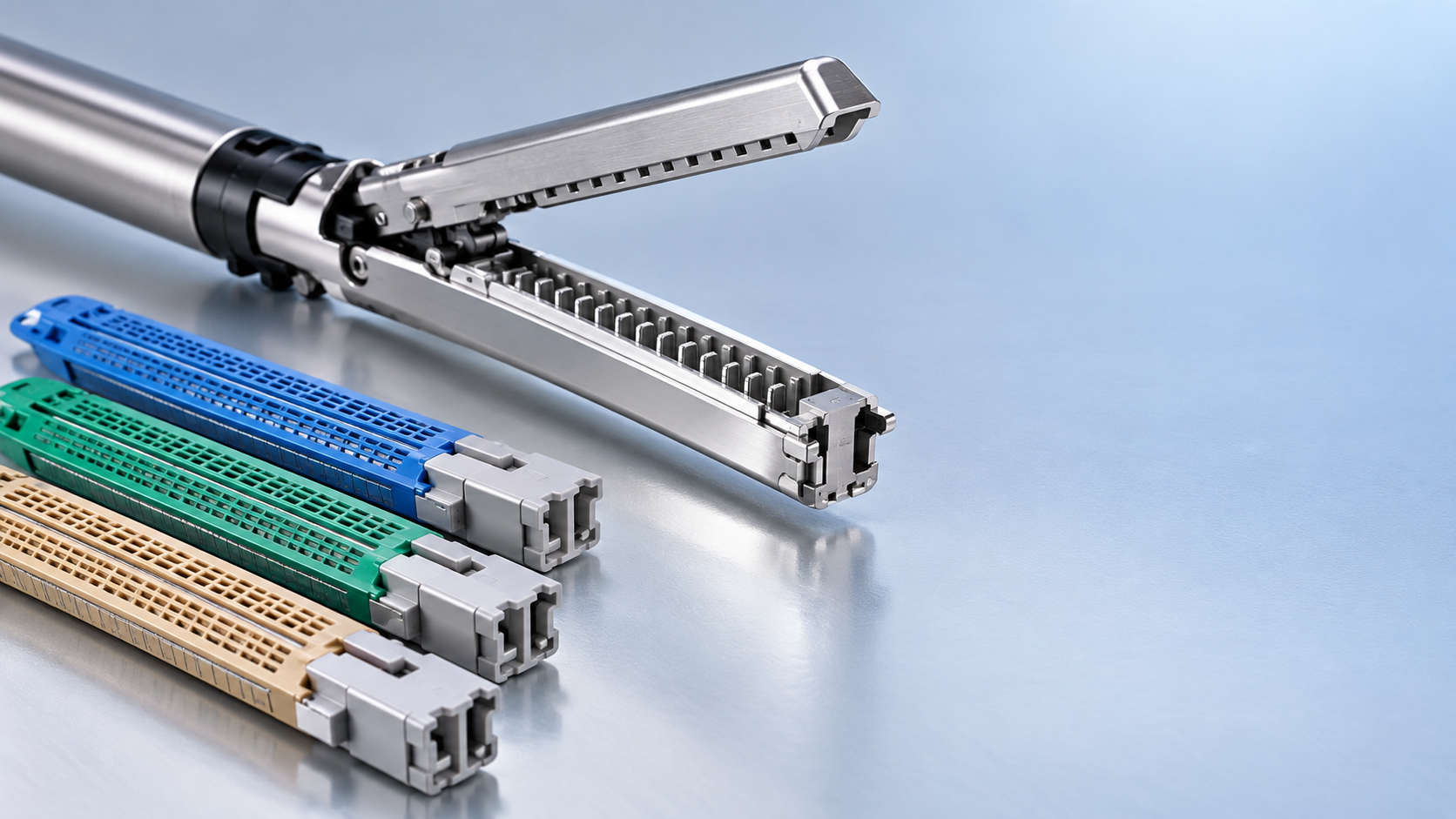
Minimally invasive surgical staplers are not generic disposables. They combine precision metal forming, polymer components, strict sterilization control, packaging validation, and surgeon usability requirements. In many contracts, a quoted reduction of 15% to 35% may appear manageable at the sales line, but the underlying cost stack often moves far less flexibly than the tender price.
For finance approvers, the core issue is that a stapler bid usually includes more than one product logic. There may be powered staplers, manual staplers, reload cartridges, different staple heights, and procedure-specific packs. A single winning quote can shift the product mix toward lower-margin reloads while leaving fixed overhead largely unchanged for 2 to 4 quarters.
Four Cost Layers Often Underestimated
A reliable VBP pricing strategy should separate at least four cost layers before approval: direct material cost, conversion cost, regulatory and quality cost, and commercial fulfillment cost. When these are blended too early, margin leakage remains hidden until shipment begins.
- Direct materials: titanium staples, polymer housings, blades, packaging films, and sterile barrier systems.
- Conversion cost: machining, assembly, cleanroom handling, validation, and line yield losses.
- Compliance cost: biocompatibility testing, process validation, complaint handling, and post-market documentation.
- Commercial cost: distribution fees, hospital servicing, training support, and bid-related rebates.
In practice, one weak assumption can erase 3 to 8 percentage points of margin. For example, if forecasted tender volume rises by 40% but line yield falls by 2%, the expected scale benefit may disappear once rework, sterilization rescheduling, and expedited logistics are included.
Where Finance Teams Usually Miss the Risk
Many approvals focus on gross margin at the invoice level, yet VBP contracts often pressure cash conversion more than accounting margin. Payment terms of 90 to 180 days, inventory buffers of 6 to 10 weeks, and hospital demand variability can create a cash gap even when reported gross margin looks acceptable.
The table below highlights common risk points in stapler tenders and how they affect approval quality.
The key conclusion is simple: an approved quote should never be judged only by headline discount. A sound VBP pricing strategy requires finance to test payment timing, procedure mix, capacity impact, and service obligations before a bid is submitted.
Building a Finance-Ready VBP Pricing Strategy for Staplers
A finance-ready model starts with contribution transparency. Instead of approving one blended gross margin, decision-makers should test at least 3 scenarios: base volume, upside volume, and stressed volume. Each scenario should include unit economics, payment timing, inventory assumptions, and probable mix by procedure type.
Use a Five-Step Approval Framework
For minimally invasive surgical consumables, a practical VBP pricing strategy often follows five steps. This structure helps align sales, operations, supply chain, and finance around one realistic bid floor.
- Define the SKU-level cost floor, including sterilization, packaging, and scrap assumptions.
- Map expected volume by province, hospital tier, and procedure category over 4 quarters.
- Model payment terms, rebate timing, and inventory days to estimate cash exposure.
- Stress-test capacity with 10% to 20% demand variance and emergency supply requirements.
- Approve a price corridor rather than a single bid point, with clear stop-loss thresholds.
This framework is especially important for manufacturers and distributors in the medical consumables sector, where compliance costs do not disappear after the bid is won. Complaint investigation, batch traceability, and surgeon support remain active cost drivers throughout the contract period.
Key Metrics Finance Should Review Before Sign-Off
At minimum, approvers should check 6 core indicators: gross margin by SKU, contribution margin after commercial support, cash conversion cycle, break-even volume, safety stock requirement, and expected return on committed capacity. If two or more indicators fall below internal thresholds, the quoted price should be escalated for review.
The next table provides a practical checklist for bid approval in stapler tenders.
These control points help transform VBP pricing strategy from a sales-led exercise into a capital discipline tool. In a market where pricing pressure can intensify within one tender cycle, that shift is critical for long-term supply sustainability.
Set a Bid Floor Based on Full Economic Reality
A recurring mistake is setting the bid floor based only on factory cost plus a target gross margin. For staplers, the economic floor should include at least 7 items: direct materials, conversion, quality assurance, sterilization, logistics, commercial servicing, and capital cost tied to delayed payment.
If a contract requires regional warehousing, surgeon in-servicing, or replacement stock for urgent cases, these should be costed explicitly. Even a 1% to 2% underestimation in these service layers can materially affect EBITDA when volumes reach several thousand units per tender cycle.
Common Margin Traps in Aggressive Stapler Quotations
Not every low price is irrational, but every aggressive quote needs a risk map. In the medical consumables industry, margin traps usually emerge after award, not before. That is why finance approvers should challenge assumptions that appear commercially attractive but operationally fragile.
Trap 1: Volume Assumptions That Ignore Clinical Switching Friction
Winning a bid does not guarantee immediate procedural conversion. Surgeons may require 4 to 8 weeks of evaluation, preference adaptation, and reload selection adjustment. If the pricing model assumes full volume from month 1, the payback period on the tender can be overstated.
For finance, this means early-quarter shipments may lag while inventory and support costs are already incurred. A better VBP pricing strategy phases the ramp-up curve, often across 3 stages: initial access, clinical normalization, and steady-state replenishment.
Trap 2: Ignoring the Cost of Supply Assurance
Staplers are essential heavy consumables in modern minimally invasive surgery. Hospitals expect consistent supply, not just compliant documentation. If safety stock is set too low, emergency replenishment may require air freight, batch reprioritization, or line overtime, all of which can dilute already-thin margins by 2 to 6 points.
Approvers should ask whether the quoted price still works when service levels exceed baseline assumptions. A bid that is profitable at 95% fill rate may become unattractive if contract reality demands 98% or 99% availability.
Trap 3: Overlooking Portfolio Cannibalization
A stapler tender rarely affects one SKU in isolation. It may pull demand away from legacy channels, premium reload lines, or non-tender hospital accounts. If the new tender price resets market expectations, adjacent products can face secondary discount pressure within 1 to 2 quarters.
This portfolio effect is highly relevant for companies operating across orthopedic implants, cardiovascular devices, surgical consumables, and advanced wound care. Once procurement teams recognize a supplier’s willingness to accept steep erosion in one category, negotiation behavior may harden across others.
Questions Every Approver Should Ask
- What is the lowest sustainable price after full service and financing costs?
- How much of the quoted volume is truly incremental versus shifted from existing accounts?
- What happens if raw material or sterilization cost rises by 3% to 5% mid-cycle?
- Can the supplier maintain quality metrics if utilization exceeds planned capacity?
How IMCS Intelligence Supports Better Bid Decisions
For finance approvers in high-value medical consumables, better pricing outcomes depend on better intelligence. IMCS focuses on the regulatory, clinical, and capital realities behind implantable and surgical products, including minimally invasive staplers that require precision manufacturing and dependable supply continuity.
A strong VBP pricing strategy should not be built in isolation. It should connect market access assumptions with manufacturing constraints, clinical adoption patterns, and compliance obligations. That is particularly true in categories where product performance directly affects patient recovery, tissue closure integrity, and operating room efficiency.
Decision Support Areas That Matter Most
Finance teams typically benefit from cross-functional review in three areas. First is cost realism, including validation of direct and indirect cost drivers. Second is regulatory endurance, meaning the ability to support quality and traceability throughout the contract. Third is commercial resilience, including scenario modeling for price cliffs, capacity stress, and payment delays.
When these three areas are reviewed together, bid approvals become more disciplined. Instead of asking whether a quote can win, finance can ask whether the business can serve the contract for 12, 18, or 24 months without damaging cash flow, operational flexibility, or broader portfolio pricing.
From Approval to Sustainable Execution
The best tender outcomes come from aligning price with execution capability. That means setting clear approval thresholds, updating assumptions every quarter, and monitoring actual mix, receivables, and service cost against the original bid case. In many organizations, even a quarterly review cadence can significantly reduce hidden loss-making contracts.
For manufacturers, distributors, and investment reviewers in medical consumables, the goal is not to avoid VBP participation. It is to participate with enough financial clarity to protect margins where technology, quality, and long-term reliability still create value.
A durable VBP pricing strategy for stapler bids combines price discipline, cost visibility, mix sensitivity analysis, and cash-flow control. Finance approvers who evaluate contracts through these lenses are better positioned to prevent low-price wins from turning into long-cycle margin losses. If you need deeper support on stapler tender economics, medical consumables pricing scenarios, or contract risk screening, contact IMCS to discuss a tailored intelligence framework and learn more solutions for sustainable bid performance.
Get weekly intelligence in your inbox.
No noise. No sponsored content. Pure intelligence.
News Recommendations
 Oct 26, 2026Can a single approval cover life science product sales worldwide?Can a single approval cover life science product sales worldwide?
 Oct 25, 2026When is sensitization testing needed for medical device biocompatibility?When is sensitization testing needed for medical device biocompatibility?
 Oct 24, 2026How is biocompatibility tested for implantable polymer biomaterials?How is biocompatibility tested for implantable polymer biomaterials?
 Oct 23, 2026How to build reimbursement into an implant commercialization strategyHow to build reimbursement into an implant commercialization strategy
 Oct 22, 2026What clinical evidence do implants need for CE marking under EU MDR?What clinical evidence do implants need for CE marking under EU MDR?
 Oct 21, 2026How to choose disposable laparoscopic stapler reloads for thick tissueHow to choose disposable laparoscopic stapler reloads for thick tissue
 Oct 20, 2026How to assess medical polymer biocompatibility under ISO 10993How to assess medical polymer biocompatibility under ISO 10993
 Oct 19, 2026How do interventional device categories differ in clinical use?How do interventional device categories differ in clinical use?
 Oct 18, 2026When to choose alginate dressings for heavily exuding chronic woundsWhen to choose alginate dressings for heavily exuding chronic wounds
 Oct 17, 2026How is biocompatibility tested for custom medical-grade PEEK implants?How is biocompatibility tested for custom medical-grade PEEK implants?
 Oct 16, 2026How to check a wound healing materials supplier’s biocompatibility dataHow to check a wound healing materials supplier’s biocompatibility data
 Oct 15, 2026How to verify the FDA clearance status of silver wound dressingsHow to verify the FDA clearance status of silver wound dressings
 Oct 14, 2026How to register orthopedic implants and instruments in Latin AmericaHow to register orthopedic implants and instruments in Latin America
 Oct 13, 2026How to use a device market intelligence database to benchmark VBP pricesHow to use a device market intelligence database to benchmark VBP prices
 Oct 12, 2026When should stainless steel orthopedic instruments be replaced?When should stainless steel orthopedic instruments be replaced?
 Oct 11, 2026When are alginate dressings rope the right choice for cavity wounds?When are alginate dressings rope the right choice for cavity wounds?
 Oct 10, 2026When smart minimally invasive technology improves catheter accessWhen smart minimally invasive technology improves catheter access
 Oct 08, 2026Clinical evaluation requirements for cardiovascular implant devices in EuropeClinical evaluation requirements for cardiovascular implant devices in Europe
 Oct 07, 2026What to verify before appointing an artificial joint implants distributorWhat to verify before appointing an artificial joint implants distributor
 Oct 06, 2026How ISO 10993 guides biocompatibility testing for medical materialsHow ISO 10993 guides biocompatibility testing for medical materials
 Oct 05, 2026How to verify an orthopedic implants and instruments exporterHow to verify an orthopedic implants and instruments exporter
 Oct 04, 2026What drives surgical stapling devices price differences in hospital tenders?What drives surgical stapling devices price differences in hospital tenders?
 Oct 03, 2026How to assess a central venous catheter manufacturer's infection-control evidenceHow to assess a central venous catheter manufacturer's infection-control evidence
 Oct 02, 2026How to assess an advanced wound care factory’s quality systemHow to assess an advanced wound care factory’s quality system
 Oct 01, 2026What is driving global medical consumables demand in emerging markets?What is driving global medical consumables demand in emerging markets?
 Sep 30, 2026Implant Material Compliance Testing: Evidence Needed for Regulatory SubmissionImplant Material Compliance Testing: Evidence Needed for Regulatory Submission
 Sep 30, 2026From Corrosion to Fatigue: What Implant Materials Testing Should MeasureFrom Corrosion to Fatigue: What Implant Materials Testing Should Measure