Medical Consumables Procurement: Cost Risks Hidden in Supply Terms
Medical Consumables Procurement: Cost Risks Hidden in Supply Terms
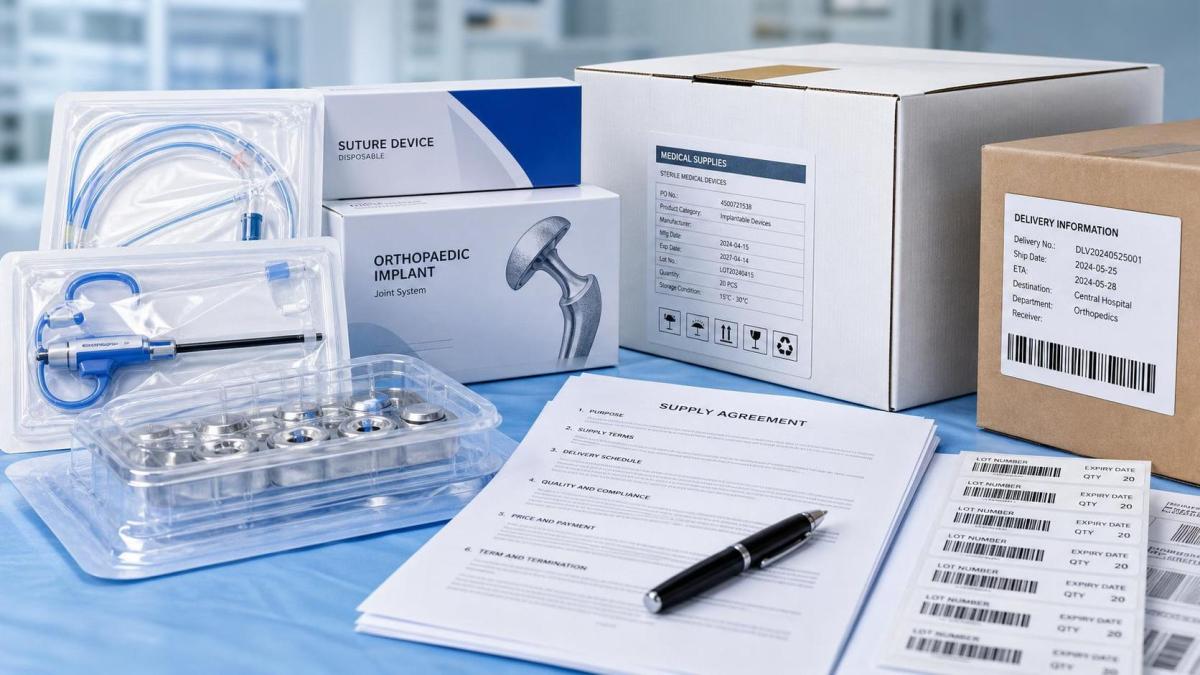
In medical consumables procurement, price is only the visible number. The real cost often sits inside supply terms that look routine at first review.
A contract can show a strong discount, yet still create losses through delivery failures, dispute delays, inventory pressure, or weak service obligations.
That is why medical consumables procurement should be treated as a cost-control exercise, not only a sourcing exercise.
This is especially true for high-value products tied to strict regulation, shelf life, sterilization validation, and clinical continuity.
Orthopedic implants, cardiovascular devices, staplers, catheters, and advanced wound care products all carry hidden cost triggers inside contract language.
In practice, the lowest bid can become the highest total cost once emergency sourcing, write-offs, or claim disputes begin.
A stronger approach is to read supply terms as financial risk maps. That changes procurement decisions materially.
Why Unit Price Rarely Tells the Full Cost Story
Many teams still judge medical consumables procurement by price variance alone. That works poorly in regulated supply environments.
A lower unit cost may come with higher freight exposure, tighter volume commitments, or slow replacement terms for defective lots.
The result is familiar. Savings appear in the contract summary, then disappear in the monthly exception report.
This pattern is common when supply terms were negotiated by product urgency rather than lifecycle cost logic.
From recent market changes, the stronger signal is this: pricing pressure is increasing, while operational resilience is becoming more expensive.
That means medical consumables procurement must connect sourcing decisions with inventory, compliance, quality, and cash flow assumptions.
The hidden cost categories behind supply terms
- Expedited freight caused by missed lead times
- Inventory write-downs from short remaining shelf life
- Cash lockup from advance payment structures
- Procedure disruption from incomplete replacement guarantees
- Legal and audit exposure from vague quality responsibility
- Volume penalties when actual usage shifts below forecasts
Supply Terms That Create the Biggest Cost Risks
Not every clause has the same financial weight. In medical consumables procurement, several terms repeatedly drive avoidable losses.
1. Delivery liability and lead-time definitions
A quoted lead time is not enough. The contract should define whether lead time starts at order release, acknowledgment, or shipment readiness.
It should also state liability for partial shipments, customs delays, temperature excursions, and emergency backfill costs.
Without those details, late delivery costs shift quietly to the buyer.
2. Payment structure and cash-flow burden
Medical consumables procurement often includes deposits, milestone billing, or accelerated payment triggers for imported or specialized items.
These structures matter because they change working capital, financing cost, and exposure before goods even pass quality acceptance.
A nominal discount can become expensive if payment leaves too early.
3. Quality dispute windows
Some suppliers allow only very short windows for reporting defects, packaging issues, or sterilization concerns.
That may be unworkable for implanted products, consigned inventory, or items discovered during clinical use.
If the window is too narrow, valid claims can become nonrecoverable cost.
4. Volume commitments and rebate traps
Rebates look attractive in medical consumables procurement, especially under budget pressure. The problem is what sits behind them.
If minimum volumes are based on optimistic usage, changing case mix or policy shifts can erase rebates and trigger penalties.
That is a contract design issue, not a market issue.
5. Shelf life, rotation, and returns
Short-dated stock is a quiet margin killer. This is common with specialty dressings, catheters, and lower-turn implant variants.
Terms should define minimum remaining shelf life, stock rotation support, and return rights for unopened products.
Otherwise, obsolescence cost lands fully on the buyer.
How These Risks Show Up Across Product Categories
Different products trigger different supply-term risks. That makes category-specific review essential in medical consumables procurement.
This is why one standard template rarely covers all categories well. Product economics and clinical urgency change the risk profile.
A Practical Review Framework for Medical Consumables Procurement
A good review process does not need to be slow. It needs to focus on clauses with real balance-sheet impact.
In actual business settings, a simple red-flag checklist often improves decision quality faster than a long legal review alone.
Use this five-point check before approval
- Confirm who pays when delivery failure causes emergency replacement or procedure rescheduling.
- Test whether payment timing aligns with inspection, acceptance, and usable shelf life.
- Check if quality claim periods match real clinical discovery timelines.
- Stress-test volume commitments against conservative demand scenarios.
- Calculate total cost including write-offs, freight, financing, and service support.
Questions worth asking suppliers early
- What minimum shelf life is guaranteed at delivery?
- How are urgent replacements handled after quality failure?
- Which defects qualify for credit, replacement, or refund?
- What happens if policy changes reduce usage volume?
- Who carries cost during recalls or field corrective actions?
Where Intelligence Improves Procurement Decisions
Medical consumables procurement gets stronger when contract review is supported by product, regulatory, and market intelligence together.
That is especially relevant in Class III and other high-risk categories, where technical performance and regulatory compliance shape commercial reality.
IMCS tracks the interaction between biocompatibility, precision manufacturing, regulatory pressure, and pricing policy across global medical consumables markets.
That broader view helps procurement teams judge whether aggressive terms reflect real efficiency or hidden risk transfer.
It also helps explain why two similar products can create very different downstream costs once service, validation, and replacement duties are compared.
The Bottom Line for Cost-Safe Procurement
The most effective medical consumables procurement decisions are rarely the ones with the lowest visible price.
They are the ones that control supply risk, preserve cash, protect clinical continuity, and keep quality accountability clear.
In other words, supply terms deserve the same level of scrutiny as product specifications.
When reviewing the next contract, start with one question: where can this agreement create cost after the invoice price looks settled?
That question usually leads to better negotiation, better approval logic, and better long-term value in medical consumables procurement.
Get weekly intelligence in your inbox.
No noise. No sponsored content. Pure intelligence.
News Recommendations
 Oct 08, 2026Clinical evaluation requirements for cardiovascular implant devices in EuropeClinical evaluation requirements for cardiovascular implant devices in Europe
 Oct 07, 2026What to verify before appointing an artificial joint implants distributorWhat to verify before appointing an artificial joint implants distributor
 Oct 06, 2026How ISO 10993 guides biocompatibility testing for medical materialsHow ISO 10993 guides biocompatibility testing for medical materials
 Oct 05, 2026How to verify an orthopedic implants and instruments exporterHow to verify an orthopedic implants and instruments exporter
 Oct 04, 2026What drives surgical stapling devices price differences in hospital tenders?What drives surgical stapling devices price differences in hospital tenders?
 Oct 03, 2026How to assess a central venous catheter manufacturer's infection-control evidenceHow to assess a central venous catheter manufacturer's infection-control evidence
 Oct 02, 2026How to assess an advanced wound care factory’s quality systemHow to assess an advanced wound care factory’s quality system
 Oct 01, 2026What is driving global medical consumables demand in emerging markets?What is driving global medical consumables demand in emerging markets?
 Sep 30, 2026Are Foam Wound Dressings Worth the Higher Procurement Cost?Are Foam Wound Dressings Worth the Higher Procurement Cost?
 Sep 30, 2026When Should Silver Wound Dressings Be Avoided?When Should Silver Wound Dressings Be Avoided?
 Sep 30, 2026Is Silicone Foam Dressing Suitable for Heavily Exuding Wounds?Is Silicone Foam Dressing Suitable for Heavily Exuding Wounds?
 Sep 30, 2026How Should Manufacturers Respond to a Biocompatibility Test Failure?How Should Manufacturers Respond to a Biocompatibility Test Failure?
 Sep 30, 2026What Is the Typical CE MDR Review Timeline for High-Risk Devices?What Is the Typical CE MDR Review Timeline for High-Risk Devices?
 Sep 30, 2026How Do FDA and CE MDR Requirements Differ for Implantable Devices?How Do FDA and CE MDR Requirements Differ for Implantable Devices?
 Sep 30, 2026What Are the Main Compliance Risks for Central Venous Access Catheters?What Are the Main Compliance Risks for Central Venous Access Catheters?
 Sep 30, 2026How Should a Surgical Stapler Manufacturer Prepare for a Compliance Audit?How Should a Surgical Stapler Manufacturer Prepare for a Compliance Audit?
 Sep 30, 2026How to assess an orthopedic implant solutions distributor’s traceability systemHow to assess an orthopedic implant solutions distributor’s traceability system
 Sep 29, 2026How a medical device registration strategy can reduce approval delaysHow a medical device registration strategy can reduce approval delays
 Sep 28, 2026How to verify a medical device specification database before useHow to verify a medical device specification database before use
 Sep 27, 2026What to verify before selecting a microcatheters manufacturerWhat to verify before selecting a microcatheters manufacturer
 Sep 26, 2026How to verify FDA compliance for medical device materialsHow to verify FDA compliance for medical device materials
 Sep 25, 2026When does a porous 3D-printed cranial implant improve fixation?When does a porous 3D-printed cranial implant improve fixation?
 Sep 24, 2026When are bovine pericardial valves suitable for transcatheter aortic valve replacement?When are bovine pericardial valves suitable for transcatheter aortic valve replacement?
 Sep 23, 2026How to verify the sterility assurance of surgical devicesHow to verify the sterility assurance of surgical devices
 Sep 22, 2026How to assess a spinal implants manufacturer’s quality systemHow to assess a spinal implants manufacturer’s quality system
 Sep 21, 2026How to assess an osseointegration technology manufacturer’s quality systemHow to assess an osseointegration technology manufacturer’s quality system
 Sep 20, 2026Medical material science trends reshaping biocompatibility testingMedical material science trends reshaping biocompatibility testing