China Medical Consumables Compliance: Key Filing and Testing Risks
Medical consumables compliance China is no longer a narrow registration task. It sits at the intersection of product design, material safety, testing strategy, hospital access, and pricing pressure.
For implants, catheters, staplers, and advanced dressings, the real exposure often appears before approval is denied. It starts with the wrong filing path, incomplete type testing, weak biocompatibility justification, or mismatched local evidence.
That matters because delays in China rarely stay inside regulatory timelines. They affect launch sequencing, distributor confidence, production planning, and even later participation in volume-based procurement.
Why China compliance risk is getting harder to manage

China’s device framework has matured quickly, but interpretation still depends on product category, intended use, clinical context, and local review expectations.
In practice, medical consumables compliance China is shaped by both written standards and review logic. A technically sound dossier can still stall if the evidence structure does not match reviewer focus.
This is especially true for high-value consumables. Orthopedic implants, cardiovascular interventional devices, minimally invasive staplers, polymer catheters, and wound care materials all face different scrutiny points.
IMCS tracks this complexity closely because these categories combine stringent material requirements with demanding Class III expectations and strong commercial pressure after approval.
The first mistake usually happens at the filing stage
Many market entry problems begin with product positioning. The filing route may look obvious internally, yet the Chinese classification logic can lead to a different conclusion.
A small change in intended use can shift the regulatory burden. The same is true for coating claims, drug-device combination features, absorbable components, or long-term implant duration.
Where teams get exposed is not only classification. It is also the supporting language used across labeling, technical requirements, test plans, and risk management files.
If those documents describe the product differently, reviewers often question whether the type testing package actually represents the marketed device.
Typical filing blind spots
- Intended use wording that is broader than available evidence.
- Accessory and core product boundaries defined too loosely.
- Imported reference data used without checking Chinese applicability.
- Claims on coating, antimicrobial function, or durability that trigger extra testing.
- Device variants grouped together without a defensible equivalence rationale.
Type testing is where schedule risk becomes visible
In medical consumables compliance China, type testing is often treated as an execution step. It should be treated as a strategic checkpoint.
Testing failures are not always caused by bad products. They are often caused by test item selection, sample preparation issues, missing rationales, or poor alignment with applicable GB and YY standards.
For example, a catheter program may satisfy global mechanical expectations, yet still face questions around particulate generation, coating durability, extractables, or flow performance under local methods.
For staplers and implants, dimensional tolerances, fatigue behavior, corrosion profiles, or packaging validation can become the pace-setting issue rather than the headline technology.
Where testing plans often break down
Biocompatibility is no longer a box-ticking exercise
For high-value consumables, reviewers increasingly look beyond the presence of ISO 10993 reports. They want a coherent biological safety story.
That story must connect material composition, manufacturing residues, contact type, exposure duration, sterilization effects, and any surface treatment or additive.
This is where sophisticated products face more risk. A porous implant, drug-eluting stent, hydrophilic catheter, or silver-based dressing may be clinically advanced, but each added feature changes the evidence burden.
IMCS pays particular attention to this layer because biocompatibility is where R&D, toxicology, and regulatory logic need to align early, not after type testing has started.
Questions that deserve early answers
- Does the material history actually match the final processing route?
- Are extractables data linked to the worst-case finished form?
- Have surface modifications altered cytotoxicity or sensitization assumptions?
- Can literature be bridged credibly, or is new testing unavoidable?
Different consumable categories carry different local review pressure
Medical consumables compliance China does not fail for the same reason across all product families. The risk profile changes with anatomy, duration, intervention level, and reimbursement visibility.
Orthopedic implants and instruments often draw attention to material traceability, fatigue, wear, and long-term fixation assumptions.
Cardiovascular interventional products usually face deeper review on coating consistency, hemocompatibility, delivery performance, and clinical comparability.
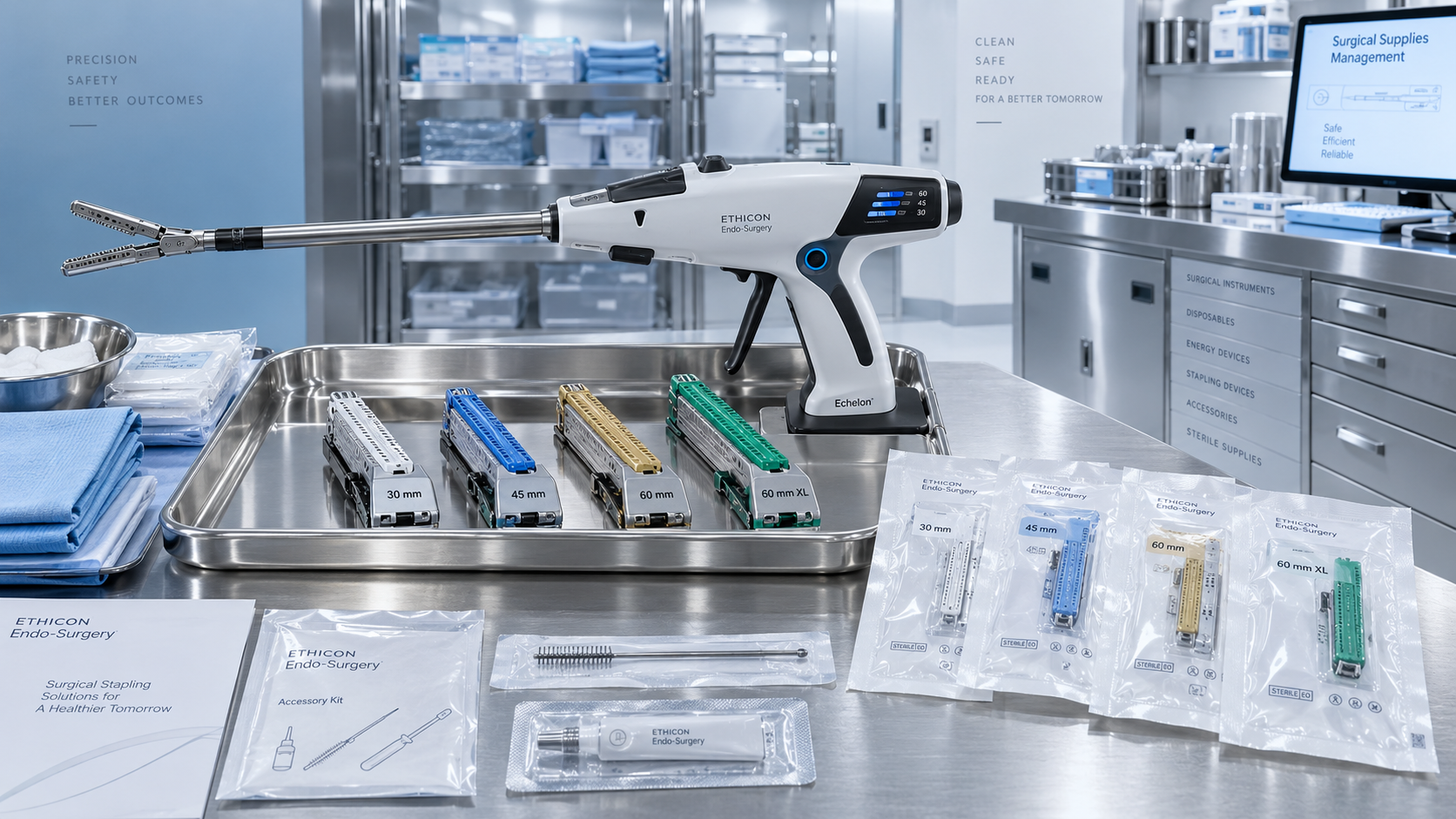
Minimally invasive staplers bring focus to firing consistency, staple formation, tissue interaction, and shelf life under sterilized conditions.
Polymer catheters are judged heavily on flexibility, kink resistance, lubricity retention, thrombogenic risk, and particulate control.
Advanced dressings and wound care materials may look lower in complexity, yet silver release, absorption claims, tissue compatibility, and intended wound environment can still widen the review scope.
Commercial context now shapes compliance choices
Regulatory success alone is not enough. In China, approval timing and evidence quality can affect later pricing resilience and access strategy.
This matters in sectors touched by VBP. If a product reaches market late, or with a narrow claim set, its room to defend premium positioning may shrink quickly.
That is why medical consumables compliance China should be evaluated alongside lifecycle economics. A cheaper early submission can become expensive if it limits indication breadth or creates post-market correction work.
The stronger approach is to connect regulatory planning with portfolio strategy, evidence generation, and expected procurement dynamics from the start.
A practical way to reduce filing and testing risk
A workable framework usually starts before formal submission. The goal is to test assumptions while the cost of change is still manageable.
Three steps are especially useful.
1. Lock the regulatory narrative early
Define intended use, product boundaries, variants, and material claims in one controlled logic. Then carry that logic across testing, labeling, and risk files.
2. Build a China-specific gap map
Do not assume global data will transfer cleanly. Compare existing evidence against local standards, expected test methods, and known reviewer concerns by category.
3. Stress-test the evidence package commercially
Check whether the planned submission supports not only approval, but also future claims, hospital adoption, and pricing defense under competitive pressure.
What to assess next
The most useful next step is usually not another generic regulatory summary. It is a product-level review of classification, testing logic, biological safety arguments, and local evidence transferability.
For any team navigating medical consumables compliance China, the better question is not whether a dossier can be submitted. It is whether the submission logic is strong enough to survive review, protect timing, and support the broader market plan.
That kind of review becomes more valuable as products move toward complex coatings, personalized materials, minimally invasive delivery, and tighter procurement conditions. In this environment, disciplined filing and testing strategy is not an administrative detail. It is a competitive decision.
Get weekly intelligence in your inbox.
No noise. No sponsored content. Pure intelligence.
News Recommendations
 Oct 07, 2026What to verify before appointing an artificial joint implants distributorWhat to verify before appointing an artificial joint implants distributor
 Oct 06, 2026How ISO 10993 guides biocompatibility testing for medical materialsHow ISO 10993 guides biocompatibility testing for medical materials
 Oct 05, 2026How to verify an orthopedic implants and instruments exporterHow to verify an orthopedic implants and instruments exporter
 Oct 04, 2026What drives surgical stapling devices price differences in hospital tenders?What drives surgical stapling devices price differences in hospital tenders?
 Oct 03, 2026How to assess a central venous catheter manufacturer's infection-control evidenceHow to assess a central venous catheter manufacturer's infection-control evidence
 Oct 02, 2026How to assess an advanced wound care factory’s quality systemHow to assess an advanced wound care factory’s quality system
 Oct 01, 2026What is driving global medical consumables demand in emerging markets?What is driving global medical consumables demand in emerging markets?
 Sep 30, 2026When Should Silver Wound Dressings Be Avoided?When Should Silver Wound Dressings Be Avoided?
 Sep 30, 2026Is Silicone Foam Dressing Suitable for Heavily Exuding Wounds?Is Silicone Foam Dressing Suitable for Heavily Exuding Wounds?
 Sep 30, 2026How Should Manufacturers Respond to a Biocompatibility Test Failure?How Should Manufacturers Respond to a Biocompatibility Test Failure?
 Sep 30, 2026What Is the Typical CE MDR Review Timeline for High-Risk Devices?What Is the Typical CE MDR Review Timeline for High-Risk Devices?
 Sep 30, 2026How Do FDA and CE MDR Requirements Differ for Implantable Devices?How Do FDA and CE MDR Requirements Differ for Implantable Devices?
 Sep 30, 2026What Are the Main Compliance Risks for Central Venous Access Catheters?What Are the Main Compliance Risks for Central Venous Access Catheters?
 Sep 30, 2026How Should a Surgical Stapler Manufacturer Prepare for a Compliance Audit?How Should a Surgical Stapler Manufacturer Prepare for a Compliance Audit?
 Sep 30, 2026How to assess an orthopedic implant solutions distributor’s traceability systemHow to assess an orthopedic implant solutions distributor’s traceability system
 Sep 29, 2026How a medical device registration strategy can reduce approval delaysHow a medical device registration strategy can reduce approval delays
 Sep 28, 2026How to verify a medical device specification database before useHow to verify a medical device specification database before use
 Sep 27, 2026What to verify before selecting a microcatheters manufacturerWhat to verify before selecting a microcatheters manufacturer
 Sep 26, 2026How to verify FDA compliance for medical device materialsHow to verify FDA compliance for medical device materials
 Sep 25, 2026When does a porous 3D-printed cranial implant improve fixation?When does a porous 3D-printed cranial implant improve fixation?
 Sep 24, 2026When are bovine pericardial valves suitable for transcatheter aortic valve replacement?When are bovine pericardial valves suitable for transcatheter aortic valve replacement?
 Sep 23, 2026How to verify the sterility assurance of surgical devicesHow to verify the sterility assurance of surgical devices
 Sep 22, 2026How to assess a spinal implants manufacturer’s quality systemHow to assess a spinal implants manufacturer’s quality system
 Sep 21, 2026How to assess an osseointegration technology manufacturer’s quality systemHow to assess an osseointegration technology manufacturer’s quality system
 Sep 20, 2026Medical material science trends reshaping biocompatibility testingMedical material science trends reshaping biocompatibility testing
 Sep 19, 2026What North American regulators expect in implant clinical evaluationsWhat North American regulators expect in implant clinical evaluations
 Sep 18, 2026When should plate and screw systems be selected for fracture fixation?When should plate and screw systems be selected for fracture fixation?