Smart Minimally Invasive Tech in Microcatheters
What does smart minimally invasive technology mean in microcatheters?
Smart minimally invasive technology is changing how microcatheters perform in delicate interventional procedures.

It combines precision design, responsive materials, imaging compatibility, and delivery control in very small catheter systems.
In practice, this means better trackability through tortuous anatomy and more stable navigation in high-risk pathways.
The value of smart minimally invasive technology is not only technical. It also supports procedural consistency and safer device handling.
For IMCS, this topic connects materials science, clinical performance, and regulatory expectations in one critical device category.
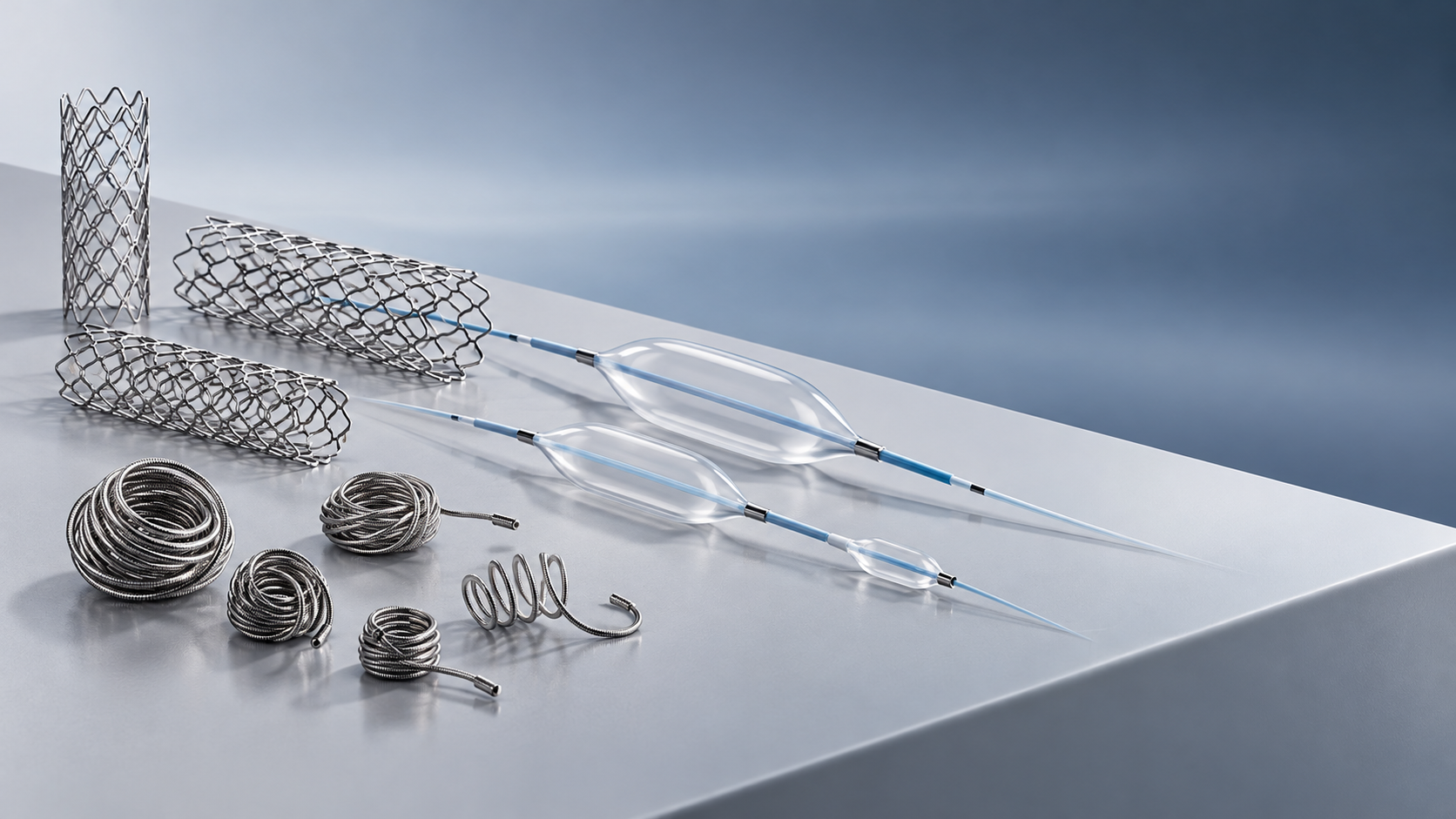
The modern microcatheter is no longer just a tube. It is a controlled access tool for life-channel intervention.
The strongest systems often integrate layered polymers, hydrophilic coatings, reinforced shafts, and optimized distal tip behavior.
That combination helps operators reach target sites while reducing vessel trauma, friction, and unintended movement.
In cardiovascular, neurovascular, and peripheral procedures, these details directly affect outcome quality and workflow confidence.
Why is smart minimally invasive technology important in complex vascular procedures?
Complex anatomy exposes the limits of traditional catheter design very quickly.
Tight curves, fragile vessels, calcified lesions, and long access paths demand advanced response from microcatheters.
Smart minimally invasive technology improves several essentials at the same time:
- pushability without excessive stiffness
- torque response for controlled steering
- kink resistance during demanding navigation
- distal flexibility for vessel protection
- device compatibility for embolic agents or guidewires
These gains support both procedural efficiency and patient safety.
A microcatheter that advances smoothly can reduce repositioning, fluoroscopy time, and frustration during critical moments.
Better control also supports more predictable placement of coils, liquid embolics, or diagnostic agents.
In neuro-intervention, even a small improvement in trackability may change access success in highly tortuous vessels.
In coronary and peripheral intervention, better shaft transition can reduce force concentration and improve procedural rhythm.
This is why smart minimally invasive technology matters beyond marketing language. It solves real navigation problems.
Which design features define a high-performance smart microcatheter?
The best way to judge smart minimally invasive technology is through measurable design features.
1. Multi-layer shaft construction
Layered polymer structures balance proximal support and distal softness.
This design reduces abrupt stiffness changes and improves overall handling consistency.
2. Reinforcement for torque and stability
Braided or coiled reinforcement helps transfer rotation and resist collapse.
It is especially valuable during difficult turns or long-distance advancement.
3. Hydrophilic or low-friction coating
Surface treatment can improve glide through vessels and lower resistance at contact points.
However, coating durability and particulate risk must be carefully validated.
4. Optimized distal tip design
Atraumatic tips support safer vessel entry and controlled target approach.
Radiopacity at the tip also improves visibility under imaging guidance.
5. Compatibility with delivery systems
Inner diameter, pressure tolerance, and material compatibility affect real procedural use.
A smart design should support intended embolic materials, guidewires, or therapeutic payloads.
When these features work together, smart minimally invasive technology becomes clinically meaningful, not just technically impressive.
How should smart minimally invasive technology be evaluated before selection?
Selection should begin with application fit, not with the most advanced specification sheet.
Different interventions require different balances of flexibility, support, visibility, and chemical resistance.
A useful evaluation framework includes the following questions:
- Is the anatomy highly tortuous or relatively straightforward?
- Does the procedure require delicate distal access?
- Which guidewire sizes and therapeutic agents will be used?
- What imaging visibility is needed at the tip and shaft?
- How important are pressure performance and injection consistency?
- What biocompatibility and regulatory evidence are available?
Smart minimally invasive technology should also be reviewed through manufacturing quality and evidence depth.
Bench tests are valuable, but they should align with realistic use conditions.
For global market readiness, ISO 10993 evaluation, coating validation, and performance consistency are central checkpoints.
Clinical usability is another filter. A technically advanced microcatheter fails if handling feels unpredictable in the field.
What are the common risks and misconceptions around smart minimally invasive technology?
One common misconception is that more flexibility always means a better microcatheter.
Excessive softness may reduce pushability and compromise navigation over long pathways.
Another misunderstanding is that coating alone defines smart minimally invasive technology.
In reality, coating is only one part of a total performance system.
Other risk areas deserve equal attention:
- mismatch between catheter lumen and intended devices
- insufficient kink resistance under complex access conditions
- coating degradation during repeated manipulation
- poor visibility in critical distal positions
- limited evidence under demanding clinical scenarios
There is also a regulatory misconception. Approval does not automatically mean broad procedural suitability.
Smart minimally invasive technology must be judged in the context of indication, evidence, and consistency.
For high-value medical consumables, hidden reliability issues can become costly in both clinical and compliance terms.
What do cost, implementation, and regulation mean for adoption?
Cost evaluation should move beyond unit price.
Smart minimally invasive technology may offer value through shorter procedures, fewer exchanges, and better target access.
That said, adoption requires balance between performance claims and operational realities.
Implementation usually involves four practical dimensions:
- training for handling differences
- compatibility review with existing accessories
- inventory planning across indications
- documentation for quality and regulatory review
Regulation is particularly important in the medical consumables sector.
Class III pathways, CER requirements, and post-market surveillance expectations are becoming stricter worldwide.
For coated polymer microcatheters, biological safety, extractables, and durability evidence must be credible and updated.
In price-sensitive systems shaped by VBP logic, premium positioning depends on proven technical differentiation.
This is where intelligence-led review becomes useful, linking performance, compliance, and long-term market viability.
FAQ summary table: how can smart minimally invasive technology be judged quickly?
Smart minimally invasive technology is redefining what microcatheters can achieve in modern intervention.
The real advantage lies in balanced design, not isolated features or headline claims.
A strong evaluation should connect anatomy, usability, biocompatibility, regulatory evidence, and economic logic.
For deeper insight into microcatheters and advanced medical consumables, IMCS helps connect technical detail with strategic judgment.
Use these checkpoints as the next step to compare solutions, reduce uncertainty, and support better procedural outcomes.
Get weekly intelligence in your inbox.
No noise. No sponsored content. Pure intelligence.
News Recommendations
 Oct 26, 2026Can a single approval cover life science product sales worldwide?Can a single approval cover life science product sales worldwide?
 Oct 25, 2026When is sensitization testing needed for medical device biocompatibility?When is sensitization testing needed for medical device biocompatibility?
 Oct 24, 2026How is biocompatibility tested for implantable polymer biomaterials?How is biocompatibility tested for implantable polymer biomaterials?
 Oct 23, 2026How to build reimbursement into an implant commercialization strategyHow to build reimbursement into an implant commercialization strategy
 Oct 22, 2026What clinical evidence do implants need for CE marking under EU MDR?What clinical evidence do implants need for CE marking under EU MDR?
 Oct 21, 2026How to choose disposable laparoscopic stapler reloads for thick tissueHow to choose disposable laparoscopic stapler reloads for thick tissue
 Oct 20, 2026How to assess medical polymer biocompatibility under ISO 10993How to assess medical polymer biocompatibility under ISO 10993
 Oct 19, 2026How do interventional device categories differ in clinical use?How do interventional device categories differ in clinical use?
 Oct 18, 2026When to choose alginate dressings for heavily exuding chronic woundsWhen to choose alginate dressings for heavily exuding chronic wounds
 Oct 17, 2026How is biocompatibility tested for custom medical-grade PEEK implants?How is biocompatibility tested for custom medical-grade PEEK implants?
 Oct 16, 2026How to check a wound healing materials supplier’s biocompatibility dataHow to check a wound healing materials supplier’s biocompatibility data
 Oct 15, 2026How to verify the FDA clearance status of silver wound dressingsHow to verify the FDA clearance status of silver wound dressings
 Oct 14, 2026How to register orthopedic implants and instruments in Latin AmericaHow to register orthopedic implants and instruments in Latin America
 Oct 13, 2026How to use a device market intelligence database to benchmark VBP pricesHow to use a device market intelligence database to benchmark VBP prices
 Oct 12, 2026When should stainless steel orthopedic instruments be replaced?When should stainless steel orthopedic instruments be replaced?
 Oct 11, 2026When are alginate dressings rope the right choice for cavity wounds?When are alginate dressings rope the right choice for cavity wounds?
 Oct 10, 2026When smart minimally invasive technology improves catheter accessWhen smart minimally invasive technology improves catheter access
 Oct 08, 2026Clinical evaluation requirements for cardiovascular implant devices in EuropeClinical evaluation requirements for cardiovascular implant devices in Europe
 Oct 07, 2026What to verify before appointing an artificial joint implants distributorWhat to verify before appointing an artificial joint implants distributor
 Oct 06, 2026How ISO 10993 guides biocompatibility testing for medical materialsHow ISO 10993 guides biocompatibility testing for medical materials
 Oct 05, 2026How to verify an orthopedic implants and instruments exporterHow to verify an orthopedic implants and instruments exporter
 Oct 04, 2026What drives surgical stapling devices price differences in hospital tenders?What drives surgical stapling devices price differences in hospital tenders?
 Oct 03, 2026How to assess a central venous catheter manufacturer's infection-control evidenceHow to assess a central venous catheter manufacturer's infection-control evidence
 Oct 02, 2026How to assess an advanced wound care factory’s quality systemHow to assess an advanced wound care factory’s quality system
 Oct 01, 2026What is driving global medical consumables demand in emerging markets?What is driving global medical consumables demand in emerging markets?
 Sep 30, 2026Implant Material Compliance Testing: Evidence Needed for Regulatory SubmissionImplant Material Compliance Testing: Evidence Needed for Regulatory Submission
 Sep 30, 2026From Corrosion to Fatigue: What Implant Materials Testing Should MeasureFrom Corrosion to Fatigue: What Implant Materials Testing Should Measure