Medical Device Regulations: 2026 Access Risks
By 2026, medical device regulations will reshape market access for Class III implants, cardiovascular consumables, MIS staplers, polymer catheters, and advanced wound care technologies. For enterprise decision-makers, the risk is no longer limited to approval delays; it spans clinical evidence gaps, biocompatibility scrutiny, VBP-driven price pressure, and post-market surveillance exposure. Understanding these regulatory shifts early is critical to protecting margins, sustaining supply, and securing premium positioning in increasingly controlled global healthcare markets.
For manufacturers of high-value consumables, regulatory strategy is now a board-level operating issue. Medical device regulations influence R&D timing, clinical evidence design, supplier qualification, reimbursement positioning, and the ability to defend price under procurement pressure.
IMCS views the 2026 access environment through five material-intensive categories: orthopedic implants, cardiovascular interventional devices, minimally invasive staplers, polymer catheters, and advanced wound care systems. Each category faces different evidence burdens, but all share one question: can the enterprise prove durable safety, measurable clinical value, and supply resilience at the same time?
2026 Regulatory Access Risks for High-Value Medical Consumables

The next phase of medical device regulations will be less tolerant of incomplete files and generic equivalence arguments. Decision-makers should expect deeper review of biological safety, clinical performance, manufacturing control, and post-market risk signals.
For Class III implants and life-sustaining consumables, the commercial impact can appear in 3 places: delayed approval, restricted indication scope, or a weaker negotiation position in hospital tenders and VBP frameworks.
Why Access Risk Is Expanding Beyond Approval
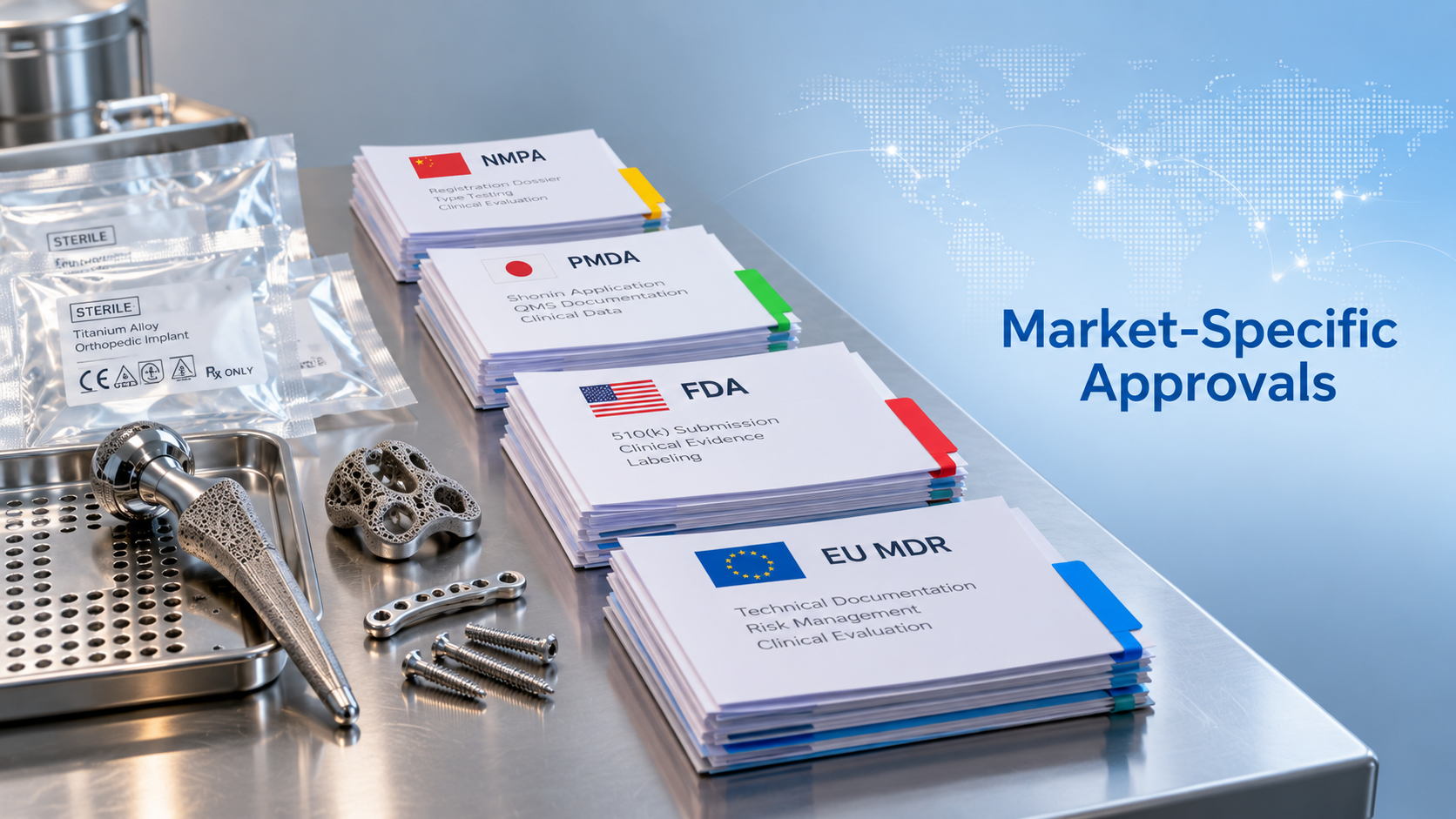
Traditional access planning often focused on submission milestones: 510(k), PMA, CE MDR certification, NMPA registration, or local technical review. By 2026, this is insufficient for categories with long implantation periods or direct blood contact.
Regulators increasingly assess the full lifecycle: material origin, processing residues, sterilization validation, packaging stability, clinical evaluation, complaint handling, and periodic safety reporting over 1, 3, or 5 years.
Key risk signals enterprise teams should monitor
- Clinical evidence gaps for revised indications, new coatings, porous structures, or drug-device combinations.
- ISO 10993 biological evaluation questions, especially cytotoxicity, sensitization, irritation, hemocompatibility, and degradation products.
- Manufacturing variation affecting micron-level tolerances, titanium staple formation, stent expansion behavior, or catheter kink resistance.
- Post-market surveillance exposure from complaint trends, real-world registry data, and field safety corrective actions.
In practical terms, medical device regulations now reward companies that build evidence early. A 6-month delay in toxicology testing or clinical documentation can become a 12-month launch disadvantage when Notified Body capacity is limited.
Category-Level Exposure Under Stricter Review
Different product families face different access bottlenecks. The table below summarizes the most relevant 2026 risks for enterprise planning, including evidence depth and procurement sensitivity.
The key conclusion is clear: medical device regulations cannot be managed as isolated paperwork. They must be translated into product roadmap choices, evidence budgets, and regional launch sequencing.
Clinical Evidence and Biocompatibility: The New Access Gate
Clinical evidence is becoming the commercial language of trust. For Class III devices, regulators, hospitals, and procurement committees increasingly ask whether benefits remain visible after 12, 24, or 60 months.
Medical device regulations also require closer alignment between material science and clinical claims. A porous titanium cage, a hydrophilic catheter, and a silver-ion foam dressing each need distinct evidence logic.
Biological Safety Must Start Before Design Freeze
Biocompatibility should not begin after tooling. Under ISO 10993 principles, companies need a biological evaluation plan tied to contact duration, tissue type, material formulation, and processing residues.
For long-term implants, testing may include cytotoxicity, sensitization, irritation, systemic toxicity, genotoxicity, implantation, chemical characterization, and degradation evaluation. Blood-contacting devices add hemolysis, thrombogenicity, and complement activation concerns.
A practical 5-step evidence sequence
- Define patient contact: surface, external communicating, implant, blood path, and contact duration.
- Map material composition, additives, coatings, sterilization residues, and packaging interactions.
- Perform gap analysis against ISO 10993 endpoints and local regulatory expectations.
- Align preclinical tests with intended claims, risk controls, and clinical evaluation needs.
- Maintain change control for suppliers, processing parameters, and shelf-life extensions.
This sequence protects enterprises from late-stage surprises. A coating supplier switch, even within the same polymer family, can trigger new extractables analysis and delay market entry by 3–6 months.
Clinical Evaluation Is Not a Template Exercise
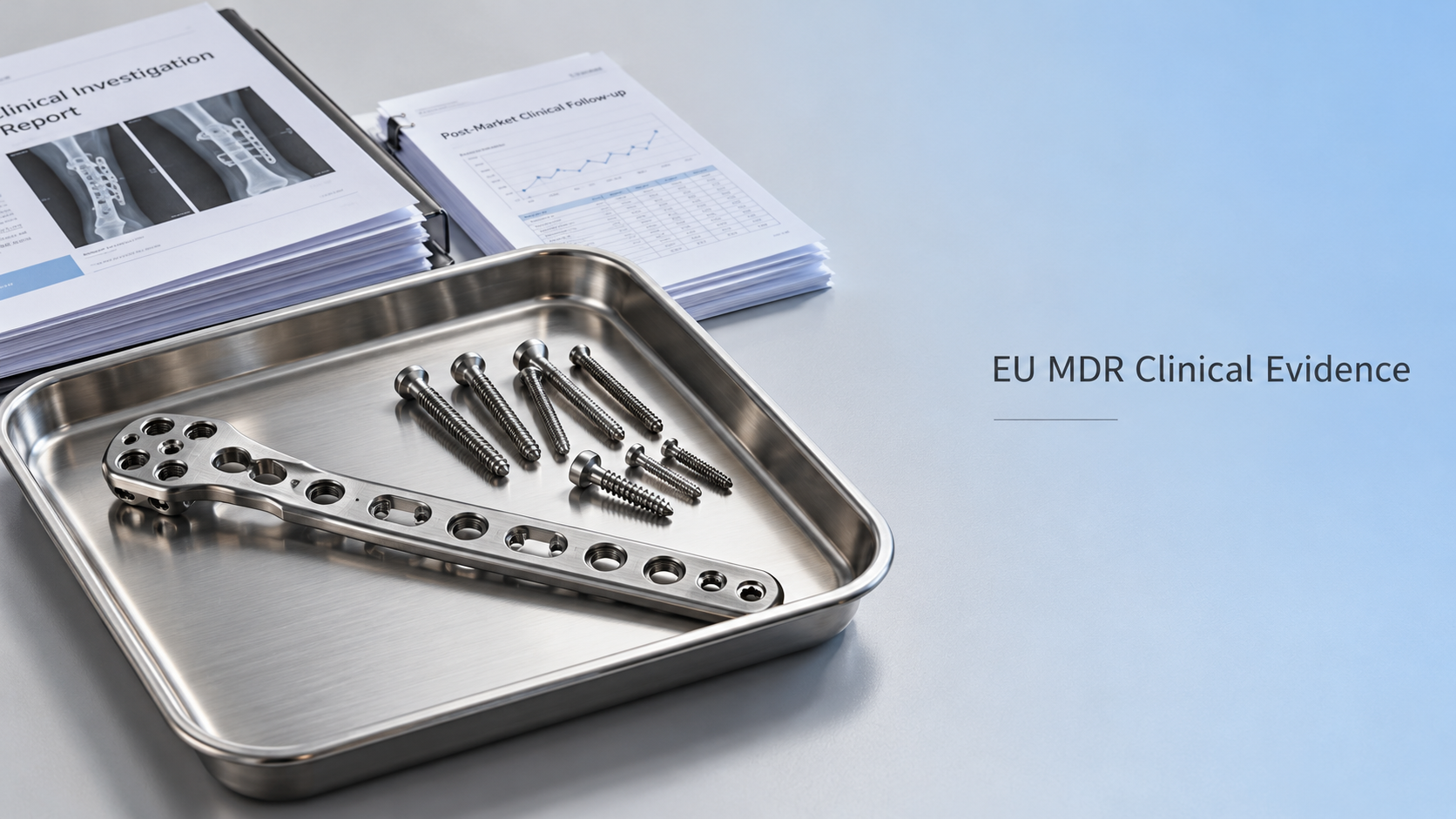
Under CE MDR and similar global frameworks, clinical evaluation must connect device design, state of the art, risk profile, and claimed benefit. Equivalence arguments are narrower than they were 5 years ago.
For orthopedic replacements, decision-makers should evaluate revision rates, patient-reported outcomes, wear behavior, and fixation stability. For TAVR or DES platforms, endpoints may include restenosis, thrombosis, mortality, and valve function.
For wound care, the evidence burden may focus on healing time, exudate control, infection reduction, and dressing change frequency. Even here, medical device regulations increasingly challenge vague claims such as “accelerates healing” without measurable support.
VBP, Pricing Pressure, and Regulatory Strategy Must Converge
Volume-Based Procurement changes how medical device regulations affect enterprise economics. Approval alone does not secure margin if a product enters a tender with weak differentiation and poor cost modeling.
In many procurement systems, categories such as coronary stents, orthopedic joints, and staplers may face aggressive price compression. Decision-makers need to model regulatory cost, production scale, and price floors together.
From Regulatory Compliance to Value Defense
A strong technical file can support value defense when it demonstrates outcomes that matter to hospitals: fewer revisions, shorter procedures, lower complication exposure, fewer dressing changes, or improved workflow stability.
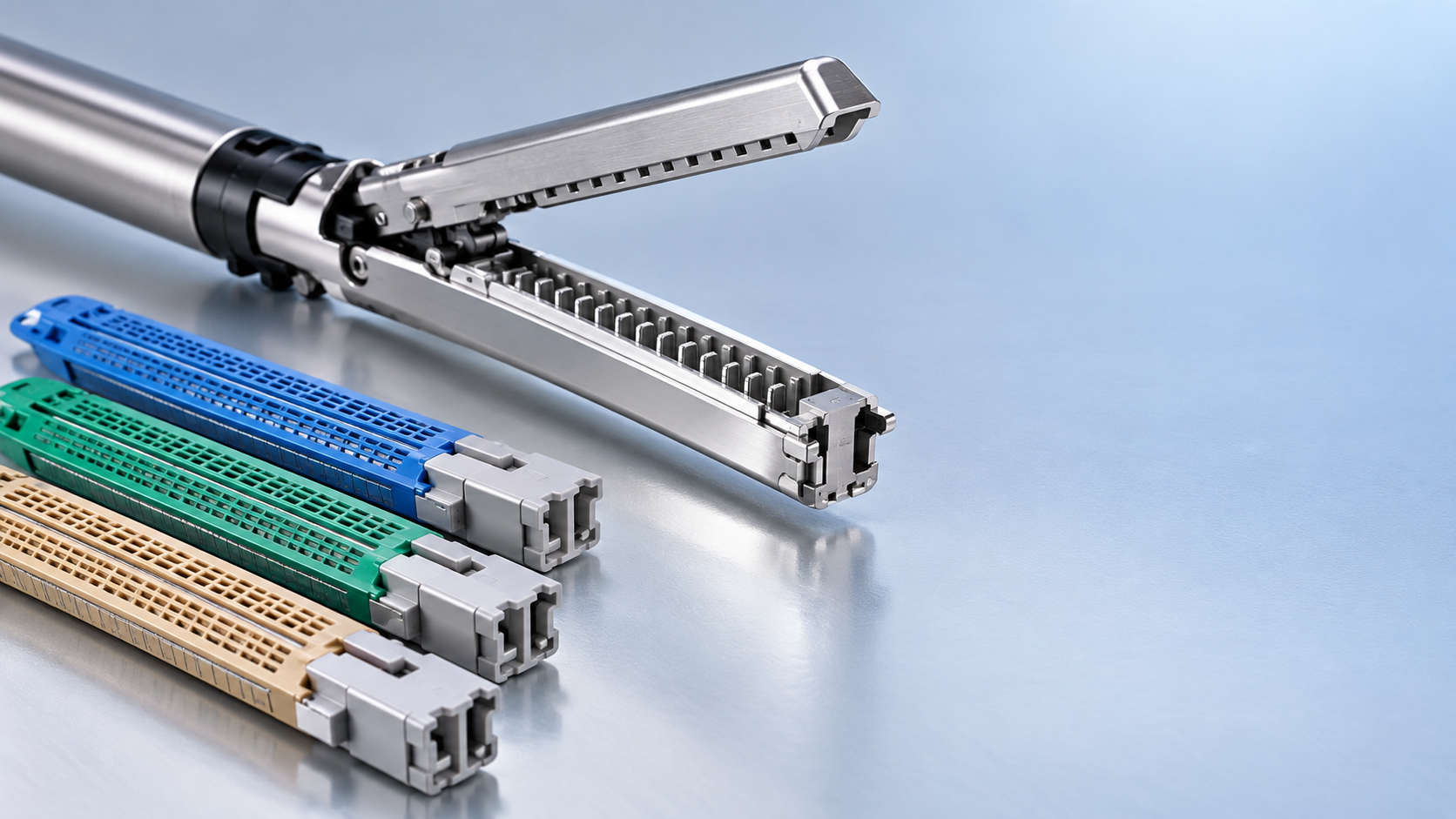
For example, a MIS stapler with consistent staple formation across 10,000 firing cycles in validation data has a stronger procurement narrative than one supported only by basic functional checks.
Similarly, a catheter platform with verified coating durability after simulated navigation can reduce the perceived risk of intravascular particle shedding, supporting safer clinical adoption.
Decision Framework for Access and Tender Readiness
The following framework helps leadership teams connect medical device regulations with tender strategy, manufacturing readiness, and market access sequencing across 3 major decision layers.
The table shows why regulatory, finance, quality, and commercial leaders must share one access dashboard. A product that wins registration but loses cost control may still fail strategically.
Building a 2026-Ready Compliance and Market Access System
A 2026-ready access system needs more than a regulatory affairs team. It requires cross-functional governance linking R&D, clinical science, toxicology, manufacturing, reimbursement, and regional sales intelligence.
For enterprise decision-makers, the practical goal is to reduce avoidable rework by 30%–50% through earlier evidence planning, clearer design controls, and tighter supplier qualification.
A 6-Part Operating Model
- Regulatory route mapping for each target market, including classification, submission pathway, and local testing needs.
- Biocompatibility strategy led before pilot production, with material change triggers clearly defined.
- Clinical evaluation planning that aligns indications, claims, endpoints, and post-market commitments.
- VBP scenario modeling using 3 price levels: premium, defensive, and floor-price supply cases.
- Manufacturing readiness review covering critical dimensions, sterilization, packaging, and release testing.
- Post-market surveillance loop with monthly complaint review and quarterly management escalation.
This model converts medical device regulations into operating discipline. It also improves negotiation quality because procurement teams can see documented value rather than unsupported technical language.
How IMCS Supports Executive Decision-Making
IMCS functions as an intelligence portal for high-value medical consumables, connecting material biocompatibility, micron-level manufacturing, Class III regulatory logic, and VBP policy analysis.
Its Strategic Intelligence Center helps leadership teams identify evidence gaps before they become access failures. Toxicology analysis, CER logic, and procurement simulation are reviewed together, not in isolation.
For orthopedic implants, IMCS focuses on osseointegration, porous trabecular structures, PEEK performance, and revision-risk evidence. For cardiovascular consumables, attention turns to hemocompatibility, drug release, deployment accuracy, and real-world safety signals.
For MIS staplers, polymer catheters, and wound care, IMCS helps frame practical questions: which claims require stronger evidence, which material changes trigger new testing, and which features can support premium tender positioning?
Implementation checkpoints for leadership teams
- Run a 10-item regulatory gap review before finalizing the 2026 product launch calendar.
- Separate “approval evidence” from “value evidence” to support both regulators and procurement committees.
- Create a 12-month supplier risk plan for critical polymers, titanium materials, coatings, and sterile packaging.
- Prepare at least 3 VBP response scenarios before entering price negotiations.
- Review post-market signals every 30–90 days, depending on device risk class and complaint volume.
These checkpoints are especially important for companies expanding across multiple regions. Medical device regulations may differ by jurisdiction, but the expectation for traceable evidence is converging.
Common Mistakes That Increase 2026 Access Exposure
Many access failures start long before submission. They begin when companies treat clinical evidence as a late-stage document or underestimate how material changes affect regulatory classification and testing scope.
A second mistake is ignoring procurement pressure until approval is near. By then, product cost, supplier structure, and claim strategy may already be locked, leaving little room to defend margins.
Mistake 1: Overusing Equivalence Arguments
Equivalence can still be useful, but it is not a shortcut for high-risk devices. If materials, geometry, coating, manufacturing, or clinical use differ, reviewers may request additional data.
For a 3D-printed porous orthopedic implant, pore size, surface roughness, fatigue resistance, and cleaning validation can all affect the strength of any equivalence position.
Mistake 2: Treating VBP as Only a Sales Issue
VBP affects product design and manufacturing strategy. If a device requires expensive inspection, low-yield processing, or narrow supplier capacity, a tender price cut can turn growth into operational stress.
Decision-makers should test whether the product remains viable at 3 demand levels and 3 pricing levels. This simple 9-scenario model can expose hidden fragility early.
Mistake 3: Weak Post-Market Data Discipline
Post-market surveillance is becoming a market access asset. Complaint trends, corrective actions, registry feedback, and periodic safety updates can influence renewals, hospital trust, and competitive differentiation.
Enterprises should define escalation thresholds, such as repeated complaints within 30 days, batch-specific signals, or adverse event clusters linked to one procedure type or region.
Strategic Takeaway for Enterprise Decision-Makers
By 2026, medical device regulations will increasingly separate companies that merely submit files from companies that manage evidence, price, quality, and surveillance as one integrated system.
For Class III implants, cardiovascular consumables, staplers, catheters, and wound care technologies, the winning position is not simply faster approval. It is credible safety, defensible value, scalable production, and resilient market access.
IMCS helps global high-value consumable manufacturers interpret regulatory signals, strengthen clinical and biocompatibility logic, and prepare for VBP-driven commercial pressure with sharper intelligence.
If your leadership team is preparing a 2026 launch, regional expansion, technical file upgrade, or VBP response plan, connect with IMCS to obtain a customized access risk assessment and explore more solutions.
Get weekly intelligence in your inbox.
No noise. No sponsored content. Pure intelligence.
News Recommendations
 Oct 26, 2026Can a single approval cover life science product sales worldwide?Can a single approval cover life science product sales worldwide?
 Oct 25, 2026When is sensitization testing needed for medical device biocompatibility?When is sensitization testing needed for medical device biocompatibility?
 Oct 24, 2026How is biocompatibility tested for implantable polymer biomaterials?How is biocompatibility tested for implantable polymer biomaterials?
 Oct 23, 2026How to build reimbursement into an implant commercialization strategyHow to build reimbursement into an implant commercialization strategy
 Oct 22, 2026What clinical evidence do implants need for CE marking under EU MDR?What clinical evidence do implants need for CE marking under EU MDR?
 Oct 21, 2026How to choose disposable laparoscopic stapler reloads for thick tissueHow to choose disposable laparoscopic stapler reloads for thick tissue
 Oct 20, 2026How to assess medical polymer biocompatibility under ISO 10993How to assess medical polymer biocompatibility under ISO 10993
 Oct 19, 2026How do interventional device categories differ in clinical use?How do interventional device categories differ in clinical use?
 Oct 18, 2026When to choose alginate dressings for heavily exuding chronic woundsWhen to choose alginate dressings for heavily exuding chronic wounds
 Oct 17, 2026How is biocompatibility tested for custom medical-grade PEEK implants?How is biocompatibility tested for custom medical-grade PEEK implants?
 Oct 16, 2026How to check a wound healing materials supplier’s biocompatibility dataHow to check a wound healing materials supplier’s biocompatibility data
 Oct 15, 2026How to verify the FDA clearance status of silver wound dressingsHow to verify the FDA clearance status of silver wound dressings
 Oct 14, 2026How to register orthopedic implants and instruments in Latin AmericaHow to register orthopedic implants and instruments in Latin America
 Oct 13, 2026How to use a device market intelligence database to benchmark VBP pricesHow to use a device market intelligence database to benchmark VBP prices
 Oct 12, 2026When should stainless steel orthopedic instruments be replaced?When should stainless steel orthopedic instruments be replaced?
 Oct 11, 2026When are alginate dressings rope the right choice for cavity wounds?When are alginate dressings rope the right choice for cavity wounds?
 Oct 10, 2026When smart minimally invasive technology improves catheter accessWhen smart minimally invasive technology improves catheter access
 Oct 08, 2026Clinical evaluation requirements for cardiovascular implant devices in EuropeClinical evaluation requirements for cardiovascular implant devices in Europe
 Oct 07, 2026What to verify before appointing an artificial joint implants distributorWhat to verify before appointing an artificial joint implants distributor
 Oct 06, 2026How ISO 10993 guides biocompatibility testing for medical materialsHow ISO 10993 guides biocompatibility testing for medical materials
 Oct 05, 2026How to verify an orthopedic implants and instruments exporterHow to verify an orthopedic implants and instruments exporter
 Oct 04, 2026What drives surgical stapling devices price differences in hospital tenders?What drives surgical stapling devices price differences in hospital tenders?
 Oct 03, 2026How to assess a central venous catheter manufacturer's infection-control evidenceHow to assess a central venous catheter manufacturer's infection-control evidence
 Oct 02, 2026How to assess an advanced wound care factory’s quality systemHow to assess an advanced wound care factory’s quality system
 Oct 01, 2026What is driving global medical consumables demand in emerging markets?What is driving global medical consumables demand in emerging markets?
 Sep 30, 2026Implant Material Compliance Testing: Evidence Needed for Regulatory SubmissionImplant Material Compliance Testing: Evidence Needed for Regulatory Submission
 Sep 30, 2026From Corrosion to Fatigue: What Implant Materials Testing Should MeasureFrom Corrosion to Fatigue: What Implant Materials Testing Should Measure