Biodegradable Implants: Clinical Benefits, Degradation Risks, and Access
Biodegradable implants are moving from niche innovation to strategic priority as hospitals, payers, and manufacturers seek devices that support healing, reduce long-term foreign-body burden, and align with value-based care. For enterprise decision makers, the opportunity is significant—but so are the clinical, regulatory, and market access risks. Material selection, degradation behavior, biocompatibility evidence, and reimbursement pathways can determine whether a product becomes a premium differentiated solution or stalls before adoption. This article examines the benefits, degradation challenges, and access considerations shaping the next phase of biodegradable implant commercialization.
Why biodegradable implants are becoming a board-level decision

Biodegradable implants are designed to provide temporary mechanical support, drug delivery, tissue guidance, or fixation, then gradually break down into absorbable byproducts. This changes the commercial logic of implants.
Instead of competing only on permanent strength, manufacturers must prove synchronized healing, predictable degradation, and safe biological clearance. That is difficult, but it can create strong differentiation.
For orthopedic, cardiovascular, wound care, and minimally invasive surgery portfolios, the question is no longer whether biodegradable implants are scientifically interesting. The question is where they create measurable value.
Key business drivers behind adoption
- Hospitals want fewer removal surgeries, shorter care pathways, and fewer long-term complications linked to permanent foreign material.
- Payers are pushing value-based care, making clinical endpoints and total episode cost more important than device price alone.
- Manufacturers need technology-added margins as VBP and tender systems compress prices for conventional metal implants and consumables.
- Surgeons seek materials that maintain early stability while allowing tissue remodeling, especially in pediatric, sports medicine, and regenerative procedures.
IMCS tracks these forces across orthopedic implants, cardiovascular interventional devices, polymer catheters, surgical consumables, and advanced tissue regeneration materials. This cross-category view is essential.
Which clinical scenarios benefit most from biodegradable implants?
Not every indication needs absorbable technology. The strongest opportunities appear where temporary support is clinically sufficient and permanent materials may create downstream burden.
The following comparison helps decision makers screen where biodegradable implants may justify higher development cost, longer validation, and more complex regulatory evidence.
This table shows why access strategy must start with clinical fit. Biodegradable implants should not be positioned as universal replacements for titanium, PEEK, or cobalt-chromium devices.
A credible portfolio strategy identifies indications where the material’s disappearing function is part of the treatment value, not just a marketing feature.
Material choice: where performance, degradation, and regulation intersect
Material selection determines the entire risk profile of biodegradable implants. Mechanical retention, degradation rate, sterilization compatibility, shelf stability, and toxicology cannot be evaluated separately.
Common material families include PLA, PGA, PLGA, PCL, magnesium alloys, zinc alloys, bioactive glass composites, and collagen-based matrices. Each creates different clinical and access assumptions.
Technical checkpoints before committing to development
- Initial mechanical strength must match the surgical loading environment, not only bench-top compression or tensile targets.
- Mass loss, molecular weight reduction, and mechanical decay should be mapped over clinically relevant timelines.
- Degradation byproducts must be assessed for local pH shift, gas formation, ion release, inflammatory response, and systemic exposure.
- Manufacturing methods such as injection molding, 3D printing, extrusion, or coating must maintain reproducibility at commercial scale.
The following material view is not a specification sheet. It is a strategic screening tool for executives assessing whether biodegradable implants deserve deeper investment.
Enterprise teams should avoid choosing materials only by published degradation time. In practice, geometry, porosity, sterilization, packaging, and implantation site can change behavior significantly.
IMCS evaluates biodegradable implants through this combined lens: material science, micron-level processing, biological safety, clinical evidence, and access economics.
Clinical benefits: what must be proven, not merely claimed
The most persuasive case for biodegradable implants is not “the implant disappears.” It is the improved patient pathway that disappearance enables.
For hospitals and payers, value may include fewer removals, reduced imaging interference, better remodeling, lower long-term foreign-body exposure, or improved outcomes in growing patients.
Evidence endpoints that influence adoption
- Early mechanical success, including fixation stability, scaffold patency, or wound support during the critical healing window.
- Tissue integration markers, such as osseointegration, vascular remodeling, epithelialization, or extracellular matrix formation.
- Reduced secondary intervention burden, especially when removal surgery is common or clinically undesirable.
- Safety outcomes, including infection, inflammation, thrombosis, delayed healing, implant migration, or allergic response.
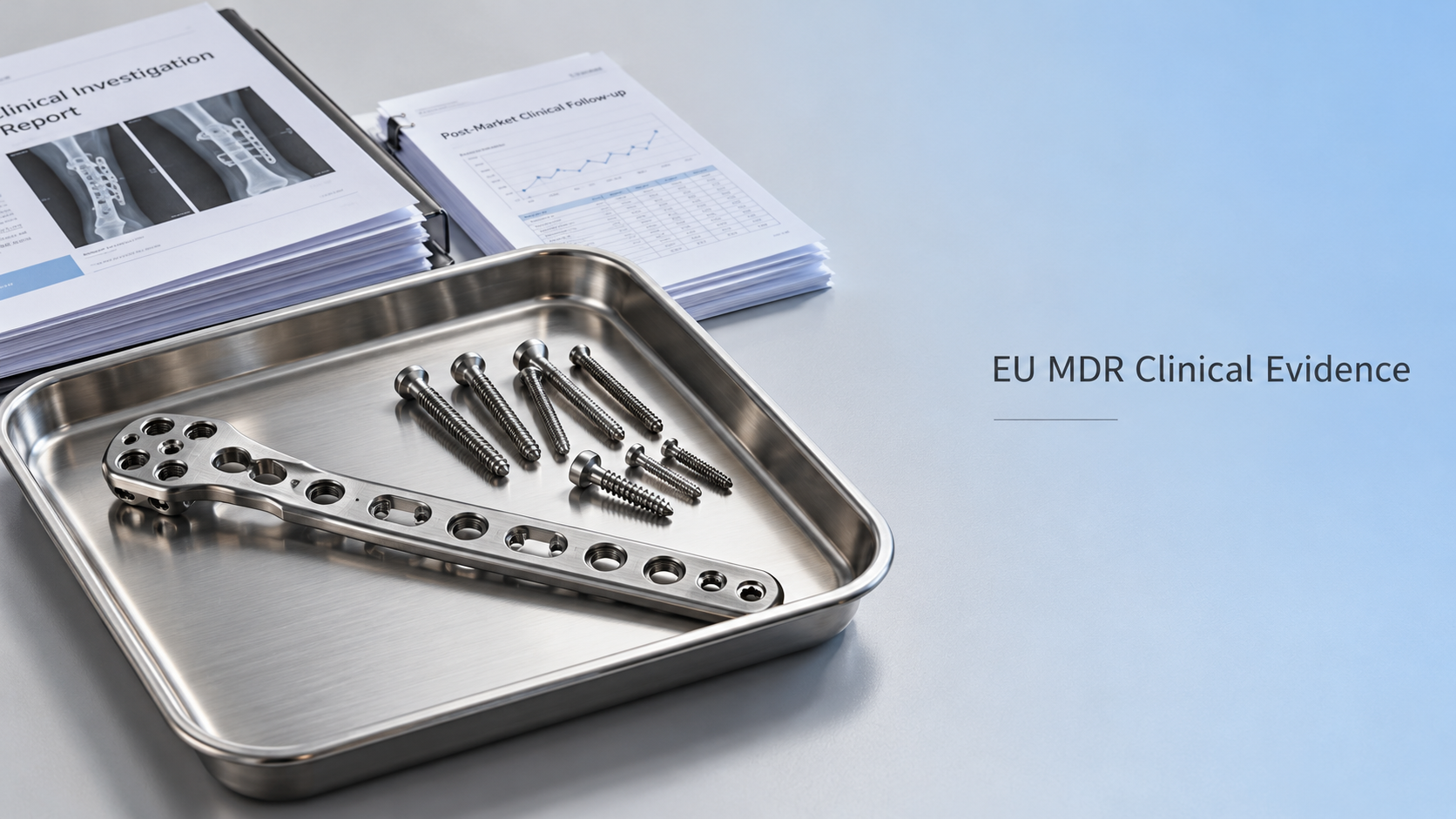
For Class III or high-risk devices, clinical narratives must be especially disciplined. Regulators will examine whether degradation adds uncertainty to benefit-risk conclusions.
Prof. Marcus Sterling’s clinical evaluation perspective at IMCS emphasizes one point: clinical claims for biodegradable implants must be anchored in indication-specific endpoints, not material enthusiasm.
Degradation risks that can damage launch, reimbursement, and reputation
Degradation is the central promise and the central risk. If biodegradable implants degrade too early, they may fail mechanically. If they degrade too late, the value proposition weakens.
If byproducts accumulate or interact with local tissue unfavorably, a premium product can become a clinical liability. This risk must be managed before market access discussions.
Risk map for executive review
- Mechanical decay mismatch: the implant loses strength before bone, vessel, tendon, or soft tissue has regained function.
- Localized inflammatory burden: acidic polymers, particles, corrosion products, or biological residues trigger adverse tissue response.
- Uncontrolled geometry effects: thin struts, porous structures, and coating defects accelerate degradation in unpredictable ways.
- Manufacturing variability: small process shifts alter crystallinity, residual monomer, alloy microstructure, or coating integrity.
- Evidence gaps: degradation data are generated in simplified in vitro media without adequate correlation to animal or clinical behavior.
Dr. Helena Vance’s toxicology validation approach at IMCS stresses the need to integrate ISO 10993 biological evaluation with degradation chemistry and device-specific exposure assessment.
For biodegradable implants, cytotoxicity, sensitization, irritation, systemic toxicity, genotoxicity, implantation, and chemical characterization may all become relevant depending on contact duration and use site.
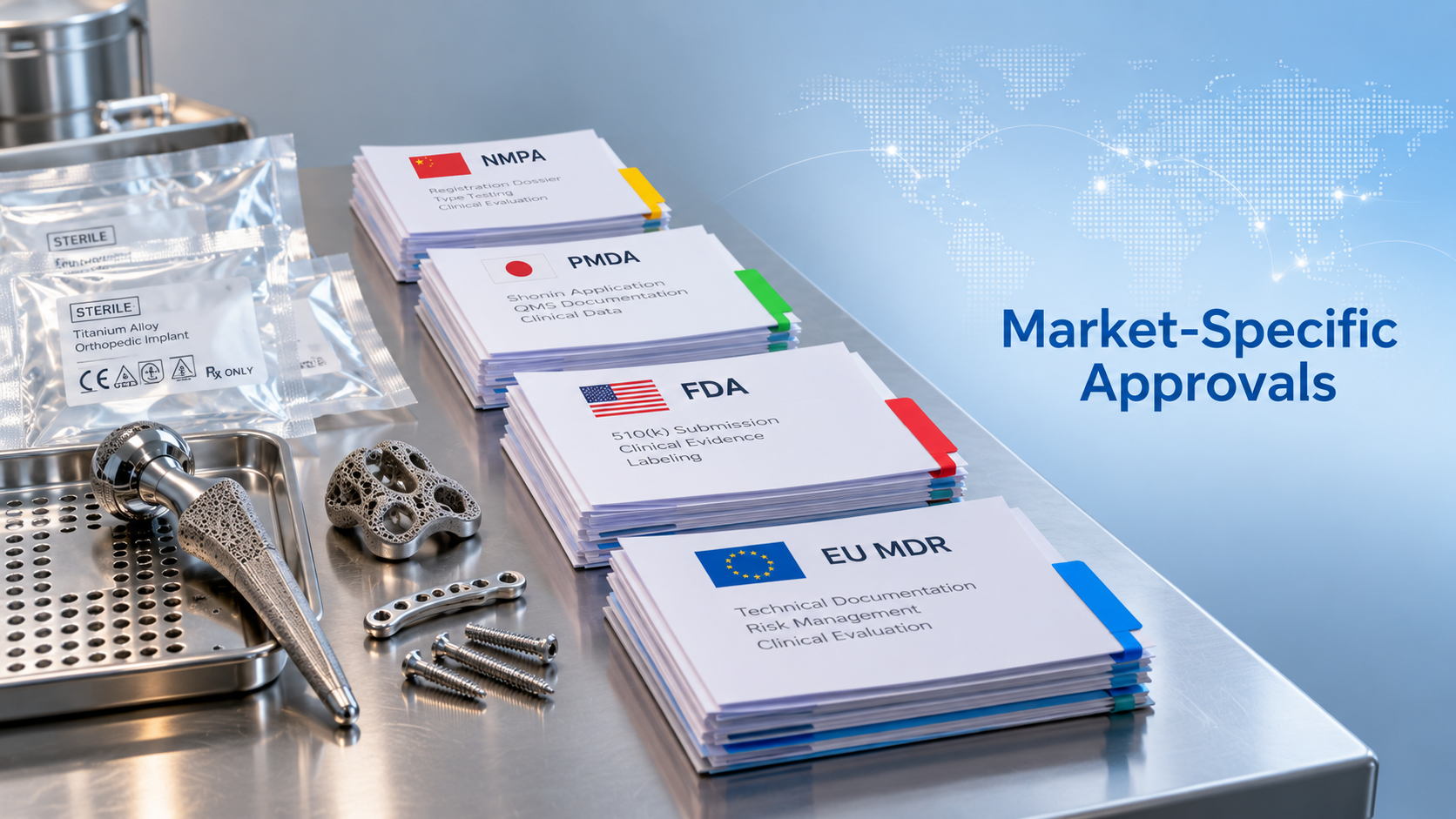
Regulatory and certification planning for high-risk markets
Regulators expect more than a familiar material name. They expect a device-specific explanation of how structure, processing, sterilization, and degradation affect safety and performance.
For biodegradable implants, evidence planning should begin before design freeze. Late-stage testing often reveals degradation mismatch that is expensive to correct.
Compliance areas to align early
The regulatory file for biodegradable implants usually requires coordinated work across quality, preclinical, clinical, and manufacturing teams.
This compliance view helps companies avoid fragmented testing. Biodegradable implants require evidence stitching, where each test supports the same clinical and degradation story.
IMCS supports this by connecting toxicology validation, clinical evaluation reasoning, and regulatory intelligence for manufacturers targeting demanding Class III or high-risk pathways.
Market access: how biodegradable implants compete under cost pressure
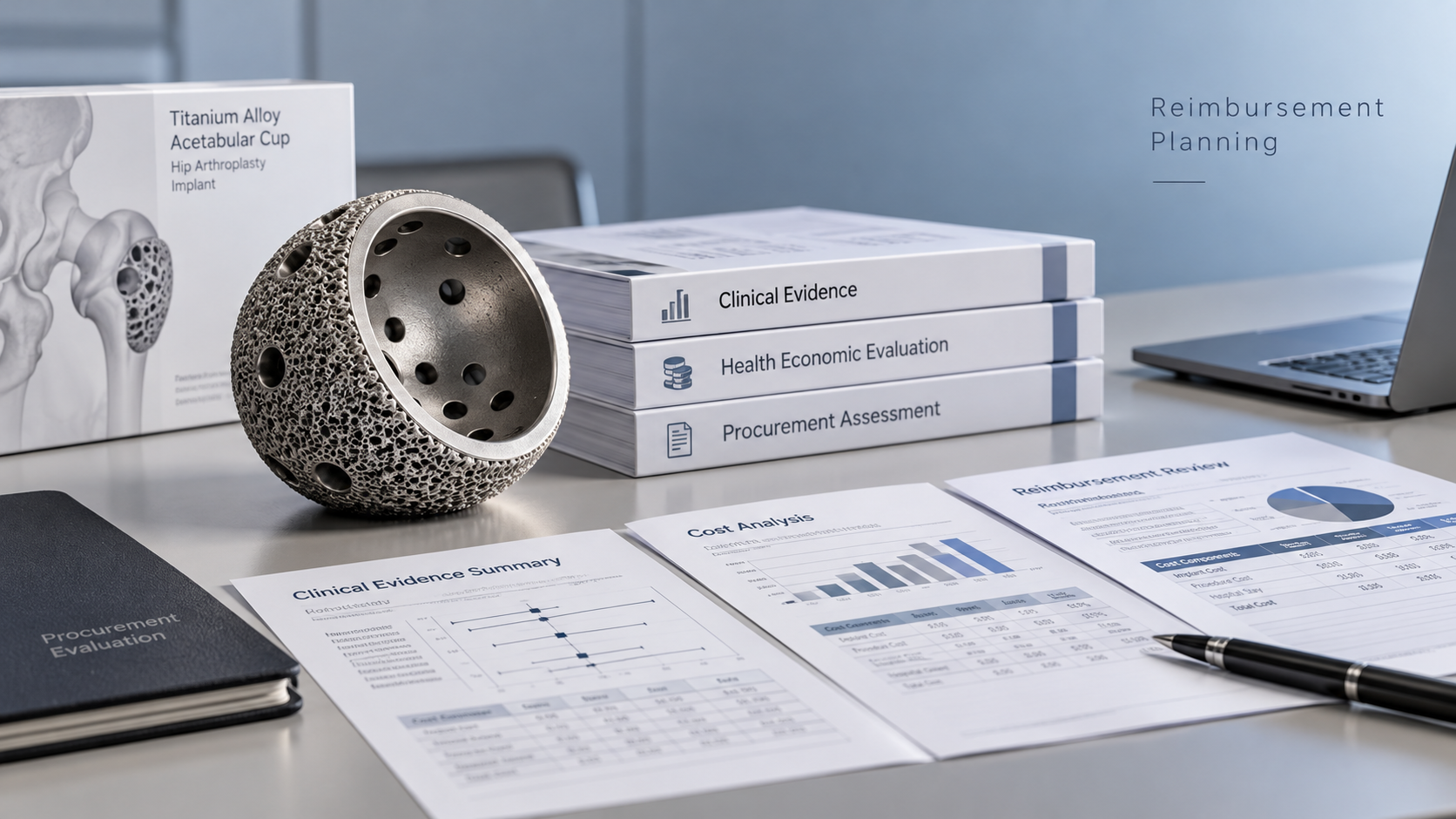
Premium pricing for biodegradable implants is possible only when the economic argument is clear. A novel material alone rarely survives procurement scrutiny.
Decision makers must compare device acquisition cost with procedure cost, removal avoidance, complication reduction, operating room time, inventory burden, and reimbursement fit.
Procurement questions before entering tender or VBP markets
- Does the device create measurable cost offset, such as fewer removal surgeries or lower follow-up burden?
- Can clinicians explain the benefit in simple, indication-specific terms during hospital evaluation?
- Is the product vulnerable to direct price comparison with conventional screws, plates, stents, meshes, or wound matrices?
- Will reimbursement codes recognize the differentiated pathway, or will the product be trapped in a commodity category?
Mr. Julian Mercer’s VBP capital analysis at IMCS focuses on this issue: premium materials need premium evidence, otherwise tender systems may compress them like standard consumables.
For biodegradable implants, successful access strategy often combines clinical segmentation, surgeon education, health-economic modeling, and selective regional launch sequencing.
How to select biodegradable implant projects with commercial discipline
A strong project is not defined by scientific novelty alone. It must show a feasible match between indication, material behavior, evidence burden, manufacturing cost, and access route.
The following checklist helps enterprise leaders prioritize biodegradable implants before committing major capital to tooling, trials, and international registration.
Executive selection checklist
- Define the clinical job: fixation, scaffolding, drug release, tissue guidance, sealing, or temporary mechanical support.
- Map the healing timeline and compare it with mechanical retention and mass-loss data under realistic conditions.
- Assess whether degradation byproducts create manageable toxicology and local tolerance requirements.
- Model manufacturing yield, sterilization compatibility, packaging stability, and shelf-life testing requirements.
- Build a reimbursement and tender strategy before finalizing the clinical claim set.
This disciplined approach prevents two common failures: developing an elegant material without a payer story, or launching a clinically useful device without sufficient degradation evidence.
FAQ: common decision concerns about biodegradable implants
Are biodegradable implants always safer than permanent implants?
No. Safety depends on indication, mechanical requirements, degradation byproducts, implantation site, and evidence quality. Permanent titanium or PEEK may remain preferable for long-term load-bearing reconstruction.
Biodegradable implants are attractive when temporary function is enough and degradation reduces a real clinical burden. The benefit must be demonstrated, not assumed.
What is the most overlooked risk during procurement evaluation?
Many teams review initial strength but underweight strength retention during degradation. Procurement teams should request data across the expected healing window, not just day-zero performance.
For load-sharing orthopedic use or cardiovascular scaffolds, time-dependent performance can be more important than the strongest initial benchmark.
How long does commercialization planning usually take?
Timelines vary by risk class, geography, clinical evidence needs, and manufacturing maturity. High-risk biodegradable implants may require extensive preclinical, biocompatibility, and clinical evaluation planning.
Decision makers should begin regulatory, clinical, and access planning during concept design, not after prototype verification.
Can biodegradable implants succeed in VBP environments?
Yes, but only with careful positioning. If the product is treated as a direct substitute for a standard device, price pressure can erase differentiation.
The better approach is to prove reduced care burden, fewer secondary procedures, or improved outcomes in a defined patient group.
Why choose IMCS for biodegradable implant intelligence and commercialization support
IMCS helps enterprise decision makers evaluate biodegradable implants from material feasibility to market access. Our perspective bridges implants, interventional devices, surgical consumables, polymers, and tissue regeneration.
Through the Strategic Intelligence Center, we support parameter confirmation, material-risk screening, ISO 10993 planning, CE MDR clinical evaluation logic, VBP exposure assessment, and differentiated product positioning.
Manufacturers can consult IMCS on product selection, degradation evidence gaps, certification requirements, sample evaluation strategy, launch sequencing, delivery assumptions, and quotation preparation for global opportunities.
If biodegradable implants are part of your next growth platform, the right decision is not simply choosing an absorbable material. It is building a defensible clinical, regulatory, and access pathway around it.
Get weekly intelligence in your inbox.
No noise. No sponsored content. Pure intelligence.
News Recommendations
 Oct 26, 2026Can a single approval cover life science product sales worldwide?Can a single approval cover life science product sales worldwide?
 Oct 25, 2026When is sensitization testing needed for medical device biocompatibility?When is sensitization testing needed for medical device biocompatibility?
 Oct 24, 2026How is biocompatibility tested for implantable polymer biomaterials?How is biocompatibility tested for implantable polymer biomaterials?
 Oct 23, 2026How to build reimbursement into an implant commercialization strategyHow to build reimbursement into an implant commercialization strategy
 Oct 22, 2026What clinical evidence do implants need for CE marking under EU MDR?What clinical evidence do implants need for CE marking under EU MDR?
 Oct 21, 2026How to choose disposable laparoscopic stapler reloads for thick tissueHow to choose disposable laparoscopic stapler reloads for thick tissue
 Oct 20, 2026How to assess medical polymer biocompatibility under ISO 10993How to assess medical polymer biocompatibility under ISO 10993
 Oct 19, 2026How do interventional device categories differ in clinical use?How do interventional device categories differ in clinical use?
 Oct 18, 2026When to choose alginate dressings for heavily exuding chronic woundsWhen to choose alginate dressings for heavily exuding chronic wounds
 Oct 17, 2026How is biocompatibility tested for custom medical-grade PEEK implants?How is biocompatibility tested for custom medical-grade PEEK implants?
 Oct 16, 2026How to check a wound healing materials supplier’s biocompatibility dataHow to check a wound healing materials supplier’s biocompatibility data
 Oct 15, 2026How to verify the FDA clearance status of silver wound dressingsHow to verify the FDA clearance status of silver wound dressings
 Oct 14, 2026How to register orthopedic implants and instruments in Latin AmericaHow to register orthopedic implants and instruments in Latin America
 Oct 13, 2026How to use a device market intelligence database to benchmark VBP pricesHow to use a device market intelligence database to benchmark VBP prices
 Oct 12, 2026When should stainless steel orthopedic instruments be replaced?When should stainless steel orthopedic instruments be replaced?
 Oct 11, 2026When are alginate dressings rope the right choice for cavity wounds?When are alginate dressings rope the right choice for cavity wounds?
 Oct 10, 2026When smart minimally invasive technology improves catheter accessWhen smart minimally invasive technology improves catheter access
 Oct 08, 2026Clinical evaluation requirements for cardiovascular implant devices in EuropeClinical evaluation requirements for cardiovascular implant devices in Europe
 Oct 07, 2026What to verify before appointing an artificial joint implants distributorWhat to verify before appointing an artificial joint implants distributor
 Oct 06, 2026How ISO 10993 guides biocompatibility testing for medical materialsHow ISO 10993 guides biocompatibility testing for medical materials
 Oct 05, 2026How to verify an orthopedic implants and instruments exporterHow to verify an orthopedic implants and instruments exporter
 Oct 04, 2026What drives surgical stapling devices price differences in hospital tenders?What drives surgical stapling devices price differences in hospital tenders?
 Oct 03, 2026How to assess a central venous catheter manufacturer's infection-control evidenceHow to assess a central venous catheter manufacturer's infection-control evidence
 Oct 02, 2026How to assess an advanced wound care factory’s quality systemHow to assess an advanced wound care factory’s quality system
 Oct 01, 2026What is driving global medical consumables demand in emerging markets?What is driving global medical consumables demand in emerging markets?
 Sep 30, 2026Implant Material Compliance Testing: Evidence Needed for Regulatory SubmissionImplant Material Compliance Testing: Evidence Needed for Regulatory Submission
 Sep 30, 2026From Corrosion to Fatigue: What Implant Materials Testing Should MeasureFrom Corrosion to Fatigue: What Implant Materials Testing Should Measure