PEEK Medical Implants: Biocompatibility Risks and Test Focus
PEEK medical implants are valued for radiolucency, strength, and design flexibility, but biocompatibility risks remain a critical concern for quality and safety teams. From extractables and surface residues to cytotoxicity, sensitization, and long-term implantation effects, testing priorities must align with both material behavior and regulatory expectations. This article highlights the key risk points and test focus needed to support safer implant development and compliance.
Why do PEEK medical implants still raise biocompatibility concerns?
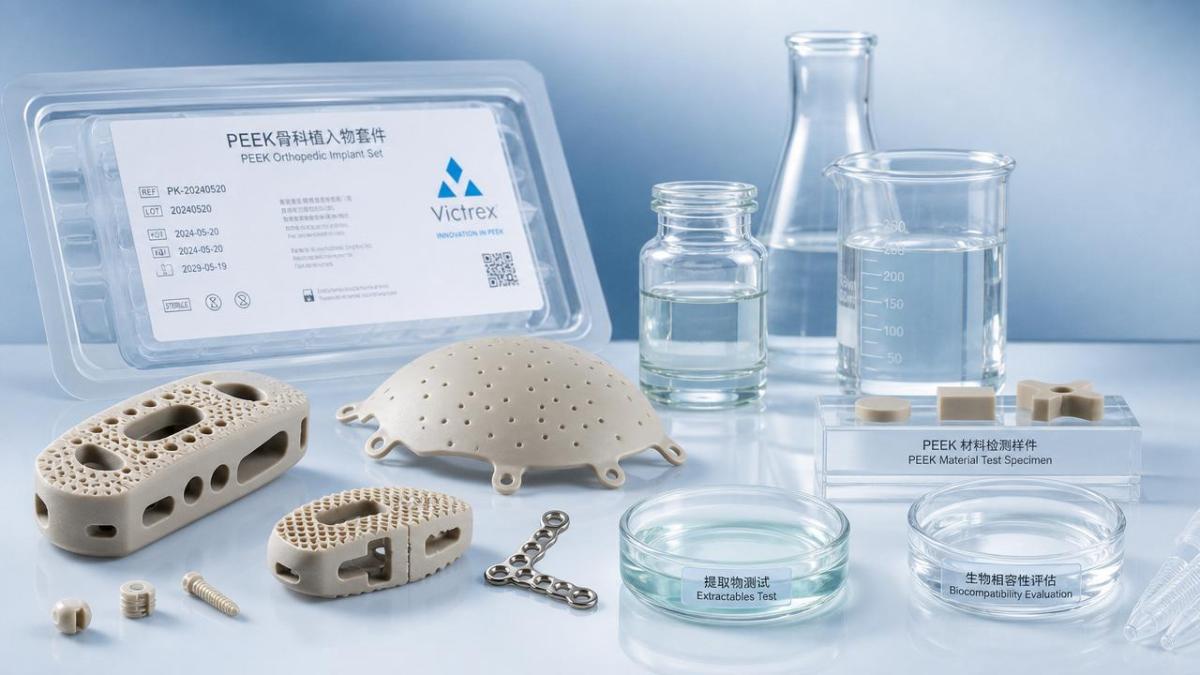
For quality control and safety managers, the main issue is not whether PEEK is broadly accepted in medical use. The issue is whether a specific implant, made from a specific grade, processed by a specific route, will remain biologically safe after sterilization, packaging, transport, and long-term contact with tissue.
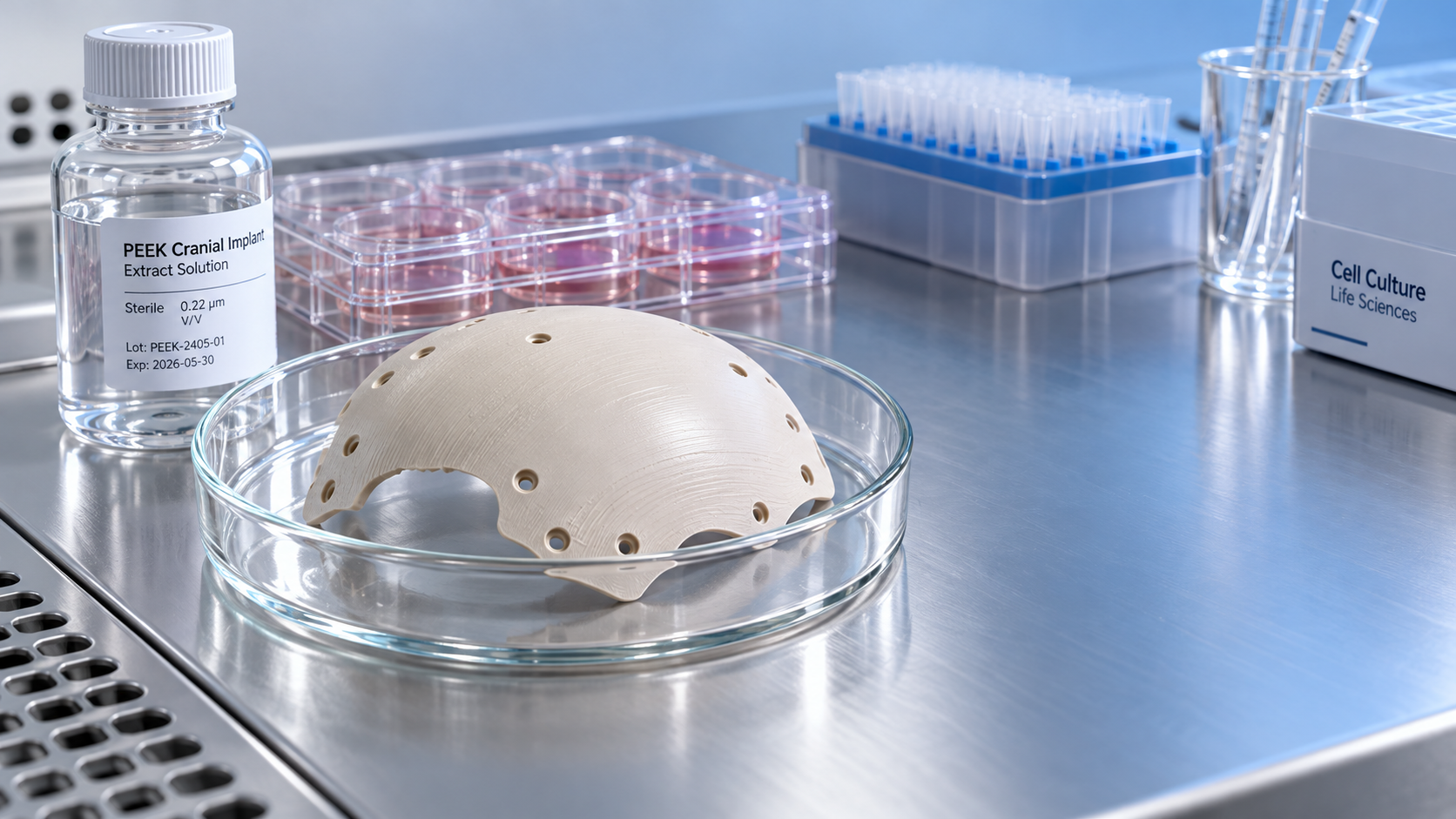
PEEK medical implants are often selected for spinal cages, trauma fixation components, cranial plates, and other load-bearing or imaging-sensitive applications. Their radiolucency supports postoperative assessment, while mechanical behavior can be tuned through design. Yet a favorable base polymer does not automatically guarantee a safe finished device.
Many biological risks arise not from the polymer backbone alone, but from the full manufacturing system. These risks include processing additives, machining oils, cleaning residues, endotoxin burden, particulate release, surface chemistry changes, and interaction between the implant and surrounding tissue over time.
- Raw material variation can affect extractables, crystallinity, and mechanical stability, especially when procurement teams source across regions or substitute grades under cost pressure.
- Secondary processes such as machining, polishing, plasma treatment, coating, laser marking, and sterilization can alter surface response and introduce new toxicological questions.
- Long-contact implants face stricter biological evaluation logic than short-term consumables, so evidence must extend beyond a single cytotoxicity pass result.
This is where IMCS adds value. In high-value implants, biological safety cannot be separated from process precision, regulatory strategy, and procurement economics. The same PEEK medical implants that appear equivalent in a catalog may create very different compliance burdens once Class III expectations, MDR documentation depth, or VBP-driven supply shifts are considered.
Which risk points should quality and safety teams screen first?
A risk-based review should start before formal testing. The first goal is to identify what may actually enter the body or change tissue response. For PEEK medical implants, early screening should focus on material history, contact duration, anatomical site, and manufacturing complexity.
Core biological risk categories
- Extractables and leachables from polymer feedstock, pigments if present, processing aids, packaging interaction, or post-processing chemicals.
- Surface residues from cutting fluids, detergents, passivation agents used on paired metallic parts, or handling contamination during assembly.
- Particulates generated during machining, insertion, revision procedures, or wear at interfaces with screws, plates, or bone-contacting structures.
- Pyrogen and endotoxin burden, particularly for implants used near sensitive tissue or introduced through complex cleaning and packaging chains.
- Changes caused by sterilization, including oxidation, chain scission at the surface, or altered extractables profile after repeated validation activities.
Why risk ranking matters
Not every PEEK implant needs the same test depth at the same stage. A spinal fusion cage, a temporary instrument tip, and a coated hybrid implant may all contain PEEK, but their biological evaluation logic differs. Safety teams should map intended use, duration, tissue contact type, and any material modifications before locking the test matrix.
The table below helps quality teams prioritize the most common biological risk points in PEEK medical implants and connect them with practical control actions.
The key takeaway is simple: biological safety for PEEK medical implants is a system question, not a single-material question. The earlier teams connect risk triggers to process controls, the fewer late-stage surprises they face in verification or registration.
What testing focus is most relevant under ISO 10993 and device regulations?
For implantable devices, biological evaluation should be planned according to contact nature and duration, then adjusted by material characterization and toxicological justification. In practice, PEEK medical implants often require a layered approach rather than a fixed checklist.
Tests that often matter most
- Chemical characterization and extractables profiling, because they define what downstream biological results actually mean.
- Cytotoxicity assessment, especially when processing residues or surface treatments may remain after final cleaning.
- Sensitization and irritation evaluation where trace chemicals or patient exposure pathways justify concern.
- Implantation and local tissue response review for long-term or permanent implants, especially when surface topography is engineered for bone interaction.
- Material-mediated pyrogen or endotoxin control when process environment and final device configuration increase biological burden risk.
Testing should reflect the finished device, not only the resin
One frequent mistake is to rely too heavily on resin supplier documents. Those documents are useful, but they do not cover your machining route, your sterilization cycle, your packaging materials, or your surface modifications. Regulators and notified bodies usually expect evidence tied to the finished device or a justified worst-case equivalent.
IMCS regularly sees this gap in orthopedic and interventional supply chains. A device team may use a respected implant-grade PEEK, yet still fail to build a convincing bridge from raw material data to final biological safety. That bridge is created through test rationale, change control, and cross-functional review between toxicology, manufacturing, and regulatory teams.
The following table summarizes a practical test focus framework for PEEK medical implants from a quality and safety management perspective.
In many cases, the strongest compliance position comes from combining material characterization, toxicological assessment, and targeted bench or biological testing. That approach is usually more defensible than treating every test as a standalone box-ticking exercise.
How do processing and design choices change the risk profile?
PEEK medical implants rarely fail biocompatibility review because of one obvious defect. More often, risk accumulates across small design and process decisions. A roughened surface may support fixation goals, but it can also retain contaminants. A reinforced structure may improve stiffness, but it may change debris behavior at interfaces.
Process decisions that deserve extra scrutiny
- Machining strategy, because heat generation and tool wear can influence surface morphology and residual particulate burden.
- Cleaning chemistry, because aggressive agents may leave residue while insufficient cleaning leaves oils and debris.
- Sterilization route, because different methods may shift oxidation state, packaging compatibility, or residual profile.
- Surface activation or coating, because even a thin interfacial layer can dominate the biological response more than the PEEK substrate itself.
Design questions for procurement and safety review
When comparing suppliers, do not stop at implant dimensions and price. Ask whether the supplier can document resin traceability, process cleanliness, particulate controls, and equivalence boundaries. If a supplier changes from one implant-grade PEEK source to another, that may trigger new characterization work even when the basic specification still looks similar.
This matters in cost-controlled environments. VBP pressure and global sourcing shifts can encourage substitution. IMCS advises teams to treat any change in resin source, surface treatment, or sterilization partner as a potential biological safety event, not merely a purchasing event.
What should procurement and supplier qualification teams verify before approval?
For PEEK medical implants, supplier qualification should integrate quality, biological safety, and regulatory readiness. A supplier that can machine accurately but cannot explain extractables strategy or cleaning validation may still create downstream approval delays.
Practical supplier review checklist
- Confirm the exact PEEK grade, medical use positioning, traceability controls, and change notification obligations.
- Review whether the supplier has a documented cleaning validation approach suitable for implantable devices rather than general industrial plastics.
- Check if biological evidence is linked to the finished configuration, including sterilized state and final packaging.
- Verify how deviations are handled, especially tool changes, lubricant substitution, rework, and surface reprocessing.
- Assess whether documentation can support US, EU, and other target market expectations without major rework of toxicological rationale.
The best suppliers for PEEK medical implants are not simply low-defect manufacturers. They are manufacturers able to provide evidence continuity from raw material through finished implant release. That continuity reduces audit exposure and shortens registration response cycles.
Common misconceptions that delay compliance
Several repeated misunderstandings create avoidable risk in implant programs. Addressing them early can save months of retesting or supplementary justification.
Misconception 1: “Implant-grade resin means the device is already biocompatible.”
Resin pedigree helps, but regulators review the finished device. Final geometry, cleaning, sterilization, packaging, and added surface treatments can all change the final biological profile.
Misconception 2: “Passing cytotoxicity is enough.”
Cytotoxicity is only one signal. Permanent PEEK medical implants may still require broader assessment of sensitization, irritation, implantation response, and chemical characterization.
Misconception 3: “A similar cleared device justifies every change.”
Equivalence arguments are limited when process routes, suppliers, or surface conditions differ. Similar appearance does not prove similar biological performance.
Misconception 4: “Biocompatibility can be finalized after design freeze.”
In reality, testing strategy should begin during material and process definition. Late biological review often reveals that samples were made under non-representative conditions, which weakens the entire evidence package.
FAQ: what do safety teams ask most about PEEK medical implants?
Are PEEK medical implants suitable for long-term implantation?
They can be suitable when the final device demonstrates acceptable biological safety, mechanical stability, and clinical relevance for its intended use. Suitability depends on the finished implant, not only on the reputation of PEEK as a material family.
What test is most often underestimated?
Chemical characterization is frequently underestimated. Without a clear extractables profile, it becomes harder to interpret cytotoxicity or justify reduced testing. For quality teams, this is often the best early investment.
Do coated or modified PEEK medical implants require extra review?
Yes. Surface coatings, plasma activation, osteoconductive layers, or antimicrobial treatments can shift the entire biological evaluation logic. In many cases, the surface layer becomes the primary safety concern rather than the PEEK substrate.
What should trigger re-evaluation after approval?
Typical triggers include resin source change, machining fluid change, revised cleaning chemistry, packaging change, sterilization modification, geometry change affecting surface area, or any new evidence of particulate generation or tissue response.
Why work with IMCS on PEEK implant risk evaluation?
PEEK medical implants sit at the intersection of material science, toxicology, precision manufacturing, and Class III regulatory logic. IMCS is built around that intersection. Our focus spans orthopedic implants, interventional devices, advanced polymer systems, and the strategic intelligence needed to navigate both compliance pressure and supply-chain volatility.
For quality and safety managers, that means support that goes beyond generic material commentary. We help connect biocompatibility risk points with device category, process route, test rationale, and documentation pathways relevant to real approval and procurement decisions.
- Parameter confirmation for PEEK medical implants, including surface condition, sterilization state, and contact profile.
- Selection guidance when comparing grades, suppliers, or hybrid implant designs under quality and compliance constraints.
- Support on testing scope, ISO 10993 focus areas, documentation logic, and change-control impact assessment.
- Discussion of delivery timelines, sample planning, and how to align verification stages with registration milestones.
- Communication on custom evaluation pathways for orthopedic, spinal, and other implant scenarios where standard assumptions are not enough.
If your team is reviewing PEEK medical implants for a new program, a supplier transition, or a biological safety gap, contact IMCS to discuss test focus, supplier qualification, sample strategy, documentation readiness, and quotation communication in a more targeted way.
Get weekly intelligence in your inbox.
No noise. No sponsored content. Pure intelligence.
News Recommendations
 Oct 26, 2026Can a single approval cover life science product sales worldwide?Can a single approval cover life science product sales worldwide?
 Oct 25, 2026When is sensitization testing needed for medical device biocompatibility?When is sensitization testing needed for medical device biocompatibility?
 Oct 24, 2026How is biocompatibility tested for implantable polymer biomaterials?How is biocompatibility tested for implantable polymer biomaterials?
 Oct 23, 2026How to build reimbursement into an implant commercialization strategyHow to build reimbursement into an implant commercialization strategy
 Oct 22, 2026What clinical evidence do implants need for CE marking under EU MDR?What clinical evidence do implants need for CE marking under EU MDR?
 Oct 21, 2026How to choose disposable laparoscopic stapler reloads for thick tissueHow to choose disposable laparoscopic stapler reloads for thick tissue
 Oct 20, 2026How to assess medical polymer biocompatibility under ISO 10993How to assess medical polymer biocompatibility under ISO 10993
 Oct 19, 2026How do interventional device categories differ in clinical use?How do interventional device categories differ in clinical use?
 Oct 18, 2026When to choose alginate dressings for heavily exuding chronic woundsWhen to choose alginate dressings for heavily exuding chronic wounds
 Oct 17, 2026How is biocompatibility tested for custom medical-grade PEEK implants?How is biocompatibility tested for custom medical-grade PEEK implants?
 Oct 16, 2026How to check a wound healing materials supplier’s biocompatibility dataHow to check a wound healing materials supplier’s biocompatibility data
 Oct 15, 2026How to verify the FDA clearance status of silver wound dressingsHow to verify the FDA clearance status of silver wound dressings
 Oct 14, 2026How to register orthopedic implants and instruments in Latin AmericaHow to register orthopedic implants and instruments in Latin America
 Oct 13, 2026How to use a device market intelligence database to benchmark VBP pricesHow to use a device market intelligence database to benchmark VBP prices
 Oct 12, 2026When should stainless steel orthopedic instruments be replaced?When should stainless steel orthopedic instruments be replaced?
 Oct 11, 2026When are alginate dressings rope the right choice for cavity wounds?When are alginate dressings rope the right choice for cavity wounds?
 Oct 10, 2026When smart minimally invasive technology improves catheter accessWhen smart minimally invasive technology improves catheter access
 Oct 08, 2026Clinical evaluation requirements for cardiovascular implant devices in EuropeClinical evaluation requirements for cardiovascular implant devices in Europe
 Oct 07, 2026What to verify before appointing an artificial joint implants distributorWhat to verify before appointing an artificial joint implants distributor
 Oct 06, 2026How ISO 10993 guides biocompatibility testing for medical materialsHow ISO 10993 guides biocompatibility testing for medical materials
 Oct 05, 2026How to verify an orthopedic implants and instruments exporterHow to verify an orthopedic implants and instruments exporter
 Oct 04, 2026What drives surgical stapling devices price differences in hospital tenders?What drives surgical stapling devices price differences in hospital tenders?
 Oct 03, 2026How to assess a central venous catheter manufacturer's infection-control evidenceHow to assess a central venous catheter manufacturer's infection-control evidence
 Oct 02, 2026How to assess an advanced wound care factory’s quality systemHow to assess an advanced wound care factory’s quality system
 Oct 01, 2026What is driving global medical consumables demand in emerging markets?What is driving global medical consumables demand in emerging markets?
 Sep 30, 2026Implant Material Compliance Testing: Evidence Needed for Regulatory SubmissionImplant Material Compliance Testing: Evidence Needed for Regulatory Submission
 Sep 30, 2026From Corrosion to Fatigue: What Implant Materials Testing Should MeasureFrom Corrosion to Fatigue: What Implant Materials Testing Should Measure