Orthopedic Implant Materials: Comparing Wear, Strength, and Safety
Choosing the right orthopedic implant materials is not simply a design decision. For quality control and safety management teams, it is a risk-control exercise that affects wear debris generation, mechanical failure probability, biological response, regulatory acceptance, and long-term product consistency. In practice, the best material is rarely the strongest one alone. The right choice is the material system that maintains function under real loading, minimizes adverse tissue response, and can be manufactured, validated, and monitored with repeatable quality.
When users search for “orthopedic implant materials,” their core intent is usually practical rather than academic. They want to compare major material classes, understand where each performs well or poorly, and identify what evidence is needed to judge safety, durability, and compliance. For quality and safety professionals, the key questions are even more specific: which materials fail by wear, corrosion, fatigue, or biological incompatibility, and how should those risks be controlled before they become complaints, revisions, or regulatory findings.
That is why this article focuses on the issues that matter most in real decision-making: wear performance, strength and fatigue behavior, biological safety, manufacturing consistency, and the regulatory evidence needed to support orthopedic implants in a high-scrutiny environment. Rather than treating all materials equally, we will emphasize how metals, polymers, ceramics, and emerging combinations should be assessed through a quality and safety lens.
What Quality and Safety Teams Actually Need to Know About Orthopedic Implant Materials
For quality control personnel and safety managers, the central question is not “Which material is best?” It is “Which material is safest and most reliable for the intended anatomy, loading condition, and implant life cycle?” In orthopedic systems, material choice influences not only primary mechanical performance, but also sterilization stability, machining precision, lot consistency, traceability, and post-market surveillance burden.
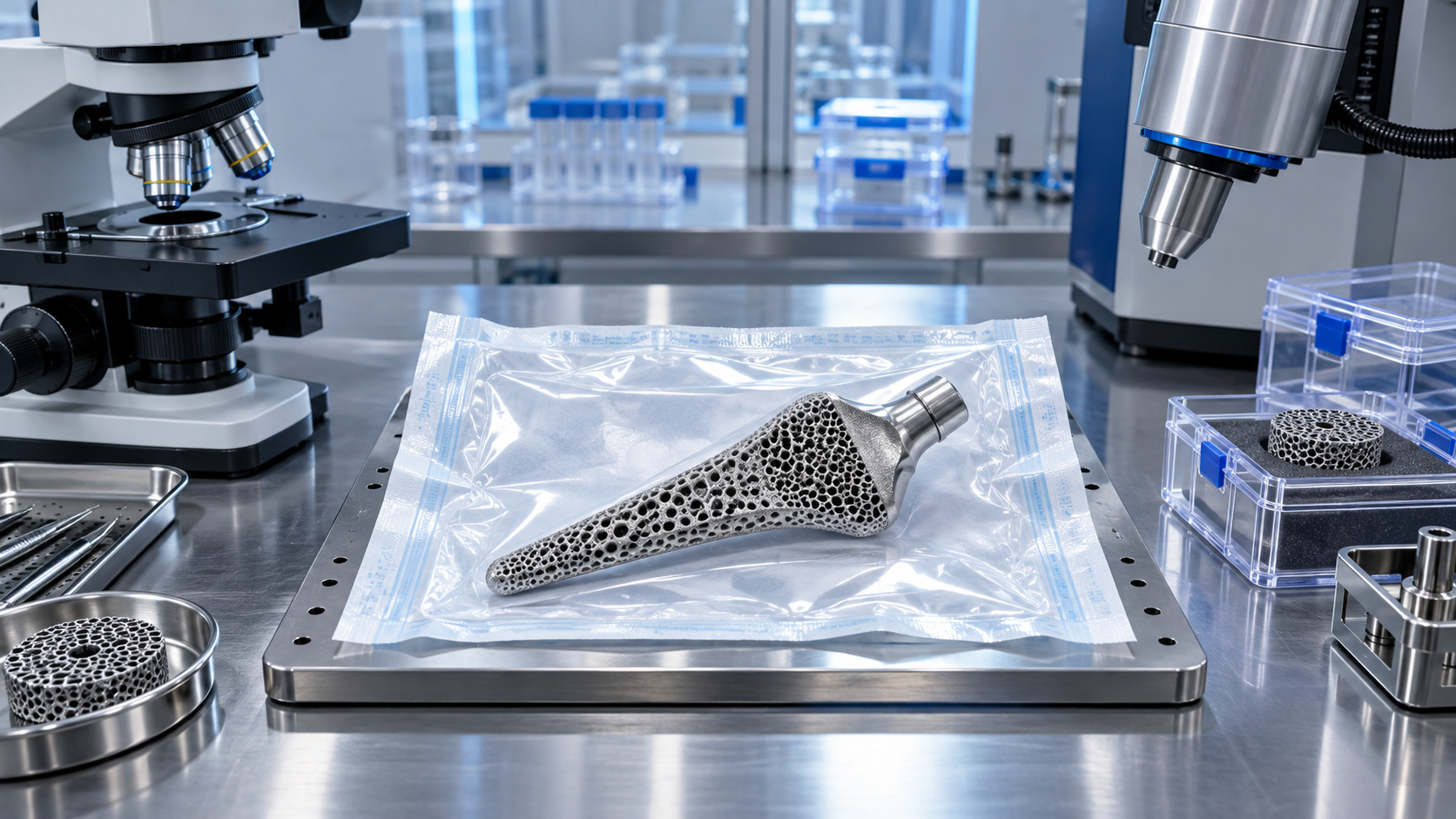
Different implant categories create different risk priorities. In hip and knee systems, wear and particulate generation often dominate long-term concerns. In trauma fixation and spinal systems, fatigue resistance, elastic modulus, and bone-implant interaction may matter more. In porous and additive-manufactured implants, surface architecture and contamination control become especially important. Therefore, any comparison of orthopedic implant materials should begin with intended use, contact duration, and failure mode analysis.
A sound quality assessment framework typically asks five questions. First, can the material withstand expected static and cyclic loads? Second, how does it behave at articulating or contact surfaces over time? Third, what biological response may result from particles, ions, or degradation products? Fourth, how stable is the manufacturing process from raw material to finished implant? Fifth, does the available verification and validation evidence support regulatory and clinical expectations for a Class III device?
Metals: Why Titanium, Cobalt-Chromium, and Stainless Steel Still Dominate
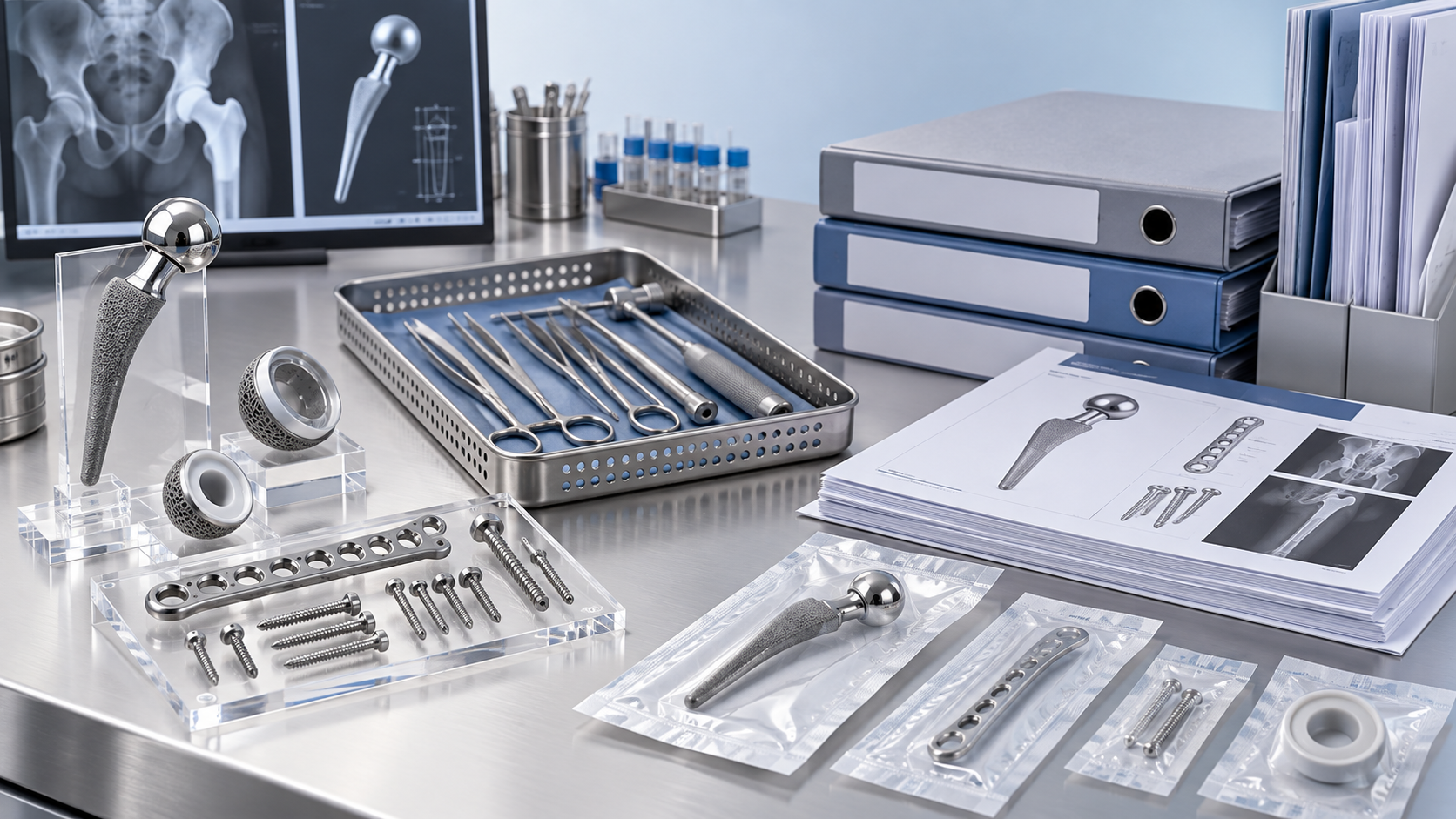
Metals remain the backbone of many orthopedic implants because they combine high mechanical strength with established manufacturing routes and long clinical history. Yet they are not interchangeable. Their wear behavior, modulus, corrosion profile, and process sensitivity differ significantly, which means quality teams should resist broad assumptions based on “metal implant” performance alone.
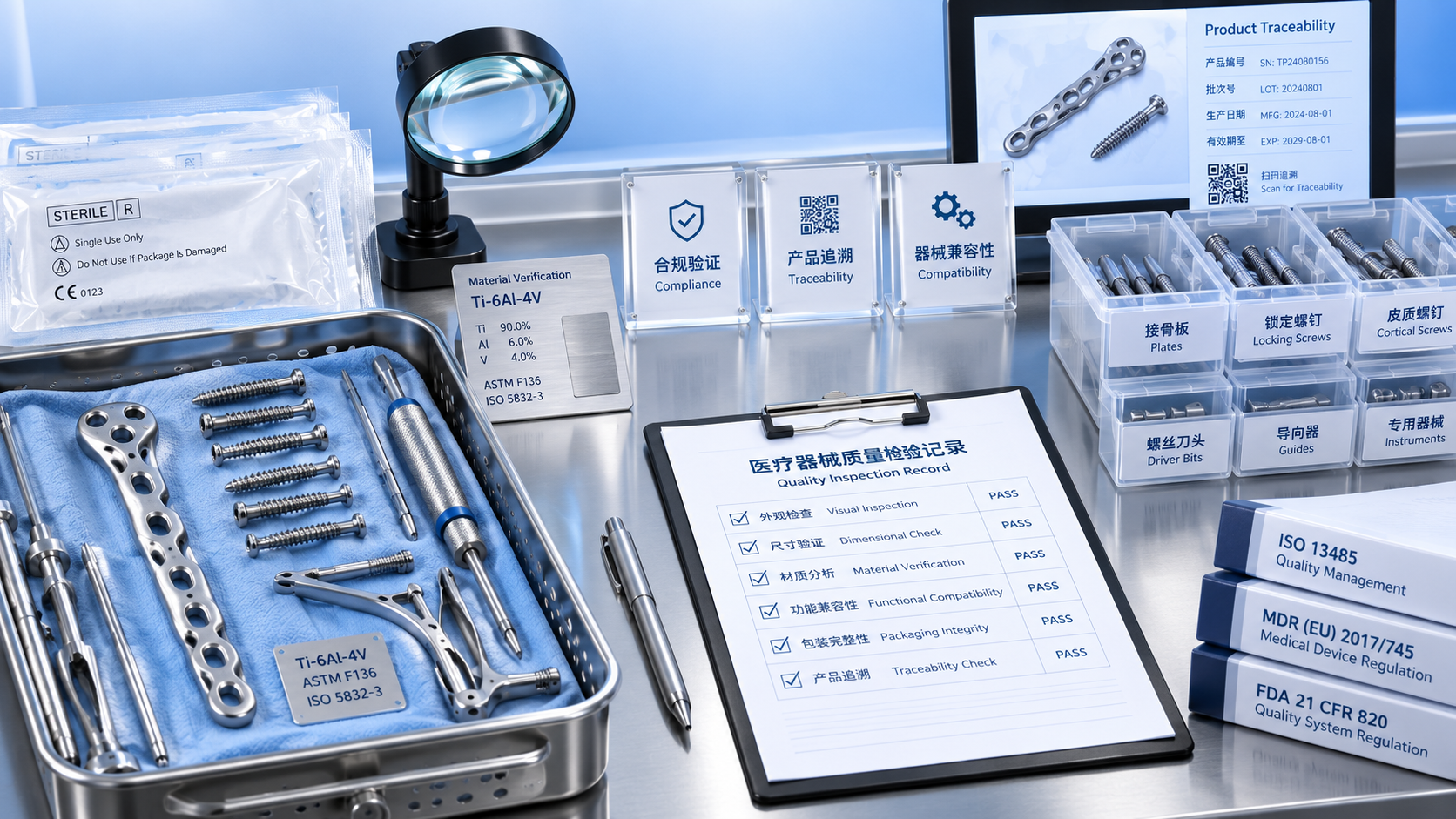
Titanium and titanium alloys, especially Ti-6Al-4V, are widely used because of their strong biocompatibility profile, good corrosion resistance, and favorable strength-to-weight ratio. They are especially valued in spinal, trauma, and porous osseointegrative designs. Their lower elastic modulus compared with cobalt-chromium can help reduce stress shielding, although titanium is generally not the first choice for highly polished articulating surfaces because its wear resistance is lower than harder alloys or ceramics.
Cobalt-chromium alloys are known for excellent hardness, wear resistance, and strength. This makes them attractive for femoral components and demanding bearing applications. However, their advantages come with trade-offs. Metal ion release, tribocorrosion concerns, and stricter control of surface finish become major quality and safety issues. For teams reviewing complaint trends or biological evaluation files, cobalt-chromium systems require careful attention to particle characteristics and corrosion-related endpoints.
Stainless steel still appears in selected fixation applications because it is cost-effective and relatively easy to process. Yet compared with titanium and cobalt-chromium, it generally offers lower corrosion resistance and may be less attractive for long-term implantation in demanding environments. In procurement-driven markets, stainless steel may appear economically favorable, but quality managers must weigh lower cost against lifecycle risk, revision probability, and performance expectations in complex anatomies.
Polymers and PEEK: Where Lighter, More Flexible Materials Add Value
Polymers play a different role in orthopedic implant materials. They are not usually selected to replace metals in every load-bearing function, but they are essential where low friction, imaging compatibility, elastic matching, or design flexibility matters. The most important examples are ultra-high-molecular-weight polyethylene, commonly called UHMWPE, and PEEK.
UHMWPE has long been used as a bearing material in joint replacement systems. Its main benefit is low friction against polished counterfaces, especially in hip and knee implants. Yet from a safety perspective, the critical issue is wear debris. Polyethylene particles can trigger inflammatory responses, osteolysis, and implant loosening over time. Modern crosslinking and stabilization methods have improved wear resistance, but quality teams must still examine oxidation stability, sterilization effects, shelf-life performance, and long-term particulate behavior.
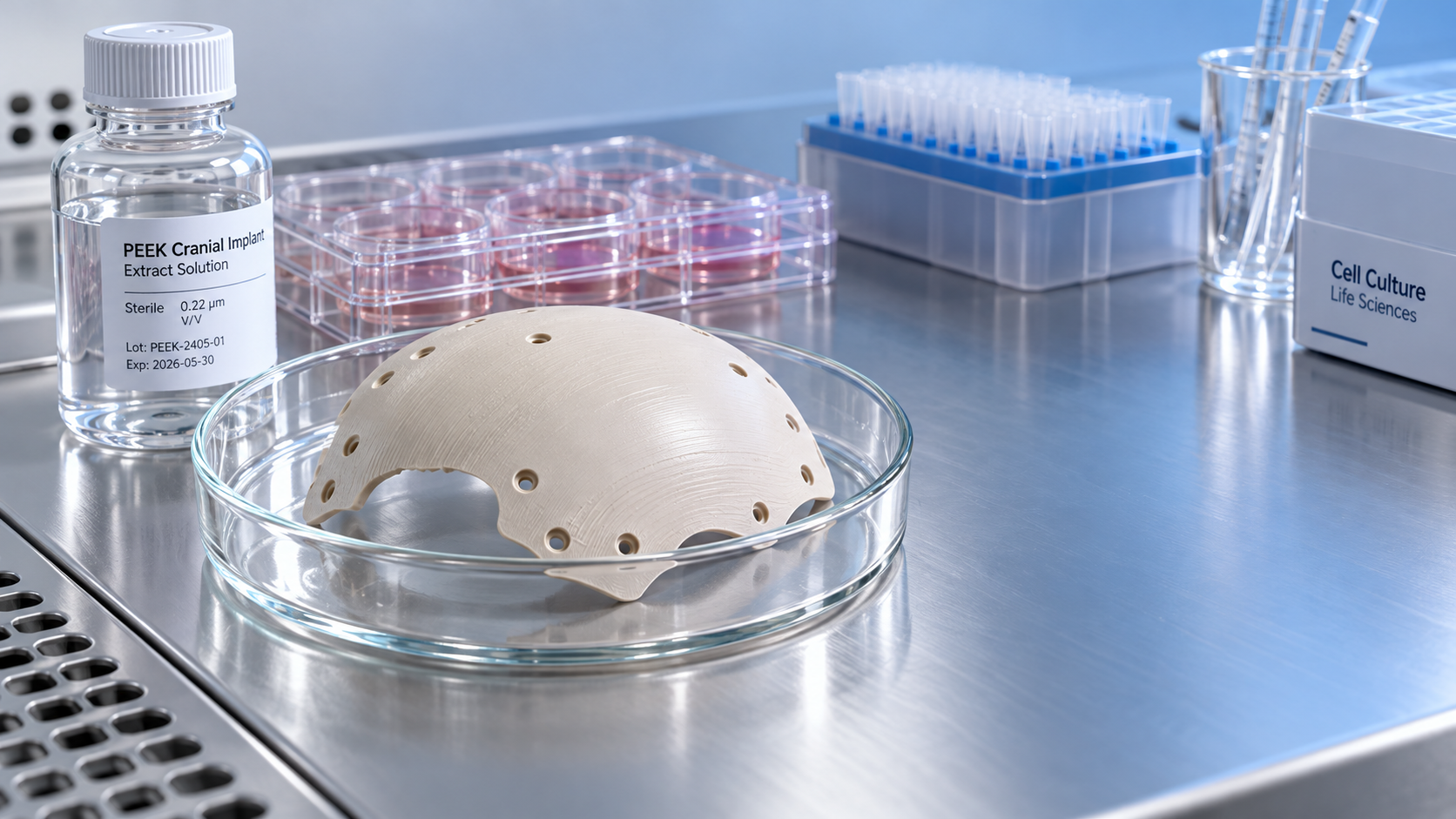
PEEK has attracted strong interest in spinal and trauma applications because its modulus is closer to bone than many metals, and it is radiolucent, which helps imaging assessment after implantation. However, PEEK brings its own evaluation challenges. It is relatively bioinert, so osseointegration may be less direct unless surface modification or composite strategies are used. For quality and safety teams, the main questions include surface consistency, bonding or coating durability, and whether the intended clinical benefits are supported by robust evidence rather than marketing claims.
In both UHMWPE and PEEK systems, processing quality matters enormously. Molecular weight, irradiation parameters, thermal treatment, residual stresses, and contamination control can materially affect performance. This means polymers should never be treated as simple “lower-risk” materials just because they are non-metallic. Their failure modes are different, but they are no less important.
Ceramics and Ceramic Interfaces: High Wear Resistance, High Precision Demands
Ceramic materials are often selected when minimizing wear is a top priority. Alumina and zirconia-toughened systems can provide excellent hardness, smoothness, and low wear rates in articulating orthopedic applications. In many comparisons of orthopedic implant materials, ceramics represent the strongest option for reducing particulate generation at the bearing interface.
That benefit, however, depends on extremely precise manufacturing and tight quality control. Ceramics are more brittle than metals, so design tolerances, defect control, and inspection methods become decisive. Microscopic flaws, inclusions, or processing inconsistencies can compromise fracture resistance. For safety managers, this means ceramic components require confidence not only in material specification but also in supplier quality systems, nondestructive evaluation, and validated finishing processes.
Ceramic-on-ceramic and ceramic-on-polyethylene combinations can significantly lower wear in the right applications. Yet they also introduce new evaluation points, including component alignment sensitivity and, in some historical cases, audible noise phenomena. The lesson for quality teams is clear: reduced wear does not eliminate risk; it shifts risk into other domains that must be anticipated during design review and post-market monitoring.
Wear: The Long-Term Risk That Often Drives Revision Burden
Among all material comparison topics, wear is one of the most clinically important. For many joint systems, the implant does not fail because it lacks initial strength. It fails because millions of motion cycles produce particles, surface damage, or interface changes that eventually trigger inflammation, loosening, pain, or revision surgery. This is why wear testing data should receive the same management attention as headline mechanical strength values.
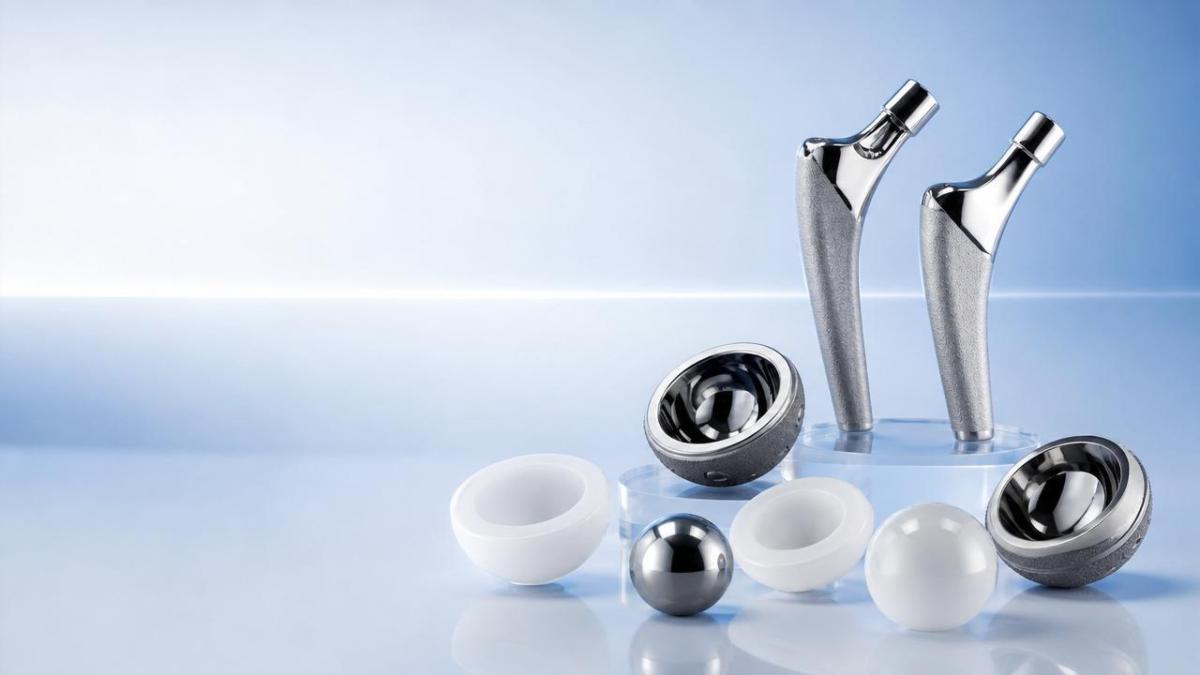
Different material pairs create different wear mechanisms. Metal-on-polyethylene systems may generate polymer debris. Metal-on-metal systems raise concern around metal ions and local tissue reactions. Ceramic interfaces often reduce wear but require careful handling of brittleness and precision. Crosslinked polyethylene can improve performance, but excessive processing changes may affect other properties. A good material decision therefore depends on pairing analysis, not just single-material review.
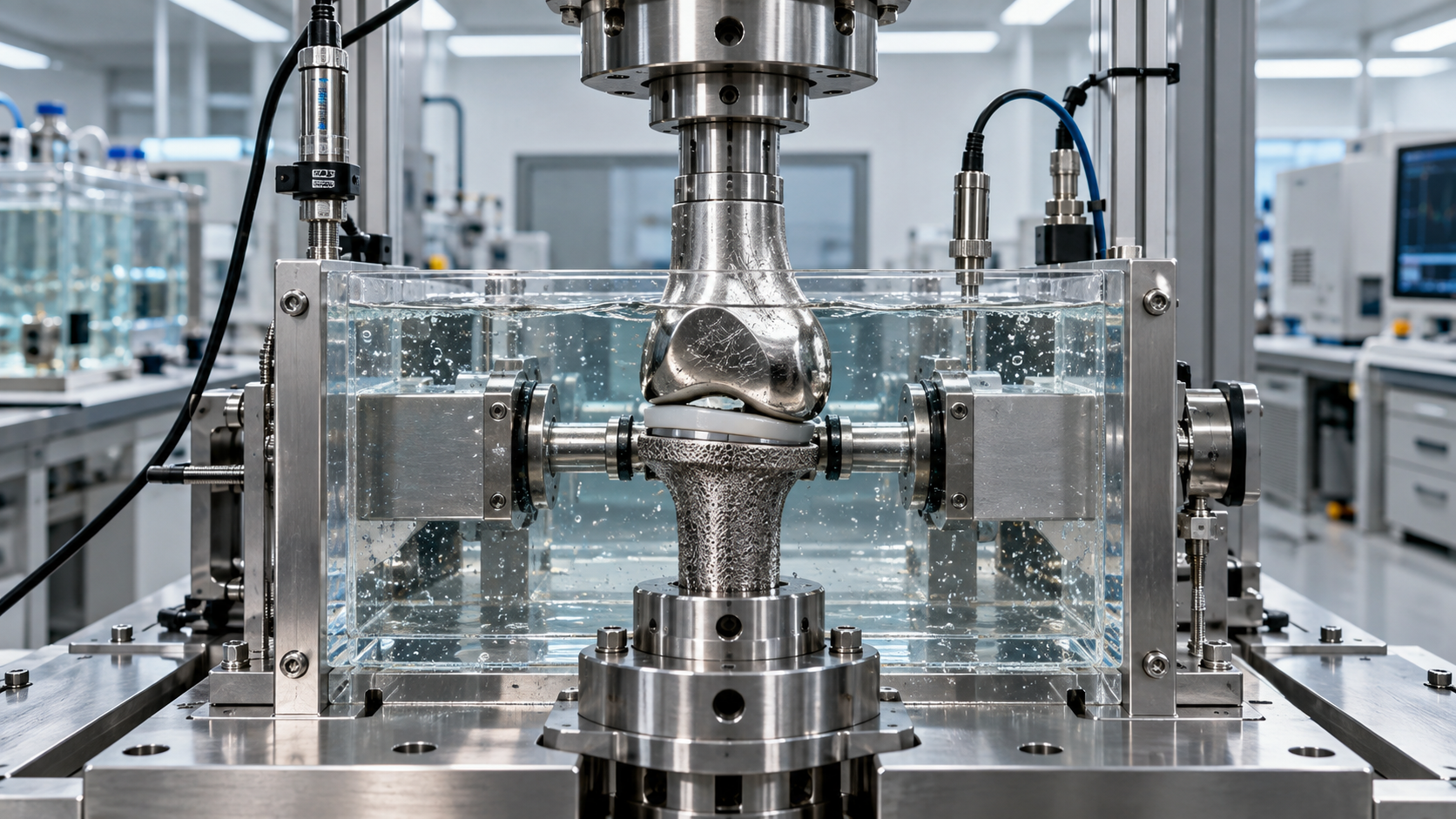
For quality control teams, wear assessment should include simulator testing relevance, lubrication conditions, third-body wear susceptibility, surface roughness control, and evaluation of worst-case design configurations. Complaint trend analysis should also look beyond obvious breakage. Rising pain reports, loosening patterns, or radiographic changes may point to wear-related issues before they appear as catastrophic failures.
Strength and Fatigue: Why Peak Numbers Alone Can Mislead
Mechanical strength is often misunderstood in implant evaluation. A material with very high ultimate strength is not automatically safer. Orthopedic implants operate under repeated cyclic loading, variable patient activity, and complex anatomical constraints. Therefore, fatigue resistance, notch sensitivity, design geometry, and interface quality can be more important than simple tensile data.
Titanium may be preferred where lower modulus and osseointegration support are important, but design must address fatigue-critical regions carefully. Cobalt-chromium can tolerate demanding loads and wear environments, yet stiffness may increase stress transfer concerns in some contexts. Polymers such as PEEK may help in modulus matching, but they must be validated for creep, deformation, and load-sharing behavior over time. Every material brings a different mechanical risk map.
For safety managers, the key is to ensure that testing reflects realistic use. Static compression or bend tests are insufficient on their own. Robust evaluation should include fatigue, fretting, locking mechanism durability where relevant, environmental conditioning, and assessment of the worst manufacturing tolerance stack-up. If the device includes porous or additively manufactured structures, testing should also consider how architecture variation affects crack initiation and long-term structural integrity.
Biocompatibility and Safety: More Than Passing ISO 10993
Biocompatibility is often summarized too narrowly as a regulatory checklist item. In reality, the safety profile of orthopedic implant materials depends on what enters the body over time: ions, particles, residuals, degradation products, and surface contaminants. Passing baseline ISO 10993 endpoints is necessary, but for implantable orthopedic devices it is not sufficient to answer all clinically relevant questions.
Metals may raise concerns around corrosion products and sensitization potential. Polymers can bring oxidation byproducts, processing residuals, or particulate effects. Coatings and porous surfaces may alter local tissue interaction and debris generation pathways. Additive manufacturing introduces extra scrutiny around powder residue, trapped contaminants, and cleaning validation. For quality teams, the biological evaluation strategy must be tightly linked to actual material and process risks, not copied from precedent files without justification.
Safety review should also connect laboratory findings to real clinical exposure. A material can look acceptable in basic screening yet create problems when combined with specific articulation patterns, micromotion, or patient sensitivity factors. This is why toxicological risk assessment, extractables characterization, corrosion testing, and particulate analysis increasingly matter in regulatory review, especially for higher-risk systems with novel features.
Manufacturing Consistency: The Hidden Variable Behind Material Performance
In practice, many implant problems are not caused by the nominal material selection itself, but by variation in how that material is processed. The same alloy or polymer grade can perform very differently depending on forging history, machining quality, heat treatment, sterilization route, surface finishing, cleaning, packaging, and storage conditions. Quality control therefore sits at the center of material reliability.
For metals, critical controls include grain structure, inclusion levels, passivation quality, surface roughness, and residual stress after machining or polishing. For polymers, key variables include resin consistency, irradiation dose, oxidation control, and dimensional stability. For ceramics, sintering uniformity and defect detection are vital. For porous and 3D-printed implants, powder traceability, build repeatability, and post-processing validation become major quality gates.
This has direct implications for supplier management and incoming inspection. A strong material strategy requires qualified suppliers, clear material specifications, change control discipline, and process validation that goes beyond document review. Safety managers should push for evidence that process capability supports clinical expectations over the full production lifecycle, not only during initial submission testing.
How to Compare Orthopedic Implant Materials in a Practical Risk-Based Framework
For teams making approval, sourcing, or monitoring decisions, a practical comparison framework can simplify the material question. First, define the implant’s dominant failure risks: wear, fatigue, corrosion, fixation loss, or biological response. Second, rank the material options against those risks in the actual use environment. Third, examine whether manufacturing capability can reliably deliver the theoretical material advantages. Fourth, confirm that verification, validation, and clinical evidence support the intended claims.
In many cases, the conclusion will not be that one material wins universally. Titanium may be the best answer for osseointegrative structures and many fixation designs. Cobalt-chromium may remain strongest for wear-intensive surfaces. UHMWPE continues to be indispensable in bearing systems when wear is carefully controlled. PEEK may offer major value in spinal applications where imaging and modulus are important. Ceramics may lead in wear reduction where manufacturing precision and fracture control are fully mature.
The most effective quality and safety teams do not treat orthopedic implant materials as isolated engineering categories. They evaluate them as integrated systems where material, surface, geometry, process, clinical use, and post-market evidence all interact. That systems view is what reduces preventable risk and supports durable product performance under both regulatory and procurement pressure.
Conclusion: The Best Material Is the One With the Best Evidence-Control Balance
Comparing orthopedic implant materials by wear, strength, and safety reveals a consistent truth: no material is perfect, but some are far better suited to specific risks and clinical functions than others. For quality control and safety management professionals, the most important task is not choosing the most advanced-sounding material. It is choosing the material system with the clearest evidence, the most controllable process, and the most predictable long-term safety profile.
As markets demand both better outcomes and tighter cost discipline, material decisions will increasingly shape regulatory success, complaint burden, and competitive resilience. Teams that understand how metals, polymers, and ceramics truly behave in orthopedic applications will be better equipped to challenge weak assumptions, strengthen risk files, and support implant performance that remains reliable long after implantation.
Get weekly intelligence in your inbox.
No noise. No sponsored content. Pure intelligence.
News Recommendations
 Oct 26, 2026Can a single approval cover life science product sales worldwide?Can a single approval cover life science product sales worldwide?
 Oct 25, 2026When is sensitization testing needed for medical device biocompatibility?When is sensitization testing needed for medical device biocompatibility?
 Oct 24, 2026How is biocompatibility tested for implantable polymer biomaterials?How is biocompatibility tested for implantable polymer biomaterials?
 Oct 23, 2026How to build reimbursement into an implant commercialization strategyHow to build reimbursement into an implant commercialization strategy
 Oct 22, 2026What clinical evidence do implants need for CE marking under EU MDR?What clinical evidence do implants need for CE marking under EU MDR?
 Oct 21, 2026How to choose disposable laparoscopic stapler reloads for thick tissueHow to choose disposable laparoscopic stapler reloads for thick tissue
 Oct 20, 2026How to assess medical polymer biocompatibility under ISO 10993How to assess medical polymer biocompatibility under ISO 10993
 Oct 19, 2026How do interventional device categories differ in clinical use?How do interventional device categories differ in clinical use?
 Oct 18, 2026When to choose alginate dressings for heavily exuding chronic woundsWhen to choose alginate dressings for heavily exuding chronic wounds
 Oct 17, 2026How is biocompatibility tested for custom medical-grade PEEK implants?How is biocompatibility tested for custom medical-grade PEEK implants?
 Oct 16, 2026How to check a wound healing materials supplier’s biocompatibility dataHow to check a wound healing materials supplier’s biocompatibility data
 Oct 15, 2026How to verify the FDA clearance status of silver wound dressingsHow to verify the FDA clearance status of silver wound dressings
 Oct 14, 2026How to register orthopedic implants and instruments in Latin AmericaHow to register orthopedic implants and instruments in Latin America
 Oct 13, 2026How to use a device market intelligence database to benchmark VBP pricesHow to use a device market intelligence database to benchmark VBP prices
 Oct 12, 2026When should stainless steel orthopedic instruments be replaced?When should stainless steel orthopedic instruments be replaced?
 Oct 11, 2026When are alginate dressings rope the right choice for cavity wounds?When are alginate dressings rope the right choice for cavity wounds?
 Oct 10, 2026When smart minimally invasive technology improves catheter accessWhen smart minimally invasive technology improves catheter access
 Oct 08, 2026Clinical evaluation requirements for cardiovascular implant devices in EuropeClinical evaluation requirements for cardiovascular implant devices in Europe
 Oct 07, 2026What to verify before appointing an artificial joint implants distributorWhat to verify before appointing an artificial joint implants distributor
 Oct 06, 2026How ISO 10993 guides biocompatibility testing for medical materialsHow ISO 10993 guides biocompatibility testing for medical materials
 Oct 05, 2026How to verify an orthopedic implants and instruments exporterHow to verify an orthopedic implants and instruments exporter
 Oct 04, 2026What drives surgical stapling devices price differences in hospital tenders?What drives surgical stapling devices price differences in hospital tenders?
 Oct 03, 2026How to assess a central venous catheter manufacturer's infection-control evidenceHow to assess a central venous catheter manufacturer's infection-control evidence
 Oct 02, 2026How to assess an advanced wound care factory’s quality systemHow to assess an advanced wound care factory’s quality system
 Oct 01, 2026What is driving global medical consumables demand in emerging markets?What is driving global medical consumables demand in emerging markets?
 Sep 30, 2026Implant Material Compliance Testing: Evidence Needed for Regulatory SubmissionImplant Material Compliance Testing: Evidence Needed for Regulatory Submission
 Sep 30, 2026From Corrosion to Fatigue: What Implant Materials Testing Should MeasureFrom Corrosion to Fatigue: What Implant Materials Testing Should Measure