How Medical Polymer Technology Shapes Catheter Safety Risks
In catheter manufacturing, medical polymer technology is not just a materials issue—it is a frontline safety factor. For quality control and safety managers, understanding how polymer selection, coating stability, extractables, and processing precision influence catheter performance is essential to reducing clinical risk, ensuring regulatory compliance, and protecting patient outcomes.
Across neurovascular, cardiovascular, urology, and central venous applications, a catheter may remain in the body for minutes, days, or several weeks. That exposure window changes the risk profile, but one principle remains constant: small polymer-related deviations can trigger large clinical consequences.
For B2B manufacturers, OEM suppliers, and hospital-facing device teams, the challenge is no longer limited to achieving flexibility or pushability. The real task is controlling the full interaction between raw material chemistry, multilayer tube design, sterilization, packaging, and real-world use conditions.
This is where medical polymer technology becomes central to catheter safety governance. It shapes thrombogenicity, particulate shedding, kink resistance, torque response, chemical extractables, and shelf-life stability. For quality and safety leaders, these are measurable risk drivers, not abstract material science topics.
Why Medical Polymer Technology Sits at the Core of Catheter Safety
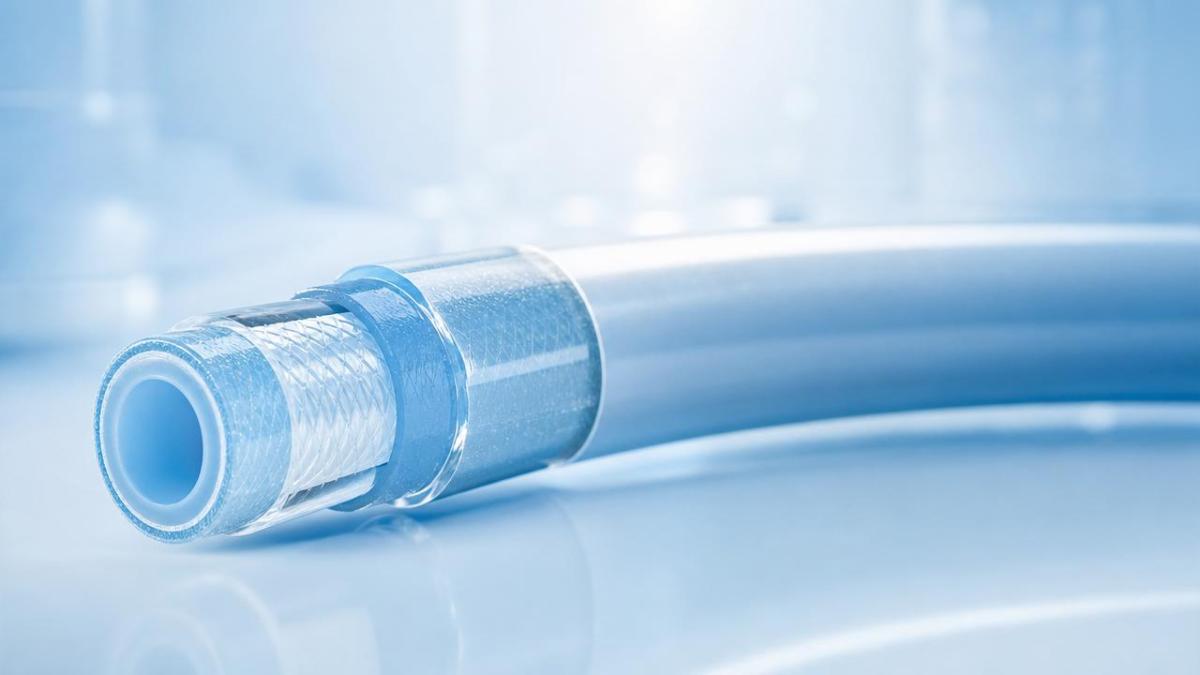
A modern catheter is rarely made from a single polymer. In many designs, there are 3 to 6 functional layers, each selected for a different purpose: lubricity, burst strength, kink resistance, radiopacity, bonding performance, or biocompatibility. The safety risk emerges at the interfaces as much as in the base resin itself.
Material choice affects both device function and patient exposure
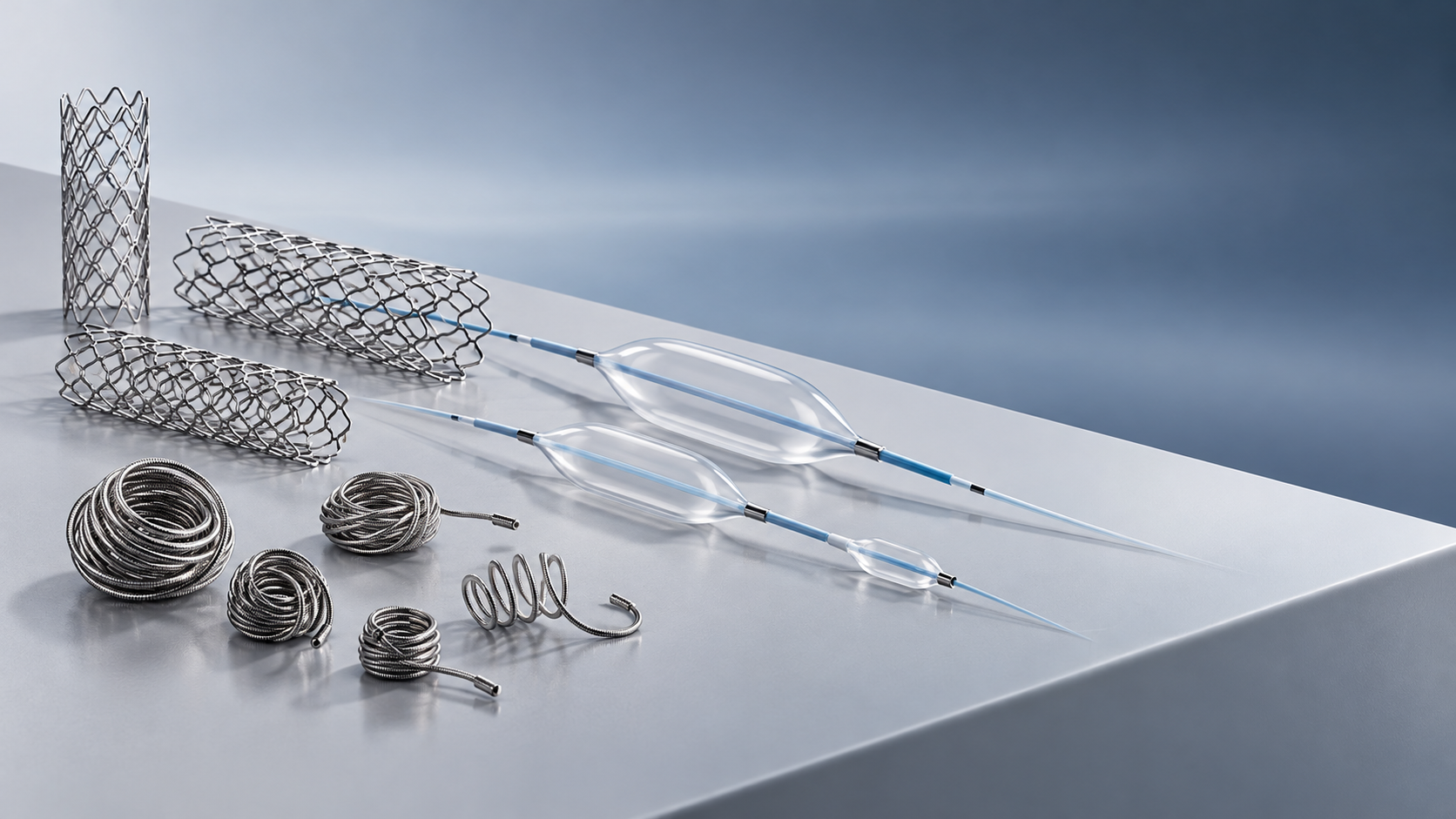
Common catheter polymers include Pebax, polyurethane, PTFE, FEP, nylon, silicone, and PEEK-based components. Each offers trade-offs. A softer durometer may improve trackability in tortuous anatomy, but can reduce column strength. A harder layer may improve torque transmission, but increase vessel trauma risk if the tip design is not optimized.
For quality teams, the priority is to map material properties to use-related hazards. A neuro-interventional microcatheter with an outer diameter under 3 Fr faces different demands than a central venous catheter used for 7 to 30 days. Mechanical safety thresholds, leachables tolerance, and coating durability cannot be assessed with a one-size-fits-all lens.
Key polymer-related safety failure modes
- Tip fracture or shaft cracking under repeated flex cycles
- Coating delamination after hydration, friction, or shelf aging
- Excess extractables or leachables after sterilization
- Kinking at bend radii below 10 mm to 25 mm, depending on design
- Bond failure at hub, balloon, or reinforcement transition zones
- Particulate generation during insertion or device exchange
These risks are especially relevant in Class III medical devices, where manufacturing precision may be controlled in microns, but patient harm can escalate quickly. A coating defect measured in tens of micrometers can increase friction, prolong procedure time by 5 to 15 minutes, or raise the probability of endothelial injury.
The table below summarizes how typical polymer technology decisions influence safety outcomes in catheter programs.
The main lesson is clear: medical polymer technology cannot be reviewed only at design transfer. It requires a lifecycle control strategy covering incoming resin, compounding, extrusion, coating, sterilization, packaging, and post-aging verification.
How Polymer Selection and Processing Create or Reduce Clinical Risk
In catheter safety investigations, root causes often sit at the intersection of chemistry and process. Two products may use the same polymer family, yet perform very differently because of drying conditions, extrusion temperature windows, reflow parameters, additive compatibility, or storage humidity.
Resin purity and additive control
Medical-grade status alone is not enough. Quality managers should verify additive packages, residual monomers, colorants, slip agents, and processing aids. Even low-level changes can affect ISO 10993 outcomes or alter extractables profiles after EtO or gamma sterilization. A practical review often includes 4 checkpoints: supplier documentation, change notification terms, traceability depth, and compatibility with intended sterilization.
Extrusion precision and dimensional stability
Catheter shafts commonly require tight tolerances on inner diameter, outer diameter, and wall thickness. In many high-risk applications, a tolerance band of ±0.02 mm to ±0.05 mm may be operationally significant. If concentricity drifts, flow performance, guidewire compatibility, and shaft response can all shift outside validated ranges.
Process validation should therefore link extrusion inputs to clinical function. Melt temperature, line speed, cooling profile, and vacuum calibration each need upper and lower control limits. It is not enough to pass final dimensions if process drift increases defect probability over a 3-month or 6-month production window.
Coating stability under realistic use conditions
Hydrophilic coatings reduce friction in demanding procedures, but they can introduce new risks if hydration time, surface preparation, or curing is inconsistent. A coating that performs well in a short benchtop test may fail after repeated in-and-out movement, blood exposure, or storage under elevated humidity.
For safety teams, three questions matter: how much particulate is generated, how stable is lubricity over repeated cycles, and does the coating remain adherent after aging? These questions become more critical in devices intended for neurovascular navigation, where force margins are small and vessel walls are fragile.
A practical 5-step control model
- Define critical material attributes for each shaft layer and coating interface.
- Set incoming inspection criteria by lot, not only by annual supplier approval.
- Validate extrusion, lamination, and bonding windows with worst-case conditions.
- Run simulated-use, aging, and post-sterilization retesting before release.
- Feed complaint, CAPA, and supplier-change data back into risk management files.
This model helps convert medical polymer technology from a development topic into a controlled safety system. It also aligns better with audit expectations, especially when regulators or notified bodies ask how the manufacturer connects material variation to patient risk.
Critical Test Areas for Quality Control and Safety Managers
Testing strategy should reflect the catheter’s intended duration, anatomy, and interaction profile. A short-term guide catheter and an indwelling venous catheter may share some biocompatibility requirements, but they do not carry the same emphasis on thrombosis, infection support, or extractables migration over time.
Mechanical, chemical, and biological checkpoints
A balanced test plan usually covers 3 categories: mechanical integrity, chemical cleanliness, and biological safety. For complex polymer systems, relying only on final-product release tests creates blind spots. Material changes can pass dimensional inspection while still altering hemocompatibility or leachable behavior.
The following matrix can help prioritize routine and validation-stage testing for catheter programs using advanced medical polymer technology.
The strongest programs do not treat these test areas as isolated boxes. They build correlation. For example, if lubricity drops after accelerated aging, the team should also review coating adhesion, particle generation, packaging barrier performance, and sterilization residual trends.
Shelf life and sterilization are often underestimated
A catheter that passes release testing at week 0 may behave differently after 12, 24, or 36 months of storage. Polymers can absorb moisture, lose plasticizer balance, oxidize, or experience coating changes. For EtO-sterilized devices, residual management and aeration validation are also part of the safety picture.
Safety managers should require aging protocols that reflect real packaging configuration and transport stress. If the catheter is shipped across multiple climate zones, transit conditioning and seal integrity testing should not be optional. Packaging is part of the material control system, not a separate commercial detail.
Supplier Qualification, Change Control, and Procurement Decisions
For many manufacturers, catheter risk does not begin on the production floor. It begins upstream, when procurement accepts a resin, additive, tubing subcontractor, or coating partner without fully understanding the safety implications of small formulation or process shifts.
What procurement and safety teams should evaluate together
In high-value medical consumables, cost pressure is real, especially under global reimbursement constraints and volume-based purchasing trends. However, a lower unit price can become expensive if it triggers revalidation, complaint spikes, delayed submissions, or field corrective action. A balanced sourcing review should include at least 6 dimensions.
- Material formulation transparency and change notification period
- Traceability to resin lot, additive lot, and conversion batch
- Consistency of extrusion, coating, and sterilization subcontractors
- Availability of biocompatibility and chemical characterization support
- Capacity stability across 2 to 4 quarters of forecast demand
- Ability to support deviation investigations within defined response times
Change control must be specific, not generic
A generic promise to notify customers of “major changes” is often insufficient. In catheter systems, seemingly minor updates can matter: resin supplier substitution, drying protocol changes, revised curing energy, new mold release chemistry, or packaging film replacement. Each may alter the behavior of medical polymer technology in a clinically relevant way.
An effective quality agreement should define notification triggers, sample requirements, revalidation responsibilities, and expected timelines. Many teams set review windows of 30 to 90 days, depending on whether the change touches chemistry, dimensions, sterilization, or packaging. The critical point is to connect contractual language with actual patient-risk assessment.
Common sourcing mistakes in catheter programs
- Approving a substitute polymer family based only on hardness range
- Assuming equivalent coatings perform the same after aging
- Skipping extractables reassessment after sterilization changes
- Focusing on dimensional acceptance while ignoring surface chemistry
- Underestimating the impact of multilayer bond-line variation
For IMCS readers working across implants, interventional devices, and advanced medical consumables, this sourcing discipline is increasingly important. As devices become smaller, more flexible, and more specialized, the margin for polymer-related inconsistency becomes narrower, while regulatory scrutiny grows sharper.
Implementation Priorities for Safer Catheter Programs
If a quality or safety team wants to strengthen catheter risk control within the next 1 to 2 quarters, the fastest gains usually come from process integration rather than adding isolated tests. Medical polymer technology should be reviewed through the full chain from design input to post-market signal.
A focused action plan for the next 90 days
- Rank catheter families by clinical risk, body-contact duration, and complaint history.
- Identify top 5 polymer-related failure modes for each family.
- Recheck supplier files for formulation detail, change clauses, and traceability gaps.
- Review whether aging, coating, and particulate tests reflect real use conditions.
- Align procurement, R&D, QA, and regulatory teams on material-change decision rules.
Where this creates business value
Better control of medical polymer technology reduces more than clinical risk. It can shorten investigation cycles, lower scrap from unstable processes, improve submission readiness, and support stronger customer confidence in hospital and distributor channels. In a competitive B2B market, consistent safety evidence is a commercial advantage.
For organizations operating in advanced medical consumables, the winning approach is disciplined rather than dramatic. Safer catheters come from controlled materials, verified interfaces, realistic testing, and responsive change management. If you need a clearer framework for polymer risk review, supplier assessment, or catheter safety intelligence, contact IMCS to get a tailored solution and explore more actionable guidance for your device portfolio.
Get weekly intelligence in your inbox.
No noise. No sponsored content. Pure intelligence.
News Recommendations
 Oct 26, 2026Can a single approval cover life science product sales worldwide?Can a single approval cover life science product sales worldwide?
 Oct 25, 2026When is sensitization testing needed for medical device biocompatibility?When is sensitization testing needed for medical device biocompatibility?
 Oct 24, 2026How is biocompatibility tested for implantable polymer biomaterials?How is biocompatibility tested for implantable polymer biomaterials?
 Oct 23, 2026How to build reimbursement into an implant commercialization strategyHow to build reimbursement into an implant commercialization strategy
 Oct 22, 2026What clinical evidence do implants need for CE marking under EU MDR?What clinical evidence do implants need for CE marking under EU MDR?
 Oct 21, 2026How to choose disposable laparoscopic stapler reloads for thick tissueHow to choose disposable laparoscopic stapler reloads for thick tissue
 Oct 20, 2026How to assess medical polymer biocompatibility under ISO 10993How to assess medical polymer biocompatibility under ISO 10993
 Oct 19, 2026How do interventional device categories differ in clinical use?How do interventional device categories differ in clinical use?
 Oct 18, 2026When to choose alginate dressings for heavily exuding chronic woundsWhen to choose alginate dressings for heavily exuding chronic wounds
 Oct 17, 2026How is biocompatibility tested for custom medical-grade PEEK implants?How is biocompatibility tested for custom medical-grade PEEK implants?
 Oct 16, 2026How to check a wound healing materials supplier’s biocompatibility dataHow to check a wound healing materials supplier’s biocompatibility data
 Oct 15, 2026How to verify the FDA clearance status of silver wound dressingsHow to verify the FDA clearance status of silver wound dressings
 Oct 14, 2026How to register orthopedic implants and instruments in Latin AmericaHow to register orthopedic implants and instruments in Latin America
 Oct 13, 2026How to use a device market intelligence database to benchmark VBP pricesHow to use a device market intelligence database to benchmark VBP prices
 Oct 12, 2026When should stainless steel orthopedic instruments be replaced?When should stainless steel orthopedic instruments be replaced?
 Oct 11, 2026When are alginate dressings rope the right choice for cavity wounds?When are alginate dressings rope the right choice for cavity wounds?
 Oct 10, 2026When smart minimally invasive technology improves catheter accessWhen smart minimally invasive technology improves catheter access
 Oct 08, 2026Clinical evaluation requirements for cardiovascular implant devices in EuropeClinical evaluation requirements for cardiovascular implant devices in Europe
 Oct 07, 2026What to verify before appointing an artificial joint implants distributorWhat to verify before appointing an artificial joint implants distributor
 Oct 06, 2026How ISO 10993 guides biocompatibility testing for medical materialsHow ISO 10993 guides biocompatibility testing for medical materials
 Oct 05, 2026How to verify an orthopedic implants and instruments exporterHow to verify an orthopedic implants and instruments exporter
 Oct 04, 2026What drives surgical stapling devices price differences in hospital tenders?What drives surgical stapling devices price differences in hospital tenders?
 Oct 03, 2026How to assess a central venous catheter manufacturer's infection-control evidenceHow to assess a central venous catheter manufacturer's infection-control evidence
 Oct 02, 2026How to assess an advanced wound care factory’s quality systemHow to assess an advanced wound care factory’s quality system
 Oct 01, 2026What is driving global medical consumables demand in emerging markets?What is driving global medical consumables demand in emerging markets?
 Sep 30, 2026Implant Material Compliance Testing: Evidence Needed for Regulatory SubmissionImplant Material Compliance Testing: Evidence Needed for Regulatory Submission
 Sep 30, 2026From Corrosion to Fatigue: What Implant Materials Testing Should MeasureFrom Corrosion to Fatigue: What Implant Materials Testing Should Measure