Biodegradable Implants: Safety and Degradation Risks
Biodegradable implants promise less permanent foreign-body burden, fewer removal surgeries, and new options for tissue-guided healing.
Their safety depends on predictable degradation, controlled byproducts, mechanical retention, local tissue response, and evidence that matches real clinical use.
Biodegradable Implants: Safety and Degradation Risks

Biodegradable implants are not simply temporary devices. They are active material systems that change after placement.
This makes validation more complex than for permanent titanium, cobalt-chromium, ceramic, or stable polymer implants.
Safety teams must evaluate the full degradation journey, not only the initial sterile and biocompatible state.
Why Biodegradable Implants Need Checklist-Based Evaluation
Biodegradable implants interact with biology over weeks, months, or years, depending on chemistry, geometry, and anatomical loading.
A checklist approach prevents isolated testing from hiding cumulative risks across design, manufacturing, sterilization, and clinical performance.
It also connects ISO 10993 evidence, mechanical testing, degradation studies, and risk management into one traceable logic.
For biodegradable implants, the key question is not whether degradation occurs. The question is whether degradation remains clinically acceptable.
Core Safety Checklist for Biodegradable Implants
- Define the intended degradation window, then match material loss to tissue healing speed, fixation demand, and expected anatomical stress.
- Verify degradation byproducts through chemical characterization, toxicological risk assessment, and dose-based exposure estimates under worst-case assumptions.
- Measure mechanical retention after aging, hydrolysis, enzymatic exposure, or corrosion, instead of relying only on initial strength data.
- Test local pH change around biodegradable implants, especially for polyester materials producing acidic degradation products.
- Evaluate particle formation, morphology, and clearance routes, because micro-debris may alter macrophage activity and inflammatory burden.
- Assess sterilization impact on molecular weight, crystallinity, surface chemistry, and degradation kinetics before final process approval.
- Confirm manufacturing consistency across batches, including porosity, residual monomers, catalysts, additives, and moisture sensitivity.
- Map biological endpoints to degradation phases, covering cytotoxicity, sensitization, irritation, systemic toxicity, genotoxicity, and implantation response.
- Simulate clinically relevant fluids, temperatures, loading cycles, and contact tissues to avoid misleading degradation timelines.
- Link bench testing to clinical hazards, including premature collapse, delayed absorption, chronic inflammation, migration, and tissue overgrowth.
Material-Specific Degradation Risks
Polymer-Based Biodegradable Implants
PLA, PLGA, PGA, PCL, and related polymers dominate many biodegradable implants used in fixation and drug delivery.
Their degradation often depends on hydrolysis, crystallinity, molecular weight, device thickness, and water penetration.
Acidic byproducts can create local pH drops, especially when mass loss exceeds tissue buffering capacity.
Risk control requires monitoring both bulk degradation and surface erosion, because each pattern creates different failure modes.
Magnesium and Metallic Biodegradable Implants
Magnesium-based biodegradable implants offer strength closer to bone than many polymers, but corrosion control is critical.
Rapid corrosion may release hydrogen gas, alter local alkalinity, and weaken fixation before healing reaches stability.
Alloy elements, surface coatings, and microstructure must be justified through toxicology and mechanical retention studies.
Testing should include galvanic effects when metallic biodegradable implants contact screws, plates, stents, or surgical instruments.
Ceramic and Composite Biodegradable Implants
Calcium phosphate ceramics support bone regeneration, but their brittleness and resorption rate require careful assessment.
Composite biodegradable implants may combine polymer flexibility with ceramic osteoconductivity, yet interfaces can become weak points.
Manufacturing defects, particle shedding, pore collapse, and uneven resorption should be included in design verification.
Application Scenarios and Safety Focus
Orthopedic Fixation and Tissue Regeneration
In bone fixation, biodegradable implants must hold strength until callus formation or osseointegration provides biological stability.
Premature strength loss can cause displacement, nonunion, pain, or secondary surgery, even when materials pass cytotoxicity testing.
Porous scaffolds must balance cell ingrowth with structural integrity, because excessive porosity may accelerate collapse.
Cardiovascular and Interventional Devices
Bioresorbable vascular scaffolds show how promising biodegradable implants can fail when mechanical and biological timing diverge.
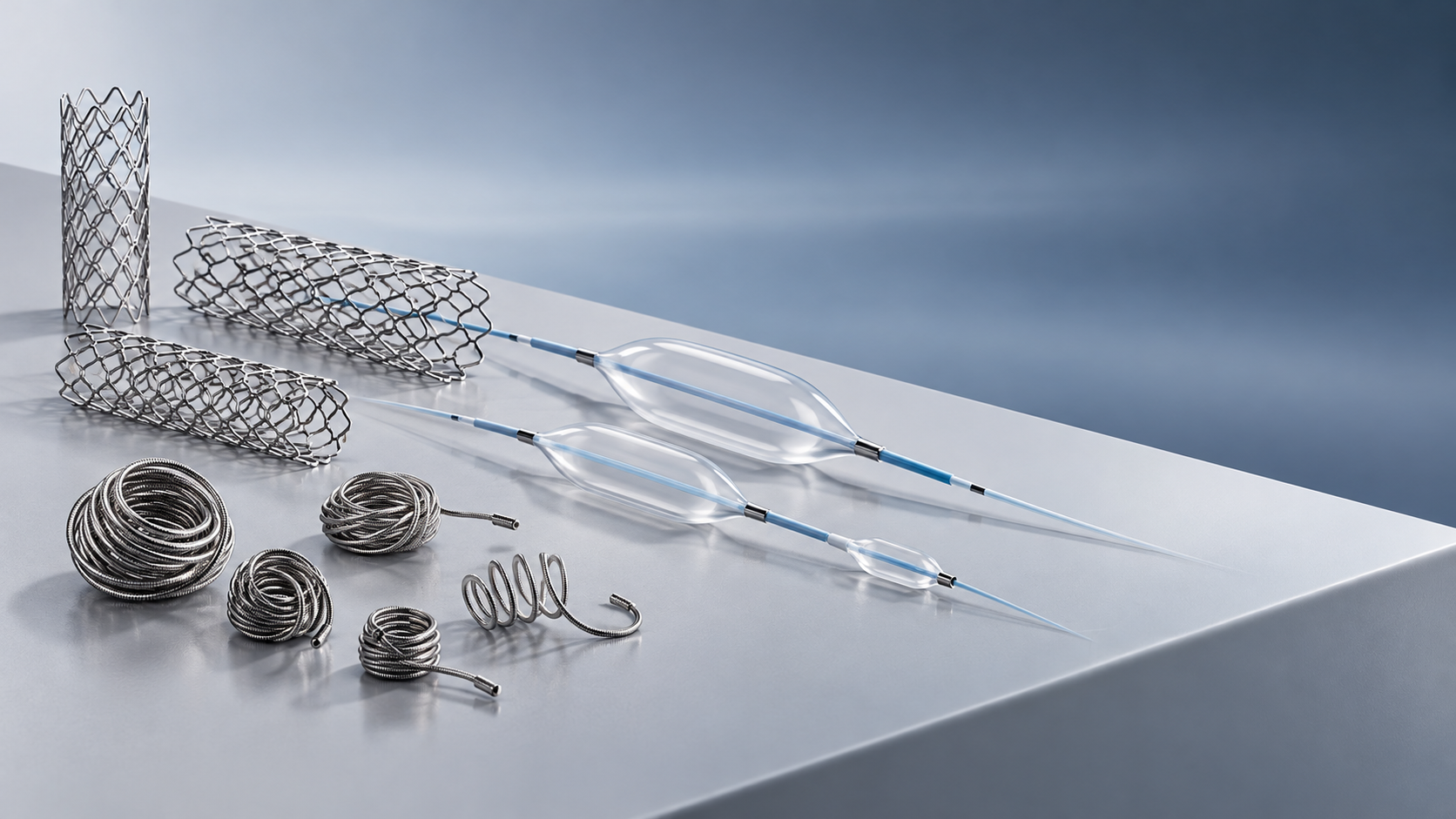
Key risks include late scaffold discontinuity, thrombosis, malapposition, inflammatory remodeling, and uneven drug release.
Hemocompatibility, fatigue resistance, radial support, and degradation sequencing must be evaluated together, not separately.
Wound Care, Sutures, and Soft-Tissue Support
Absorbable sutures and soft-tissue anchors are common biodegradable implants with direct healing-time dependency.
They must retain tensile strength long enough for tissue approximation, then disappear without chronic irritation.
In infected or ischemic wounds, degradation may change because enzymes, pH, and exudate chemistry differ from standard testing.
Commonly Overlooked Risks in Biodegradable Implants
Residual Chemicals and Processing Aids
Residual monomers, solvents, catalysts, plasticizers, and initiators may become more available as biodegradable implants erode.
Chemical characterization should include aged samples, extractables, leachables, and clinically relevant degradation extracts.
Sterilization-Driven Material Change
Gamma irradiation, ethylene oxide, and electron beam sterilization can change polymer chains, residues, and degradation speed.
Biodegradable implants should be tested after final sterilization, packaging, and shelf-life aging, not only after prototype fabrication.
Mismatch Between In Vitro and In Vivo Degradation
Laboratory buffers may miss protein adsorption, immune cells, mechanical loading, and local fluid exchange.
Use accelerated studies carefully, because exaggerated conditions may create degradation pathways not seen clinically.
Inflammation Beyond Standard Biocompatibility
Biocompatibility is not static for biodegradable implants. Tissue response can change as fragments, ions, or acids accumulate.
Histology should examine macrophage profile, fibrous capsule thickness, necrosis, vascularization, and remaining material distribution.
Execution Guide for Risk Management and Evidence Building
- Build a degradation map covering mechanical loss, mass loss, byproduct release, tissue interaction, and clearance timeline.
- Create worst-case samples using maximum thickness, highest crystallinity, lowest porosity, or slowest expected absorption profile.
- Test final-device geometry, because raw material coupons rarely represent stress concentration, coating defects, or fluid penetration.
- Align ISO 10993 testing with degradation stages, including fresh, partially degraded, and near-endpoint material conditions.
- Define clinical acceptance criteria before testing, including fixation retention, local tissue reaction, and degradation completion range.
- Use risk controls that are measurable, such as molecular-weight limits, residual thresholds, corrosion rate, or pH range.
- Connect design history, supplier controls, sterilization validation, packaging stability, and post-market surveillance into one evidence chain.
For higher-risk biodegradable implants, animal studies may need multiple explant timepoints rather than one terminal evaluation.
Each timepoint should answer a specific question: early inflammation, strength transition, byproduct accumulation, or final clearance.
Clinical evidence should avoid broad claims unless degradation behavior is confirmed across patient variability and anatomical use conditions.
Regulatory and Quality Control Considerations
Regulators increasingly expect lifecycle evidence for biodegradable implants, especially for Class III and high-risk applications.
A strong file explains why degradation rate, byproducts, tissue response, and mechanical performance are clinically acceptable.
Quality control should not rely only on dimensional inspection, sterility, and initial mechanical tests.
Release specifications may include molecular weight, residual moisture, crystallinity, coating thickness, alloy composition, or corrosion profile.
Supplier changes need careful assessment because small formulation shifts can alter degradation of biodegradable implants significantly.
Post-market surveillance should track late inflammation, delayed absorption, device fragments, revision surgery, and imaging findings.
Practical Next Steps
- Audit every biodegradable implants project against a time-based degradation risk matrix before design freeze.
- Request aged-device chemical and mechanical data whenever sterilization, shelf life, or packaging conditions may change material behavior.
- Compare degradation evidence with real healing biology, not only with convenient laboratory immersion results.
- Document why each degradation byproduct is acceptable at the expected patient exposure level.
- Review complaints and explant findings for patterns that may indicate uncontrolled absorption or inflammatory response.
Biodegradable implants can reduce permanent material burden and support regenerative treatment, but only when degradation is predictable.
The safest strategy is to treat degradation as a core design function, not a passive material outcome.
Start with a full lifecycle checklist, connect it to ISO 10993 and mechanical evidence, then verify performance under clinical conditions.
For IMCS-level intelligence, the priority is clear: vision biocompatibility, control degradation, and reconstruct vitality with evidence.
Get weekly intelligence in your inbox.
No noise. No sponsored content. Pure intelligence.
News Recommendations
 Oct 26, 2026Can a single approval cover life science product sales worldwide?Can a single approval cover life science product sales worldwide?
 Oct 25, 2026When is sensitization testing needed for medical device biocompatibility?When is sensitization testing needed for medical device biocompatibility?
 Oct 24, 2026How is biocompatibility tested for implantable polymer biomaterials?How is biocompatibility tested for implantable polymer biomaterials?
 Oct 23, 2026How to build reimbursement into an implant commercialization strategyHow to build reimbursement into an implant commercialization strategy
 Oct 22, 2026What clinical evidence do implants need for CE marking under EU MDR?What clinical evidence do implants need for CE marking under EU MDR?
 Oct 21, 2026How to choose disposable laparoscopic stapler reloads for thick tissueHow to choose disposable laparoscopic stapler reloads for thick tissue
 Oct 20, 2026How to assess medical polymer biocompatibility under ISO 10993How to assess medical polymer biocompatibility under ISO 10993
 Oct 19, 2026How do interventional device categories differ in clinical use?How do interventional device categories differ in clinical use?
 Oct 18, 2026When to choose alginate dressings for heavily exuding chronic woundsWhen to choose alginate dressings for heavily exuding chronic wounds
 Oct 17, 2026How is biocompatibility tested for custom medical-grade PEEK implants?How is biocompatibility tested for custom medical-grade PEEK implants?
 Oct 16, 2026How to check a wound healing materials supplier’s biocompatibility dataHow to check a wound healing materials supplier’s biocompatibility data
 Oct 15, 2026How to verify the FDA clearance status of silver wound dressingsHow to verify the FDA clearance status of silver wound dressings
 Oct 14, 2026How to register orthopedic implants and instruments in Latin AmericaHow to register orthopedic implants and instruments in Latin America
 Oct 13, 2026How to use a device market intelligence database to benchmark VBP pricesHow to use a device market intelligence database to benchmark VBP prices
 Oct 12, 2026When should stainless steel orthopedic instruments be replaced?When should stainless steel orthopedic instruments be replaced?
 Oct 11, 2026When are alginate dressings rope the right choice for cavity wounds?When are alginate dressings rope the right choice for cavity wounds?
 Oct 10, 2026When smart minimally invasive technology improves catheter accessWhen smart minimally invasive technology improves catheter access
 Oct 08, 2026Clinical evaluation requirements for cardiovascular implant devices in EuropeClinical evaluation requirements for cardiovascular implant devices in Europe
 Oct 07, 2026What to verify before appointing an artificial joint implants distributorWhat to verify before appointing an artificial joint implants distributor
 Oct 06, 2026How ISO 10993 guides biocompatibility testing for medical materialsHow ISO 10993 guides biocompatibility testing for medical materials
 Oct 05, 2026How to verify an orthopedic implants and instruments exporterHow to verify an orthopedic implants and instruments exporter
 Oct 04, 2026What drives surgical stapling devices price differences in hospital tenders?What drives surgical stapling devices price differences in hospital tenders?
 Oct 03, 2026How to assess a central venous catheter manufacturer's infection-control evidenceHow to assess a central venous catheter manufacturer's infection-control evidence
 Oct 02, 2026How to assess an advanced wound care factory’s quality systemHow to assess an advanced wound care factory’s quality system
 Oct 01, 2026What is driving global medical consumables demand in emerging markets?What is driving global medical consumables demand in emerging markets?
 Sep 30, 2026Implant Material Compliance Testing: Evidence Needed for Regulatory SubmissionImplant Material Compliance Testing: Evidence Needed for Regulatory Submission
 Sep 30, 2026From Corrosion to Fatigue: What Implant Materials Testing Should MeasureFrom Corrosion to Fatigue: What Implant Materials Testing Should Measure