Biodegradable Implants: Key Biocompatibility Risks to Assess Early
For technical evaluators, biodegradable implants offer temporary structural support and healing guidance.
Yet these systems also create early uncertainty in degradation kinetics, tissue tolerance, and retained function during recovery.
That is why biodegradable implants require front-loaded biocompatibility planning, not late-stage testing after design lock.
A weak early assessment can trigger redesigns, delayed submissions, unexpected toxicology questions, or post-implant performance failure.
This FAQ-style guide explains which risks matter most, how they interact, and what evidence should be generated early.
What makes biodegradable implants different from permanent implants in early biocompatibility assessment?
Permanent implants are judged mainly by long-term inertness, stability, and chronic tissue compatibility.
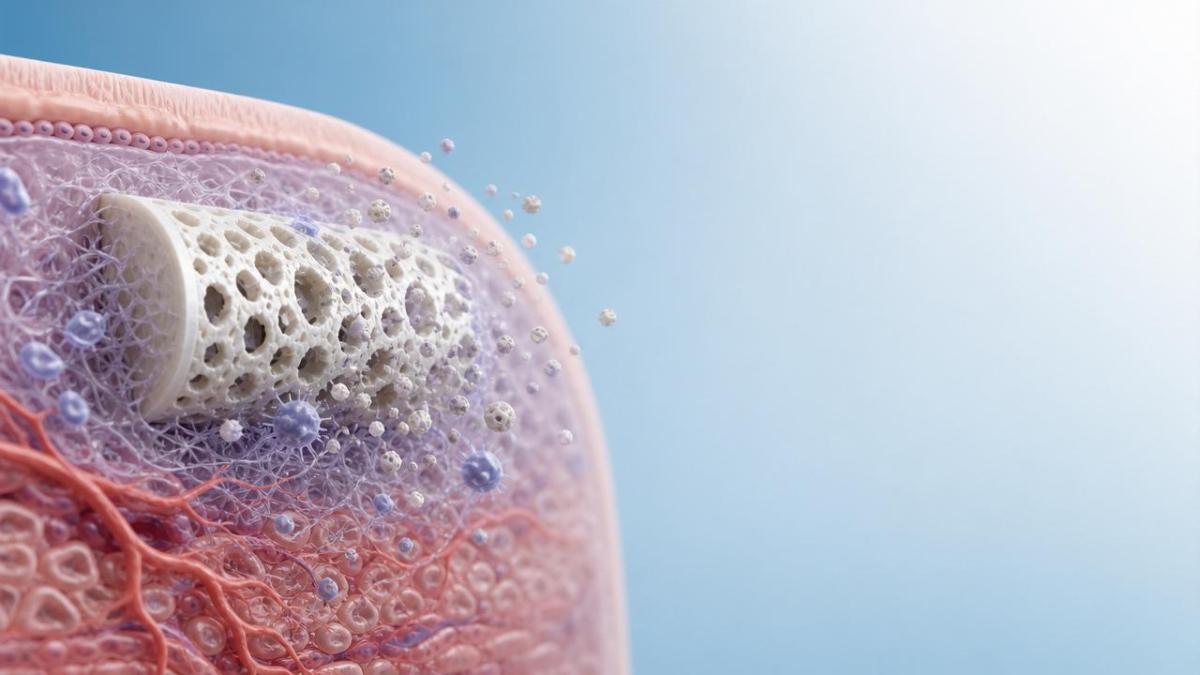
Biodegradable implants add a moving target because the material changes after implantation.
Its chemistry, mechanics, surface condition, and byproducts all evolve across healing stages.
This means early evaluation cannot stop at the starting material alone.
It must address the implant, its degradation intermediates, and the final resorption products.
For biodegradable implants, the central question is not only “Is the device biocompatible?”
It is also “Is every stage of material transformation biologically acceptable and functionally safe?”
This is especially important in orthopedic fixation, vascular scaffolds, soft tissue anchors, and regenerative membranes.
Each application sees different loads, fluid exposure, and immune behavior.
A polymer that performs well in low-load tissue may fail in a high-stress bone environment.
A metallic biodegradable implant may also release ions that require separate toxicological consideration.
Therefore, early strategy should connect material science, use environment, and ISO 10993 logic from the start.
Which biocompatibility risks should be assessed first for biodegradable implants?
The first priority is local tissue response across the full degradation timeline.
Some biodegradable implants look acceptable initially but trigger delayed inflammation as fragments accumulate.
That delayed response can impair healing even when cytotoxicity data seem clean.
Key early risk areas include:
- Acute and chronic inflammation around the implant site
- pH changes caused by acidic or reactive degradation products
- Particulate generation and macrophage-driven foreign body reaction
- Sensitization and irritation linked to additives, catalysts, or residues
- Systemic exposure to soluble byproducts or released ions
- Hemocompatibility concerns for blood-contacting biodegradable implants
These risks rarely appear in isolation.
For example, faster hydrolysis may lower local pH, accelerate inflammation, and reduce mechanical retention at the same time.
That chain effect is why single-endpoint testing gives an incomplete picture.
A practical early plan often combines extractables analysis, degradation simulation, local histology, and use-specific functional testing.
For cardiovascular biodegradable implants, thrombogenicity and endothelial healing may rise to the top.
For orthopedic biodegradable implants, osteolysis, fibrous encapsulation, and load-loss timing often matter more.
How can degradation behavior create hidden safety gaps?
Degradation is often treated as a materials issue, but it is also a biological safety issue.
If biodegradable implants degrade too slowly, foreign material may persist beyond the intended healing window.
If they degrade too quickly, support disappears before tissue recovery is complete.
The hidden danger is mismatch.
Mechanical decline, mass loss, and byproduct release do not always occur at the same rate.
A device may look intact by imaging while its internal structure already weakens.
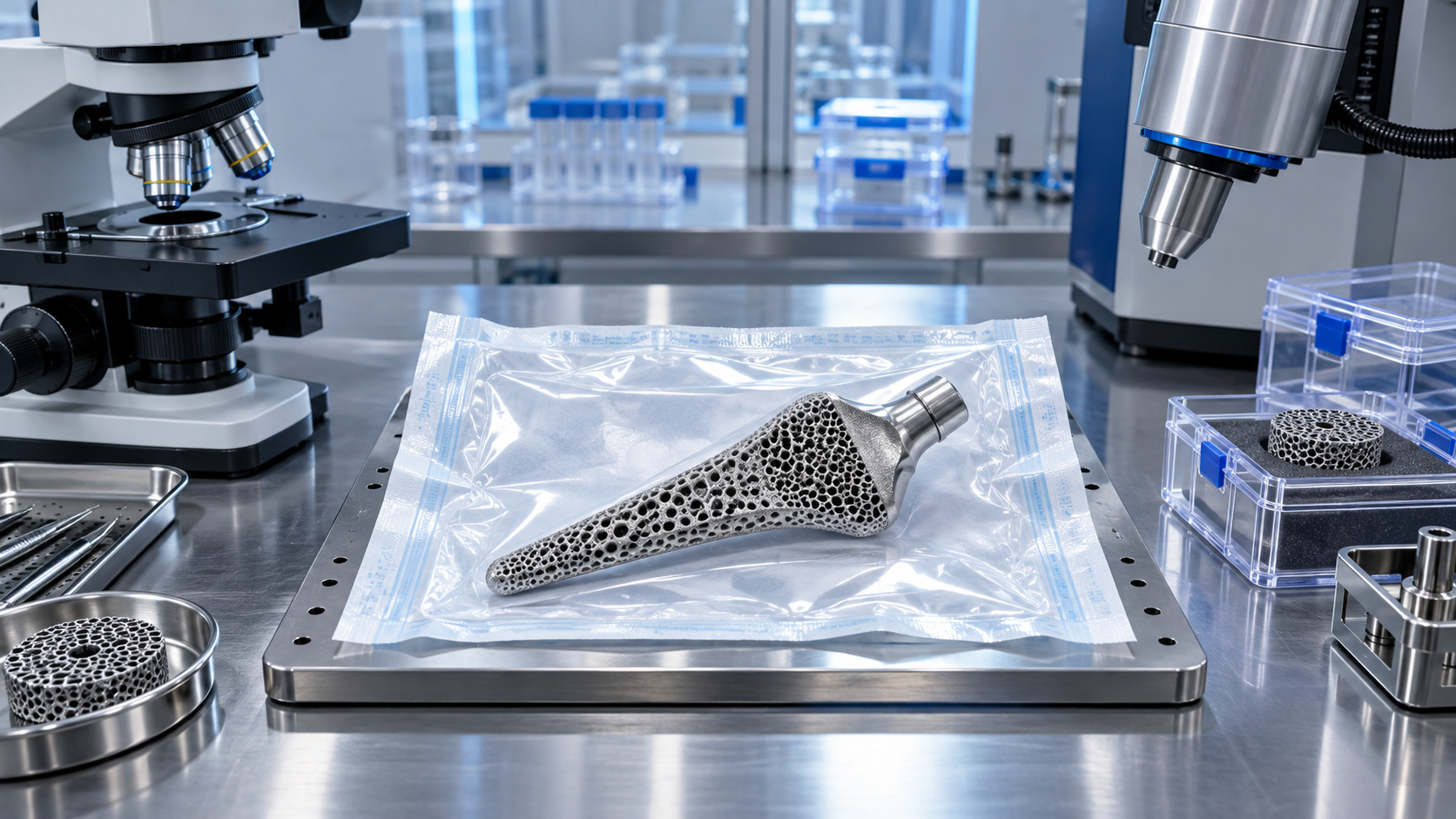
This is a common concern with porous, composite, coated, or additive-manufactured biodegradable implants.
Evaluators should ask several early questions:
- What are the primary degradation pathways in the real anatomical environment?
- Which degradation products appear first, and in what concentration range?
- Does sterilization change molecular weight or corrosion behavior?
- Do manufacturing residues alter breakdown kinetics?
- Does degradation vary under cyclic load, blood flow, or enzymatic exposure?
Answers should come from application-relevant studies, not generic bench assumptions.
Accelerated studies can help, but they should not replace physiologically meaningful models.
For biodegradable implants, the wrong acceleration method may create byproducts that never occur in vivo.
What role do processing, additives, and sterilization play in biocompatibility risk?
Many early failures come from assuming the base material defines the whole safety profile.
In reality, processing history often changes how biodegradable implants behave biologically.
Residual solvents, monomers, catalysts, mold release agents, and colorants can all shift risk.
Sterilization may also reduce polymer molecular weight or alter metallic corrosion surfaces.
That can accelerate degradation or increase release of reactive species.
Common early checkpoints include:
- Characterize raw materials and finished-device chemistry separately
- Assess extractables and leachables after final sterilization
- Review batch consistency for degradation-sensitive attributes
- Check packaging interactions during shelf life
- Link process controls to biological endpoints
This is highly relevant in high-value medical consumables and Class III implant pathways.
A polished technical file should show not only test results but also why the chosen process remains biologically stable.
That evidence becomes more persuasive during regulatory review and clinical risk discussions.
How should early testing be structured for stronger evidence and fewer redesigns?
A smart plan starts with intended use, contact type, contact duration, and degradation profile.
Then it maps those factors to biological endpoints and functional milestones.
For biodegradable implants, testing should be staged rather than performed as a disconnected checklist.
An effective sequence often looks like this:
This staged model helps reveal whether failure comes from formulation, processing, or clinical context.
It also reduces the chance of repeating expensive animal or bench studies after design changes.
When possible, pair biological tests with chemical characterization and degradation mapping.
That integrated approach creates stronger scientific justification than isolated pass-or-fail reports.
What common misconceptions lead teams to underestimate biodegradable implant risk?
One misconception is that a known biomaterial automatically remains safe in every new format.
But geometry, porosity, coating, processing, and implantation site can change exposure dramatically.
Another misconception is that degradation itself guarantees safety because the material eventually disappears.
Disappearance does not mean harmless transition.
Biodegradable implants can create a harmful middle phase before resorption is complete.
A third misconception is overreliance on standard cytotoxicity alone.
Cytotoxicity matters, but it cannot predict all inflammatory, particulate, or functional failure patterns.
The table below highlights frequent early errors and better responses.
These corrections improve decision quality long before pivotal studies or market planning begin.
What should be done next when evaluating biodegradable implants?
Start by defining the intended healing window and required mechanical support profile.
Then map expected degradation stages against local tissue exposure and systemic release possibilities.
Next, review whether processing, sterilization, and packaging could alter breakdown behavior.
Finally, build a testing matrix that connects chemistry, biology, and function over time.
For biodegradable implants, early evidence quality often determines later regulatory efficiency and development cost control.
Strong assessment does more than answer safety questions.
It supports better design decisions, clearer clinical rationale, and more resilient documentation.
In advanced implant and medical consumables development, that early clarity can become a decisive strategic advantage.
If a program involves biodegradable implants, the next practical step is a gap review of material characterization, degradation evidence, and endpoint selection.
Addressing those gaps early helps reduce safety uncertainty and strengthens the full path toward submission and clinical confidence.
Get weekly intelligence in your inbox.
No noise. No sponsored content. Pure intelligence.
News Recommendations
 Oct 26, 2026Can a single approval cover life science product sales worldwide?Can a single approval cover life science product sales worldwide?
 Oct 25, 2026When is sensitization testing needed for medical device biocompatibility?When is sensitization testing needed for medical device biocompatibility?
 Oct 24, 2026How is biocompatibility tested for implantable polymer biomaterials?How is biocompatibility tested for implantable polymer biomaterials?
 Oct 23, 2026How to build reimbursement into an implant commercialization strategyHow to build reimbursement into an implant commercialization strategy
 Oct 22, 2026What clinical evidence do implants need for CE marking under EU MDR?What clinical evidence do implants need for CE marking under EU MDR?
 Oct 21, 2026How to choose disposable laparoscopic stapler reloads for thick tissueHow to choose disposable laparoscopic stapler reloads for thick tissue
 Oct 20, 2026How to assess medical polymer biocompatibility under ISO 10993How to assess medical polymer biocompatibility under ISO 10993
 Oct 19, 2026How do interventional device categories differ in clinical use?How do interventional device categories differ in clinical use?
 Oct 18, 2026When to choose alginate dressings for heavily exuding chronic woundsWhen to choose alginate dressings for heavily exuding chronic wounds
 Oct 17, 2026How is biocompatibility tested for custom medical-grade PEEK implants?How is biocompatibility tested for custom medical-grade PEEK implants?
 Oct 16, 2026How to check a wound healing materials supplier’s biocompatibility dataHow to check a wound healing materials supplier’s biocompatibility data
 Oct 15, 2026How to verify the FDA clearance status of silver wound dressingsHow to verify the FDA clearance status of silver wound dressings
 Oct 14, 2026How to register orthopedic implants and instruments in Latin AmericaHow to register orthopedic implants and instruments in Latin America
 Oct 13, 2026How to use a device market intelligence database to benchmark VBP pricesHow to use a device market intelligence database to benchmark VBP prices
 Oct 12, 2026When should stainless steel orthopedic instruments be replaced?When should stainless steel orthopedic instruments be replaced?
 Oct 11, 2026When are alginate dressings rope the right choice for cavity wounds?When are alginate dressings rope the right choice for cavity wounds?
 Oct 10, 2026When smart minimally invasive technology improves catheter accessWhen smart minimally invasive technology improves catheter access
 Oct 08, 2026Clinical evaluation requirements for cardiovascular implant devices in EuropeClinical evaluation requirements for cardiovascular implant devices in Europe
 Oct 07, 2026What to verify before appointing an artificial joint implants distributorWhat to verify before appointing an artificial joint implants distributor
 Oct 06, 2026How ISO 10993 guides biocompatibility testing for medical materialsHow ISO 10993 guides biocompatibility testing for medical materials
 Oct 05, 2026How to verify an orthopedic implants and instruments exporterHow to verify an orthopedic implants and instruments exporter
 Oct 04, 2026What drives surgical stapling devices price differences in hospital tenders?What drives surgical stapling devices price differences in hospital tenders?
 Oct 03, 2026How to assess a central venous catheter manufacturer's infection-control evidenceHow to assess a central venous catheter manufacturer's infection-control evidence
 Oct 02, 2026How to assess an advanced wound care factory’s quality systemHow to assess an advanced wound care factory’s quality system
 Oct 01, 2026What is driving global medical consumables demand in emerging markets?What is driving global medical consumables demand in emerging markets?
 Sep 30, 2026Implant Material Compliance Testing: Evidence Needed for Regulatory SubmissionImplant Material Compliance Testing: Evidence Needed for Regulatory Submission
 Sep 30, 2026From Corrosion to Fatigue: What Implant Materials Testing Should MeasureFrom Corrosion to Fatigue: What Implant Materials Testing Should Measure