Medical Cost-Control Solutions That Cut Waste
In today’s high-pressure healthcare market, medical cost-control solutions are no longer just about cutting prices—they are about reducing waste while protecting clinical value, compliance, and patient outcomes. For decision-makers in high-value consumables, understanding how procurement policy, material innovation, and regulatory strategy interact is essential to staying competitive and sustainable in a rapidly tightening global environment.
For enterprise decision-makers, the core question is simple: how do you remove avoidable cost from the system without destroying product value, market access, or long-term profitability?
The short answer is that the best medical cost-control solutions target waste, variation, delays, and poor decision architecture—not merely supplier price. In high-value consumables, blunt cuts often create hidden losses elsewhere.
That matters especially in markets shaped by Class III regulation, hospital budget pressure, and volume-based procurement. A lower unit price alone does not guarantee lower total cost, lower risk, or better business performance.
Leaders in implants, interventional devices, staplers, catheters, and advanced dressings need a sharper framework. They must evaluate procurement, design, compliance, clinical evidence, and supply resilience as one operating system.
What decision-makers are really looking for from medical cost-control solutions

When executives search for medical cost-control solutions, they are rarely looking for theory. They want practical ways to cut waste, defend margins, preserve product credibility, and avoid triggering downstream operational problems.
They are usually balancing five pressures at once: lower selling prices, stricter compliance expectations, hospital demand for value proof, unstable supply chains, and rising R&D or validation costs.
What concerns them most is not whether cost reduction is possible. It is whether savings can be achieved without increasing recalls, tender failures, reimbursement friction, clinician resistance, or post-market regulatory exposure.
That is why the most useful analysis focuses on decision quality. Which costs are structural, which are avoidable, and which cuts create greater future expense? This distinction separates strategic savings from destructive cost compression.
For companies in high-value consumables, good cost control means protecting total economic value. That includes manufacturing efficiency, regulatory speed, clinical acceptance, procurement competitiveness, and lifecycle margin stability.
Why price cutting alone fails in high-value medical consumables
Many organizations still treat cost control as a purchasing exercise. They push harder on supplier negotiations or reduce list prices in tenders, expecting volume gains to compensate for thinner margins.
That approach often fails because the real waste sits outside the quoted price. It appears in excess SKU complexity, validation delays, weak evidence strategy, fragmented sourcing, scrap, revision risk, and inventory mismatch.
In orthopedic implants, for example, reducing component cost while keeping an oversized tray system can leave hospitals and manufacturers burdened by sterilization inefficiency, logistics complexity, and low-rotation stock.
In cardiovascular devices, aggressive price moves without differentiated clinical positioning can weaken tender outcomes. If multiple suppliers look interchangeable, buyers naturally force pricing lower and loyalty disappears.
For minimally invasive staplers or specialty catheters, low-price positioning may also increase suspicion around consistency, handling performance, or training support. Once clinician trust erodes, commercial recovery becomes expensive.
Executives should therefore ask a better question: where is waste created across the product-to-procurement pathway, and how can it be removed without damaging safety, usability, or reimbursement logic?
The highest-impact areas where waste can actually be removed
The strongest medical cost-control solutions usually come from four areas: portfolio simplification, design-for-value engineering, regulatory efficiency, and supply chain discipline. These areas create durable savings rather than one-time concessions.
Portfolio simplification is often underestimated. Too many sizes, variants, packaging options, or instrument combinations inflate forecasting difficulty, inventory carrying cost, training burden, and manufacturing setup complexity.
Decision-makers should examine whether every SKU contributes strategic revenue, clinical differentiation, or tender relevance. If not, rationalization can improve both cost position and operational clarity without reducing market competitiveness.
Design-for-value engineering is another major lever. This does not mean lowering standards. It means redesigning around manufacturability, material yield, assembly efficiency, sterilization practicality, and clinical use-case precision.
For implants, that may involve optimizing porous structures, reducing unnecessary machining steps, or revisiting instrument ecosystems. For catheters, it may mean balancing coating performance with process repeatability and scrap reduction.
Regulatory efficiency also cuts hidden cost. Poor submission planning, duplicated testing, weak biological evaluation logic, and fragmented clinical documentation create expensive delays that drain working capital and postpone revenue realization.
Finally, supply chain discipline matters more than many firms admit. A low-cost source that causes variability, late delivery, or documentation defects can destroy savings through rework, shortages, and lost tender opportunities.
How procurement policy changes the cost-control equation
Medical cost-control solutions cannot be separated from procurement policy, especially in markets influenced by VBP and centralized bidding. These systems reward scale and price discipline, but they also magnify strategic mistakes.
If a company enters a price-driven procurement environment without understanding its true floor cost, capacity limits, and compliance obligations, winning volume can become financially dangerous instead of commercially attractive.
Executives need scenario planning before bidding. What happens if prices fall by another 15 percent? Can supply remain stable? Can quality records remain intact? Does the business still fund post-market surveillance and innovation?
In many cases, the best answer is not to compete everywhere. Companies should segment markets by product maturity, clinical differentiation, local evidence strength, and service dependence before choosing a bidding posture.
Some products can withstand scale-based pricing because process control is mature and demand is predictable. Others—especially specialized Class III consumables—require value defense through outcomes data, physician preference, or technical superiority.
This is where intelligence becomes a cost-control tool. Understanding competitor behavior, tender structure, policy timing, and substitution risk helps leaders avoid price traps that look attractive in the short term.
Why regulatory strategy is a cost issue, not just a compliance issue
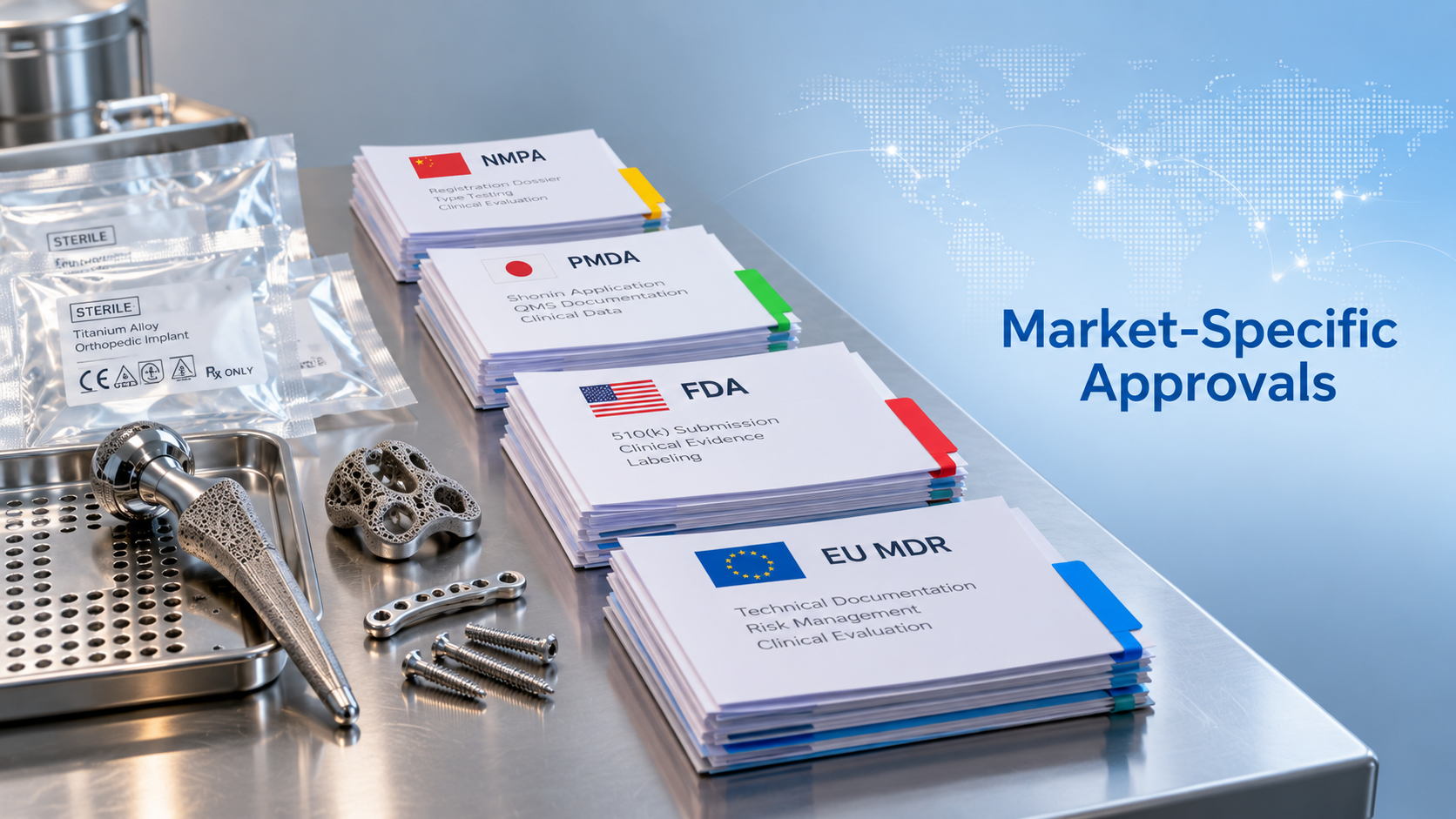
Many firms still treat regulation as a separate function after product and commercial strategy are decided. In reality, regulatory planning is one of the most important medical cost-control solutions available to leadership.
Every unnecessary test, incomplete technical file, weak CER logic, or late design change introduces avoidable cost. The expense is not only financial; it also includes launch delay, tender ineligibility, and resource distraction.
For high-risk implants and interventional consumables, biological safety, clinical evidence, and traceability requirements are too significant to manage reactively. Early alignment reduces duplication and strengthens long-term market access.
Strong regulatory strategy also helps leadership decide where not to spend. Not every market expansion justifies the same evidence investment. Not every feature upgrade creates enough reimbursement or procurement value to offset validation cost.
Companies that integrate regulatory, clinical, and commercial planning early tend to control cost better because they design evidence around strategic priorities, rather than generating documents simply to fix emerging gaps.
In a tighter market, that discipline protects more than budget. It preserves credibility with authorities, notified bodies, hospital buyers, and investors who increasingly expect robust governance in medical technology operations.
How material and manufacturing choices affect total cost of ownership
In high-value consumables, material selection directly shapes both performance and cost. The wrong material strategy can lock a company into avoidable waste for years across validation, production, packaging, and post-market management.
For orthopedic systems, advanced titanium structures, PEEK, and surface treatments may justify premium positioning when they improve osseointegration, imaging compatibility, or procedural outcomes. But complexity without meaningful value is expensive noise.
For cardiovascular products, precision, coating stability, deliverability, and fatigue resistance are not optional. However, companies still need to assess whether design sophistication translates into defendable procurement and clinical advantage.
In staplers and wound care, seemingly small manufacturing choices can materially affect cost of quality. Tolerance control, staple consistency, absorbency behavior, and packaging integrity all influence complaint rates and hospital confidence.
Total cost of ownership should therefore include yield loss, process capability, sterilization compatibility, shelf-life risk, field performance, and training demands—not just raw material or unit conversion cost.
Decision-makers who view engineering and manufacturing through this broader lens are more likely to build resilient margins. They reduce waste at the source instead of compensating later with discounting or reactive quality spending.
A practical decision framework for evaluating cost-control opportunities
For executives, the most effective approach is to rank opportunities by business impact and implementation risk. Not all savings are equal, and not all reductions support strategic competitiveness.
Start with a simple filter. Does the initiative reduce waste or simply shift cost elsewhere? Does it preserve clinical value? Does it improve procurement readiness? Does it strengthen or weaken compliance confidence?
Next, measure financial effect beyond purchase price. Include gross margin impact, inventory days, validation cost, scrap, service burden, bid win probability, and time-to-market implications.
Then assess organizational feasibility. Some initiatives require supplier renegotiation only. Others require design change, physician retraining, registration updates, or digital traceability upgrades. The pathway determines true ROI.
A useful portfolio view separates actions into three groups: quick efficiency wins, medium-term structural improvements, and strategic transformations. This prevents leadership from overinvesting in slow projects while missing easier savings.
Quick wins may include SKU cleanup, packaging optimization, supplier quality alignment, and tender analytics. Structural improvements often involve modular design, evidence standardization, and manufacturing process redesign.
Strategic transformations may include platform renewal, market repositioning under procurement reform, or digital integration of demand planning and post-market surveillance. These moves take longer but create more defensible advantage.
What good medical cost-control solutions look like in practice
The best medical cost-control solutions share a common pattern. They lower total waste while improving decision visibility. They are cross-functional, data-driven, and tightly linked to revenue quality rather than isolated departmental targets.
In practice, that might mean reducing implant set complexity to cut logistics cost while improving hospital adoption. It might mean redesigning a catheter process to reduce scrap and strengthen coating consistency at the same time.
It might also mean building a stronger clinical-economic evidence package for a premium product, allowing the company to resist destructive pricing pressure instead of entering a race to the bottom.
For some organizations, the right move is tighter bid discipline—walking away from tenders that destroy margin and capacity. For others, it is scaling selected products where process maturity supports competitive pricing safely.
The key is that cost control should create strategic freedom, not just temporary savings. When done well, it gives leadership better choices about pricing, investment, expansion, and innovation under regulatory and procurement pressure.
Conclusion: cut waste, not value
In medical technology, especially high-value consumables, sustainable cost control is not about buying cheaper or bidding lower at any cost. It is about identifying waste that does not contribute to safety, outcomes, or strategic growth.
For business leaders, the most important insight is this: price is only one part of the cost equation. Portfolio complexity, evidence weakness, manufacturing inefficiency, and regulatory delay often destroy more value than unit cost ever will.
The strongest medical cost-control solutions align procurement strategy, material science, clinical logic, compliance planning, and operational execution. That is how organizations reduce waste while protecting trust, performance, and long-term competitiveness.
In a market defined by tighter budgets and higher scrutiny, companies that cut waste intelligently will outperform those that cut value blindly. The winners will be the ones that treat cost control as a strategic capability.
Get weekly intelligence in your inbox.
No noise. No sponsored content. Pure intelligence.
News Recommendations
 Oct 26, 2026Can a single approval cover life science product sales worldwide?Can a single approval cover life science product sales worldwide?
 Oct 25, 2026When is sensitization testing needed for medical device biocompatibility?When is sensitization testing needed for medical device biocompatibility?
 Oct 24, 2026How is biocompatibility tested for implantable polymer biomaterials?How is biocompatibility tested for implantable polymer biomaterials?
 Oct 23, 2026How to build reimbursement into an implant commercialization strategyHow to build reimbursement into an implant commercialization strategy
 Oct 22, 2026What clinical evidence do implants need for CE marking under EU MDR?What clinical evidence do implants need for CE marking under EU MDR?
 Oct 21, 2026How to choose disposable laparoscopic stapler reloads for thick tissueHow to choose disposable laparoscopic stapler reloads for thick tissue
 Oct 20, 2026How to assess medical polymer biocompatibility under ISO 10993How to assess medical polymer biocompatibility under ISO 10993
 Oct 19, 2026How do interventional device categories differ in clinical use?How do interventional device categories differ in clinical use?
 Oct 18, 2026When to choose alginate dressings for heavily exuding chronic woundsWhen to choose alginate dressings for heavily exuding chronic wounds
 Oct 17, 2026How is biocompatibility tested for custom medical-grade PEEK implants?How is biocompatibility tested for custom medical-grade PEEK implants?
 Oct 16, 2026How to check a wound healing materials supplier’s biocompatibility dataHow to check a wound healing materials supplier’s biocompatibility data
 Oct 15, 2026How to verify the FDA clearance status of silver wound dressingsHow to verify the FDA clearance status of silver wound dressings
 Oct 14, 2026How to register orthopedic implants and instruments in Latin AmericaHow to register orthopedic implants and instruments in Latin America
 Oct 13, 2026How to use a device market intelligence database to benchmark VBP pricesHow to use a device market intelligence database to benchmark VBP prices
 Oct 12, 2026When should stainless steel orthopedic instruments be replaced?When should stainless steel orthopedic instruments be replaced?
 Oct 11, 2026When are alginate dressings rope the right choice for cavity wounds?When are alginate dressings rope the right choice for cavity wounds?
 Oct 10, 2026When smart minimally invasive technology improves catheter accessWhen smart minimally invasive technology improves catheter access
 Oct 08, 2026Clinical evaluation requirements for cardiovascular implant devices in EuropeClinical evaluation requirements for cardiovascular implant devices in Europe
 Oct 07, 2026What to verify before appointing an artificial joint implants distributorWhat to verify before appointing an artificial joint implants distributor
 Oct 06, 2026How ISO 10993 guides biocompatibility testing for medical materialsHow ISO 10993 guides biocompatibility testing for medical materials
 Oct 05, 2026How to verify an orthopedic implants and instruments exporterHow to verify an orthopedic implants and instruments exporter
 Oct 04, 2026What drives surgical stapling devices price differences in hospital tenders?What drives surgical stapling devices price differences in hospital tenders?
 Oct 03, 2026How to assess a central venous catheter manufacturer's infection-control evidenceHow to assess a central venous catheter manufacturer's infection-control evidence
 Oct 02, 2026How to assess an advanced wound care factory’s quality systemHow to assess an advanced wound care factory’s quality system
 Oct 01, 2026What is driving global medical consumables demand in emerging markets?What is driving global medical consumables demand in emerging markets?
 Sep 30, 2026Implant Material Compliance Testing: Evidence Needed for Regulatory SubmissionImplant Material Compliance Testing: Evidence Needed for Regulatory Submission
 Sep 30, 2026From Corrosion to Fatigue: What Implant Materials Testing Should MeasureFrom Corrosion to Fatigue: What Implant Materials Testing Should Measure