Medical Cost-Control Solutions Beyond Unit Price Cuts
For enterprise decision-makers navigating tightening budgets and rising clinical expectations, medical cost-control solutions can no longer rely on simple unit price cuts. In high-value consumables, sustainable savings come from balancing regulatory compliance, product performance, supply resilience, and long-term patient outcomes. This article explores smarter strategies that help manufacturers and procurement leaders protect value while staying competitive in a cost-sensitive global healthcare market.
Why unit price cuts alone no longer solve the cost problem

The core search intent behind medical cost-control solutions is practical, not theoretical. Decision-makers want strategies that reduce total spending without increasing clinical risk, compliance exposure, or supply instability.
That matters especially in high-value consumables, where the cheapest product can create more expensive downstream consequences. Revision surgery, device failure, training burden, inventory waste, and delayed procedures often outweigh a lower purchase price.
For executives, the real question is straightforward: where can costs be reduced without damaging outcomes, margins, or market access? The answer usually lies in total-value management rather than in procurement pressure alone.
In sectors such as orthopedic implants, cardiovascular intervention, minimally invasive stapling, catheters, and advanced wound care, product performance is directly tied to recovery speed, complication rates, and resource utilization.
That is why effective medical cost-control solutions must consider the full economic chain. Acquisition cost is only one variable inside a broader equation that includes clinical value, regulatory readiness, and operational resilience.
What enterprise decision-makers care about most
Senior leaders evaluating cost-control options usually focus on five concerns. First, they want measurable savings. Second, they need confidence that quality and patient safety will not be compromised.
Third, they look for supply continuity in an environment shaped by tendering pressure, geopolitical shifts, and raw material volatility. Fourth, they need a path that aligns with regulation across multiple markets.
Fifth, they care about competitive positioning. A cost-saving move that weakens technical differentiation or damages clinician trust can erode long-term growth faster than it improves quarterly numbers.
This is particularly true for manufacturers serving Class III device segments. In these categories, the commercial impact of a failed audit, delayed approval, or inconsistent clinical evidence can be severe.
So the best content for this audience is not generic advice about “cutting waste.” It is a clear framework for deciding which costs to reduce, which costs to protect, and which investments create durable savings.
Start with total cost of care, not unit purchase price
The most effective medical cost-control solutions begin by changing the measurement model. Instead of asking what a device costs per unit, ask what the treatment pathway costs per successful outcome.
For orthopedic implants, that may include fixation durability, revision probability, operating room time, instrument compatibility, and patient recovery speed. A lower implant price may lose value if revision risk rises.
In cardiovascular intervention, a stent or valve should be assessed against restenosis rates, procedural efficiency, catheter deliverability, and post-procedure complications. Small differences in performance can produce major economic effects.
For staplers and wound care products, cost should include leakage risk, healing time, dressing change frequency, nursing workload, and length of stay. The product with the lowest invoice price may not be cheapest in practice.
Executives should therefore require suppliers and internal teams to present cost-control cases using total cost of care metrics. This creates a more defensible basis for procurement, pricing, and portfolio decisions.
Use segmentation to avoid blunt, value-destroying cuts
Not every product should face the same cost-control logic. A critical mistake in many organizations is applying broad price pressure across categories with very different clinical and regulatory profiles.
High-value consumables should be segmented by clinical criticality, evidence strength, replacement difficulty, and supply risk. This allows leaders to apply differentiated strategies instead of a single savings mandate.
For example, highly standardized, low-differentiation items may support more aggressive price competition. But clinically sensitive implants with strong evidence or complex physician preference require a more strategic approach.
Another useful layer is margin-to-risk mapping. Products that appear expensive may still be economically favorable if they reduce readmissions, support premium positioning, or simplify inventory management across hospital networks.
Segmentation also helps commercial teams defend value in markets affected by volume-based procurement. When everyone is pushed toward lower prices, evidence-backed differentiation becomes essential to preserve sustainable profitability.
Protect compliance because regulatory failures are hidden cost multipliers
Many cost programs fail because they treat compliance as overhead instead of as cost protection. In reality, regulatory weakness creates some of the most destructive hidden costs in the medical device industry.
Delayed submissions, incomplete biocompatibility files, weak clinical evaluation, or unstable post-market surveillance can disrupt revenue, trigger remediation spending, and reduce bidding competitiveness in key markets.
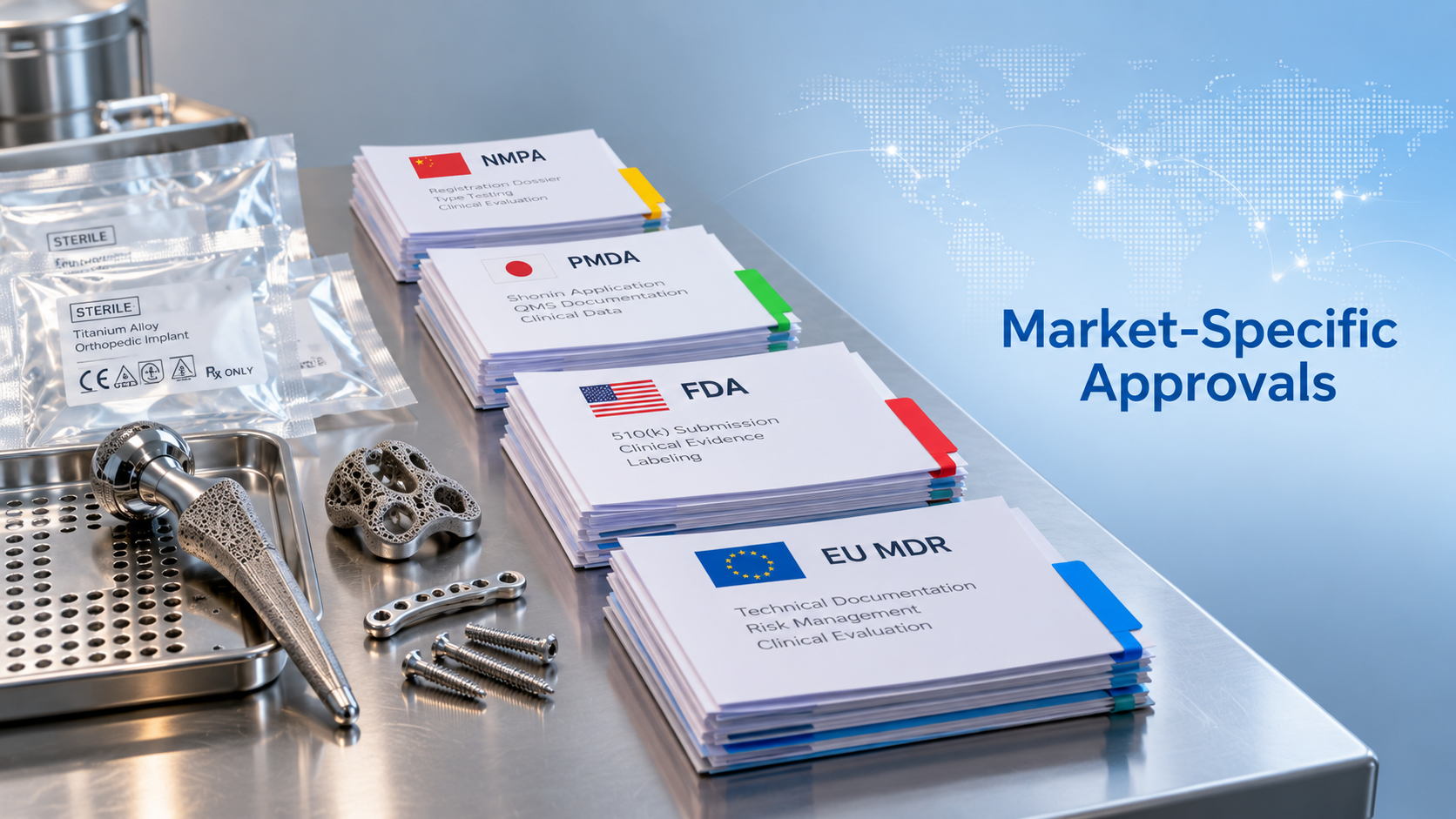
For manufacturers of implants and interventional devices, standards such as ISO 10993 and evolving expectations under CE MDR are not just technical obligations. They shape the true cost base of market access.
Smart medical cost-control solutions therefore invest in regulatory intelligence early. Strong testing plans, evidence strategies, and documentation discipline reduce rework, shorten approval timelines, and prevent costly surprises.
For enterprise leaders, this means cost control should include governance over product change management, supplier qualification, and clinical evidence planning. Cutting these functions often increases total cost later.
Reduce supply chain cost without weakening resilience
Another priority for decision-makers is supply assurance. A cheaper source is not a better source if it raises the risk of shortages, quality deviations, or inconsistent lead times during critical procurement cycles.
In high-value consumables, supply disruption can damage hospital relationships and eliminate savings through expedited shipping, emergency qualification work, and lost procedure volume. Resilience has direct economic value.
Leaders should examine where cost can be removed through smarter supplier architecture. This may include dual sourcing for key components, regional manufacturing options, and tighter visibility into sterilization and raw material constraints.
Inventory strategy is equally important. Excess stock ties up capital, but insufficient stock creates service risk. Data-driven demand planning can reduce write-offs and buffer costs without increasing stockout exposure.
For globally traded devices, enterprises should also model tender cycles, tariff changes, and logistics volatility. Cost control is strongest when procurement, operations, and commercial teams plan with the same risk assumptions.
Align product design and portfolio strategy with cost discipline
One of the highest-return opportunities lies upstream in design and portfolio management. By the time a product reaches large-scale procurement, many cost drivers are already locked in.
Design-for-value can lower long-term cost without sacrificing performance. Examples include material optimization, modular instrument systems, simplified packaging, and platform-based development across adjacent indications.
In orthopedic and cardiovascular segments, engineering choices should be reviewed not only for performance but also for manufacturability, sterilization complexity, and evidence generation burden across markets.
Portfolio discipline matters as well. Too many low-volume variants can create hidden cost through validation work, inventory fragmentation, training complexity, and reimbursement confusion. Rationalization can unlock meaningful savings.
For decision-makers, the key is balancing customization with scalability. Premium differentiation remains important, but not every feature creates enough clinical or commercial value to justify lifetime cost.
Build better procurement conversations with value evidence
Procurement pressure is unlikely to disappear, especially in markets influenced by centralized tendering and VBP-style mechanisms. That means suppliers must become more sophisticated in how they defend value.
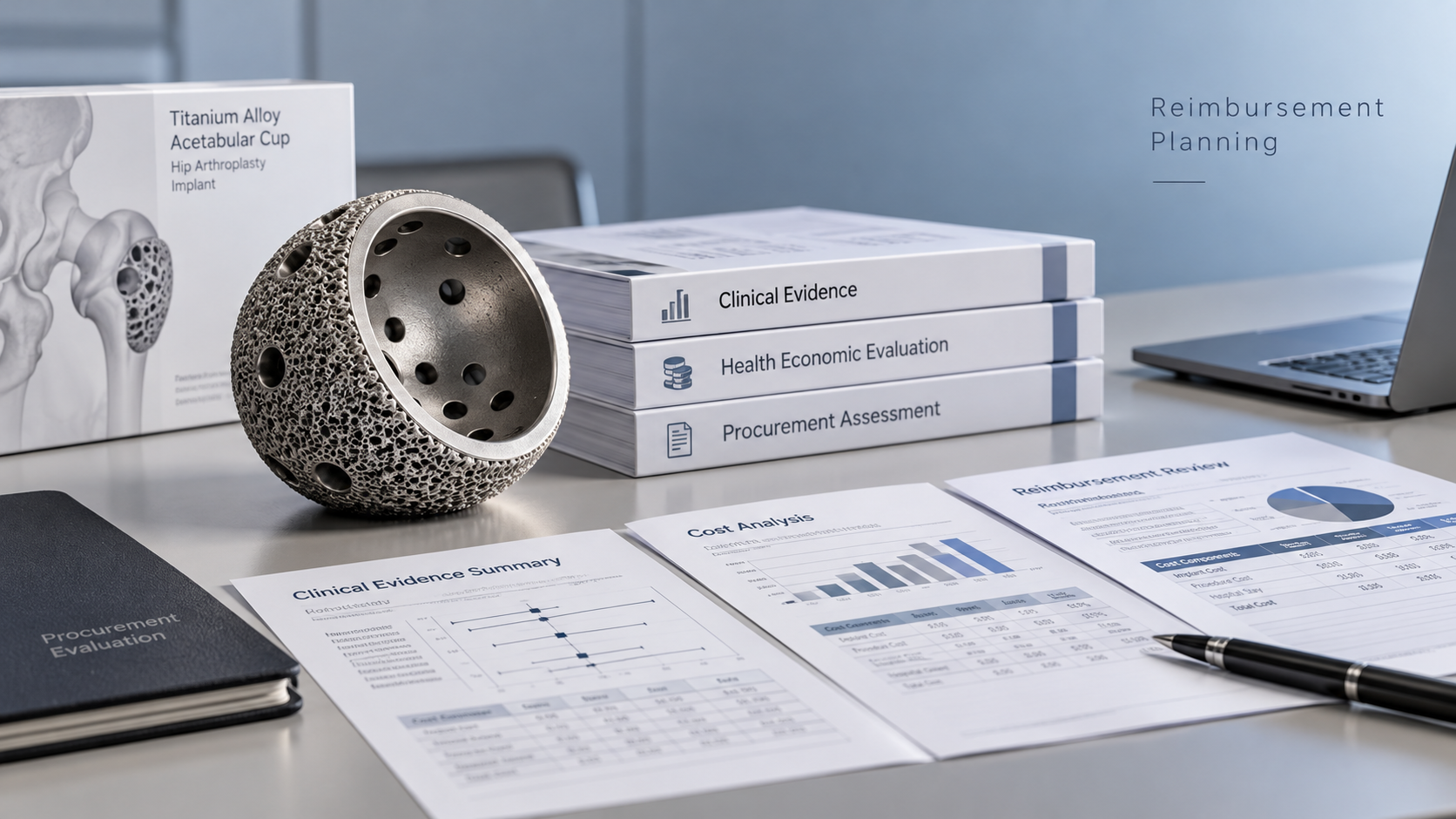
Instead of resisting price pressure with broad claims, companies should present evidence tied to hospital economics. This includes procedural efficiency, lower complication rates, shorter stays, and reduced need for follow-up intervention.
Hospitals are also more receptive when suppliers support implementation. Training, inventory coordination, instrument optimization, and clinical education can all improve utilization and reduce hidden costs at the provider level.
For procurement leaders on the buying side, this same logic helps identify which vendors are truly strategic partners. The right supplier may deliver better system-wide economics even if the unit quote is higher.
In this environment, medical cost-control solutions work best when commercial, clinical, and financial stakeholders use a shared value narrative rather than treating procurement as an isolated negotiation exercise.
Practical metrics that show whether a cost-control strategy is working
Executives need simple but meaningful indicators to track results. Purchase price variance alone is too narrow and can create misleading incentives across clinical product categories.
A better dashboard includes total cost per case, complication-linked cost, revision or reintervention rate, inventory turns, on-time supply performance, and regulatory milestone adherence.
Additional metrics may include gross margin by product family, tender win quality, surgeon adoption stability, and time-to-approval for line extensions. These measures connect cost actions to business durability.
Where possible, organizations should compare pre- and post-intervention performance at the pathway level. This helps distinguish between savings that are real and savings that merely shift cost downstream.
The goal is not to create measurement overload. It is to ensure leaders can quickly see whether a cost-control initiative is strengthening enterprise value or simply producing temporary purchasing optics.
A decision framework for choosing the right medical cost-control solutions
If a company wants a practical path forward, it can use a four-part decision framework. First, identify high-spend categories and map where total cost is actually generated.
Second, segment those categories by clinical criticality, differentiation, and supply risk. Third, define intervention options, such as design optimization, supplier restructuring, evidence strengthening, or portfolio rationalization.
Fourth, evaluate each option through both savings potential and strategic impact. The best initiative is rarely the one with the biggest immediate cut if it damages long-term access or trust.
This approach is especially important in advanced consumables markets, where technical performance, biocompatibility, and physician confidence influence economic outcomes as much as invoice price does.
Organizations that follow this framework tend to make fewer reactive cuts and more deliberate investments. Over time, that improves both cost discipline and competitive resilience.
Conclusion: smarter cost control protects value instead of eroding it
Medical cost-control solutions are most effective when they move beyond price suppression and focus on system-wide value. For enterprise decision-makers, that means managing cost where it truly originates.
Across implants, interventional devices, staplers, catheters, and advanced wound care, the sustainable path combines total cost thinking, strong compliance, resilient supply, disciplined design, and evidence-based procurement.
The strategic lesson is clear. In high-value medical consumables, the lowest price is not always the lowest cost, and the fastest cut is rarely the smartest one.
Enterprises that control cost without weakening quality, access, or innovation will be better positioned to win in a market shaped by rising scrutiny and tightening budgets. That is the real meaning of modern cost control.
Get weekly intelligence in your inbox.
No noise. No sponsored content. Pure intelligence.
News Recommendations
 Oct 26, 2026Can a single approval cover life science product sales worldwide?Can a single approval cover life science product sales worldwide?
 Oct 25, 2026When is sensitization testing needed for medical device biocompatibility?When is sensitization testing needed for medical device biocompatibility?
 Oct 24, 2026How is biocompatibility tested for implantable polymer biomaterials?How is biocompatibility tested for implantable polymer biomaterials?
 Oct 23, 2026How to build reimbursement into an implant commercialization strategyHow to build reimbursement into an implant commercialization strategy
 Oct 22, 2026What clinical evidence do implants need for CE marking under EU MDR?What clinical evidence do implants need for CE marking under EU MDR?
 Oct 21, 2026How to choose disposable laparoscopic stapler reloads for thick tissueHow to choose disposable laparoscopic stapler reloads for thick tissue
 Oct 20, 2026How to assess medical polymer biocompatibility under ISO 10993How to assess medical polymer biocompatibility under ISO 10993
 Oct 19, 2026How do interventional device categories differ in clinical use?How do interventional device categories differ in clinical use?
 Oct 18, 2026When to choose alginate dressings for heavily exuding chronic woundsWhen to choose alginate dressings for heavily exuding chronic wounds
 Oct 17, 2026How is biocompatibility tested for custom medical-grade PEEK implants?How is biocompatibility tested for custom medical-grade PEEK implants?
 Oct 16, 2026How to check a wound healing materials supplier’s biocompatibility dataHow to check a wound healing materials supplier’s biocompatibility data
 Oct 15, 2026How to verify the FDA clearance status of silver wound dressingsHow to verify the FDA clearance status of silver wound dressings
 Oct 14, 2026How to register orthopedic implants and instruments in Latin AmericaHow to register orthopedic implants and instruments in Latin America
 Oct 13, 2026How to use a device market intelligence database to benchmark VBP pricesHow to use a device market intelligence database to benchmark VBP prices
 Oct 12, 2026When should stainless steel orthopedic instruments be replaced?When should stainless steel orthopedic instruments be replaced?
 Oct 11, 2026When are alginate dressings rope the right choice for cavity wounds?When are alginate dressings rope the right choice for cavity wounds?
 Oct 10, 2026When smart minimally invasive technology improves catheter accessWhen smart minimally invasive technology improves catheter access
 Oct 08, 2026Clinical evaluation requirements for cardiovascular implant devices in EuropeClinical evaluation requirements for cardiovascular implant devices in Europe
 Oct 07, 2026What to verify before appointing an artificial joint implants distributorWhat to verify before appointing an artificial joint implants distributor
 Oct 06, 2026How ISO 10993 guides biocompatibility testing for medical materialsHow ISO 10993 guides biocompatibility testing for medical materials
 Oct 05, 2026How to verify an orthopedic implants and instruments exporterHow to verify an orthopedic implants and instruments exporter
 Oct 04, 2026What drives surgical stapling devices price differences in hospital tenders?What drives surgical stapling devices price differences in hospital tenders?
 Oct 03, 2026How to assess a central venous catheter manufacturer's infection-control evidenceHow to assess a central venous catheter manufacturer's infection-control evidence
 Oct 02, 2026How to assess an advanced wound care factory’s quality systemHow to assess an advanced wound care factory’s quality system
 Oct 01, 2026What is driving global medical consumables demand in emerging markets?What is driving global medical consumables demand in emerging markets?
 Sep 30, 2026Implant Material Compliance Testing: Evidence Needed for Regulatory SubmissionImplant Material Compliance Testing: Evidence Needed for Regulatory Submission
 Sep 30, 2026From Corrosion to Fatigue: What Implant Materials Testing Should MeasureFrom Corrosion to Fatigue: What Implant Materials Testing Should Measure