Biocompatibility Risks in 3D Printed Ti Implants
As 3D printed titanium implants enter routine care, risk assessment must move beyond geometry and strength.
Biological response now sits at the center of design review, validation, and lifecycle control.
For advanced implant systems, medical material biocompatibility depends on more than titanium chemistry alone.
Powder history, porosity, unmelted particles, cleaning residues, and surface energy can all shift tissue response.
These factors influence inflammation, osseointegration, corrosion behavior, and long-term implant safety.
A robust evaluation path helps connect engineering performance with regulatory expectations and clinical durability.
Foundational View of Biocompatibility in 3D Printed Ti Implants
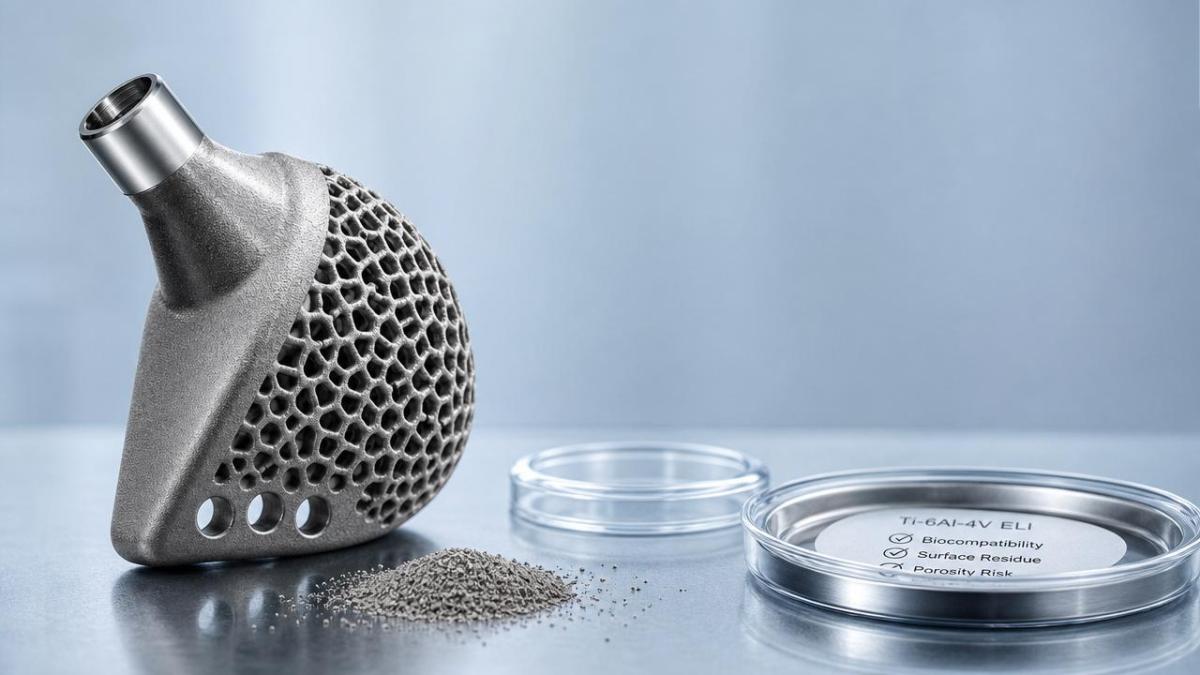
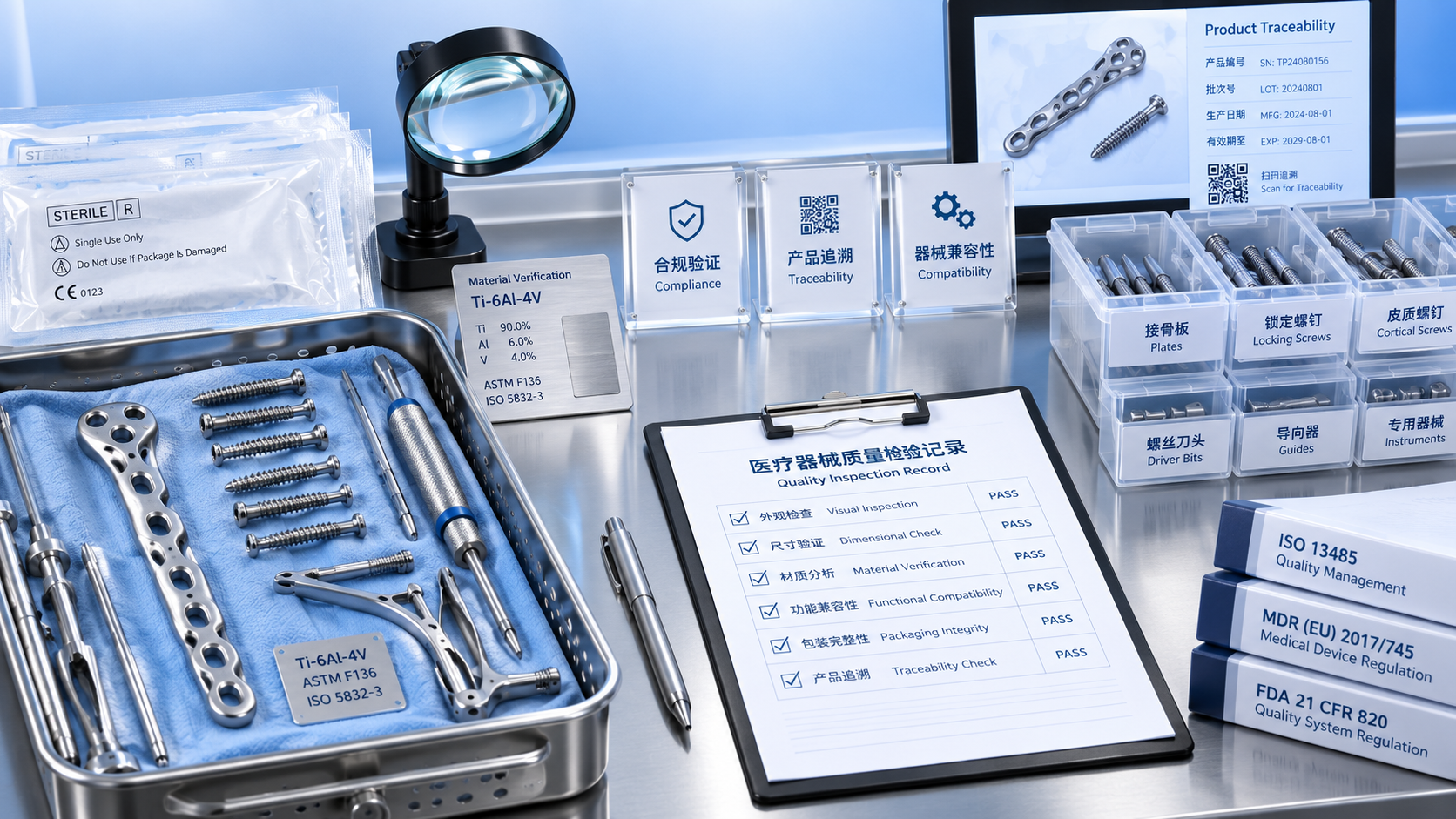
Titanium alloys, especially Ti-6Al-4V, are widely valued for strength, corrosion resistance, and bone affinity.
Yet additive manufacturing changes the material system in ways conventional forging or machining often does not.
Layer-by-layer melting creates unique thermal gradients, roughness profiles, and microstructural heterogeneity.
As a result, medical material biocompatibility must be judged as a process outcome, not a nominal alloy claim.
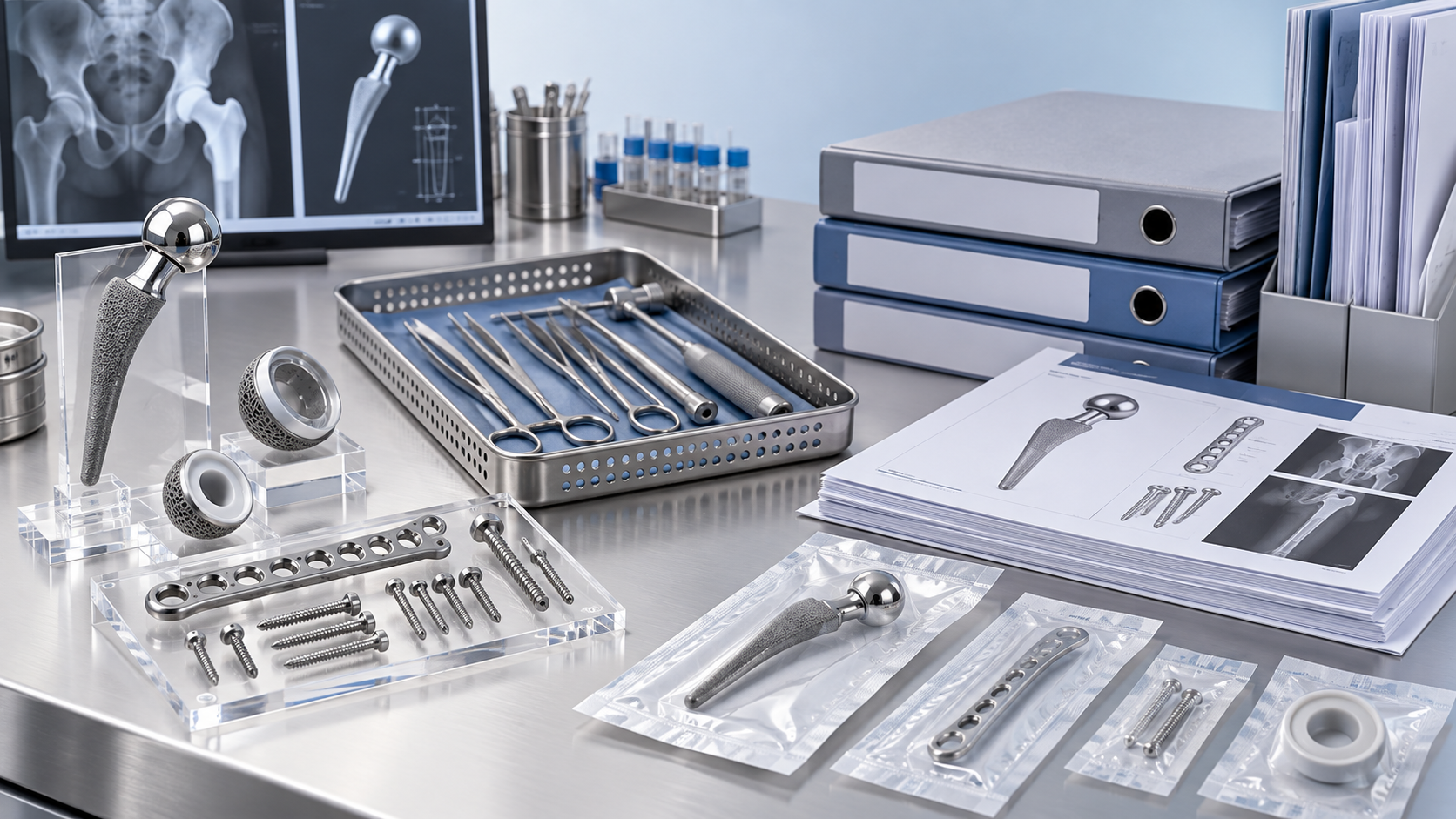
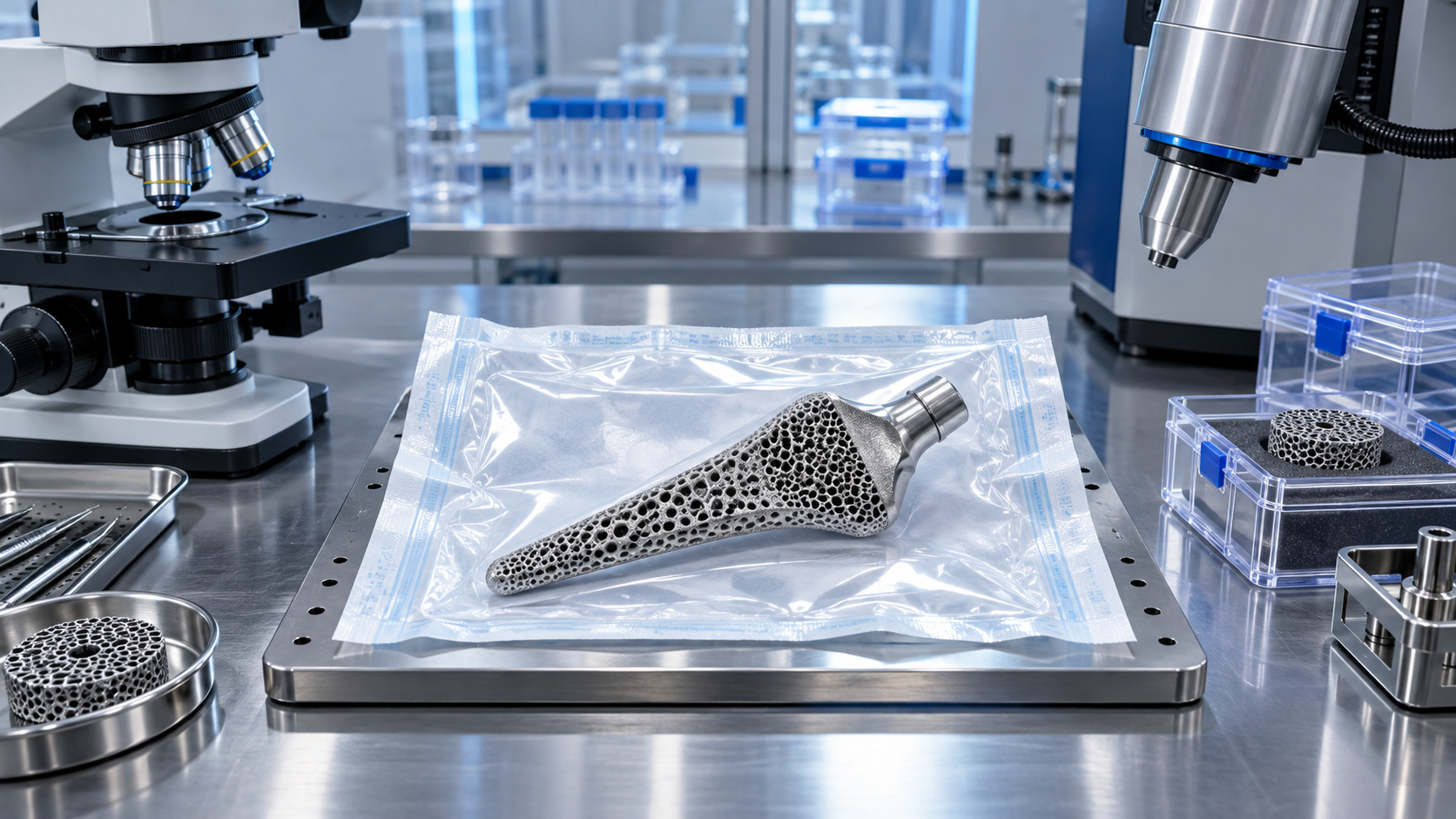
This is especially important for porous orthopedic structures designed to promote bone ingrowth.
The same porosity that supports fixation may also trap contaminants or complicate cleaning validation.
Why printed titanium behaves differently
- Surface area is much higher than machined implants.
- Internal channels can retain powder and processing residue.
- Rapid solidification may alter microstructure and oxide behavior.
- Post-processing strongly affects final medical material biocompatibility.
Key Industry Signals and Current Risk Focus
Across implant sectors, regulators and clinical reviewers increasingly ask for evidence tied to the actual printed condition.
Generic material certificates no longer answer the full biological safety question.
For IMCS-tracked Class III pathways, the strongest scrutiny often targets process-linked variability.
This trend reflects a larger shift in medical material biocompatibility evaluation across global high-value consumables.
Core Risk Factors Behind Ti Implant Compatibility
Powder quality and reuse history
Powder is the biological starting point for additive titanium.
Particle size distribution, morphology, oxygen pickup, and contamination levels affect the final implant surface.
Repeated powder reuse can increase oxidation and promote irregular melting behavior.
That variation may subtly weaken medical material biocompatibility, even if mechanical testing still passes.
Surface topology and roughness extremes
Roughness can help bone attachment, but uncontrolled roughness can create competing risks.
Sharp asperities, partially sintered beads, and inaccessible pores complicate tissue interaction.
Cell adhesion may improve in one area while debris retention rises in another.
The target is functional roughness, not simply maximum roughness.
Residual powder, blasting media, and cleaning agents
Loose titanium particles are a well-recognized concern in porous structures.
Additional residues may come from support removal, bead blasting, detergents, or passivation steps.
These residues can change extractables profiles and directly affect medical material biocompatibility testing outcomes.
Microstructure, stress, and corrosion response
Printed titanium often contains anisotropy, residual stress, and unique phase distributions.
If not controlled, these features may influence crack initiation and electrochemical behavior.
A damaged or unstable oxide surface can reduce corrosion resistance in vivo.
Corrosion byproducts then become part of the broader medical material biocompatibility picture.
Business and Clinical Value of Better Biocompatibility Control
A stronger control strategy delivers value well beyond passing ISO 10993 endpoints.
It supports cleaner regulatory narratives, fewer design surprises, and more stable clinical evidence.
In orthopedic replacement, this can protect osseointegration claims and revision risk assumptions.
In broader Class III pathways, it helps align technical files with real manufacturing conditions.
For strategic planning, reliable medical material biocompatibility data can also reduce delays during market access review.
- Improves confidence in long-term implant safety.
- Supports consistency across print batches and sites.
- Strengthens evidence for clinical evaluation reports.
- Helps connect material science with reimbursement pressure and quality economics.
Typical Risk Scenarios by Implant Configuration
Not all 3D printed titanium implants present the same biological risk profile.
Design intent, pore architecture, and implantation site all shape the assessment pathway.
Practical Evaluation and Control Measures
Effective control starts with linking material characterization to biological endpoints.
Testing should reflect the finished, sterilized, clinically representative implant.
- Define powder acceptance limits, reuse rules, and traceable batch history.
- Characterize roughness, pore accessibility, and loose particle burden.
- Validate cleaning for worst-case porous designs, not only simple coupons.
- Review post-processing effects, including HIP, machining, etching, and passivation.
- Build a biological evaluation plan aligned with ISO 10993 principles.
- Use extractables, elemental analysis, and corrosion data to support medical material biocompatibility conclusions.
Common oversight points
- Assuming alloy equivalence means process equivalence.
- Testing polished witness samples instead of final textured surfaces.
- Ignoring internal geometry during residue assessment.
- Separating engineering change control from biocompatibility review.
Next-Step Framework for More Reliable Assessment
A mature program treats medical material biocompatibility as a cross-functional discipline.
Material science, process validation, toxicology, and clinical logic must be stitched together early.
That approach is increasingly important for personalized implants and porous load-bearing devices.
The most reliable next step is to map every manufacturing variable to a biological relevance question.
Then confirm which risks need testing, which need justification, and which need tighter process control.
For organizations tracking global implant intelligence, this creates a clearer path from innovation to durable compliance.
In 3D printed Ti systems, better medical material biocompatibility management is not a final checkpoint.
It is the operating basis for safer reconstruction, stronger evidence, and longer clinical trust.
Get weekly intelligence in your inbox.
No noise. No sponsored content. Pure intelligence.
News Recommendations
 Oct 26, 2026Can a single approval cover life science product sales worldwide?Can a single approval cover life science product sales worldwide?
 Oct 25, 2026When is sensitization testing needed for medical device biocompatibility?When is sensitization testing needed for medical device biocompatibility?
 Oct 24, 2026How is biocompatibility tested for implantable polymer biomaterials?How is biocompatibility tested for implantable polymer biomaterials?
 Oct 23, 2026How to build reimbursement into an implant commercialization strategyHow to build reimbursement into an implant commercialization strategy
 Oct 22, 2026What clinical evidence do implants need for CE marking under EU MDR?What clinical evidence do implants need for CE marking under EU MDR?
 Oct 21, 2026How to choose disposable laparoscopic stapler reloads for thick tissueHow to choose disposable laparoscopic stapler reloads for thick tissue
 Oct 20, 2026How to assess medical polymer biocompatibility under ISO 10993How to assess medical polymer biocompatibility under ISO 10993
 Oct 19, 2026How do interventional device categories differ in clinical use?How do interventional device categories differ in clinical use?
 Oct 18, 2026When to choose alginate dressings for heavily exuding chronic woundsWhen to choose alginate dressings for heavily exuding chronic wounds
 Oct 17, 2026How is biocompatibility tested for custom medical-grade PEEK implants?How is biocompatibility tested for custom medical-grade PEEK implants?
 Oct 16, 2026How to check a wound healing materials supplier’s biocompatibility dataHow to check a wound healing materials supplier’s biocompatibility data
 Oct 15, 2026How to verify the FDA clearance status of silver wound dressingsHow to verify the FDA clearance status of silver wound dressings
 Oct 14, 2026How to register orthopedic implants and instruments in Latin AmericaHow to register orthopedic implants and instruments in Latin America
 Oct 13, 2026How to use a device market intelligence database to benchmark VBP pricesHow to use a device market intelligence database to benchmark VBP prices
 Oct 12, 2026When should stainless steel orthopedic instruments be replaced?When should stainless steel orthopedic instruments be replaced?
 Oct 11, 2026When are alginate dressings rope the right choice for cavity wounds?When are alginate dressings rope the right choice for cavity wounds?
 Oct 10, 2026When smart minimally invasive technology improves catheter accessWhen smart minimally invasive technology improves catheter access
 Oct 08, 2026Clinical evaluation requirements for cardiovascular implant devices in EuropeClinical evaluation requirements for cardiovascular implant devices in Europe
 Oct 07, 2026What to verify before appointing an artificial joint implants distributorWhat to verify before appointing an artificial joint implants distributor
 Oct 06, 2026How ISO 10993 guides biocompatibility testing for medical materialsHow ISO 10993 guides biocompatibility testing for medical materials
 Oct 05, 2026How to verify an orthopedic implants and instruments exporterHow to verify an orthopedic implants and instruments exporter
 Oct 04, 2026What drives surgical stapling devices price differences in hospital tenders?What drives surgical stapling devices price differences in hospital tenders?
 Oct 03, 2026How to assess a central venous catheter manufacturer's infection-control evidenceHow to assess a central venous catheter manufacturer's infection-control evidence
 Oct 02, 2026How to assess an advanced wound care factory’s quality systemHow to assess an advanced wound care factory’s quality system
 Oct 01, 2026What is driving global medical consumables demand in emerging markets?What is driving global medical consumables demand in emerging markets?
 Sep 30, 2026Implant Material Compliance Testing: Evidence Needed for Regulatory SubmissionImplant Material Compliance Testing: Evidence Needed for Regulatory Submission
 Sep 30, 2026From Corrosion to Fatigue: What Implant Materials Testing Should MeasureFrom Corrosion to Fatigue: What Implant Materials Testing Should Measure