Minimally Invasive Surgery Equipment: Cost vs Utilization in 2026
In 2026, purchasing decisions for minimally invasive surgery equipment are no longer driven by clinical appeal alone. For financial approvers, the real question is how equipment cost compares with utilization, procedural volume, and long-term return. This article examines the balance between capital investment, consumable demand, and operational efficiency, helping decision-makers identify where minimally invasive surgery equipment creates measurable value instead of hidden budget pressure.
Why does minimally invasive surgery equipment require a different financial lens in 2026?
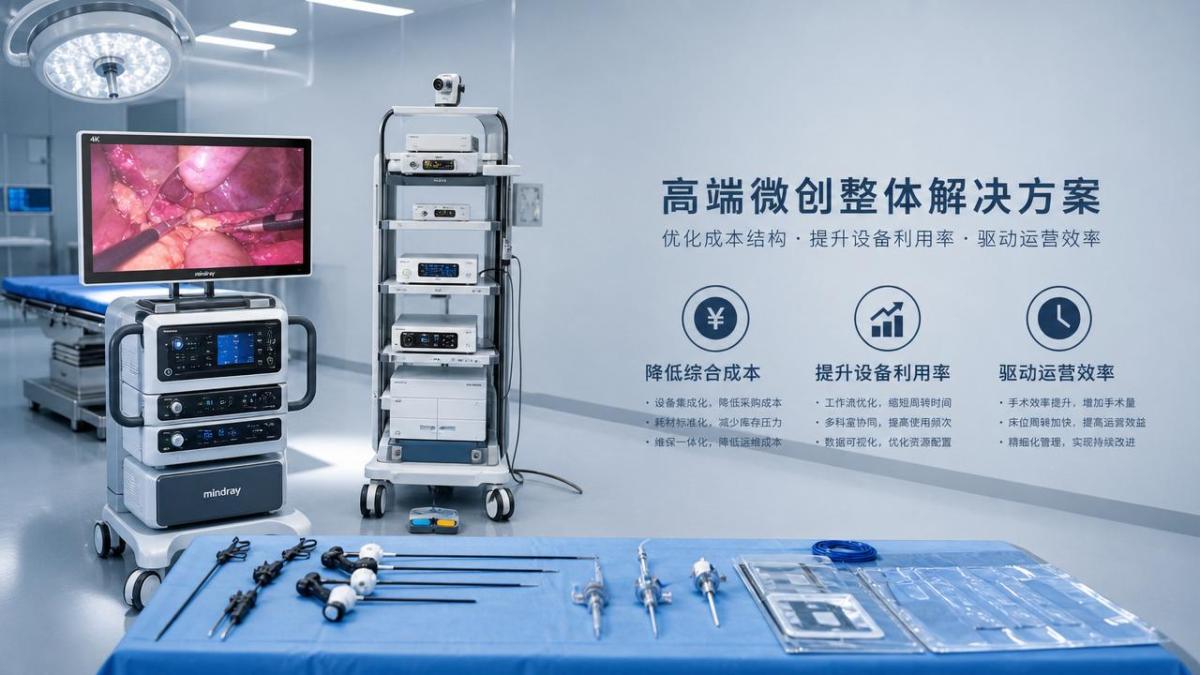
Minimally invasive surgery equipment now sits at the intersection of capital budgeting, case volume forecasting, consumable control, and regulatory scrutiny. For finance teams, the issue is not whether MIS technology is clinically relevant, but whether the installed base will be used enough to justify ownership cost.
This is especially true in hospitals and surgical networks facing reimbursement pressure, procurement standardization, and price compression across high-value medical consumables. A laparoscopic tower, energy platform, powered stapling system, or visualization stack may look efficient in a demo, yet underutilization can quickly turn a strategic purchase into an idle asset.
For financial approvers, minimally invasive surgery equipment should be assessed as a full operating model. That means linking purchase price to service life, planned specialties, surgeon adoption, compatible consumables, sterilization flow, maintenance burden, and expected procedure growth.
- Capital expenditure matters, but it is only the visible layer. Hidden cost often comes from low room turnover, non-standard accessories, and expensive single-use items.
- Utilization is not simply annual case count. It includes uptime, cross-department sharing, surgeon preference alignment, and scheduling efficiency.
- Return depends on the mix of procedures. High-volume general surgery and bariatric use may support a system differently than low-frequency advanced thoracic or colorectal cases.
This is where IMCS adds practical value. Its intelligence framework does not isolate devices from their commercial and regulatory realities. By connecting minimally invasive surgical consumables, precision manufacturing expectations, and cost-control policies such as VBP-style pricing pressure, IMCS helps approval teams evaluate real cost exposure rather than brochure assumptions.
What costs actually define the true ownership of minimally invasive surgery equipment?
Finance teams often receive a headline quotation and an expected payback narrative. That is not enough. The true cost of minimally invasive surgery equipment is distributed across acquisition, procedure support, maintenance, compliance, and workflow adaptation.
Before comparing suppliers, decision-makers should separate fixed and variable cost components. The table below provides a practical framework for financial review of minimally invasive surgery equipment in 2026.
A common mistake is to compare only capital price while ignoring the consumable tail. In minimally invasive surgery equipment, a lower platform price can be offset by higher disposable usage per case. This is particularly relevant for stapling systems, energy devices, and specialty catheters tied to procedure-specific clinical pathways.
IMCS monitors these relationships across orthopedic, cardiovascular, MIS, and advanced wound care ecosystems, giving procurement and finance teams a broader benchmark for where device economics are tightening and where premium value still holds.
How should financial approvers measure utilization before approving purchase?
Utilization is the central variable in the cost versus value equation for minimally invasive surgery equipment. Without credible utilization assumptions, ROI models become optimistic spreadsheets rather than operating plans.
Use a three-layer utilization model
A useful approach is to measure planned utilization at three levels: procedural volume, room productivity, and platform versatility. Looking at just one level usually hides risk.
- Procedural volume: How many laparoscopic, endoscopic, or image-guided cases are expected per month by specialty?
- Room productivity: How often is the system actually available, set up correctly, and turned over without causing delays?
- Platform versatility: Can the same minimally invasive surgery equipment support general surgery, gynecology, urology, thoracic, or colorectal applications?
Watch for utilization distortions
Forecasts can be overstated when a hospital counts all theoretically eligible cases but has only two trained surgeons, one restricted OR slot, or a sterilization backlog. For finance teams, utilization should be approved only after matching procedure demand to staffing, training, and consumable supply continuity.
The next table helps approval teams compare utilization quality rather than volume alone when evaluating minimally invasive surgery equipment.
A high-quality utilization plan makes approval more defensible. It also lowers the chance that expensive minimally invasive surgery equipment is parked in one department while other suitable service lines remain unsupported.
Which equipment categories create the biggest gap between cost and utilization?
Not all minimally invasive surgery equipment behaves the same financially. Some categories scale well across specialties, while others are economically viable only in focused, high-volume programs.
Higher utilization potential
- Basic laparoscopic visualization systems often support multiple departments and can achieve strong room-level utilization when standardized.
- Insufflation and general access tools can spread cost over a wide procedural base if accessory compatibility is managed well.
- Certain reusable instrument platforms improve economics when sterilization capacity is reliable and damage rates are controlled.
Higher cost-risk categories
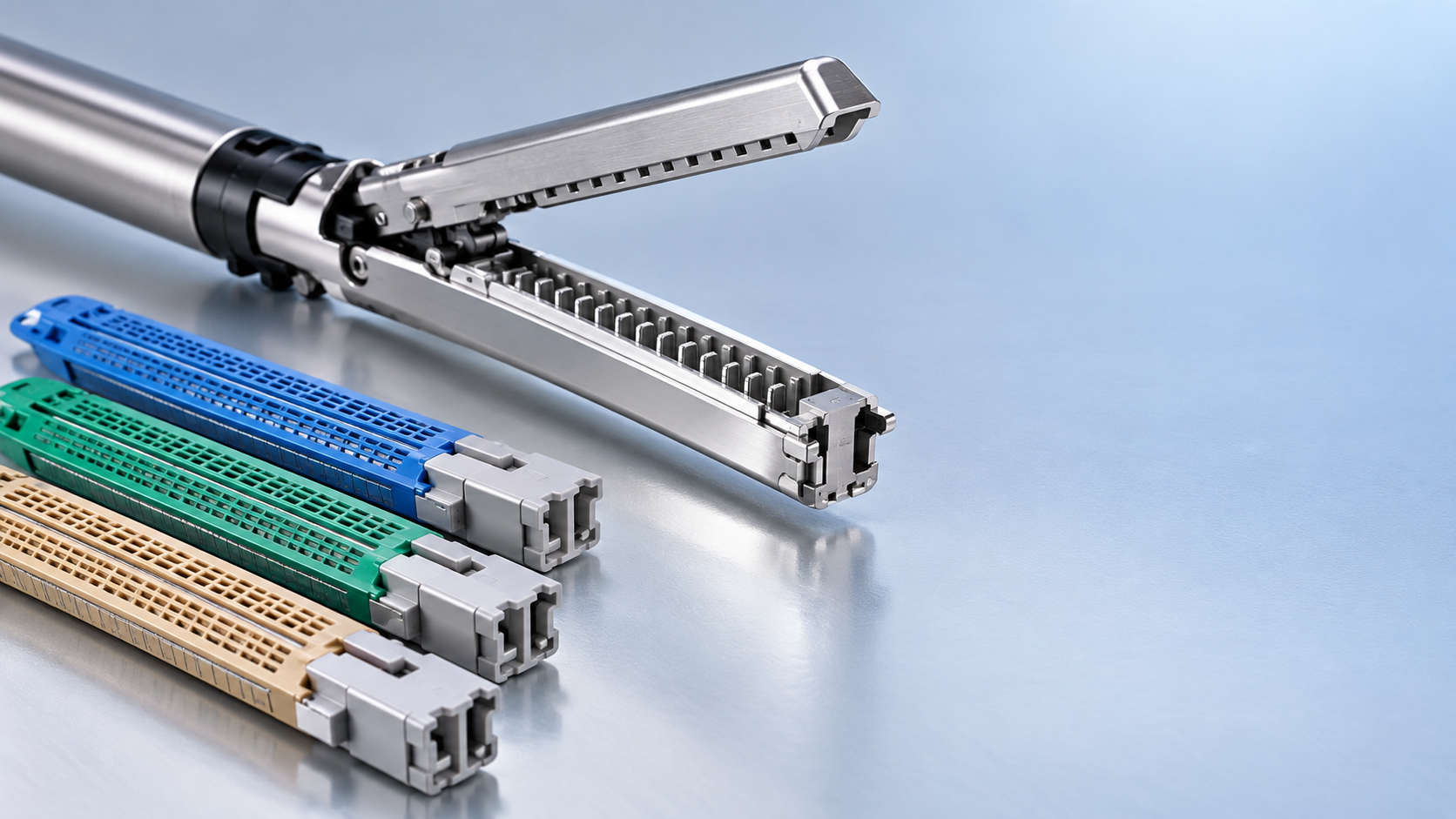
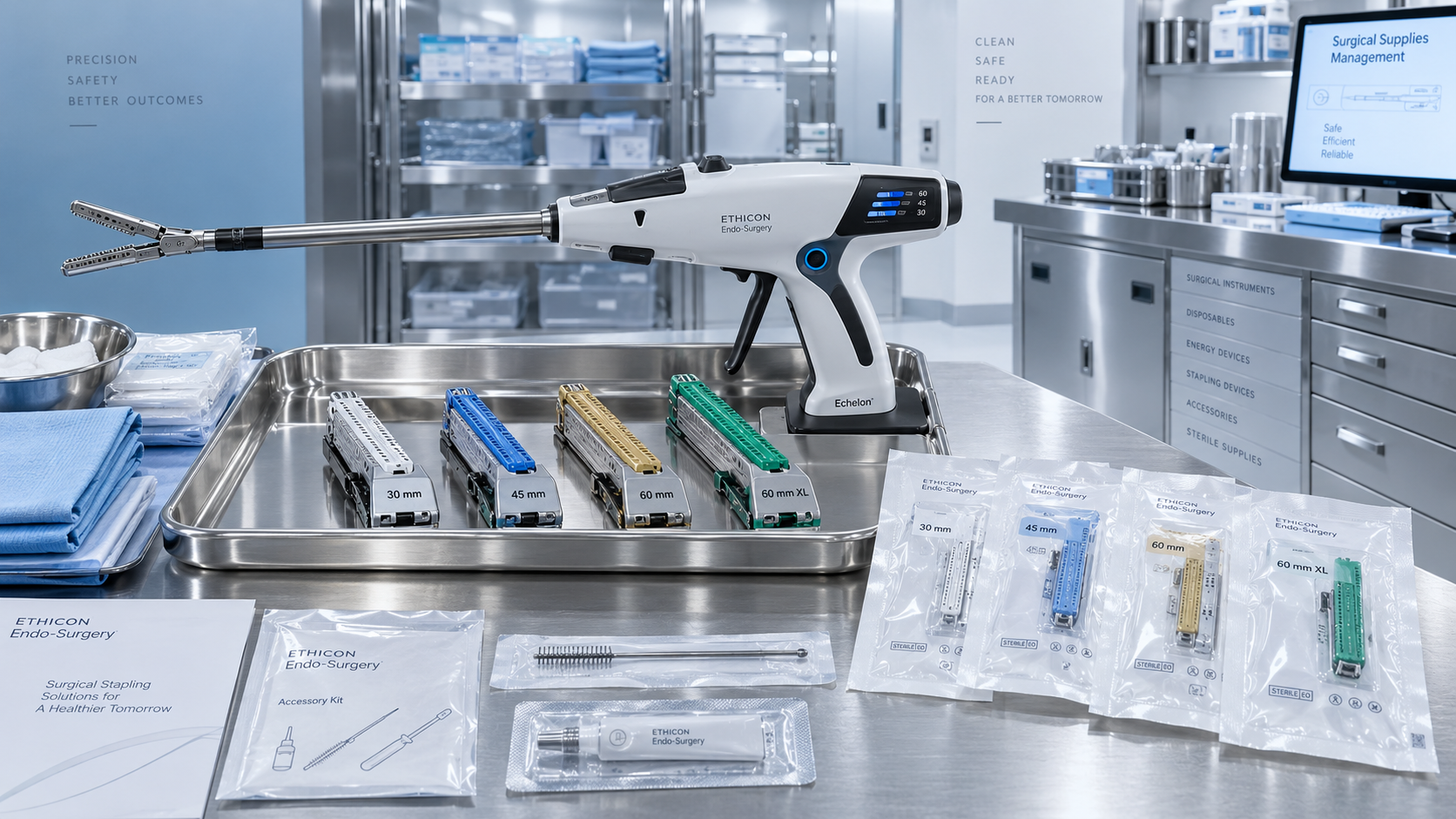
- Powered stapling ecosystems can carry a large recurring consumable burden, especially in colorectal and bariatric procedures.
- Advanced vessel sealing or energy systems may justify premium spend only if reduced operative time or reduced instrument changes are consistently realized.
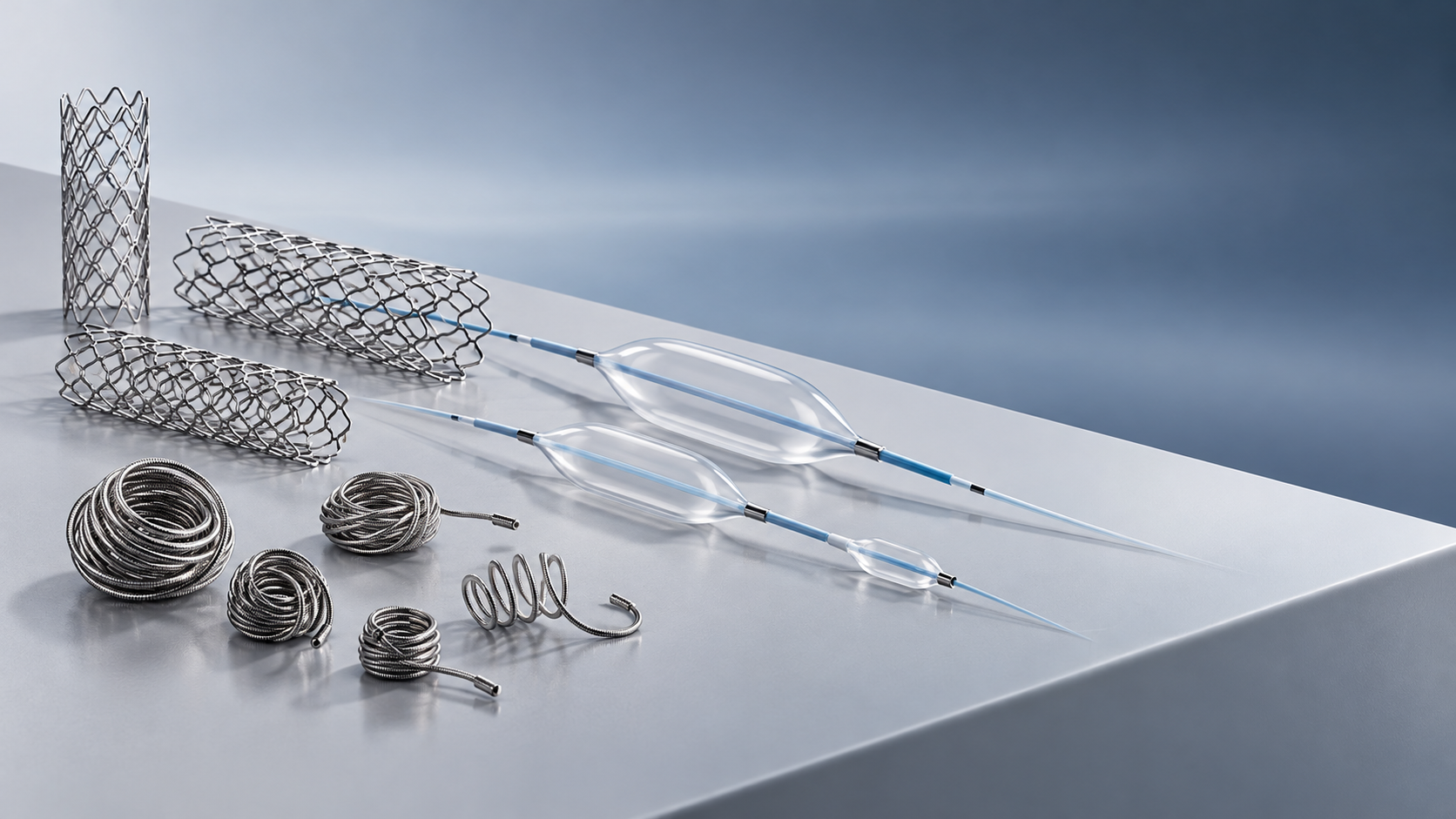
- Specialty catheters and interventional disposables may produce excellent clinical outcomes but require very close review of reimbursement and case selection.
IMCS is particularly relevant in these high-cost-risk categories because its intelligence scope extends beyond capital devices into the consumables that often determine real budget performance. For example, minimally invasive surgical staplers are not just a technical tool; they are a heavy consumable category whose pricing, sourcing stability, and regulatory profile directly affect finance outcomes.
How can procurement compare minimally invasive surgery equipment options more realistically?
A useful comparison should not ask which system is the most advanced in isolation. It should ask which option fits expected volume, compliance needs, and budget discipline with the least operational friction.
The table below compares three common procurement pathways for minimally invasive surgery equipment from a finance perspective.
There is no universal winner. Full purchase may be financially efficient in a mature surgical center, while phased deployment may better protect a network that still needs to validate surgeon demand and accessory standardization. Approval quality improves when procurement asks each supplier for a utilization-linked commercial model instead of a generic quotation.
What standards and compliance issues should finance teams not overlook?
Minimally invasive surgery equipment does not operate in a compliance vacuum. Even when capital equipment appears straightforward, associated consumables, materials, and sterile-contact components may bring important documentation obligations.
- Biocompatibility expectations can matter for patient-contact consumables, making frameworks such as ISO 10993 relevant in product evaluation discussions.
- For regulated markets, quality system evidence, product registration status, and traceability support can affect rollout timing and audit readiness.
- In Europe and similar jurisdictions, clinical evaluation logic under CE MDR may influence how premium devices and associated consumables are positioned and documented.
- In cost-controlled environments influenced by centralized procurement or VBP-style mechanisms, price can change rapidly, but quality and supply assurance cannot be treated as secondary.
This is another area where IMCS stands out. Its Strategic Intelligence Center connects toxicology, clinical evaluation, and capital-market pricing logic. For financial approvers, that means better visibility into whether a proposed minimally invasive surgery equipment program is vulnerable to future price shocks, compliance delays, or supply instability.
Common approval mistakes: where do budgets usually go wrong?
Mistake 1: Approving technology before confirming case migration
A hospital may approve minimally invasive surgery equipment based on current open surgery volume, assuming fast conversion to MIS. In reality, conversion depends on surgeon training, patient mix, anesthesia support, and operating room discipline. Without those factors, projected utilization can fall short.
Mistake 2: Ignoring consumable lock-in
Some systems look attractively priced because margin is shifted into proprietary single-use components. Finance teams should test total case cost under low, medium, and high monthly volume assumptions.
Mistake 3: Underestimating implementation friction
If minimally invasive surgery equipment requires retraining, new sterilization protocols, or added inventory complexity, early utilization may remain weak. Payback timelines should include a realistic ramp period.
Mistake 4: Treating all specialties as interchangeable
General surgery, gynecology, urology, cardiovascular intervention, and tissue repair workflows do not consume resources in the same way. Approval should reflect specialty-specific procedure economics rather than one blended average.
FAQ: what do financial approvers ask most about minimally invasive surgery equipment?
How do we know if minimally invasive surgery equipment is underutilized?
Look beyond annual ownership reports. Warning signs include inconsistent monthly case counts, repeated rescheduling due to setup issues, limited surgeon participation, and high disposable purchase relative to completed cases. Underutilization often shows up first in workflow metrics, not accounting summaries.
What is the most important metric for approval: cost per case or total ROI?
Both matter, but they answer different questions. Cost per case shows recurring margin pressure, while total ROI tests whether capital deployment is justified over time. A strong approval model should include both metrics, plus a conservative utilization ramp.
Are cheaper systems always better for budget control?
No. Lower acquisition price can lead to higher total cost if the system has poor accessory compatibility, weak service support, or expensive proprietary disposables. Financial value comes from a balanced platform, not the smallest quotation.
What should be requested before final approval?
Request a procedure-level cost map, planned specialty rollout, maintenance terms, compatibility list, training schedule, consumable forecast, and documentation relevant to regulatory and quality review. This creates a more defendable approval package.
Why choosing the right intelligence partner matters before you approve
Minimally invasive surgery equipment decisions are no longer just procurement events. They are cross-functional commitments involving capital planning, clinical adoption, supply chain reliability, consumable economics, and regulatory logic. The more complex the portfolio, the more valuable structured market intelligence becomes.
IMCS supports this decision process by connecting the financial reality of high-value consumables with the technical and compliance depth behind them. Its coverage of minimally invasive staplers, cardiovascular devices, medical polymer catheters, orthopedic implants, and advanced wound care allows approvers to evaluate equipment not as isolated units, but as part of a broader care and reimbursement ecosystem.
If you are reviewing minimally invasive surgery equipment for 2026 budgeting, you can consult IMCS for parameter confirmation, product selection logic, delivery cycle discussion, consumable structure review, regulatory documentation expectations, sample support pathways, and quotation comparison analysis. That makes approval faster, more evidence-based, and less exposed to hidden downstream cost.
Get weekly intelligence in your inbox.
No noise. No sponsored content. Pure intelligence.
News Recommendations
 Oct 26, 2026Can a single approval cover life science product sales worldwide?Can a single approval cover life science product sales worldwide?
 Oct 25, 2026When is sensitization testing needed for medical device biocompatibility?When is sensitization testing needed for medical device biocompatibility?
 Oct 24, 2026How is biocompatibility tested for implantable polymer biomaterials?How is biocompatibility tested for implantable polymer biomaterials?
 Oct 23, 2026How to build reimbursement into an implant commercialization strategyHow to build reimbursement into an implant commercialization strategy
 Oct 22, 2026What clinical evidence do implants need for CE marking under EU MDR?What clinical evidence do implants need for CE marking under EU MDR?
 Oct 21, 2026How to choose disposable laparoscopic stapler reloads for thick tissueHow to choose disposable laparoscopic stapler reloads for thick tissue
 Oct 20, 2026How to assess medical polymer biocompatibility under ISO 10993How to assess medical polymer biocompatibility under ISO 10993
 Oct 19, 2026How do interventional device categories differ in clinical use?How do interventional device categories differ in clinical use?
 Oct 18, 2026When to choose alginate dressings for heavily exuding chronic woundsWhen to choose alginate dressings for heavily exuding chronic wounds
 Oct 17, 2026How is biocompatibility tested for custom medical-grade PEEK implants?How is biocompatibility tested for custom medical-grade PEEK implants?
 Oct 16, 2026How to check a wound healing materials supplier’s biocompatibility dataHow to check a wound healing materials supplier’s biocompatibility data
 Oct 15, 2026How to verify the FDA clearance status of silver wound dressingsHow to verify the FDA clearance status of silver wound dressings
 Oct 14, 2026How to register orthopedic implants and instruments in Latin AmericaHow to register orthopedic implants and instruments in Latin America
 Oct 13, 2026How to use a device market intelligence database to benchmark VBP pricesHow to use a device market intelligence database to benchmark VBP prices
 Oct 12, 2026When should stainless steel orthopedic instruments be replaced?When should stainless steel orthopedic instruments be replaced?
 Oct 11, 2026When are alginate dressings rope the right choice for cavity wounds?When are alginate dressings rope the right choice for cavity wounds?
 Oct 10, 2026When smart minimally invasive technology improves catheter accessWhen smart minimally invasive technology improves catheter access
 Oct 08, 2026Clinical evaluation requirements for cardiovascular implant devices in EuropeClinical evaluation requirements for cardiovascular implant devices in Europe
 Oct 07, 2026What to verify before appointing an artificial joint implants distributorWhat to verify before appointing an artificial joint implants distributor
 Oct 06, 2026How ISO 10993 guides biocompatibility testing for medical materialsHow ISO 10993 guides biocompatibility testing for medical materials
 Oct 05, 2026How to verify an orthopedic implants and instruments exporterHow to verify an orthopedic implants and instruments exporter
 Oct 04, 2026What drives surgical stapling devices price differences in hospital tenders?What drives surgical stapling devices price differences in hospital tenders?
 Oct 03, 2026How to assess a central venous catheter manufacturer's infection-control evidenceHow to assess a central venous catheter manufacturer's infection-control evidence
 Oct 02, 2026How to assess an advanced wound care factory’s quality systemHow to assess an advanced wound care factory’s quality system
 Oct 01, 2026What is driving global medical consumables demand in emerging markets?What is driving global medical consumables demand in emerging markets?
 Sep 30, 2026Implant Material Compliance Testing: Evidence Needed for Regulatory SubmissionImplant Material Compliance Testing: Evidence Needed for Regulatory Submission
 Sep 30, 2026From Corrosion to Fatigue: What Implant Materials Testing Should MeasureFrom Corrosion to Fatigue: What Implant Materials Testing Should Measure