Cardiovascular Device Development: Key 2026 Trial Signals
Cardiovascular device development is moving into a high-stakes 2026 window, and the most meaningful trial signals will not be headline claims alone. For information researchers, the real value lies in reading which studies can change labeling, physician confidence, reimbursement positioning, and procurement outcomes. Across stents, structural heart devices, catheters, and next-generation biomaterials, 2026 is likely to separate technologies with durable clinical evidence from those relying mainly on engineering promise.
The clearest early read is this: success in 2026 will be defined by a combination of hard safety outcomes, longer follow-up durability, smarter patient stratification, and evidence that can survive both regulators and cost-control systems. In other words, cardiovascular device development is no longer judged only by procedural feasibility. It is judged by whether clinical data can support adoption in real-world hospitals under tightening economic scrutiny.
For researchers tracking the sector, the key question is not simply which trial reports positive data. The better question is which readouts can alter the clinical and commercial trajectory of a device category. That means looking closely at endpoint design, comparator choice, subgroup consistency, adverse event trends, and whether trial results map to practical use in everyday interventional cardiology.
What information researchers should focus on first in 2026

The most useful way to monitor cardiovascular device development in 2026 is to rank trial signals by decision impact. Some data affect scientific interest only. Others influence regulatory review, physician behavior, hospital purchasing, and global market access almost immediately.
Four questions should come first. Does the device improve safety versus current standard care? Does it maintain effectiveness over a meaningful follow-up window? Is the benefit concentrated in a narrow patient subgroup or broadly reproducible? And can the evidence justify premium pricing in systems facing reimbursement pressure and volume-based procurement logic?
These questions matter because the cardiovascular field has matured. Novelty alone no longer creates momentum. Trial evidence must now carry multiple burdens at once: clinical proof, operational practicality, risk management, and economic defensibility. Devices that fail any one of these dimensions may still attract attention, but they are less likely to gain durable adoption.
Which trial endpoints will matter more than promotional claims
In 2026, safety endpoints will remain the first screen. For coronary and peripheral devices, researchers should watch rates of target lesion failure, stent thrombosis, major adverse cardiovascular events, bleeding complications, and device-related reintervention. Small differences in these outcomes can strongly influence how interventionalists judge platform reliability.
For structural heart technologies such as TAVR systems or transcatheter repair platforms, the most important signals often extend beyond procedural success. Stroke, pacemaker implantation, paravalvular leak, mortality, valve hemodynamics, and long-term structural deterioration are central to determining whether a device can move into younger or lower-risk populations.
Composite endpoints require extra caution. They can make a study look stronger than the individual clinical components justify. Researchers should check whether positive results are driven by soft endpoints, repeat imaging findings, or events with lower patient relevance. A trial can meet its primary endpoint while still leaving major doubts about real-world value.
Non-inferiority designs also deserve careful reading. In many mature cardiovascular categories, proving superiority is difficult, so companies pursue non-inferiority against established devices. But the margin selected, the event rate assumptions, and crossover patterns can all shape interpretation. A technically positive non-inferiority result is not always enough to support broad market enthusiasm.
Why durability data may be the strongest 2026 differentiator
One of the most important developments in cardiovascular device development is the market’s rising demand for durability evidence. Early procedural performance is no longer sufficient, especially in implants intended to remain in the body for years. Devices increasingly need follow-up that confirms stability rather than merely acute success.
For drug-eluting stents, this means sustained vessel patency, low late thrombosis risk, and confidence that thinner struts or novel polymers do not create late trade-offs. For bioresorbable or hybrid platforms, durability questions become even sharper because the clinical promise depends on what happens after the material changes over time.
For TAVR and other structural implants, durability is becoming a central strategic issue. As indications expand toward younger patients, the tolerance for uncertain long-term performance declines. A trial with acceptable short-term outcomes but limited multiyear data may struggle to support aggressive positioning, especially where surgical alternatives still set a high benchmark.
Researchers should therefore pay attention to whether 2026 trial updates include two-year, three-year, or even longer follow-up extensions. These later readouts may have more strategic significance than initial enrollment announcements because they show whether early gains persist, narrow, or reverse with time.
How patient selection trends will reveal where adoption is heading
Another key signal in 2026 will come from patient selection. Cardiovascular device development increasingly succeeds through precise indication strategy rather than broad claims. Trials that identify the right anatomical, risk, or comorbidity-defined subgroup can create strong adoption momentum even when the total addressable population appears smaller at first.
For example, lesion complexity, calcification burden, bifurcation anatomy, vessel diameter, renal risk, frailty, and prior intervention history can all shape device performance. A technology that looks average across a mixed population may be highly valuable in a specific subgroup where current options remain weak.
Structural heart trials are especially dependent on patient selection logic. Age, surgical risk classification, annular anatomy, conduction system vulnerability, and lifetime management considerations affect how clinicians judge a transcatheter solution. In 2026, subgroup consistency will likely matter as much as overall headline outcomes.
Information researchers should therefore review inclusion and exclusion criteria with care. If a trial enrolls highly selected centers, heavily screened patients, or anatomies that do not reflect ordinary practice, translation into the broader market may be limited. Strong results in ideal patients do not automatically equal strong adoption in routine care.
Regulatory meaning: which readouts can actually change pathways
Not every positive study changes regulatory direction. In cardiovascular device development, 2026 trial signals will matter most when they can support label expansion, reduce post-market uncertainty, or answer known reviewer concerns about biocompatibility, embolic risk, thrombogenicity, or device failure modes.
Researchers should watch whether trial design aligns with what major regulatory systems typically require. Randomized evidence against accepted standard of care, clinically meaningful endpoints, adequate follow-up, and robust adverse event adjudication all improve the chance that data can support submissions across demanding jurisdictions.
For high-risk Class III devices, regulators often look beyond efficacy summaries. They evaluate whether the clinical package is coherent with bench testing, material safety, manufacturing consistency, and post-market surveillance planning. This is where cardiovascular device development intersects with broader evidence quality, not just isolated trial performance.
Readouts that directly reduce uncertainty around known category risks are especially powerful. For instance, if a new coating technology demonstrates lower thrombosis risk without increasing restenosis, or a valve system shows lower pacemaker rates while preserving hemodynamics, the data may have clear regulatory relevance rather than mere marketing value.
Commercial significance: evidence now needs to survive procurement pressure
The commercial environment is changing how trial data are interpreted. Cardiovascular device development no longer competes only on innovation and physician preference. It also competes within cost-control frameworks, tender systems, and hospital committees that increasingly ask whether incremental benefit justifies price differences.
This is particularly relevant for categories already exposed to procurement compression or reimbursement scrutiny. If a new device shows only marginal improvement over standard platforms, its trial success may not translate into pricing power. Stronger market positioning usually requires evidence tied to fewer complications, shorter stays, lower reintervention rates, or use in previously underserved patients.
For information researchers, this means reading trials through an access lens. Does the data create a compelling health-economic story? Can it reduce downstream resource use? Does it simplify procedures, shorten training curves, or improve predictability in ways hospitals value? These questions often decide whether adoption expands beyond leading centers.
Procurement implications are especially important in high-volume interventional categories such as stents, balloons, and certain catheter systems. Even technically elegant products can struggle if clinical differentiation is too subtle to withstand price-based competition. In 2026, evidence must increasingly defend both clinical utility and economic relevance.
Which device segments deserve the closest monitoring
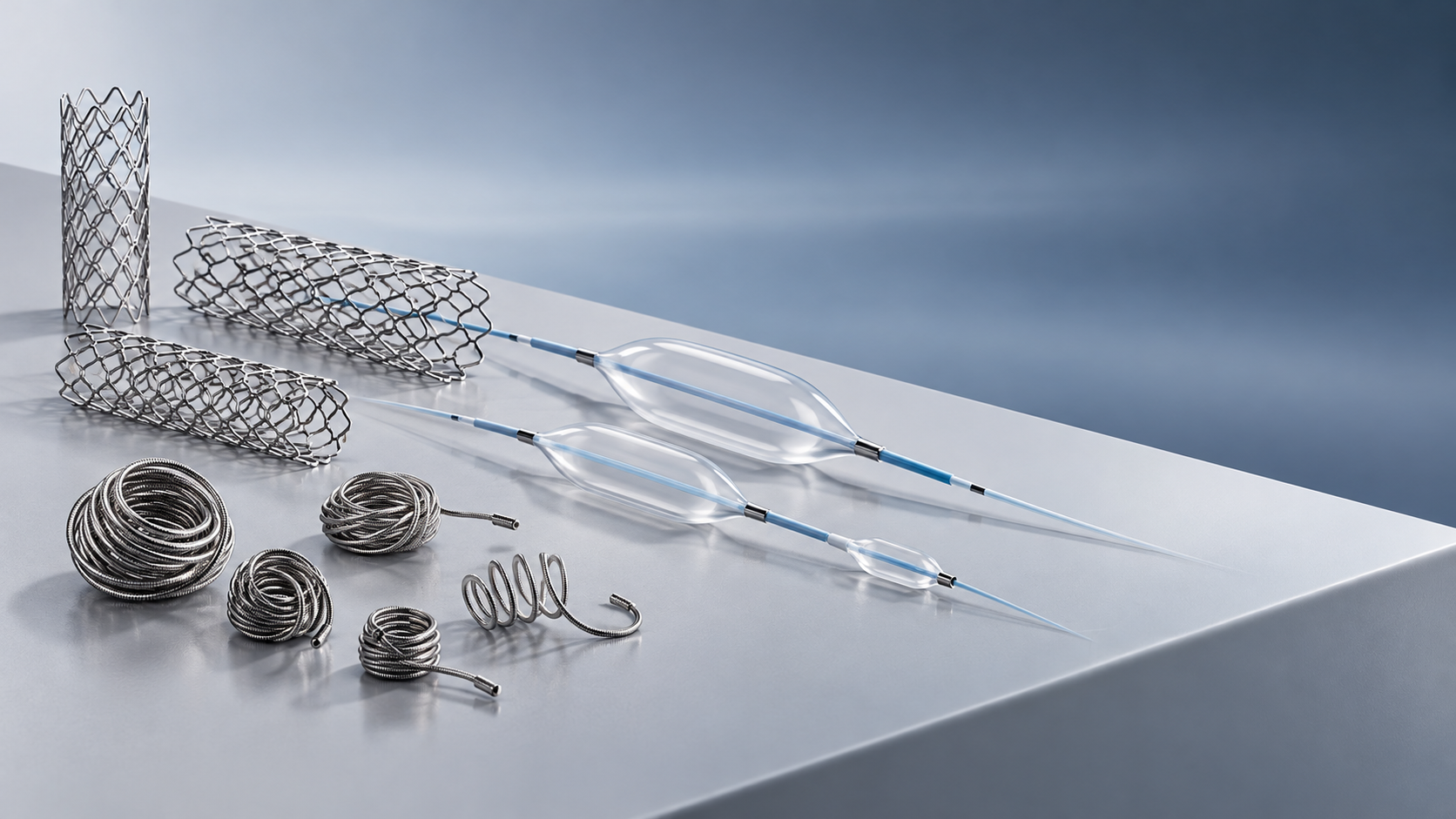
Within cardiovascular device development, several segments are likely to produce the most decision-relevant trial signals in 2026. First are next-generation coronary platforms, where developers continue to refine strut thickness, polymer behavior, deliverability, and high-risk lesion performance in search of measurable gains over established DES systems.
Second are structural heart devices, especially TAVR-related programs and transcatheter repair technologies. These studies carry outsized influence because positive data can expand patient eligibility, while negative durability or safety findings can quickly slow momentum across an entire platform class.
Third are specialized catheter and access technologies that improve navigation, support, or embolic protection during complex procedures. These may appear less dramatic than implant trials, but they can win meaningful adoption if they reduce procedural risk or improve success in anatomically challenging cases.
Fourth are biomaterial and surface-modification innovations aimed at improving hemocompatibility, endothelial healing, or infection resistance. These advances matter because they can strengthen the long-term safety profile of existing device architectures, often creating quieter but commercially important shifts in platform preference.
How to separate meaningful 2026 signals from trial noise
A practical framework can help researchers interpret crowded headlines. Start with endpoint credibility: are the outcomes hard, clinically relevant, and independently adjudicated? Then assess comparator strength: was the device tested against current best practice or a weaker benchmark? After that, examine durability, subgroup consistency, and adverse event patterns.
Next, consider execution quality. Enrollment geography, operator experience, protocol deviations, and loss to follow-up all affect confidence. A cleanly run trial from representative sites generally deserves more weight than a study that succeeds under unusually favorable conditions unlikely to be reproduced at scale.
Finally, connect the data to market reality. Ask whether the evidence can change guidelines, support regulatory filing, influence physician conversion, and withstand procurement pressure. The most important 2026 trial signals will be those that move across all four layers: scientific credibility, regulatory usability, clinical practicality, and economic defensibility.
This integrated view is essential because cardiovascular device development has entered a stage where partial success is often insufficient. A device can be innovative, statistically positive, and even clinically interesting, yet still fail to reshape the market if it does not answer the broader access and adoption questions decision-makers now ask.
Conclusion: the 2026 readouts that will matter most
For information researchers, the key 2026 trial signals in cardiovascular device development will come from evidence that clarifies four issues at once: safety, durability, patient selection, and access viability. These are the signals most likely to influence regulation, physician confidence, purchasing decisions, and long-term competitive position.
The strongest programs will not simply report positive primary endpoints. They will show durable benefit, manageable risk, credible subgroup logic, and a practical value proposition in increasingly cost-sensitive systems. That is the standard now shaping the field.
In short, 2026 is likely to be less about raw innovation announcements and more about proof that innovation can survive real scrutiny. For anyone tracking interventional and structural cardiovascular technologies, the smartest reading strategy is to follow the data that meaningfully reduces uncertainty. Those are the trial signals most likely to define the next phase of cardiovascular device development.
Get weekly intelligence in your inbox.
No noise. No sponsored content. Pure intelligence.
News Recommendations
 Oct 26, 2026Can a single approval cover life science product sales worldwide?Can a single approval cover life science product sales worldwide?
 Oct 25, 2026When is sensitization testing needed for medical device biocompatibility?When is sensitization testing needed for medical device biocompatibility?
 Oct 24, 2026How is biocompatibility tested for implantable polymer biomaterials?How is biocompatibility tested for implantable polymer biomaterials?
 Oct 23, 2026How to build reimbursement into an implant commercialization strategyHow to build reimbursement into an implant commercialization strategy
 Oct 22, 2026What clinical evidence do implants need for CE marking under EU MDR?What clinical evidence do implants need for CE marking under EU MDR?
 Oct 21, 2026How to choose disposable laparoscopic stapler reloads for thick tissueHow to choose disposable laparoscopic stapler reloads for thick tissue
 Oct 20, 2026How to assess medical polymer biocompatibility under ISO 10993How to assess medical polymer biocompatibility under ISO 10993
 Oct 19, 2026How do interventional device categories differ in clinical use?How do interventional device categories differ in clinical use?
 Oct 18, 2026When to choose alginate dressings for heavily exuding chronic woundsWhen to choose alginate dressings for heavily exuding chronic wounds
 Oct 17, 2026How is biocompatibility tested for custom medical-grade PEEK implants?How is biocompatibility tested for custom medical-grade PEEK implants?
 Oct 16, 2026How to check a wound healing materials supplier’s biocompatibility dataHow to check a wound healing materials supplier’s biocompatibility data
 Oct 15, 2026How to verify the FDA clearance status of silver wound dressingsHow to verify the FDA clearance status of silver wound dressings
 Oct 14, 2026How to register orthopedic implants and instruments in Latin AmericaHow to register orthopedic implants and instruments in Latin America
 Oct 13, 2026How to use a device market intelligence database to benchmark VBP pricesHow to use a device market intelligence database to benchmark VBP prices
 Oct 12, 2026When should stainless steel orthopedic instruments be replaced?When should stainless steel orthopedic instruments be replaced?
 Oct 11, 2026When are alginate dressings rope the right choice for cavity wounds?When are alginate dressings rope the right choice for cavity wounds?
 Oct 10, 2026When smart minimally invasive technology improves catheter accessWhen smart minimally invasive technology improves catheter access
 Oct 08, 2026Clinical evaluation requirements for cardiovascular implant devices in EuropeClinical evaluation requirements for cardiovascular implant devices in Europe
 Oct 07, 2026What to verify before appointing an artificial joint implants distributorWhat to verify before appointing an artificial joint implants distributor
 Oct 06, 2026How ISO 10993 guides biocompatibility testing for medical materialsHow ISO 10993 guides biocompatibility testing for medical materials
 Oct 05, 2026How to verify an orthopedic implants and instruments exporterHow to verify an orthopedic implants and instruments exporter
 Oct 04, 2026What drives surgical stapling devices price differences in hospital tenders?What drives surgical stapling devices price differences in hospital tenders?
 Oct 03, 2026How to assess a central venous catheter manufacturer's infection-control evidenceHow to assess a central venous catheter manufacturer's infection-control evidence
 Oct 02, 2026How to assess an advanced wound care factory’s quality systemHow to assess an advanced wound care factory’s quality system
 Oct 01, 2026What is driving global medical consumables demand in emerging markets?What is driving global medical consumables demand in emerging markets?
 Sep 30, 2026Implant Material Compliance Testing: Evidence Needed for Regulatory SubmissionImplant Material Compliance Testing: Evidence Needed for Regulatory Submission
 Sep 30, 2026From Corrosion to Fatigue: What Implant Materials Testing Should MeasureFrom Corrosion to Fatigue: What Implant Materials Testing Should Measure