Tissue Engineering Materials: How to Assess Biocompatibility and Safety
Tissue engineering materials sit at the intersection of regeneration science, device safety, and market access. Choosing a promising scaffold, hydrogel, membrane, or polymer is rarely the hardest step. The harder task is proving that the material behaves safely in the body, supports healing, and stands up to toxicological and regulatory review without creating hidden downstream risk.
That pressure is growing across implants, wound care, minimally invasive consumables, and advanced reconstruction products. In practice, biocompatibility is no longer a box to check. It is a decision framework that links formulation, processing, sterilization, packaging, clinical use, and post-market confidence.
Why biocompatibility has become a strategic issue
For high-value medical consumables, material risk travels fast. A small extractable, a process residue, or an unstable surface treatment can affect cells, blood contact, inflammation, and healing performance.
This is especially relevant where IMCS focuses its intelligence lens: orthopedic implants, cardiovascular devices, polymer catheters, surgical stapling systems, and advanced dressings. Each category uses different interfaces with tissue, but all depend on credible biological safety evidence.

The shift is also regulatory. ISO 10993 expectations are more risk-based. Reviewers increasingly want a scientific rationale for test selection, not a generic testing bundle. At the same time, pricing pressure and VBP-style procurement make late-stage redesigns far more expensive.
What tissue engineering materials really include
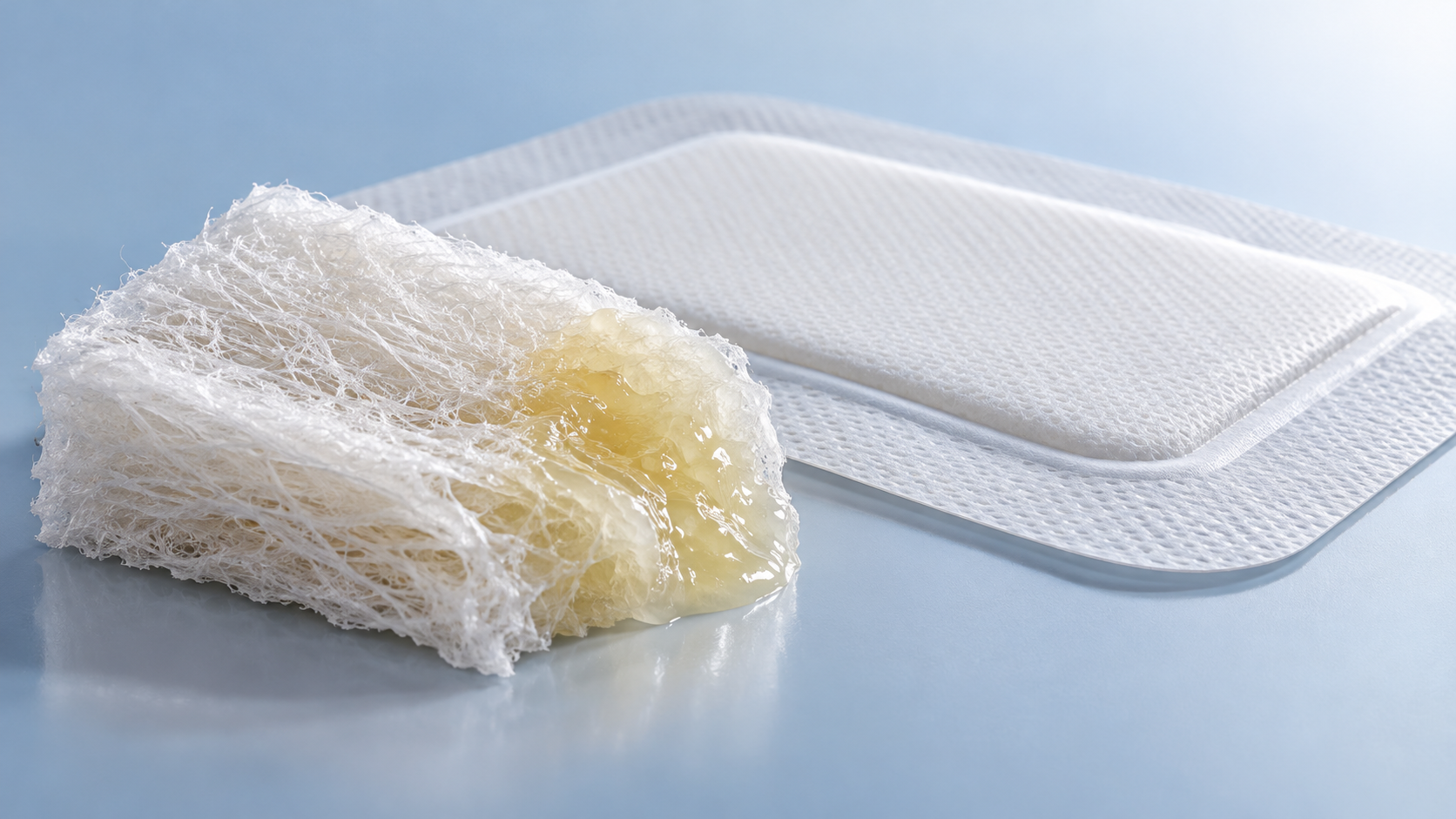
The term covers more than biodegradable scaffolds. Tissue engineering materials may include collagen matrices, synthetic resorbable polymers, decellularized tissues, hydrogels, bioactive ceramics, composite dressings, and porous structures designed to guide cell attachment or tissue integration.
Some are implanted for months or years. Others contact wounds briefly but still influence regeneration. Some release degradation products. Others carry drugs, ions, or biologically active coatings. That diversity is why assessment must begin with intended use, not material marketing claims.
A porous spinal implant, a cardiovascular patch, and an alginate wound dressing may all be described as tissue engineering materials. Their safety questions are not the same. Neither are their endpoints, exposure durations, or acceptable residual limits.
Start with the real exposure profile
A useful assessment starts by mapping how the material meets the body. That sounds basic, yet many weak submissions begin with test lists rather than exposure logic.
Questions that shape the safety strategy
- Is contact limited to intact skin, breached tissue, blood, bone, or the central vascular pathway?
- How long does contact last, and does degradation extend the exposure window?
- Does the product release monomers, plasticizers, crosslinkers, metal ions, or nanoparticles?
- Will sterilization alter chemistry, surface energy, or mechanical integrity?
- Does processing introduce lubricants, solvents, endotoxin, or packaging-related contaminants?
Once these answers are clear, biological endpoints become easier to prioritize. More importantly, the team can distinguish intrinsic material risk from manufacturing risk.
The core endpoints that deserve attention
Not every product needs every test, but several endpoints appear repeatedly in tissue engineering materials programs because they reflect how these products interact with healing tissue.
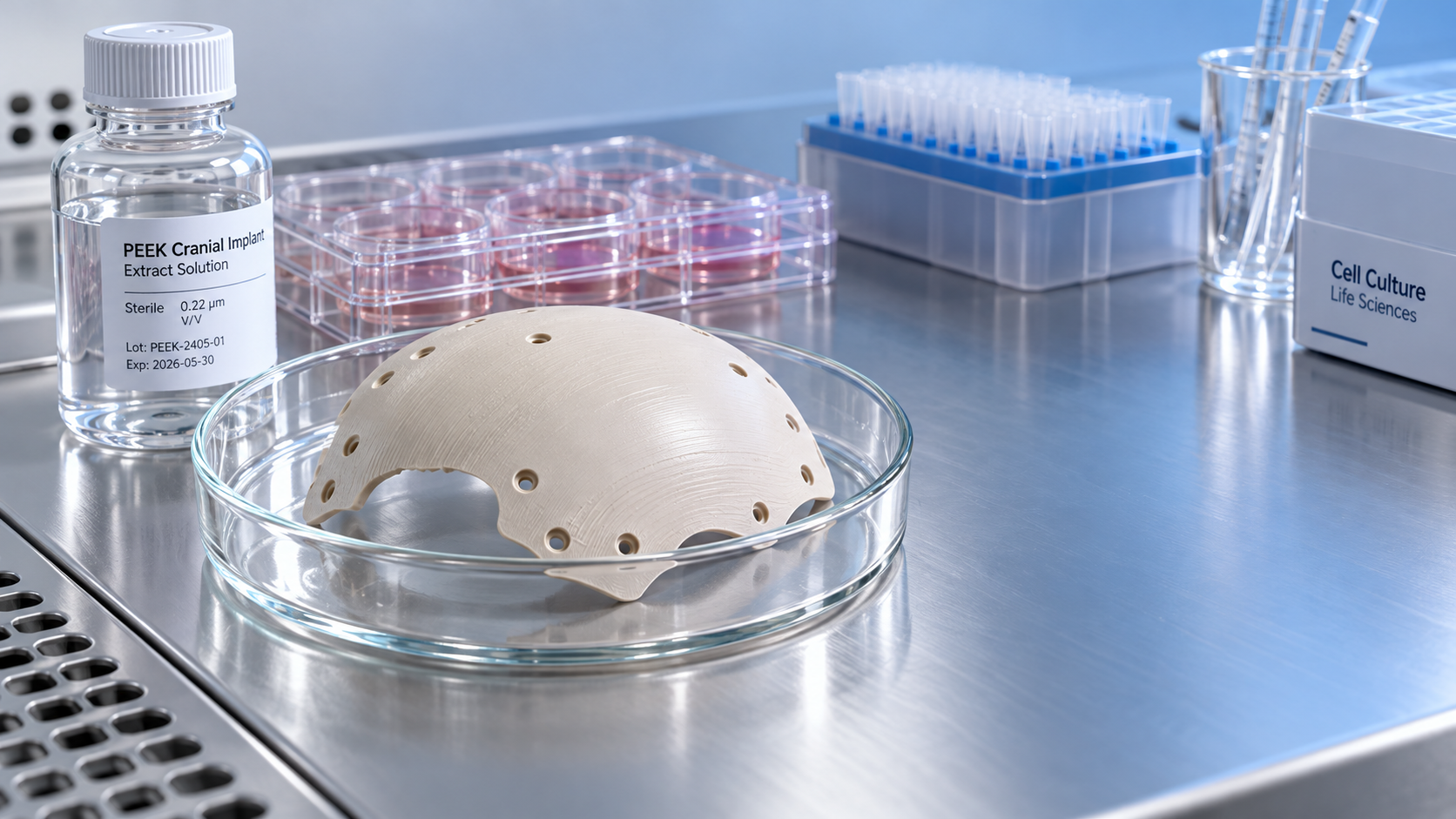
For many modern tissue engineering materials, chemical characterization and toxicological risk assessment deserve early emphasis. They often reveal issues that biological assays alone cannot explain.
Where safety failures usually begin
Material selection rarely fails because the base polymer or matrix looked unsafe on paper. Failures usually appear after conversion into a finished product.
Common hidden drivers
- Crosslinking chemistry that leaves reactive residues.
- Sterilization that changes oxidation level or brittleness.
- Colorants, radiopacifiers, or antimicrobial agents with poor toxicological support.
- Surface coatings that delaminate under friction or blood flow.
- Supplier changes that alter impurity profiles.
- Packaging interactions during shelf life.
This is why a safety file for tissue engineering materials should track the full chain: raw material specification, formulation controls, processing aids, cleaning validation, sterilization validation, and packaging compatibility.
Different applications require different judgment
The same material family may be acceptable in one setting and problematic in another. Context matters more than broad claims about “medical grade” status.
Examples across the IMCS landscape
In orthopedic reconstruction, porous and resorbable structures must support osseointegration while limiting inflammatory debris. Mechanical wear and long-term degradation become central questions.
In cardiovascular intervention, tissue engineering materials face stricter hemocompatibility demands. Even minor surface instability can influence thrombogenicity or endothelial response.
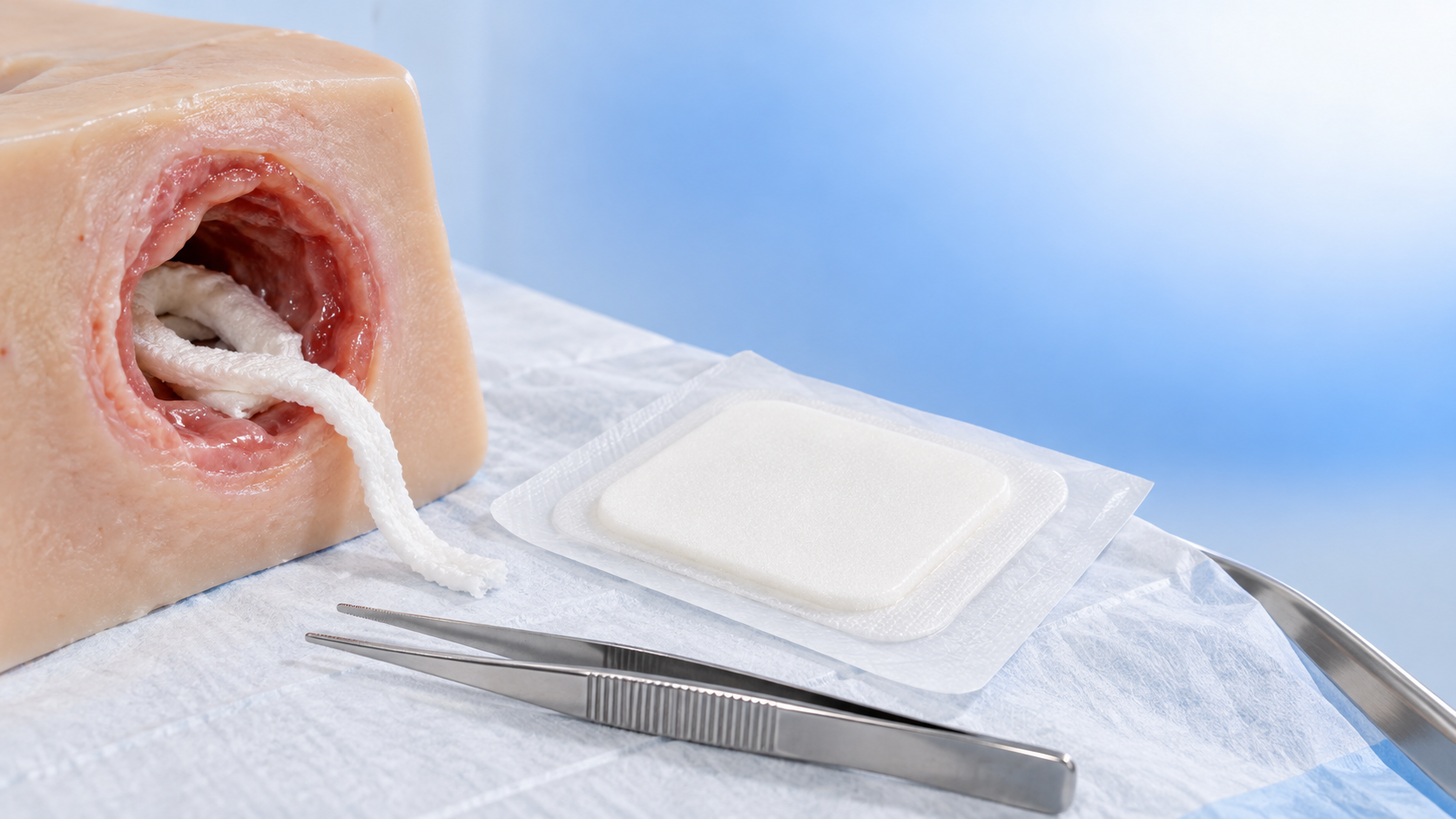
In advanced wound care, the priority may shift toward moisture balance, microbial control, and local tissue tolerance. Silver, alginate, silicone, and bioactive layers need balanced benefit-risk justification.
For catheter systems, flexibility and lubricity matter, but so do extractables under dynamic fluid exposure. A low-friction coating that performs well mechanically may still raise biological concerns.
A practical review framework for safer decisions
A strong internal review process does not wait for final verification testing. It asks whether the evidence already supports the intended clinical claim and contact profile.
Useful checkpoints before formal submission
- Confirm material identity, grade consistency, and supplier change controls.
- Review extractables and leachables against realistic worst-case conditions.
- Check whether sterilization and aging data match the marketed shelf life.
- Align ISO 10993 endpoint selection with contact type and duration.
- Examine whether degradation products have toxicological qualification.
- Look for gaps between bench performance and biological performance.
This approach helps reduce a common problem: technically successful development that later stalls because the safety narrative is incomplete.
Regulatory readiness is built from evidence, not volume
More reports do not automatically create a stronger file. Review quality depends on coherence. The chemistry profile, biological tests, clinical rationale, and manufacturing controls should tell the same story.
That is where intelligence-led review becomes useful. IMCS reflects a broader market reality: toxicology validation, clinical evaluation logic, and policy economics increasingly affect whether tissue engineering materials succeed beyond the lab.
A product may be scientifically elegant yet commercially exposed if evidence gaps trigger rework, delayed approval, or weak positioning in cost-sensitive procurement environments.
What deserves attention next
For any pipeline involving tissue engineering materials, the next useful step is to build a concise risk map. Link intended use, contact pathway, chemistry, process residues, sterilization effects, and regulatory endpoints in one view.
From there, compare what is already known with what still depends on assumption. That gap analysis often reveals the most efficient next action, whether it is deeper characterization, targeted testing, supplier tightening, or a clearer clinical justification.
When tissue engineering materials are assessed this way, biocompatibility stops being a late hurdle. It becomes an early design discipline that protects safety, supports regulatory confidence, and improves the odds of durable clinical value.
Get weekly intelligence in your inbox.
No noise. No sponsored content. Pure intelligence.
News Recommendations
 Oct 26, 2026Can a single approval cover life science product sales worldwide?Can a single approval cover life science product sales worldwide?
 Oct 25, 2026When is sensitization testing needed for medical device biocompatibility?When is sensitization testing needed for medical device biocompatibility?
 Oct 24, 2026How is biocompatibility tested for implantable polymer biomaterials?How is biocompatibility tested for implantable polymer biomaterials?
 Oct 23, 2026How to build reimbursement into an implant commercialization strategyHow to build reimbursement into an implant commercialization strategy
 Oct 22, 2026What clinical evidence do implants need for CE marking under EU MDR?What clinical evidence do implants need for CE marking under EU MDR?
 Oct 21, 2026How to choose disposable laparoscopic stapler reloads for thick tissueHow to choose disposable laparoscopic stapler reloads for thick tissue
 Oct 20, 2026How to assess medical polymer biocompatibility under ISO 10993How to assess medical polymer biocompatibility under ISO 10993
 Oct 19, 2026How do interventional device categories differ in clinical use?How do interventional device categories differ in clinical use?
 Oct 18, 2026When to choose alginate dressings for heavily exuding chronic woundsWhen to choose alginate dressings for heavily exuding chronic wounds
 Oct 17, 2026How is biocompatibility tested for custom medical-grade PEEK implants?How is biocompatibility tested for custom medical-grade PEEK implants?
 Oct 16, 2026How to check a wound healing materials supplier’s biocompatibility dataHow to check a wound healing materials supplier’s biocompatibility data
 Oct 15, 2026How to verify the FDA clearance status of silver wound dressingsHow to verify the FDA clearance status of silver wound dressings
 Oct 14, 2026How to register orthopedic implants and instruments in Latin AmericaHow to register orthopedic implants and instruments in Latin America
 Oct 13, 2026How to use a device market intelligence database to benchmark VBP pricesHow to use a device market intelligence database to benchmark VBP prices
 Oct 12, 2026When should stainless steel orthopedic instruments be replaced?When should stainless steel orthopedic instruments be replaced?
 Oct 11, 2026When are alginate dressings rope the right choice for cavity wounds?When are alginate dressings rope the right choice for cavity wounds?
 Oct 10, 2026When smart minimally invasive technology improves catheter accessWhen smart minimally invasive technology improves catheter access
 Oct 08, 2026Clinical evaluation requirements for cardiovascular implant devices in EuropeClinical evaluation requirements for cardiovascular implant devices in Europe
 Oct 07, 2026What to verify before appointing an artificial joint implants distributorWhat to verify before appointing an artificial joint implants distributor
 Oct 06, 2026How ISO 10993 guides biocompatibility testing for medical materialsHow ISO 10993 guides biocompatibility testing for medical materials
 Oct 05, 2026How to verify an orthopedic implants and instruments exporterHow to verify an orthopedic implants and instruments exporter
 Oct 04, 2026What drives surgical stapling devices price differences in hospital tenders?What drives surgical stapling devices price differences in hospital tenders?
 Oct 03, 2026How to assess a central venous catheter manufacturer's infection-control evidenceHow to assess a central venous catheter manufacturer's infection-control evidence
 Oct 02, 2026How to assess an advanced wound care factory’s quality systemHow to assess an advanced wound care factory’s quality system
 Oct 01, 2026What is driving global medical consumables demand in emerging markets?What is driving global medical consumables demand in emerging markets?
 Sep 30, 2026Implant Material Compliance Testing: Evidence Needed for Regulatory SubmissionImplant Material Compliance Testing: Evidence Needed for Regulatory Submission
 Sep 30, 2026From Corrosion to Fatigue: What Implant Materials Testing Should MeasureFrom Corrosion to Fatigue: What Implant Materials Testing Should Measure