How to Verify Medical Device Supplier References for Catheters
How to Verify Medical Device Supplier References for Catheters
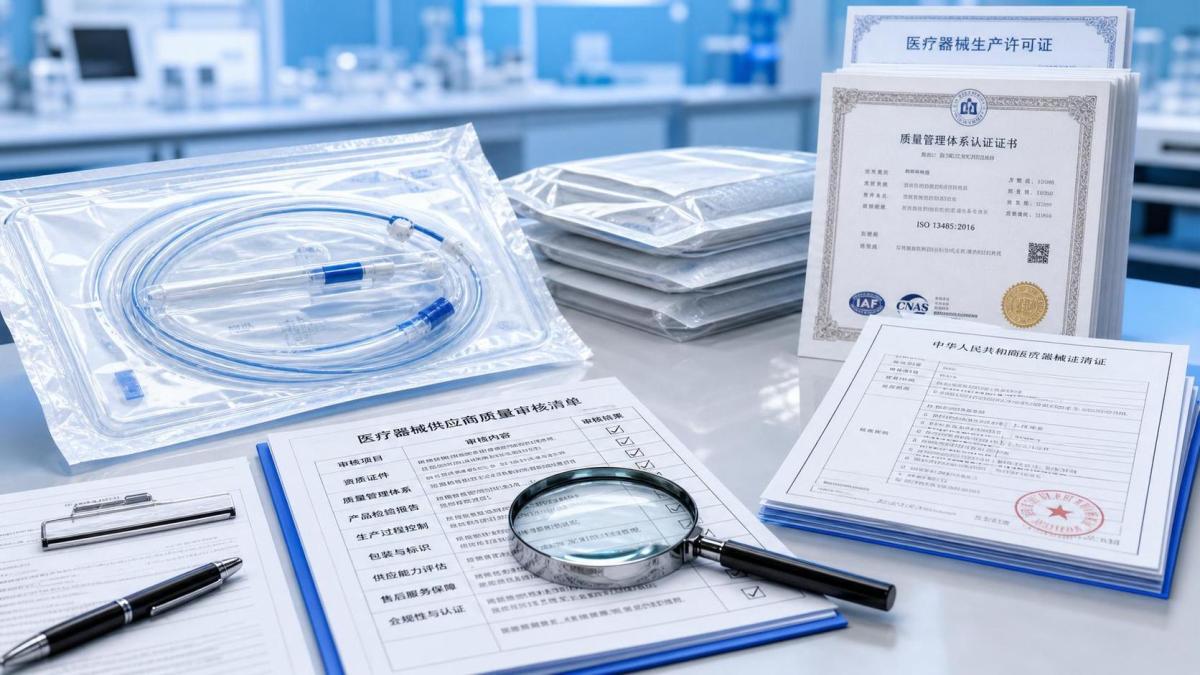
When sourcing catheter products, checking medical device supplier references catheters buyers receive is a critical step for reducing regulatory, quality, and delivery risks.
For procurement decisions, references should do more than confirm a supplier exists. They should show how that supplier performs under pressure.
A polished brochure can look convincing. A verified customer reference usually tells the real story faster.
In catheter sourcing, that story includes complaint trends, regulatory consistency, supply reliability, and post-market responsiveness.
This matters even more for hydrophilic-coated, central venous, neurovascular, drainage, and interventional catheter lines, where performance variation can create serious downstream risk.
A strong reference check process helps separate capable manufacturers from suppliers who simply know how to pass an initial sales conversation.
Why medical device supplier references catheters buyers review matter
Catheters look straightforward on paper, but procurement teams know the real risk sits in process control, materials, sterility assurance, and batch consistency.
That is why medical device supplier references catheters programs depend on should be treated as validation evidence, not sales support material.
Useful references can uncover signals that are often missing from quotations and technical datasheets.
- How often deliveries slip during peak demand
- Whether field complaints are handled quickly
- How stable the catheter coating and shaft performance remain across lots
- Whether documentation is clean during audits
- How the supplier reacts when a nonconformance appears
From a risk perspective, verified references often predict future execution better than a factory tour alone.
That is especially true when sourcing across regions with different registration, reimbursement, and tender pressures.
Start with the right type of reference
Not every reference carries the same weight. Some are too general to support a catheter sourcing decision.
Ask for references that match your product category, regulatory market, and purchasing model.
- Product-fit references: Similar catheter type, material system, coating, and intended use.
- Market-fit references: Customers selling into the same countries or regulatory frameworks.
- Volume-fit references: Customers ordering at a similar annual volume and forecast pattern.
- Quality-fit references: Customers who faced audits, CAPA events, or complaint investigations.
A supplier may be excellent in low-volume OEM work, yet weak in tender-driven, high-volume catheter supply.
That difference is easy to miss unless your medical device supplier references catheters review is highly specific.
How to validate if a reference is real and relevant
The first step is identity verification. Confirm the reference contact actually works for the named customer.
Use company email domains, public role listings, trade records, or professional platforms to cross-check the contact.
Next, confirm relevance. A real customer does not automatically mean a useful catheter reference.
Ask direct questions about the supplied product family, contract duration, shipment frequency, and quality interaction history.
In actual sourcing work, vague answers are usually a warning sign.
- “We have worked together for years” is not enough.
- “They are generally reliable” is also too weak.
- You need examples tied to catheter supply, deviations, and corrective action.
The best medical device supplier references catheters teams collect include measurable details, not broad compliments.
Reference questions worth asking
Keep the call structured. Short, targeted questions usually get the clearest answers.
- How long has the supplier provided catheter products?
- What catheter types or configurations are supplied?
- How often have you seen late delivery in the last 12 months?
- Have you experienced coating defects, kinking, leakage, or packaging issues?
- How quickly does the supplier respond to complaints or CAPA requests?
- Have regulatory documents been complete and current during submissions or audits?
- Would you expand business with this supplier today?
Cross-check references with quality and regulatory evidence
References are powerful, but they should never stand alone. Strong procurement decisions come from triangulation.
If a reference praises a supplier’s consistency, the quality records should support that claim.
Review the reference feedback alongside formal evidence such as:
- ISO 13485 certification status and scope
- Sterilization validation summaries
- Biocompatibility documentation under ISO 10993
- Shelf-life and packaging validation
- Complaint trend data and recall history
- Change control procedures for raw materials and sub-suppliers
This is where sector intelligence becomes useful.
IMCS tracks high-value medical consumables across orthopedic, cardiovascular, minimally invasive, catheter, and wound care segments.
That broader market view helps procurement teams compare supplier claims against regulatory patterns and product risk signals seen across global markets.
Watch for red flags in medical device supplier references catheters checks
Some warning signs appear early, long before contract negotiation ends.
A credible reference does not need to be perfect. In fact, balanced feedback is usually more trustworthy.
If a customer admits there were issues but explains how the supplier fixed them, that often signals maturity.
Build a practical scoring model for supplier comparison
Reference checks become more useful when they feed a simple decision model.
This reduces bias and helps internal teams compare catheter suppliers on the same basis.
A practical scorecard can include five weighted areas:
- Reference relevance to your catheter category
- Delivery reliability and forecast flexibility
- Complaint handling and CAPA effectiveness
- Regulatory documentation readiness
- Consistency across multiple reference sources
In practice, medical device supplier references catheters evaluations work best when scored together with audits, samples, and commercial terms.
That way, one impressive conversation cannot outweigh weak documentation or unstable manufacturing performance.
Final checklist for safer catheter sourcing decisions
Before approving a catheter supplier, make sure your reference process answers the operational questions that really matter.
- Verify at least two relevant customer references.
- Confirm the references match your product type and target market.
- Ask about quality issues, not only delivery and pricing.
- Cross-check every claim against regulatory and quality evidence.
- Score findings in a structured comparison model.
- Escalate any inconsistency before nomination or contract award.
The strongest medical device supplier references catheters teams rely on are not the most flattering ones. They are the most specific and the easiest to verify.
When references, audit evidence, and market intelligence all point in the same direction, procurement decisions become faster and much more defensible.
Use that discipline early, and catheter sourcing becomes less reactive, more predictable, and better aligned with long-term quality and supply goals.
Get weekly intelligence in your inbox.
No noise. No sponsored content. Pure intelligence.
News Recommendations
 Oct 26, 2026Can a single approval cover life science product sales worldwide?Can a single approval cover life science product sales worldwide?
 Oct 25, 2026When is sensitization testing needed for medical device biocompatibility?When is sensitization testing needed for medical device biocompatibility?
 Oct 24, 2026How is biocompatibility tested for implantable polymer biomaterials?How is biocompatibility tested for implantable polymer biomaterials?
 Oct 23, 2026How to build reimbursement into an implant commercialization strategyHow to build reimbursement into an implant commercialization strategy
 Oct 22, 2026What clinical evidence do implants need for CE marking under EU MDR?What clinical evidence do implants need for CE marking under EU MDR?
 Oct 21, 2026How to choose disposable laparoscopic stapler reloads for thick tissueHow to choose disposable laparoscopic stapler reloads for thick tissue
 Oct 20, 2026How to assess medical polymer biocompatibility under ISO 10993How to assess medical polymer biocompatibility under ISO 10993
 Oct 19, 2026How do interventional device categories differ in clinical use?How do interventional device categories differ in clinical use?
 Oct 18, 2026When to choose alginate dressings for heavily exuding chronic woundsWhen to choose alginate dressings for heavily exuding chronic wounds
 Oct 17, 2026How is biocompatibility tested for custom medical-grade PEEK implants?How is biocompatibility tested for custom medical-grade PEEK implants?
 Oct 16, 2026How to check a wound healing materials supplier’s biocompatibility dataHow to check a wound healing materials supplier’s biocompatibility data
 Oct 15, 2026How to verify the FDA clearance status of silver wound dressingsHow to verify the FDA clearance status of silver wound dressings
 Oct 14, 2026How to register orthopedic implants and instruments in Latin AmericaHow to register orthopedic implants and instruments in Latin America
 Oct 13, 2026How to use a device market intelligence database to benchmark VBP pricesHow to use a device market intelligence database to benchmark VBP prices
 Oct 12, 2026When should stainless steel orthopedic instruments be replaced?When should stainless steel orthopedic instruments be replaced?
 Oct 11, 2026When are alginate dressings rope the right choice for cavity wounds?When are alginate dressings rope the right choice for cavity wounds?
 Oct 10, 2026When smart minimally invasive technology improves catheter accessWhen smart minimally invasive technology improves catheter access
 Oct 08, 2026Clinical evaluation requirements for cardiovascular implant devices in EuropeClinical evaluation requirements for cardiovascular implant devices in Europe
 Oct 07, 2026What to verify before appointing an artificial joint implants distributorWhat to verify before appointing an artificial joint implants distributor
 Oct 06, 2026How ISO 10993 guides biocompatibility testing for medical materialsHow ISO 10993 guides biocompatibility testing for medical materials
 Oct 05, 2026How to verify an orthopedic implants and instruments exporterHow to verify an orthopedic implants and instruments exporter
 Oct 04, 2026What drives surgical stapling devices price differences in hospital tenders?What drives surgical stapling devices price differences in hospital tenders?
 Oct 03, 2026How to assess a central venous catheter manufacturer's infection-control evidenceHow to assess a central venous catheter manufacturer's infection-control evidence
 Oct 02, 2026How to assess an advanced wound care factory’s quality systemHow to assess an advanced wound care factory’s quality system
 Oct 01, 2026What is driving global medical consumables demand in emerging markets?What is driving global medical consumables demand in emerging markets?
 Sep 30, 2026Implant Material Compliance Testing: Evidence Needed for Regulatory SubmissionImplant Material Compliance Testing: Evidence Needed for Regulatory Submission
 Sep 30, 2026From Corrosion to Fatigue: What Implant Materials Testing Should MeasureFrom Corrosion to Fatigue: What Implant Materials Testing Should Measure