Negative Pressure Wound Therapy: When NPWT Improves Healing Efficiency
Negative pressure wound therapy is transforming modern wound care by helping clinicians and operators manage exudate, support granulation, and improve healing efficiency in complex wounds. For users and frontline operators, understanding when NPWT works best is essential for safer application, better patient outcomes, and more standardized wound management across surgical, traumatic, and chronic care settings.
When does negative pressure wound therapy make the biggest clinical difference?
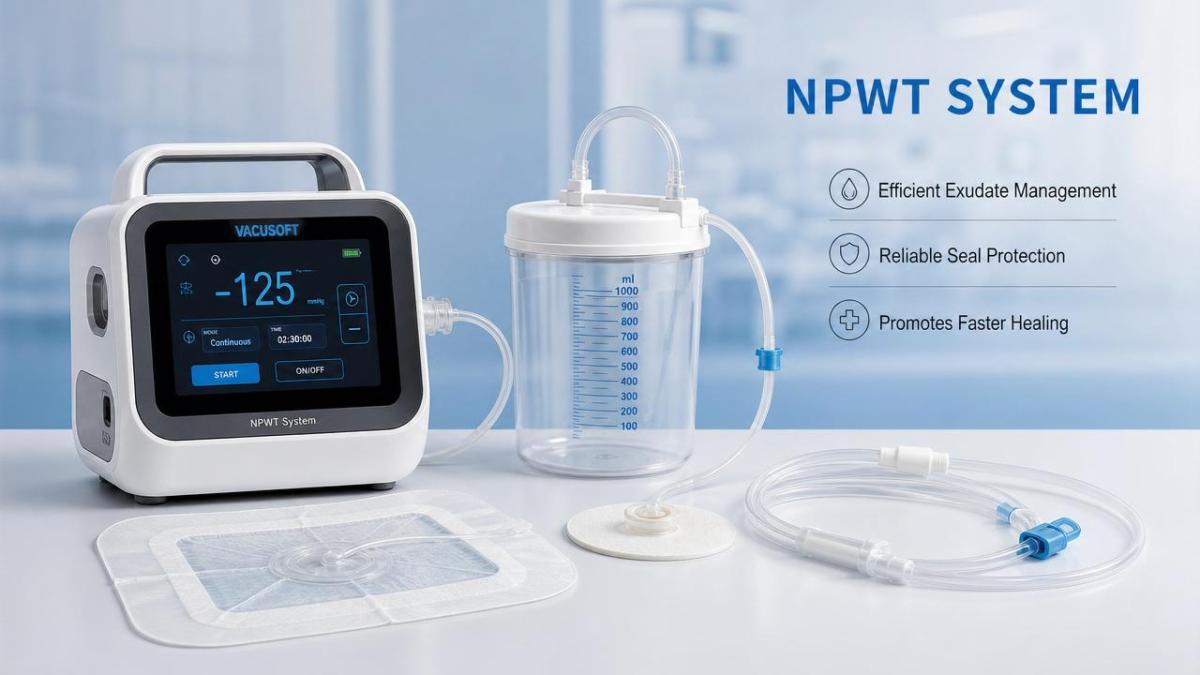
For operators, the value of negative pressure wound therapy is not just that it covers a wound. Its practical advantage lies in fluid control, stable wound bed protection, and support for tissue formation in cases where conventional dressings require frequent replacement or fail to manage dead space.
In advanced wound care, NPWT is often considered when the healing pathway is delayed by heavy exudate, large soft tissue defects, post-surgical dehiscence, graft preparation needs, or pressure redistribution challenges. It is especially relevant in hospitals and surgical centers that are under pressure to improve consistency and reduce avoidable dressing changes.
Typical situations where operators may consider NPWT
- Postoperative wounds with moderate to heavy exudate where moisture imbalance can delay closure or increase skin maceration risk.
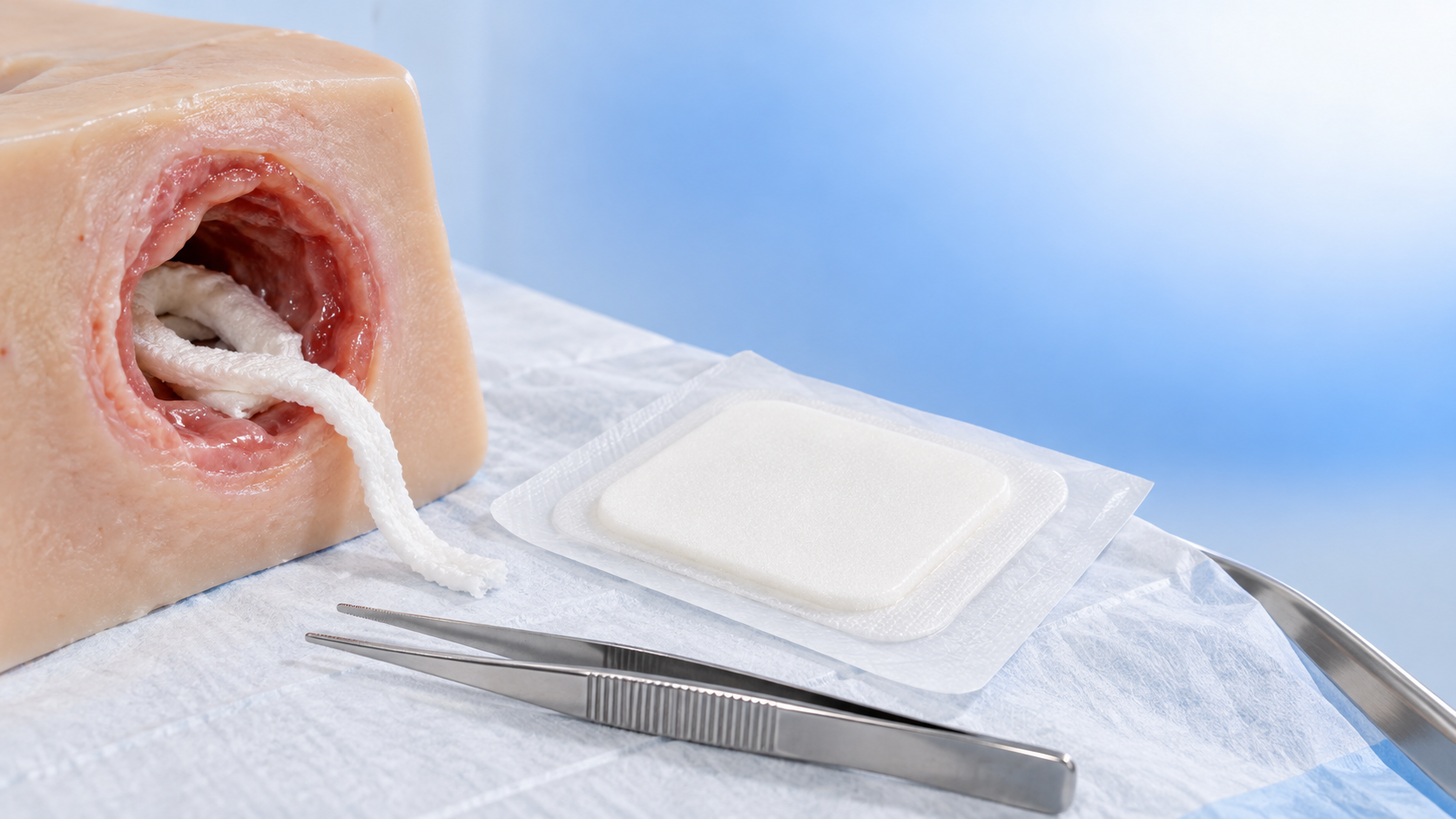
- Traumatic wounds with tissue loss, tunneling, or irregular geometry that make standard gauze packing inefficient and hard to monitor.
- Diabetic foot ulcers and chronic wounds that need a controlled wound environment after debridement and infection assessment.
- Skin graft and flap support scenarios where operators need stable fixation and exudate evacuation without excessive disturbance.
- Orthopedic or minimally invasive postoperative incisions in selected risk cases where incision management aims to reduce fluid accumulation and protect closure integrity.
This is where IMCS brings industry value. Because wound care does not exist in isolation, buyers and users often need to align dressings, stapling closure logic, biomaterial compatibility, and regulatory expectations across broader medical consumables systems. That cross-category intelligence is critical when evaluating NPWT in real care pathways rather than as a standalone product decision.
How negative pressure wound therapy works in daily wound management
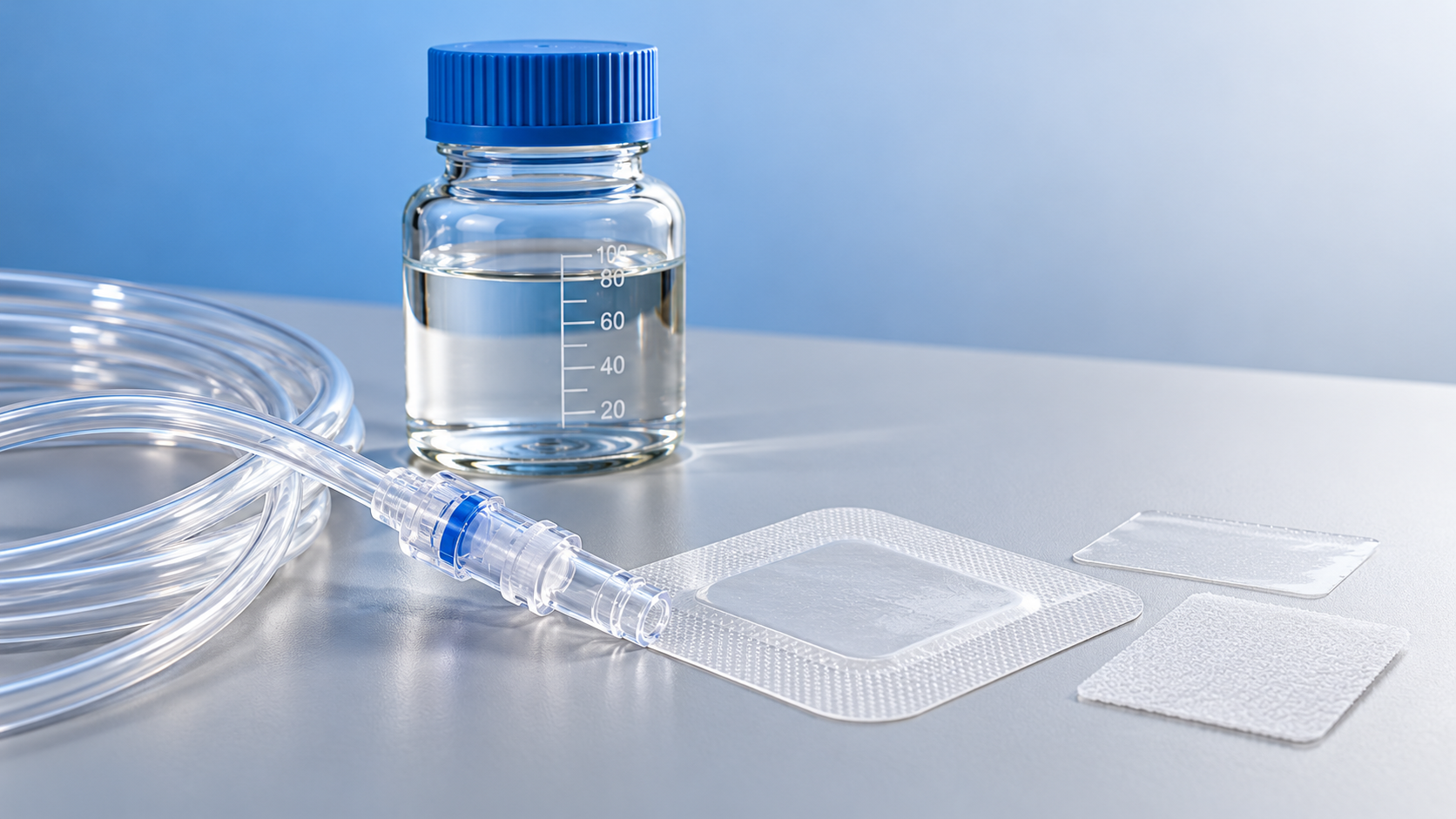
Negative pressure wound therapy applies controlled sub-atmospheric pressure through a sealed dressing and tubing set connected to a vacuum source. The therapy is designed to remove exudate, reduce local edema, maintain a protected moist environment, and mechanically support the wound bed through microdeformation at the tissue interface.
For frontline operators, the mechanism matters because every component influences outcome. Foam or gauze interface choice affects wound conformity. Seal integrity affects pressure delivery. Canister capacity affects maintenance frequency. Alarm design affects workflow. These details determine whether NPWT is truly efficient or simply expensive.
Operational goals that NPWT usually supports
- Control exudate in wounds where saturation quickly overwhelms standard dressings.
- Protect periwound skin by reducing leakage and maceration caused by repeated overflow.
- Promote granulation tissue development in clean, well-assessed wounds with delayed healing potential.
- Help manage wound depth, undermining, and dead space through better contact and drainage.
- Support more standardized dressing intervals when protocols and patient monitoring are appropriate.
The following table helps users compare common wound conditions against practical NPWT suitability factors.
The key reading is simple: negative pressure wound therapy works best when wound assessment is precise and the clinical goal is clearly defined. It is not a substitute for debridement, vascular evaluation, infection control, or pressure offloading. It is a force multiplier when those foundations are already in place.
Which wounds are poor candidates or require caution?
One common operational mistake is assuming NPWT should be applied whenever a wound looks severe. In practice, contraindications and caution zones matter as much as indications. Improper use can lead to delayed recognition of complications, bleeding risk, seal failure, or ineffective therapy spending.
Situations that require careful review before application
- Untreated osteomyelitis or uncontrolled local infection that needs definitive clinical management first.
- Necrotic tissue with eschar when debridement has not been completed and wound bed preparation is insufficient.
- Exposed vessels, organs, anastomotic sites, or fragile structures that may need protective interfaces or alternative management.
- Bleeding disorders or anticoagulation situations where monitoring and clinical judgment must be heightened.
- Malignancy within the wound area or fistula patterns that require specialist evaluation and protocol-specific decisions.
For procurement teams and ward operators, this means product training is not optional. Device selection should be linked to institutional protocols, alarm response pathways, and documentation habits. A good system with weak implementation still produces poor outcomes.
NPWT versus conventional advanced dressings: what should users compare?
Negative pressure wound therapy should not be purchased or deployed on headline appeal alone. In many cases, silver foam dressings, alginates, hydrofiber materials, or silicone contact layers remain appropriate. The decision depends on exudate level, wound depth, dressing interval goals, staff training, and total care burden.
This comparison table highlights where NPWT changes the operational equation for users and operators.
The practical takeaway is that NPWT often earns its place in wounds with high drainage, tissue defects, or graft support needs. For shallow, low-exudate, uncomplicated wounds, a high-performance dressing may be simpler and more cost-aligned. Operators should compare total dressing burden, not just unit price.
How should buyers and operators evaluate an NPWT system before purchase?
In medical consumables procurement, selection errors usually come from overemphasizing pump availability and underestimating consumable workflow. A negative pressure wound therapy platform must fit clinical demand, staff capability, and compliance requirements across inpatient, outpatient, and surgical use.
A practical procurement checklist
- Pressure range and mode options should match target applications, including continuous and intermittent therapy where relevant.
- Dressing interface options should cover foam, gauze, incision management, and protective contact layers as needed.
- Canister configuration should align with expected exudate volumes and infection control workflow.
- Alarm logic should be clear enough for frontline staff to address leaks, blockages, and low battery events without delay.
- Training support should include application technique, contraindication review, dressing change intervals, and documentation guidance.
- Regulatory and material documentation should be reviewed for the target market, especially where higher-risk use scenarios intersect with strict device oversight.
For users comparing systems, the table below converts selection criteria into operational questions.
This is also where IMCS adds measurable value. Our perspective spans advanced dressings, surgical closure consumables, biomaterial safety, and regulatory interpretation. That helps procurement teams evaluate not only whether a negative pressure wound therapy system works, but whether it fits a broader healing strategy, supply framework, and market access pathway.
What technical and compliance factors are often overlooked?
Users frequently focus on pressure settings and forget the interface between material science and clinical performance. In wound care, sealing films, tubing materials, skin-contact layers, and absorbent structures all affect tolerance, leakage risk, and dressing change experience. These are not minor details in a high-risk healing environment.
From a compliance standpoint, buyers should review the intended use statement, risk labeling, instructions for use, and material biocompatibility documentation relevant to skin and wound contact. In global procurement, expectations may also intersect with ISO 10993 biocompatibility frameworks and market-specific device registration requirements. A product can appear operationally similar while differing significantly in documentation completeness.
Key review points before final selection
- Check whether wound contact materials are appropriate for the planned duration and dressing change schedule.
- Confirm whether the system supports the intended environment, such as OR transition, inpatient wards, or outpatient mobility.
- Review accessory compatibility, because non-standard substitutions can disrupt seal integrity and responsibility tracking.
- Assess whether supplier support includes protocol education, not just equipment delivery.
FAQ: practical questions about negative pressure wound therapy
How do I know whether a wound should move from standard dressing to NPWT?
A common trigger is when exudate volume, wound depth, or dressing instability makes routine management inefficient. If the wound bed has been assessed, debrided when needed, and the clinical objective includes drainage control or granulation support, negative pressure wound therapy may offer a more controlled pathway. The decision should always sit within a broader wound evaluation, not on drainage alone.
Is NPWT always faster than advanced foam or alginate dressings?
Not always. NPWT can improve healing efficiency in the right wound profile, but it does not outperform every advanced dressing in every case. Shallow wounds with limited drainage may respond well to simpler options. The right comparison is overall wound progression, staff time, change frequency, and complication prevention, rather than assuming one modality is universally superior.
What do operators most often get wrong during application?
Three issues appear repeatedly: incomplete wound bed preparation, poor seal creation near difficult contours, and weak monitoring after connection. Operators may also under-document exudate trends and alarm events. These mistakes reduce therapeutic consistency and can make a well-designed negative pressure wound therapy system look ineffective.
What should procurement teams ask suppliers before ordering?
Ask about indication scope, consumable compatibility, training content, replacement supply continuity, documentation for regulatory review, and whether the system supports your target care settings. Also ask practical questions: average dressing kit composition, canister options, battery handling, and whether technical support is available during rollout.
Why many institutions now evaluate NPWT within a broader consumables strategy
Wound healing performance is increasingly linked to the entire perioperative and post-acute consumables chain. A difficult orthopedic incision, a vascular access complication, or a minimally invasive postoperative wound may require coordinated decisions across closure devices, polymer catheters, advanced dressings, and tissue-contact materials. Negative pressure wound therapy becomes more effective when these decisions are not fragmented.
That systems view is central to IMCS. Our intelligence model connects wound care performance with biomaterial understanding, device regulation, and procurement pressure under cost-control environments. For manufacturers, distributors, hospitals, and frontline users, this reduces blind spots between technical features, compliance demands, and real clinical deployment.
Why choose us for NPWT insight and medical consumables decision support?
If you are evaluating negative pressure wound therapy for wound care programs, surgical recovery pathways, or advanced dressing portfolios, IMCS can support more than product awareness. We help users and procurement teams translate technical information into usable selection logic.
- Parameter confirmation for application scope, consumable configuration, and workflow fit across inpatient or outpatient settings.
- Product selection support that compares NPWT options with foam dressings, alginates, incision management approaches, and related wound care consumables.
- Delivery cycle discussion for pumps, dressing kits, and accessory continuity where procurement timing is tight.
- Customized solution review based on wound type mix, operator capability, training needs, and regional market access expectations.
- Certification and documentation communication, including general review points related to biocompatibility, labeling, and medical device compliance pathways.
- Sample and quotation discussions for teams that need to validate fit before wider adoption or portfolio expansion.
For organizations navigating wound care efficiency, regulatory complexity, and pricing pressure at the same time, a better negative pressure wound therapy decision starts with clearer evidence, sharper comparison, and stronger implementation planning. That is the conversation IMCS is built to support.
Get weekly intelligence in your inbox.
No noise. No sponsored content. Pure intelligence.
News Recommendations
 Oct 26, 2026Can a single approval cover life science product sales worldwide?Can a single approval cover life science product sales worldwide?
 Oct 25, 2026When is sensitization testing needed for medical device biocompatibility?When is sensitization testing needed for medical device biocompatibility?
 Oct 24, 2026How is biocompatibility tested for implantable polymer biomaterials?How is biocompatibility tested for implantable polymer biomaterials?
 Oct 23, 2026How to build reimbursement into an implant commercialization strategyHow to build reimbursement into an implant commercialization strategy
 Oct 22, 2026What clinical evidence do implants need for CE marking under EU MDR?What clinical evidence do implants need for CE marking under EU MDR?
 Oct 21, 2026How to choose disposable laparoscopic stapler reloads for thick tissueHow to choose disposable laparoscopic stapler reloads for thick tissue
 Oct 20, 2026How to assess medical polymer biocompatibility under ISO 10993How to assess medical polymer biocompatibility under ISO 10993
 Oct 19, 2026How do interventional device categories differ in clinical use?How do interventional device categories differ in clinical use?
 Oct 18, 2026When to choose alginate dressings for heavily exuding chronic woundsWhen to choose alginate dressings for heavily exuding chronic wounds
 Oct 17, 2026How is biocompatibility tested for custom medical-grade PEEK implants?How is biocompatibility tested for custom medical-grade PEEK implants?
 Oct 16, 2026How to check a wound healing materials supplier’s biocompatibility dataHow to check a wound healing materials supplier’s biocompatibility data
 Oct 15, 2026How to verify the FDA clearance status of silver wound dressingsHow to verify the FDA clearance status of silver wound dressings
 Oct 14, 2026How to register orthopedic implants and instruments in Latin AmericaHow to register orthopedic implants and instruments in Latin America
 Oct 13, 2026How to use a device market intelligence database to benchmark VBP pricesHow to use a device market intelligence database to benchmark VBP prices
 Oct 12, 2026When should stainless steel orthopedic instruments be replaced?When should stainless steel orthopedic instruments be replaced?
 Oct 11, 2026When are alginate dressings rope the right choice for cavity wounds?When are alginate dressings rope the right choice for cavity wounds?
 Oct 10, 2026When smart minimally invasive technology improves catheter accessWhen smart minimally invasive technology improves catheter access
 Oct 08, 2026Clinical evaluation requirements for cardiovascular implant devices in EuropeClinical evaluation requirements for cardiovascular implant devices in Europe
 Oct 07, 2026What to verify before appointing an artificial joint implants distributorWhat to verify before appointing an artificial joint implants distributor
 Oct 06, 2026How ISO 10993 guides biocompatibility testing for medical materialsHow ISO 10993 guides biocompatibility testing for medical materials
 Oct 05, 2026How to verify an orthopedic implants and instruments exporterHow to verify an orthopedic implants and instruments exporter
 Oct 04, 2026What drives surgical stapling devices price differences in hospital tenders?What drives surgical stapling devices price differences in hospital tenders?
 Oct 03, 2026How to assess a central venous catheter manufacturer's infection-control evidenceHow to assess a central venous catheter manufacturer's infection-control evidence
 Oct 02, 2026How to assess an advanced wound care factory’s quality systemHow to assess an advanced wound care factory’s quality system
 Oct 01, 2026What is driving global medical consumables demand in emerging markets?What is driving global medical consumables demand in emerging markets?
 Sep 30, 2026Implant Material Compliance Testing: Evidence Needed for Regulatory SubmissionImplant Material Compliance Testing: Evidence Needed for Regulatory Submission
 Sep 30, 2026From Corrosion to Fatigue: What Implant Materials Testing Should MeasureFrom Corrosion to Fatigue: What Implant Materials Testing Should Measure