2026 Volume Based Procurement Cost Risks in Stapler Bidding
2026 is changing the economics of stapler bidding

As 2026 gets closer, volume based procurement is no longer a simple price-cutting exercise for stapler tenders.
The bigger issue is whether bid economics still hold after compliance costs, delivery obligations, and utilization commitments begin to accumulate.
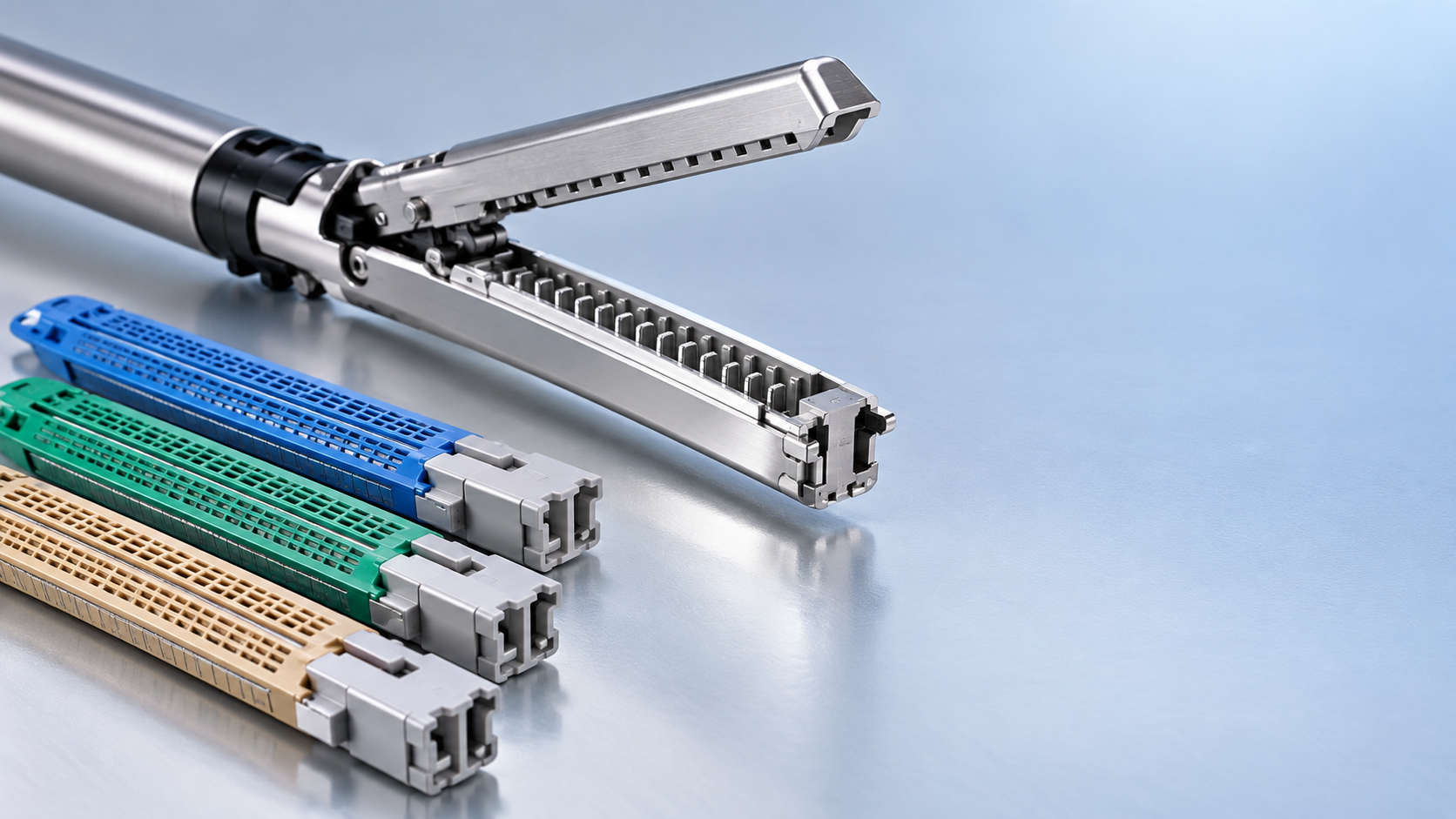
In minimally invasive surgery, staplers are not peripheral accessories. They are high-usage, precision-dependent consumables tied directly to case safety and operating room efficiency.
That makes volume based procurement unusually sensitive here. A sharp bid win can quickly become a margin trap if assumptions were built on outdated cost logic.
Recent signals across the medical consumables market point in the same direction: policy pressure is converging with stricter technical scrutiny and more demanding post-award execution.
This is especially visible in the ecosystem observed by IMCS, where Class III regulatory discipline, biocompatibility expectations, and precision manufacturing realities increasingly shape commercial outcomes.
For stapler bidding, cost risk now sits at the intersection of regulation, supply security, clinical acceptance, and contract discipline.
Why volume based procurement risk is becoming more visible
The first change is obvious: benchmark prices have become more aggressive, even when product complexity has not fallen.
The second change is quieter. Tendering bodies are looking beyond quoted unit price toward consistency, traceability, and real delivery resilience.
That shift matters because staplers combine metal components, reload systems, sterilization controls, packaging validation, and surgeon preference patterns.
In other words, volume based procurement in this category touches far more than invoice price.
Several forces are driving the change:
- Hospitals expect stable supply under tighter annual budgets.
- Regulators expect stronger evidence, cleaner documentation, and better adverse event responsiveness.
- Clinicians expect reliable firing performance across increasingly diverse MIS procedures.
- Winning suppliers face hidden service burdens after award, including training, replacement, and reporting.
The result is a market where bid success may improve top-line access while weakening actual profitability.
The cost model no longer breaks at one point, but at several
A common mistake in volume based procurement reviews is focusing on the visible discount while underweighting downstream cost layers.
In stapler bidding, those layers now deserve separate stress testing.
More importantly, these costs do not move independently. A regulatory delay can trigger inventory buffers, retraining, and replacement expenses at the same time.
Compliance is becoming a direct cost variable, not a background function
One of the clearest 2026 signals is that compliance can no longer sit outside financial modeling.
For sophisticated consumables, volume based procurement is being shaped by the same discipline affecting implants, catheters, and advanced wound products.
The IMCS perspective is useful here. In high-value medical consumables, biocompatibility, manufacturing precision, and regulatory proof increasingly determine commercial durability.
Staplers may not always attract the same public attention as DES, TAVR, or orthopedic implants, yet their tender risk profile is moving in a similar direction.
Three compliance-linked costs stand out:
- Validation refreshes for materials, sterilization, and packaging integrity.
- Clinical evidence maintenance when usage expands across procedures or regions.
- Traceability and complaint-response systems that must scale after a bid win.
These expenses rarely appear dramatic in isolation. Together, they can erase the buffer that justified an aggressive volume based procurement offer.
Supply volatility now affects contract economics faster than many models assume
The old assumption was that scale automatically protects cost. In 2026, scale can just as easily magnify exposure.
Stapler systems rely on precise component consistency. Minor variation in staple formation, cartridge reliability, or handle mechanics can become a serious operational issue.
When volume based procurement awards surge demand, the pressure hits several points at once:
- Second-source qualification may be incomplete.
- Safety stock may be too thin for regional spikes.
- Subcomponent lead times may not match contracted delivery promises.
- Lot release timing may strain quality teams.
This creates a familiar but costly pattern: the bid looks efficient on paper, then expediting, substitutions, and field support absorb the gains.
More firms are therefore treating supply security as a priced risk factor in volume based procurement, not a generic operations issue.
The post-award burden is where many stapler bids quietly lose money
Winning access is only the visible part of the contract.
Actual margin performance often depends on what happens after conversion in the operating room.
For staplers, post-award costs may include procedural education, product-mix adjustments, onsite troubleshooting, sample support, and replacement commitments.
If surgeons shift case selection slowly, awarded volume may ramp later than forecast. That delays fixed-cost absorption while service expenses start immediately.
This is where volume based procurement becomes a timing risk as much as a pricing risk.
A bid can appear acceptable under annualized assumptions but turn negative in the first two quarters because operational conversion lags behind contracted expectations.
What deserves closer review before 2026 bidding decisions are locked
The most useful review is not a broader spreadsheet. It is a narrower one built around failure points.
Several questions now matter more than headline discount levels:
- How much of the quoted cost base is fixed for twelve months, and how much is floating?
- Which compliance tasks will scale once awarded volume begins shipping?
- What service commitments are written into local execution, even if absent from the headline tender terms?
- How quickly can volume migrate from incumbent systems in actual surgical practice?
- What is the financial impact if the first delivery cycle misses the utilization curve?
These questions help separate strategic volume based procurement participation from reactive discounting.
A more resilient response is taking shape across medical consumables
Across implants, interventional devices, staplers, catheters, and regenerative materials, a consistent response pattern is emerging.
Firms are no longer assuming that market access and profitability will naturally align under volume based procurement.
Instead, stronger bids are being built around selective participation, procedure-level demand mapping, and compliance-adjusted margin thresholds.
That approach fits the IMCS view of the sector: technical products in regulated medicine need intelligence stitching between materials, clinical logic, and policy economics.
For staplers, that means treating volume based procurement as a cross-functional pricing event, not a standalone tender exercise.
The next step is practical. Rebuild bid cases using scenario ranges for supply, compliance, conversion speed, and service burden.
Then compare contracts by resilience, not by nominal award volume alone.
In 2026, the safer judgment may not be the lowest executable price. It may be the price that survives reality.
Get weekly intelligence in your inbox.
No noise. No sponsored content. Pure intelligence.
News Recommendations
 Oct 26, 2026Can a single approval cover life science product sales worldwide?Can a single approval cover life science product sales worldwide?
 Oct 25, 2026When is sensitization testing needed for medical device biocompatibility?When is sensitization testing needed for medical device biocompatibility?
 Oct 24, 2026How is biocompatibility tested for implantable polymer biomaterials?How is biocompatibility tested for implantable polymer biomaterials?
 Oct 23, 2026How to build reimbursement into an implant commercialization strategyHow to build reimbursement into an implant commercialization strategy
 Oct 22, 2026What clinical evidence do implants need for CE marking under EU MDR?What clinical evidence do implants need for CE marking under EU MDR?
 Oct 21, 2026How to choose disposable laparoscopic stapler reloads for thick tissueHow to choose disposable laparoscopic stapler reloads for thick tissue
 Oct 20, 2026How to assess medical polymer biocompatibility under ISO 10993How to assess medical polymer biocompatibility under ISO 10993
 Oct 19, 2026How do interventional device categories differ in clinical use?How do interventional device categories differ in clinical use?
 Oct 18, 2026When to choose alginate dressings for heavily exuding chronic woundsWhen to choose alginate dressings for heavily exuding chronic wounds
 Oct 17, 2026How is biocompatibility tested for custom medical-grade PEEK implants?How is biocompatibility tested for custom medical-grade PEEK implants?
 Oct 16, 2026How to check a wound healing materials supplier’s biocompatibility dataHow to check a wound healing materials supplier’s biocompatibility data
 Oct 15, 2026How to verify the FDA clearance status of silver wound dressingsHow to verify the FDA clearance status of silver wound dressings
 Oct 14, 2026How to register orthopedic implants and instruments in Latin AmericaHow to register orthopedic implants and instruments in Latin America
 Oct 13, 2026How to use a device market intelligence database to benchmark VBP pricesHow to use a device market intelligence database to benchmark VBP prices
 Oct 12, 2026When should stainless steel orthopedic instruments be replaced?When should stainless steel orthopedic instruments be replaced?
 Oct 11, 2026When are alginate dressings rope the right choice for cavity wounds?When are alginate dressings rope the right choice for cavity wounds?
 Oct 10, 2026When smart minimally invasive technology improves catheter accessWhen smart minimally invasive technology improves catheter access
 Oct 08, 2026Clinical evaluation requirements for cardiovascular implant devices in EuropeClinical evaluation requirements for cardiovascular implant devices in Europe
 Oct 07, 2026What to verify before appointing an artificial joint implants distributorWhat to verify before appointing an artificial joint implants distributor
 Oct 06, 2026How ISO 10993 guides biocompatibility testing for medical materialsHow ISO 10993 guides biocompatibility testing for medical materials
 Oct 05, 2026How to verify an orthopedic implants and instruments exporterHow to verify an orthopedic implants and instruments exporter
 Oct 04, 2026What drives surgical stapling devices price differences in hospital tenders?What drives surgical stapling devices price differences in hospital tenders?
 Oct 03, 2026How to assess a central venous catheter manufacturer's infection-control evidenceHow to assess a central venous catheter manufacturer's infection-control evidence
 Oct 02, 2026How to assess an advanced wound care factory’s quality systemHow to assess an advanced wound care factory’s quality system
 Oct 01, 2026What is driving global medical consumables demand in emerging markets?What is driving global medical consumables demand in emerging markets?
 Sep 30, 2026Implant Material Compliance Testing: Evidence Needed for Regulatory SubmissionImplant Material Compliance Testing: Evidence Needed for Regulatory Submission
 Sep 30, 2026From Corrosion to Fatigue: What Implant Materials Testing Should MeasureFrom Corrosion to Fatigue: What Implant Materials Testing Should Measure