Medical Polymer Technology in IV Cannulas: What Matters Most
In IV cannulas, medical polymer technology directly shapes insertion comfort, kink resistance, flow stability, thrombogenicity, and regulatory confidence. For technical evaluation, the critical issue is not material selection alone. Real performance depends on how polymer chemistry, extrusion control, sterilization tolerance, surface behavior, and biocompatibility remain stable across design, production, storage, and bedside use.
That is why a checklist-based review is useful. IV cannulas look simple, yet failure often starts from small mismatches between resin properties, processing windows, and clinical demands. A structured assessment helps compare devices more objectively, reduce hidden risk, and connect material decisions with safety, usability, and long-term procurement value.
Why medical polymer technology matters most in IV cannulas
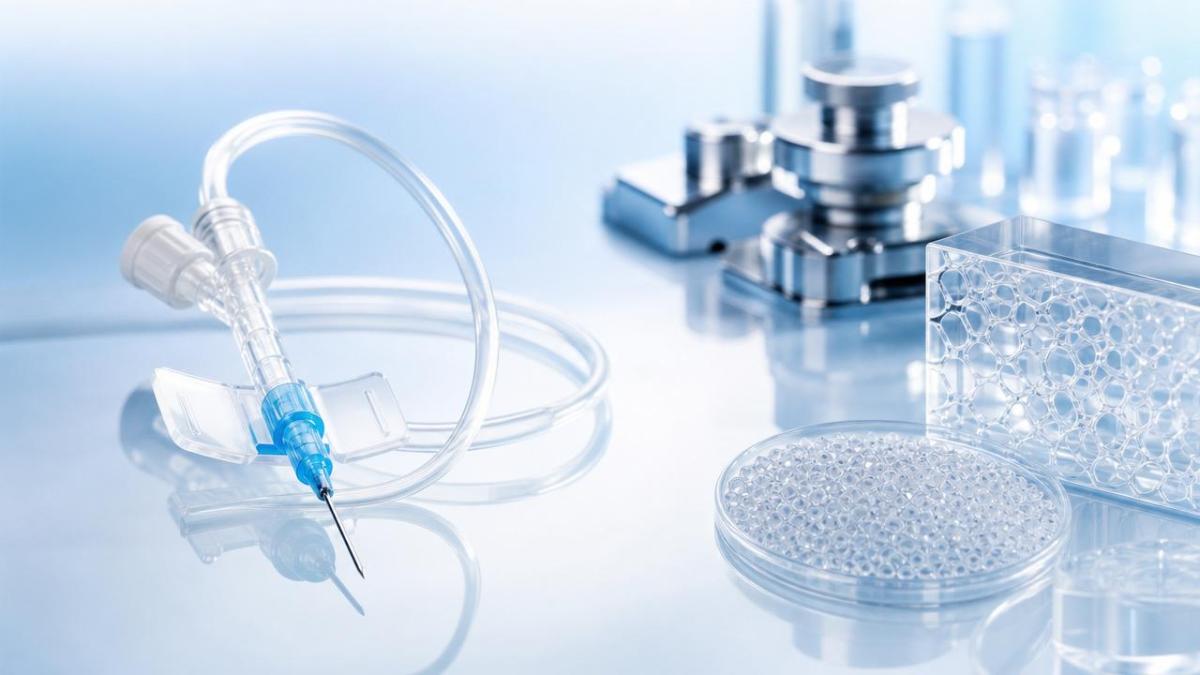
An IV cannula must enter tissue smoothly, hold shape during insertion, then flex safely inside the vessel. That balance is achieved through medical polymer technology, not metal performance alone. Catheter polymer selection influences puncture efficiency, vessel irritation, dwell time, and complication rates.
Common catheter materials include FEP, PTFE, polyurethane, and other engineered medical polymers. Each offers tradeoffs in stiffness, transparency, kink recovery, and softening behavior at body temperature. The best option depends on intended dwell duration, infusion type, insertion site, and sterilization route.
Core checklist for evaluating medical polymer technology in IV cannulas
- Verify baseline resin identity, grade traceability, and medical-use history before reviewing any finished-part claims or marketing language.
- Check flexural balance between insertion stiffness and in-vessel softness, especially whether the catheter softens predictably at body temperature.
- Measure kink resistance under realistic bending angles, fixation stress, and patient movement rather than relying on straight-bench samples.
- Assess inner lumen smoothness and dimensional consistency to confirm stable flow, lower pressure drop, and reduced hemolysis risk.
- Review surface energy, friction behavior, and coating adhesion because insertion comfort depends on stable low-friction performance.
- Confirm biocompatibility under ISO 10993 with emphasis on cytotoxicity, sensitization, irritation, hemocompatibility, and extractables relevance.
- Compare sterilization compatibility across EO, gamma, or e-beam to ensure no embrittlement, discoloration, or property drift.
- Audit extrusion and tipping consistency because wall thickness variation can weaken burst strength and alter insertion feedback.
- Examine hub bonding and catheter-to-component interfaces since many failures occur at joints, not within the polymer tube itself.
- Review aging data, package interaction, and shelf-life stability to confirm the polymer remains functional until point of use.
- Test radiopacity strategy carefully, as additives can improve visibility but also affect flexibility, transparency, and process stability.
- Connect all material results with complaint trends such as kinking, difficult advancement, occlusion, phlebitis, or premature removal.
What high-priority polymer attributes should be reviewed first
1. Flexibility without loss of pushability
A useful IV cannula cannot be overly soft during insertion. It must track the needle, cross the skin, and enter the vein cleanly. After placement, however, excessive stiffness can irritate the vessel wall and increase mechanical phlebitis risk.
This is where medical polymer technology creates value. Polyurethane systems that soften at body temperature often improve in-use comfort while preserving insertion control. The performance question is whether that softening is repeatable lot after lot.
2. Kink resistance and lumen integrity
Kink resistance is not a secondary feature. A cannula may remain intact visually yet partially collapse, reducing flow and causing repeated alarms or difficult flushing. Thin-wall designs demand especially tight process control.
Review bend testing at clinically relevant radii, including securement stress and patient motion. Good medical polymer technology should preserve lumen shape, recover from minor deformation, and resist permanent creasing.
3. Surface behavior and thrombogenicity
Blood-contacting polymers need more than generic biocompatibility. Surface roughness, additive migration, and coating durability affect protein adsorption, platelet response, and thrombus formation. A smooth, stable surface helps maintain patency and supports longer dwell performance.
If hydrophilic or lubricious coatings are used, check delamination risk after sterilization and shelf aging. In medical polymer technology, surface chemistry must stay functional throughout storage and handling, not only at release testing.
4. Process consistency and sterilization resilience
A strong resin can still fail in production. Excess thermal history during extrusion may shift hardness, transparency, or molecular stability. Sterilization can then amplify weak points, causing brittleness, discoloration, or bonding issues.
For this reason, medical polymer technology should be judged as a full system: resin specification, drying control, extrusion window, tip forming, bonding, sterilization route, and final packaging compatibility.
Application-specific considerations
Short-dwell peripheral cannulas
For routine peripheral access, insertion feel and first-pass success matter greatly. A catheter that advances smoothly and resists buckling can reduce repeated attempts. Here, balanced stiffness and low-friction surface design are usually more important than advanced long-term antithrombotic features.
Transparency also supports use because flashback visibility and visual inspection remain practical bedside concerns. In this setting, medical polymer technology should combine process simplicity with dependable clinical handling.
Longer dwell or more demanding infusion environments
When dwell time increases, the focus shifts toward vessel compatibility, stable lumen patency, and resistance to stress cracking. Frequent manipulation, securement, and exposure to varied drugs place more burden on polymer durability.
In these cases, body-temperature softening, hemocompatibility data, and long-term aging evidence deserve higher weight. The right medical polymer technology should minimize irritation while retaining structural reliability.
Commonly overlooked risks
Ignoring additive effects. Radiopaque fillers, plasticizers, pigments, and processing aids can change extraction profiles, stiffness, and bonding behavior. A good base polymer does not guarantee a good final catheter.
Overvaluing single test results. Passing cytotoxicity alone is insufficient. IV cannulas need integrated review of hemocompatibility, irritation, particulate control, and clinical complaint correlation.
Separating design from manufacturing. Many issues blamed on material choice actually come from unstable extrusion, poor annealing, or inconsistent tip geometry. Medical polymer technology includes process discipline.
Missing sterilization-package interaction. A polymer may pass initial release but drift after sterilization and storage. Shelf-life claims should be supported by real-time or well-justified accelerated data.
Practical execution steps
- Start with a matrix linking resin grade, key properties, sterilization method, and intended clinical use.
- Request evidence on kink testing, flow stability, bond strength, and aged performance, not summary claims only.
- Compare complaint categories against material attributes to identify whether failures are chemistry-driven or process-driven.
- Prioritize data packages that connect ISO 10993, extractables, and functional testing under clinically relevant conditions.
- Reassess polymer decisions whenever gauge size, wall design, radiopacity, or coating strategy changes.
Conclusion and next-step guidance
In IV cannulas, medical polymer technology matters most where clinical handling, blood compatibility, and manufacturing consistency meet. The strongest evaluation does not ask only which polymer is used. It asks whether the complete catheter system stays safe, flexible, patent, and reproducible from raw material to bedside application.
A practical next step is to build a side-by-side review sheet covering resin grade, softening profile, kink resistance, hemocompatibility, sterilization tolerance, bond reliability, and shelf-life evidence. That approach turns polymer assessment into a defensible decision framework with clearer safety and value outcomes.
Get weekly intelligence in your inbox.
No noise. No sponsored content. Pure intelligence.
News Recommendations
 Oct 26, 2026Can a single approval cover life science product sales worldwide?Can a single approval cover life science product sales worldwide?
 Oct 25, 2026When is sensitization testing needed for medical device biocompatibility?When is sensitization testing needed for medical device biocompatibility?
 Oct 24, 2026How is biocompatibility tested for implantable polymer biomaterials?How is biocompatibility tested for implantable polymer biomaterials?
 Oct 23, 2026How to build reimbursement into an implant commercialization strategyHow to build reimbursement into an implant commercialization strategy
 Oct 22, 2026What clinical evidence do implants need for CE marking under EU MDR?What clinical evidence do implants need for CE marking under EU MDR?
 Oct 21, 2026How to choose disposable laparoscopic stapler reloads for thick tissueHow to choose disposable laparoscopic stapler reloads for thick tissue
 Oct 20, 2026How to assess medical polymer biocompatibility under ISO 10993How to assess medical polymer biocompatibility under ISO 10993
 Oct 19, 2026How do interventional device categories differ in clinical use?How do interventional device categories differ in clinical use?
 Oct 18, 2026When to choose alginate dressings for heavily exuding chronic woundsWhen to choose alginate dressings for heavily exuding chronic wounds
 Oct 17, 2026How is biocompatibility tested for custom medical-grade PEEK implants?How is biocompatibility tested for custom medical-grade PEEK implants?
 Oct 16, 2026How to check a wound healing materials supplier’s biocompatibility dataHow to check a wound healing materials supplier’s biocompatibility data
 Oct 15, 2026How to verify the FDA clearance status of silver wound dressingsHow to verify the FDA clearance status of silver wound dressings
 Oct 14, 2026How to register orthopedic implants and instruments in Latin AmericaHow to register orthopedic implants and instruments in Latin America
 Oct 13, 2026How to use a device market intelligence database to benchmark VBP pricesHow to use a device market intelligence database to benchmark VBP prices
 Oct 12, 2026When should stainless steel orthopedic instruments be replaced?When should stainless steel orthopedic instruments be replaced?
 Oct 11, 2026When are alginate dressings rope the right choice for cavity wounds?When are alginate dressings rope the right choice for cavity wounds?
 Oct 10, 2026When smart minimally invasive technology improves catheter accessWhen smart minimally invasive technology improves catheter access
 Oct 08, 2026Clinical evaluation requirements for cardiovascular implant devices in EuropeClinical evaluation requirements for cardiovascular implant devices in Europe
 Oct 07, 2026What to verify before appointing an artificial joint implants distributorWhat to verify before appointing an artificial joint implants distributor
 Oct 06, 2026How ISO 10993 guides biocompatibility testing for medical materialsHow ISO 10993 guides biocompatibility testing for medical materials
 Oct 05, 2026How to verify an orthopedic implants and instruments exporterHow to verify an orthopedic implants and instruments exporter
 Oct 04, 2026What drives surgical stapling devices price differences in hospital tenders?What drives surgical stapling devices price differences in hospital tenders?
 Oct 03, 2026How to assess a central venous catheter manufacturer's infection-control evidenceHow to assess a central venous catheter manufacturer's infection-control evidence
 Oct 02, 2026How to assess an advanced wound care factory’s quality systemHow to assess an advanced wound care factory’s quality system
 Oct 01, 2026What is driving global medical consumables demand in emerging markets?What is driving global medical consumables demand in emerging markets?
 Sep 30, 2026Implant Material Compliance Testing: Evidence Needed for Regulatory SubmissionImplant Material Compliance Testing: Evidence Needed for Regulatory Submission
 Sep 30, 2026From Corrosion to Fatigue: What Implant Materials Testing Should MeasureFrom Corrosion to Fatigue: What Implant Materials Testing Should Measure