NPWT Systems: When Negative Pressure Improves Healing
Negative pressure wound therapy is more than a device setting. It is a controlled healing strategy for wounds that need structured fluid management.
By applying regulated suction through specialized dressings, NPWT systems help manage exudate, reduce edema, and support granulation.
It is often considered for diabetic ulcers, surgical dehiscence, burns, traumatic injuries, and wounds with complex drainage patterns.
Safe use depends on wound assessment, dressing integrity, pressure selection, infection control, and continuous monitoring.
NPWT Systems: When Negative Pressure Improves Healing
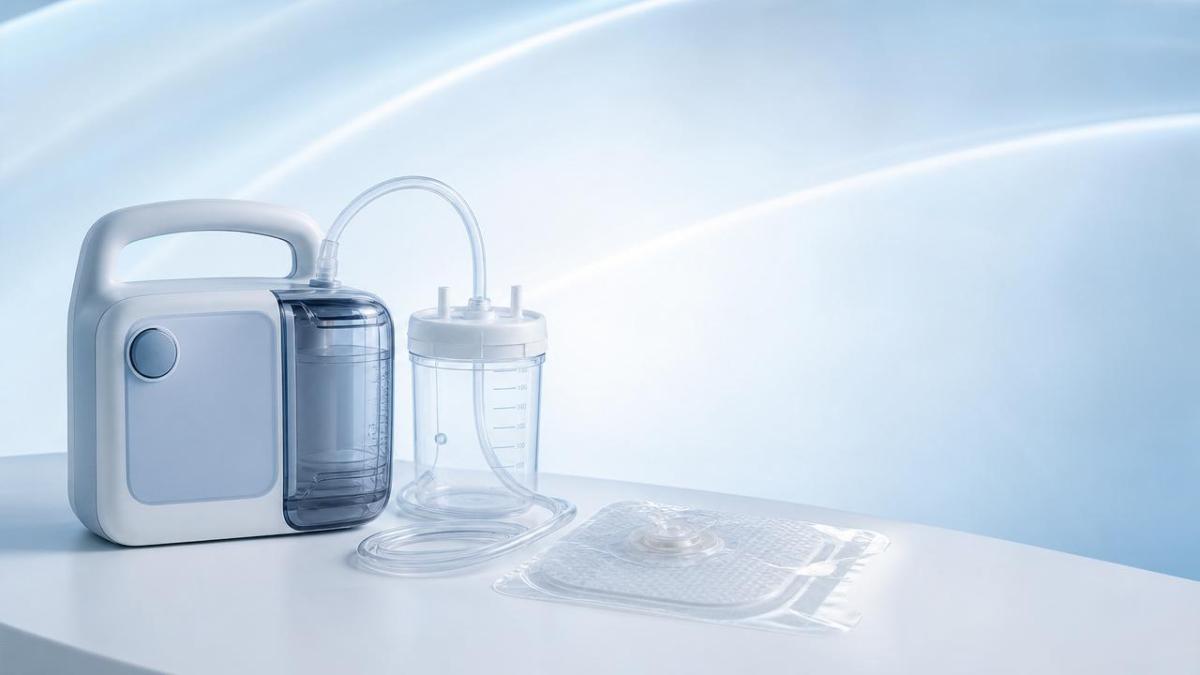
Negative pressure wound therapy uses a sealed dressing, tubing, a collection canister, and a pump to create controlled sub-atmospheric pressure.
The goal is not simply suction. The goal is to create a stable microenvironment that supports organized tissue repair.
When pressure is applied evenly, wound edges may draw closer, interstitial fluid may decrease, and perfusion can become more favorable.
Modern systems vary by pump size, pressure range, dressing interface, canister design, alarms, and portability.
In advanced wound care, negative pressure wound therapy connects device engineering with practical tissue regeneration.
What Is Negative Pressure Wound Therapy Actually Doing?
Negative pressure wound therapy works through several related mechanisms rather than one isolated effect.
First, the system removes excess exudate. This helps limit maceration around the wound edge.
Second, suction reduces localized edema. Lower tissue swelling may improve oxygen and nutrient exchange.
Third, the dressing interface can create microdeformation. This mechanical stimulation may encourage granulation tissue formation.
Fourth, a sealed environment helps protect the wound from external contamination when the seal remains intact.
These effects are strongest when the wound has been properly debrided and evaluated.
Negative pressure wound therapy should not be treated as a shortcut around basic wound preparation.
- It supports fluid balance.
- It assists wound contraction.
- It helps maintain a protected environment.
- It may accelerate granulation in selected wounds.
Which Wounds Are Commonly Considered for NPWT?
Negative pressure wound therapy is most useful when a wound produces fluid, needs granulation, or requires staged closure.
Diabetic foot ulcers are a frequent application, especially after debridement and infection control.
In these wounds, exudate management and protection from repeated trauma are central priorities.
Surgical dehiscence is another common scenario. Negative pressure wound therapy may support closure planning after wound stabilization.
Traumatic wounds may benefit when tissue loss, drainage, and delayed reconstruction are present.
Burn-related wounds may require specialized judgment, especially when grafting, infection risk, and tissue depth are involved.
Pressure injuries can be considered only after pressure relief, nutrition, perfusion, and infection status are addressed.
When Should Use Be Avoided or Delayed?
Negative pressure wound therapy is not suitable for every wound.
It is generally avoided over untreated osteomyelitis, unexplored fistulas, malignant tissue, or exposed vital structures without protection.
Necrotic tissue with eschar usually requires debridement before therapy can be considered.
Active bleeding risk deserves special caution, especially with anticoagulation or fragile vessels.
How Is the Right System and Dressing Selected?
Selection begins with the wound, not the pump.
Depth, location, exudate level, tissue type, infection concern, and periwound condition should guide device choice.
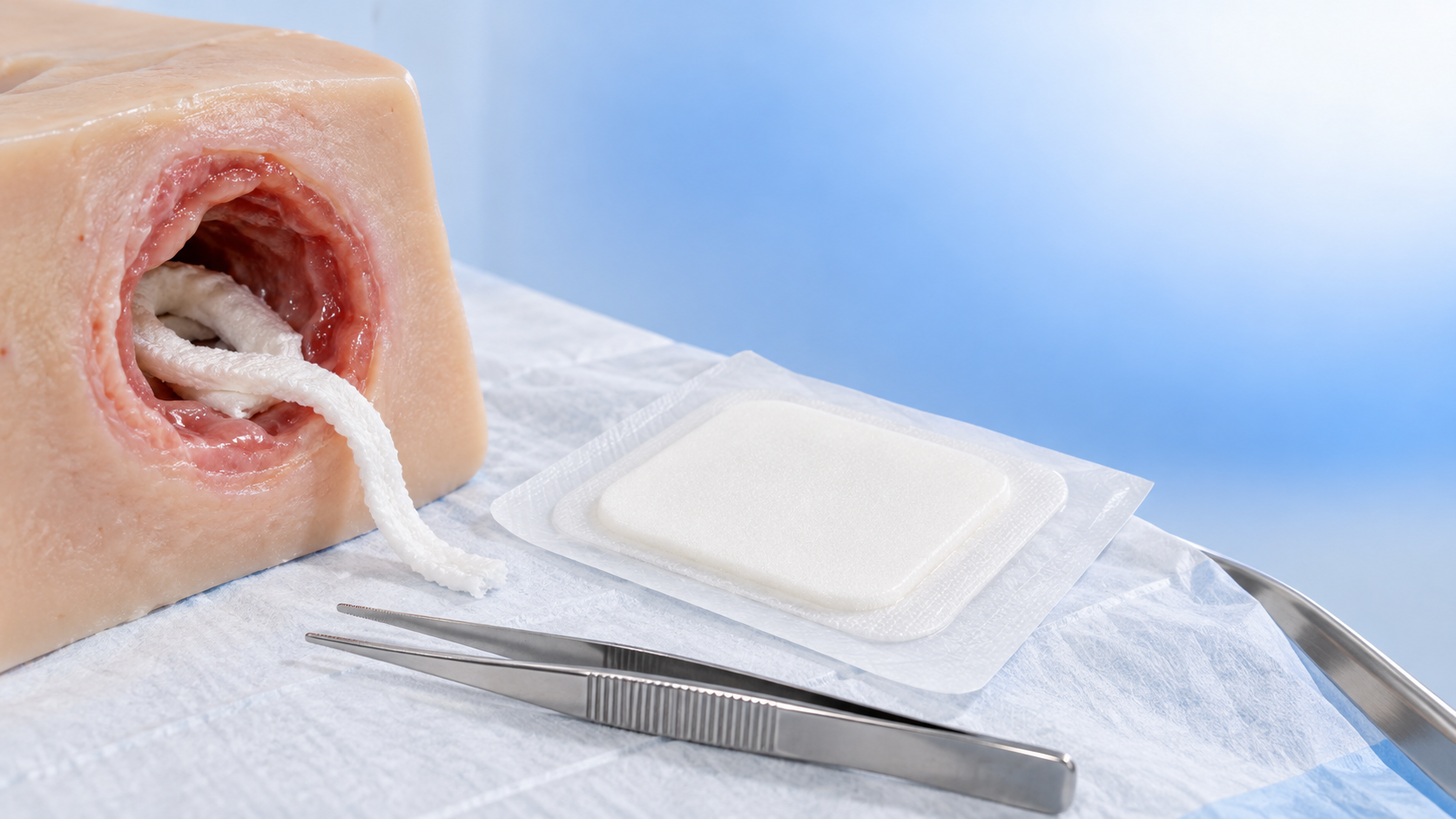
Foam dressings are often used when robust fluid removal and granulation support are needed.
Gauze-based interfaces may be preferred for tunnels, undermining, or more delicate wound beds.
Single-use negative pressure wound therapy systems may suit smaller wounds with moderate drainage.
Reusable systems may better support larger wounds, heavy exudate, or longer treatment courses.
Pressure settings vary by wound type, dressing, tolerance, and clinical protocol.
Continuous mode is commonly used early, especially for heavily draining wounds.
Intermittent or variable modes may be considered later, depending on goals and wound response.
Decision Factors That Matter
- Can the wound be sealed reliably?
- Is drainage volume compatible with canister capacity?
- Is the periwound skin strong enough?
- Are pain and mobility manageable?
- Is there a clear endpoint for reassessment?
What Should Be Monitored During Therapy?
Monitoring determines whether negative pressure wound therapy is helping, plateauing, or causing avoidable problems.
The seal should be checked frequently. Air leaks reduce pressure delivery and may dry the wound surface.
Canister output should be reviewed for volume, color, odor, and sudden change.
Bright red drainage, rapid filling, or clots require urgent evaluation.
Pain should not be dismissed as normal. Pressure, dressing contact, or periwound injury may need adjustment.
Periwound skin should be protected from adhesive trauma, moisture, and shear.
Progress should be documented through wound dimensions, tissue quality, exudate trends, and photographs when appropriate.
If granulation does not improve, the treatment plan should be reassessed.
Practical Monitoring Checklist
How Does NPWT Compare With Advanced Dressings?
Negative pressure wound therapy is one part of advanced wound care, not a replacement for every dressing.
Silver foams, alginates, hydrofibers, silicone dressings, and collagen matrices each serve different wound needs.
Alginates and hydrofibers absorb exudate but do not actively apply mechanical pressure.
Silicone foams protect fragile skin and manage moderate drainage with less device complexity.
Antimicrobial dressings may help manage bioburden when infection risk is present.
Negative pressure wound therapy becomes more compelling when exudate control, wound contraction, and granulation stimulation are all needed.
A combined strategy is common. NPWT may prepare the wound, while dressings support later epithelialization.
Comparison at a Glance
What Risks and Misunderstandings Should Be Avoided?
The biggest misunderstanding is that higher suction always means faster healing.
Excess pressure can increase pain, stress delicate tissue, or worsen periwound damage.
Another mistake is leaving therapy unchanged despite poor progress.
Negative pressure wound therapy should have measurable goals and reassessment intervals.
A wound that becomes more painful, malodorous, necrotic, or heavily bleeding needs prompt review.
Dressing changes must follow protocol. Retained foam fragments can cause serious complications.
Tubing placement also matters. Pressure points from tubing can create new skin injury.
Safe use requires both technology and disciplined wound care fundamentals.
FAQ: Quick Answers on Negative Pressure Wound Therapy
Turning Device Capability Into Better Healing Decisions
Negative pressure wound therapy improves healing when the wound biology and device strategy match.
It is most valuable when fluid management, tissue stimulation, and wound protection are all required.
The next step is a structured wound review before therapy begins.
Assess tissue viability, infection status, bleeding risk, wound geometry, exudate, and patient tolerance.
Then select the dressing, pressure mode, change frequency, and monitoring plan with clear endpoints.
In advanced wound care, evidence-informed use matters as much as device sophistication.
IMCS tracks wound care technologies, regulatory expectations, material safety, and clinical adoption across high-value medical consumables.
With disciplined application, negative pressure wound therapy can help transform complex wounds into controlled healing pathways.
Get weekly intelligence in your inbox.
No noise. No sponsored content. Pure intelligence.
News Recommendations
 Oct 26, 2026Can a single approval cover life science product sales worldwide?Can a single approval cover life science product sales worldwide?
 Oct 25, 2026When is sensitization testing needed for medical device biocompatibility?When is sensitization testing needed for medical device biocompatibility?
 Oct 24, 2026How is biocompatibility tested for implantable polymer biomaterials?How is biocompatibility tested for implantable polymer biomaterials?
 Oct 23, 2026How to build reimbursement into an implant commercialization strategyHow to build reimbursement into an implant commercialization strategy
 Oct 22, 2026What clinical evidence do implants need for CE marking under EU MDR?What clinical evidence do implants need for CE marking under EU MDR?
 Oct 21, 2026How to choose disposable laparoscopic stapler reloads for thick tissueHow to choose disposable laparoscopic stapler reloads for thick tissue
 Oct 20, 2026How to assess medical polymer biocompatibility under ISO 10993How to assess medical polymer biocompatibility under ISO 10993
 Oct 19, 2026How do interventional device categories differ in clinical use?How do interventional device categories differ in clinical use?
 Oct 18, 2026When to choose alginate dressings for heavily exuding chronic woundsWhen to choose alginate dressings for heavily exuding chronic wounds
 Oct 17, 2026How is biocompatibility tested for custom medical-grade PEEK implants?How is biocompatibility tested for custom medical-grade PEEK implants?
 Oct 16, 2026How to check a wound healing materials supplier’s biocompatibility dataHow to check a wound healing materials supplier’s biocompatibility data
 Oct 15, 2026How to verify the FDA clearance status of silver wound dressingsHow to verify the FDA clearance status of silver wound dressings
 Oct 14, 2026How to register orthopedic implants and instruments in Latin AmericaHow to register orthopedic implants and instruments in Latin America
 Oct 13, 2026How to use a device market intelligence database to benchmark VBP pricesHow to use a device market intelligence database to benchmark VBP prices
 Oct 12, 2026When should stainless steel orthopedic instruments be replaced?When should stainless steel orthopedic instruments be replaced?
 Oct 11, 2026When are alginate dressings rope the right choice for cavity wounds?When are alginate dressings rope the right choice for cavity wounds?
 Oct 10, 2026When smart minimally invasive technology improves catheter accessWhen smart minimally invasive technology improves catheter access
 Oct 08, 2026Clinical evaluation requirements for cardiovascular implant devices in EuropeClinical evaluation requirements for cardiovascular implant devices in Europe
 Oct 07, 2026What to verify before appointing an artificial joint implants distributorWhat to verify before appointing an artificial joint implants distributor
 Oct 06, 2026How ISO 10993 guides biocompatibility testing for medical materialsHow ISO 10993 guides biocompatibility testing for medical materials
 Oct 05, 2026How to verify an orthopedic implants and instruments exporterHow to verify an orthopedic implants and instruments exporter
 Oct 04, 2026What drives surgical stapling devices price differences in hospital tenders?What drives surgical stapling devices price differences in hospital tenders?
 Oct 03, 2026How to assess a central venous catheter manufacturer's infection-control evidenceHow to assess a central venous catheter manufacturer's infection-control evidence
 Oct 02, 2026How to assess an advanced wound care factory’s quality systemHow to assess an advanced wound care factory’s quality system
 Oct 01, 2026What is driving global medical consumables demand in emerging markets?What is driving global medical consumables demand in emerging markets?
 Sep 30, 2026Implant Material Compliance Testing: Evidence Needed for Regulatory SubmissionImplant Material Compliance Testing: Evidence Needed for Regulatory Submission
 Sep 30, 2026From Corrosion to Fatigue: What Implant Materials Testing Should MeasureFrom Corrosion to Fatigue: What Implant Materials Testing Should Measure