Implantable Biomaterials: What to Check Before Regulatory Submission
Implantable Biomaterials: Why submission readiness starts before the dossier
Implantable biomaterials rarely fail at submission because of one dramatic defect.
More often, approval slows down because several small gaps appear connected.
A resin grade changes without full impact review.
A surface treatment is validated for performance, but not for biocompatibility drift.
A sterilization file looks complete, yet residual risk remains weakly justified.
That is why implantable biomaterials must prove more than function.
They must show biological safety, process consistency, traceability, and controlled change history.
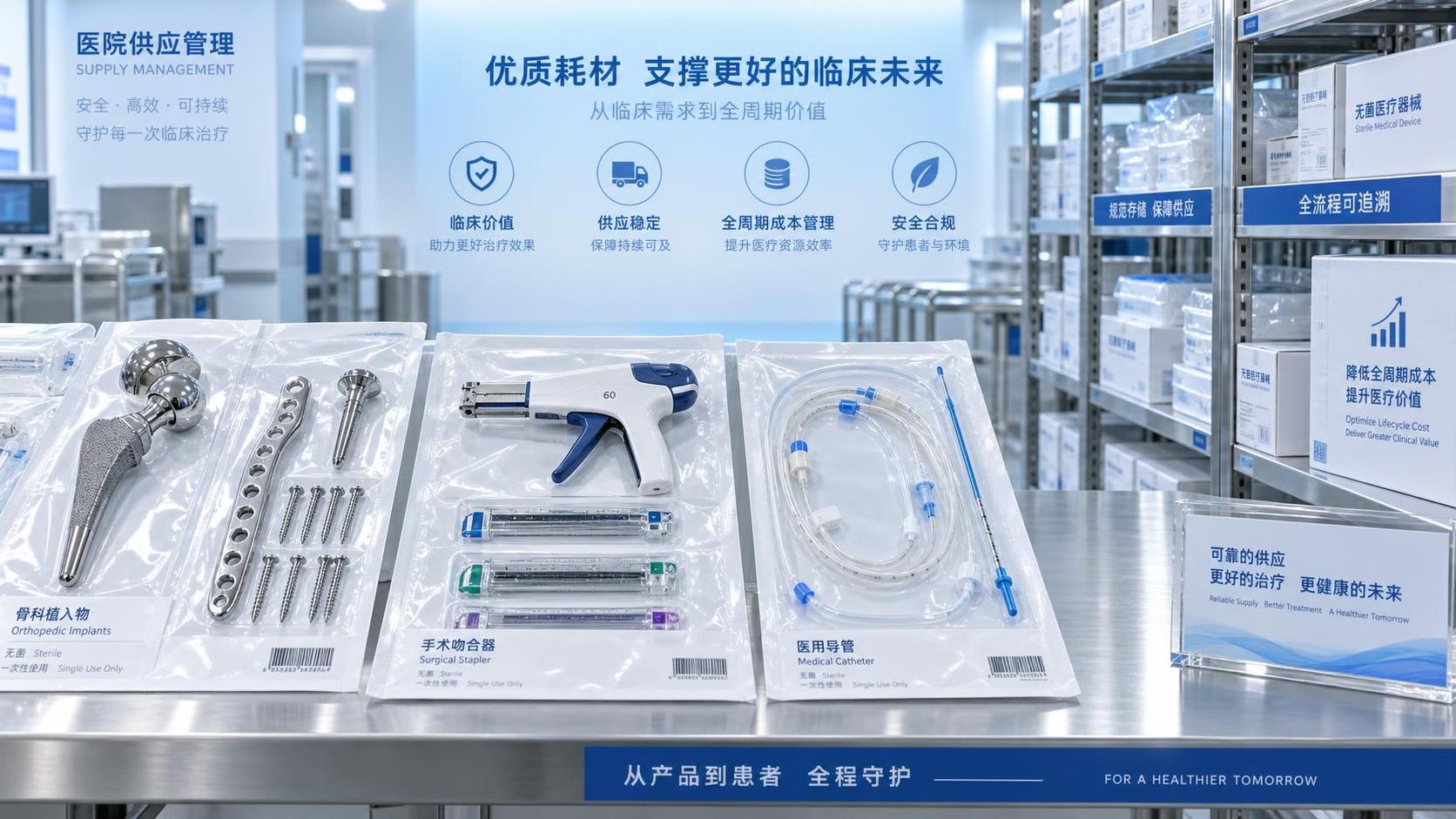
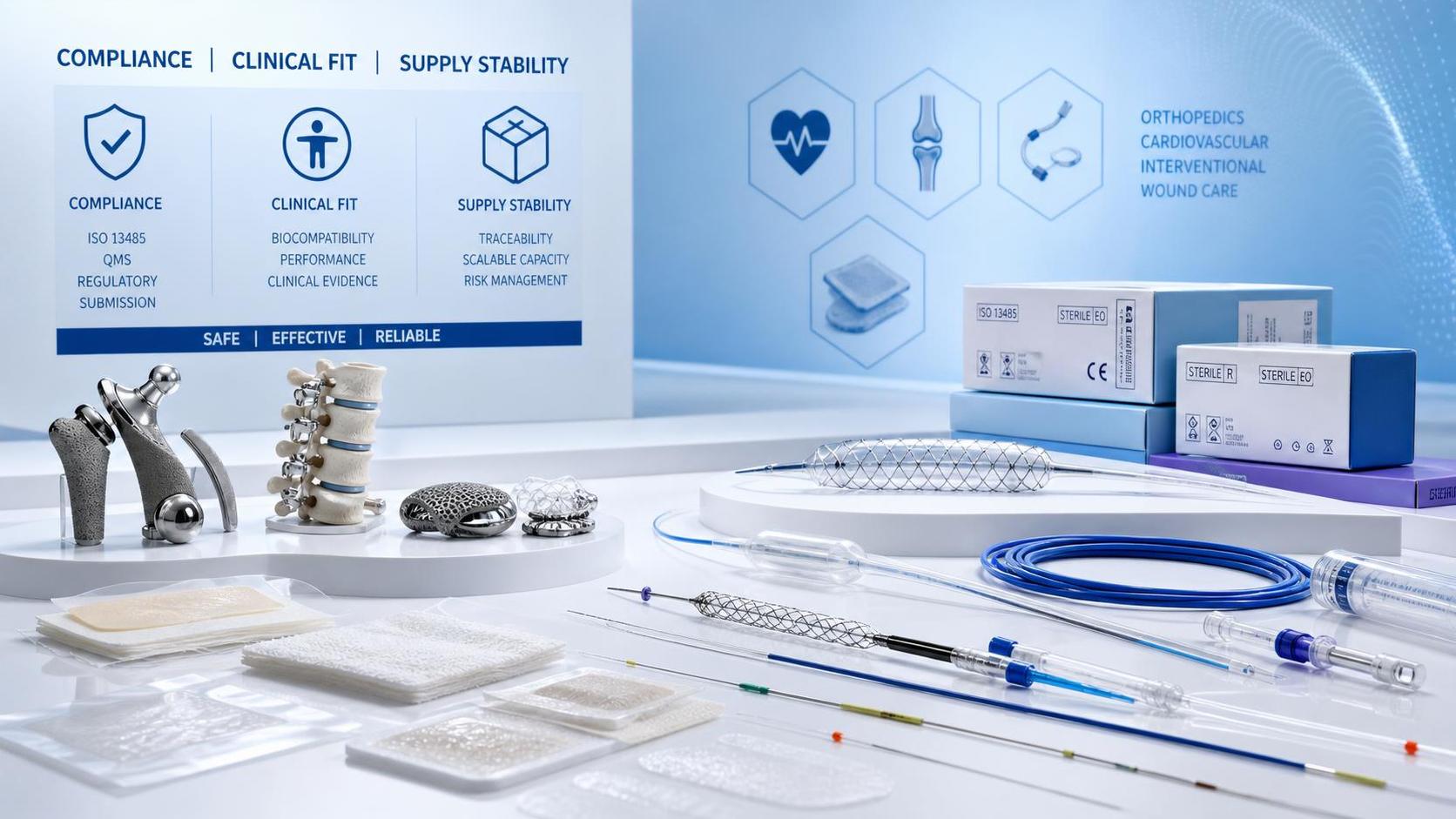
Across orthopedics, cardiovascular devices, polymer catheters, stapling systems, and regenerative materials, the pattern is similar.
The material decision becomes a regulatory decision much earlier than many teams expect.
IMCS follows this intersection closely, especially where Class III expectations meet real manufacturing constraints.
So what should be checked before regulatory submission, and what usually gets overlooked?
What counts as “submission-ready” for implantable biomaterials?
Submission-ready does not mean the material is well known or widely used.
It means the full evidence chain is coherent.
Reviewers want to see that material identity, intended use, processing route, and biological evaluation all support each other.
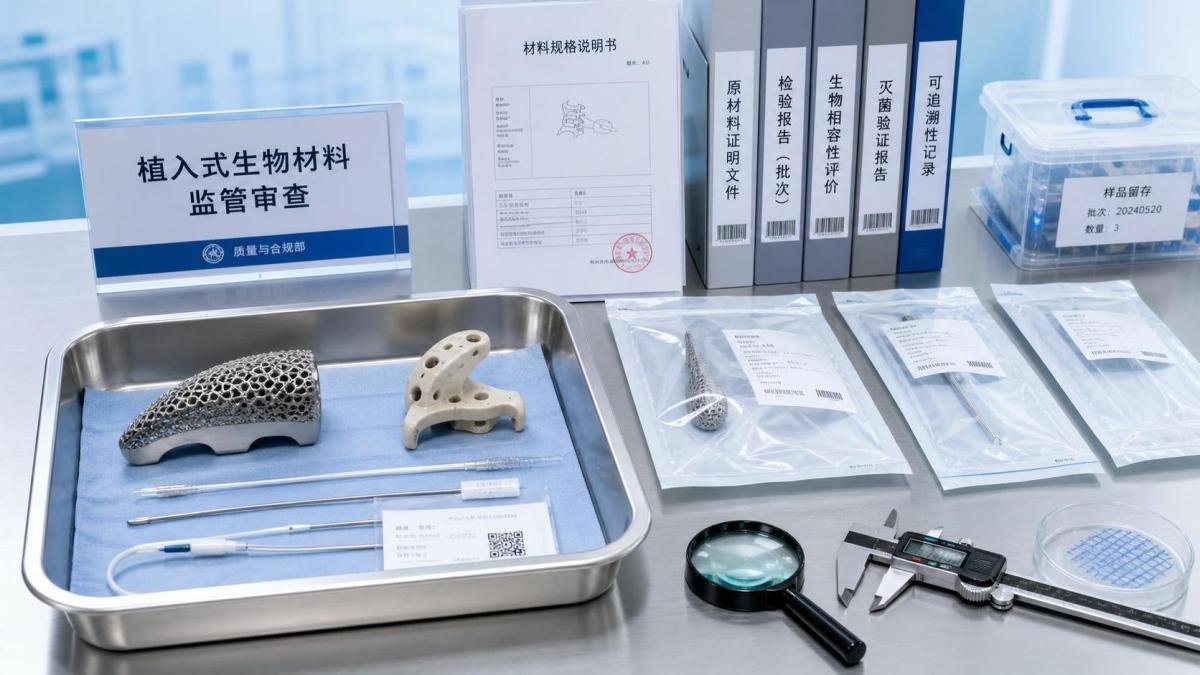
For implantable biomaterials, the basic file usually needs five anchors.
- Clear material specification, including grade, additives, coating, and supplier controls.
- Processing history, covering molding, machining, cleaning, passivation, printing, or crosslinking.
- Biological evaluation linked to contact type, duration, and patient exposure.
- Risk management that translates data into residual risk decisions.
- Change control records showing what remained stable across development and scale-up.
In practice, the weak point is often not the test itself.
It is the link between the test article and the marketed configuration.
If the submitted sample does not represent final cleaning, packaging, or sterilization, confidence drops quickly.
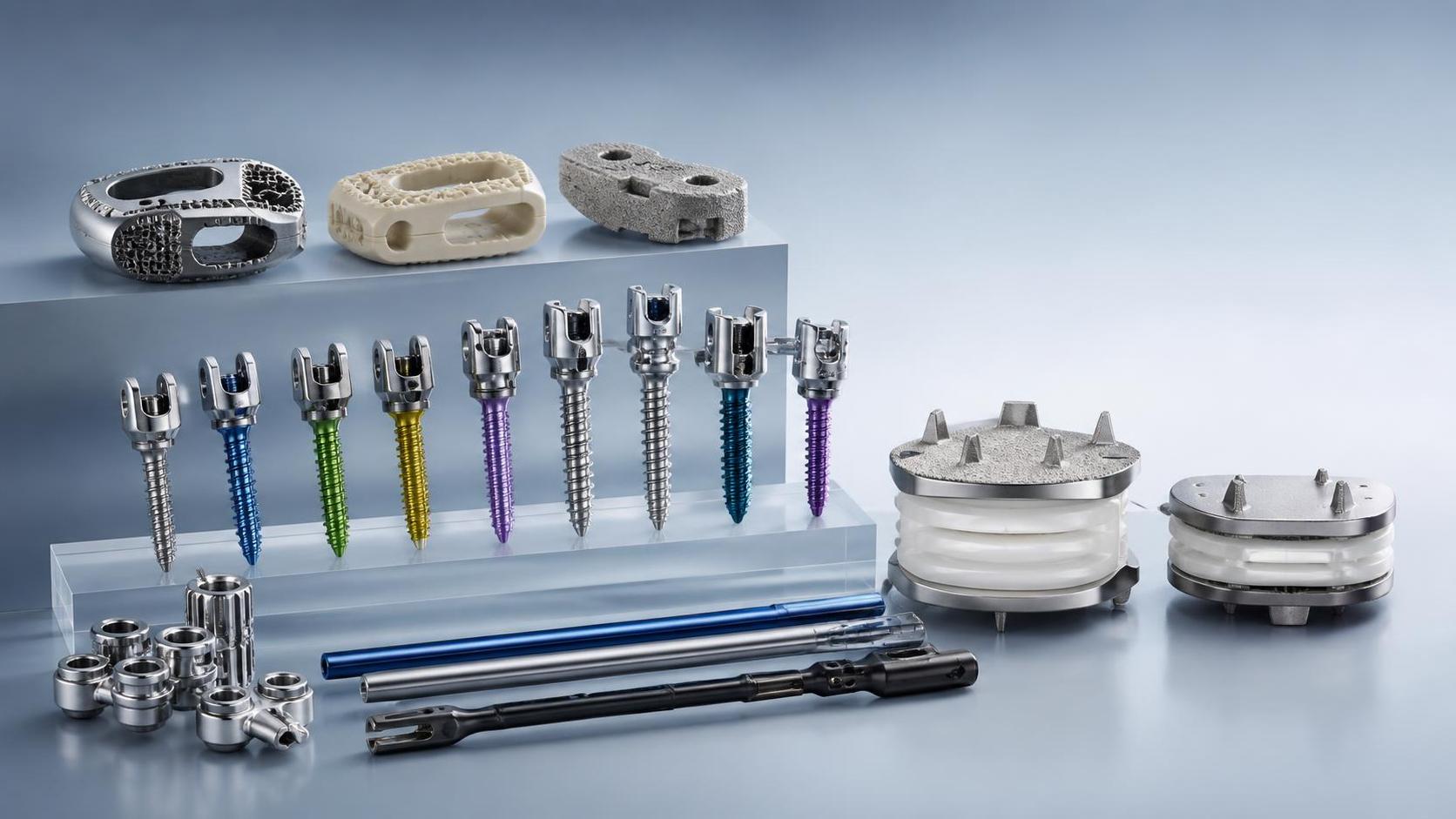
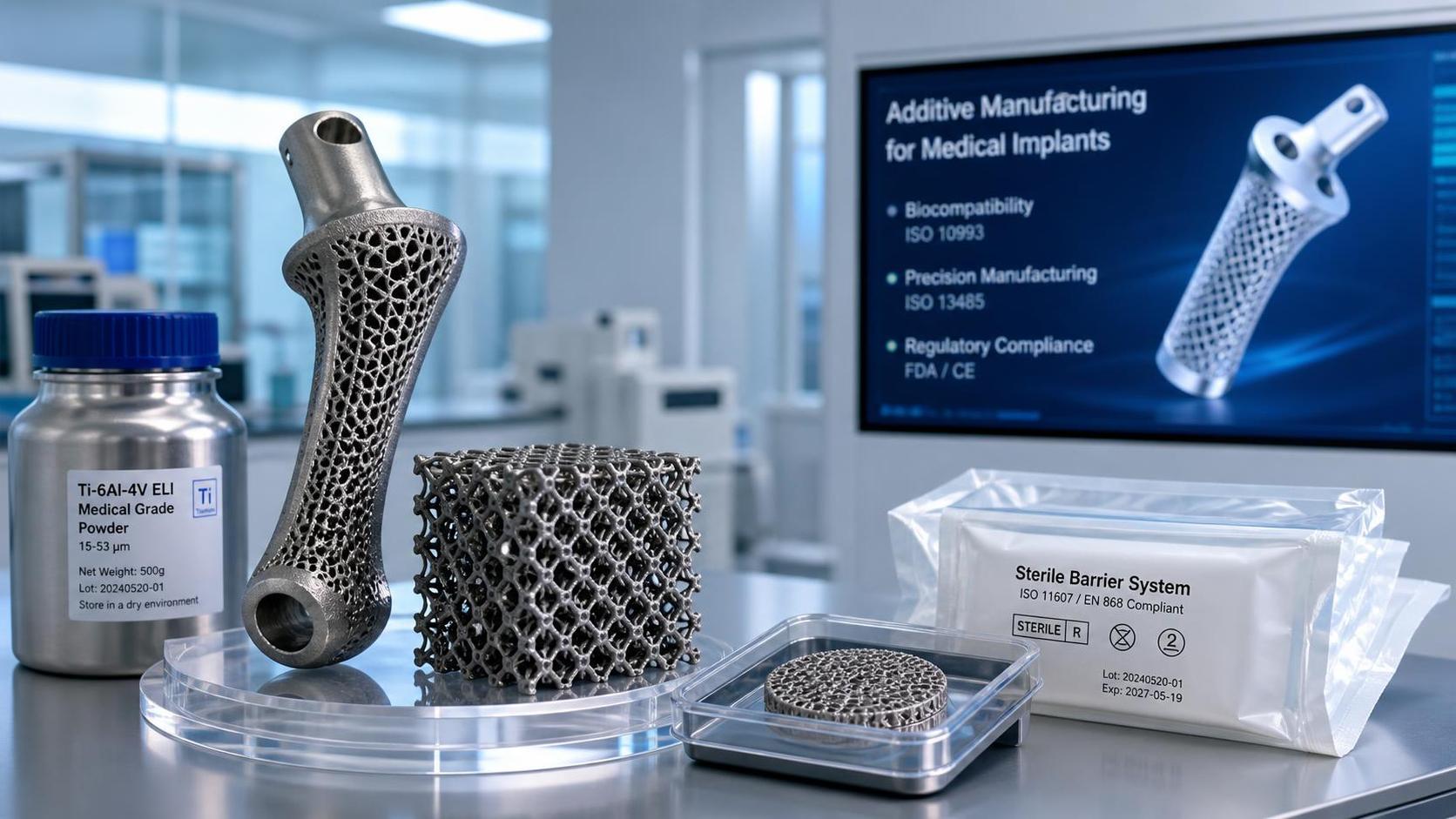
This is especially true for porous titanium implants, drug-coated cardiovascular components, and absorbable wound-contact materials.
Which material details trigger the most questions during review?
Reviewers usually probe the details that can change patient exposure without obvious visual clues.
For implantable biomaterials, those details differ by platform.
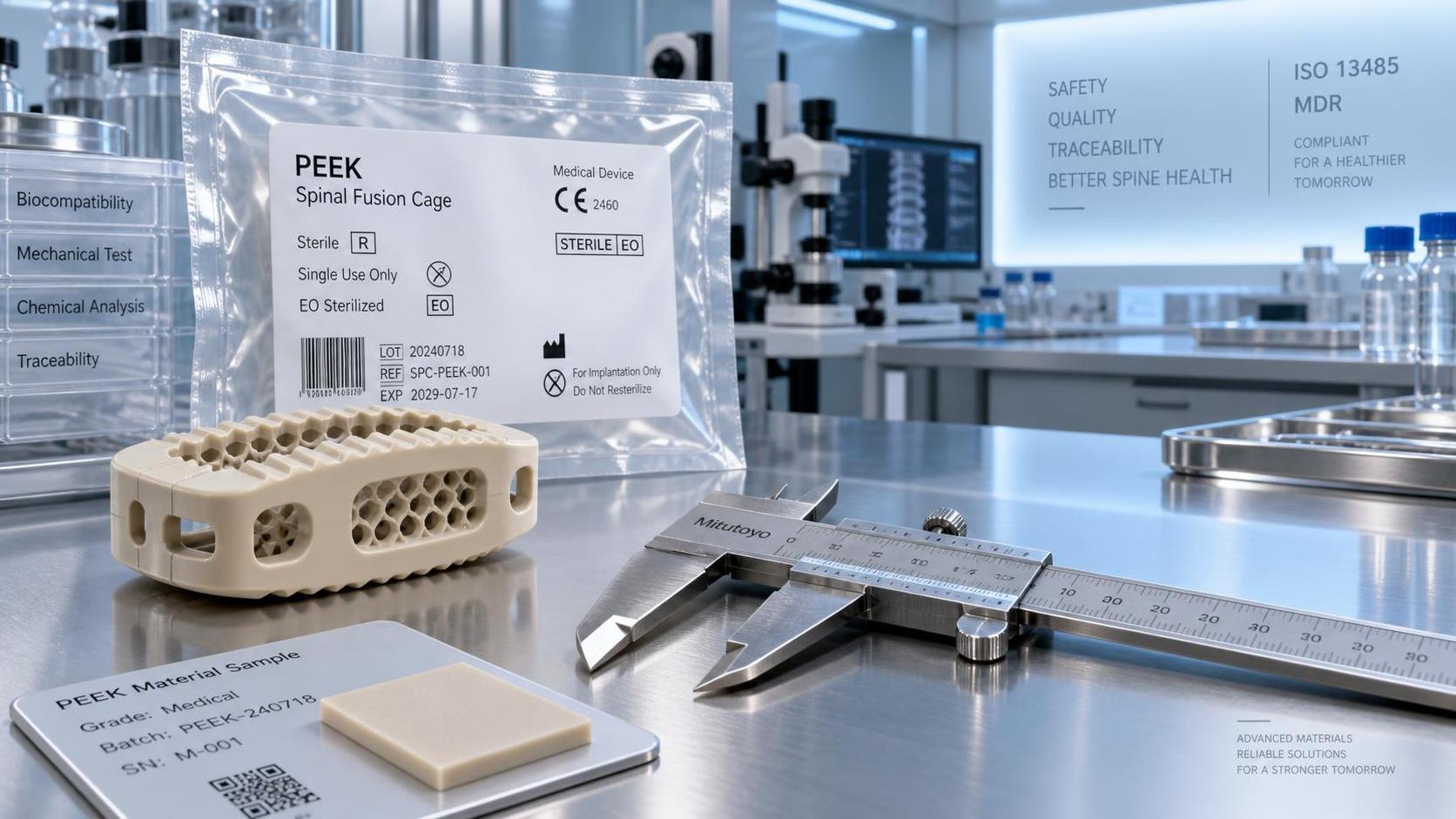
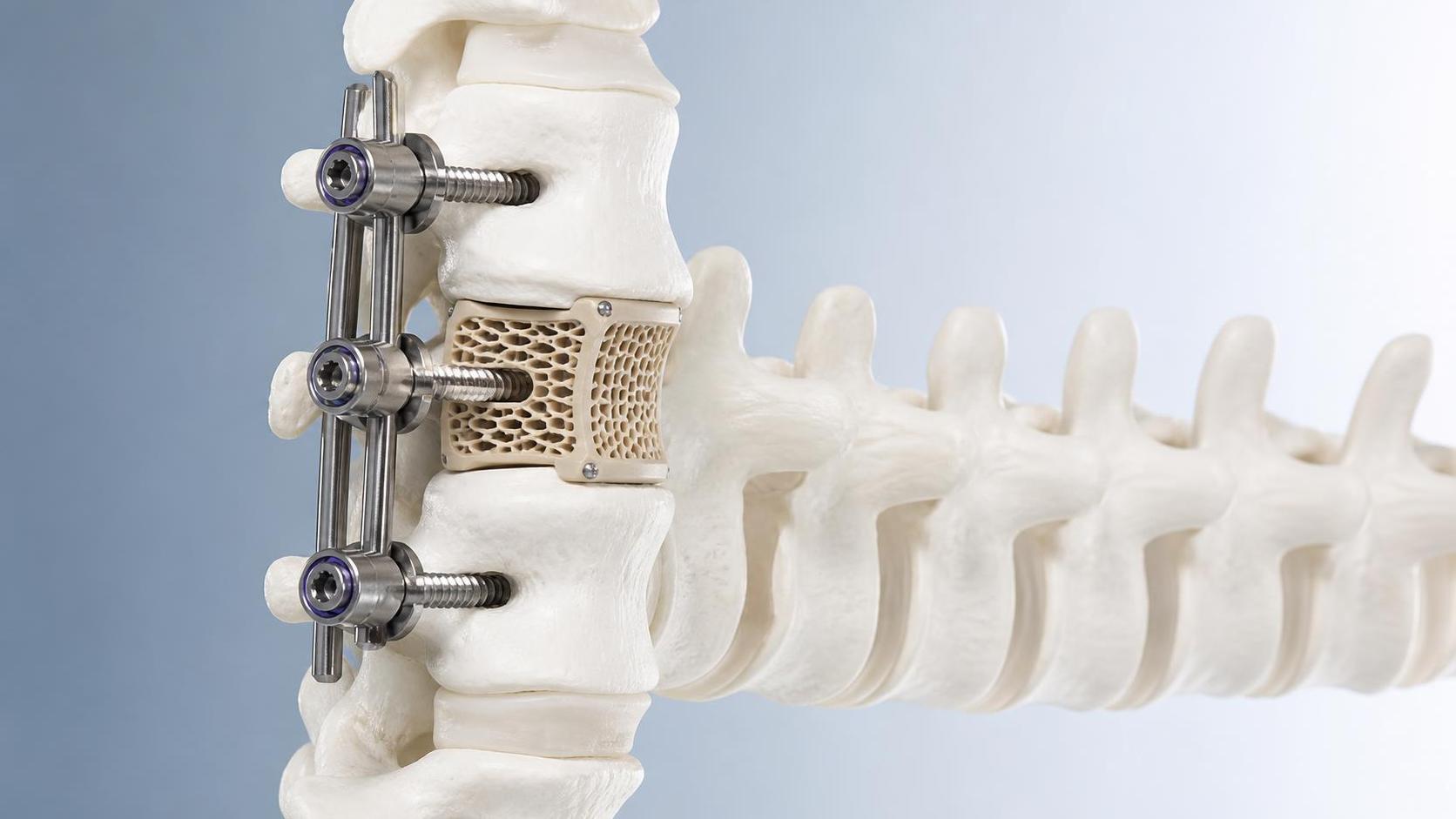
A PEEK spinal implant raises one set of questions.
A hydrophilic-coated catheter or a silver-containing regenerative dressing raises another.
Still, several review themes appear again and again.
This is where structured intelligence becomes useful.
IMCS often highlights the same pattern seen by toxicology and clinical reviewers.
Material claims are easy to state, but much harder to defend across the entire evidence package.
Is ISO 10993 testing enough, or does the context matter more?
ISO 10993 is essential, but it is not a shortcut.
For implantable biomaterials, the testing plan only makes sense when it matches the real clinical exposure profile.
That includes contact duration, tissue type, implantation site, and whether the material degrades or releases agents over time.
A permanent orthopedic implant needs a different justification than a transient cardiovascular delivery component.
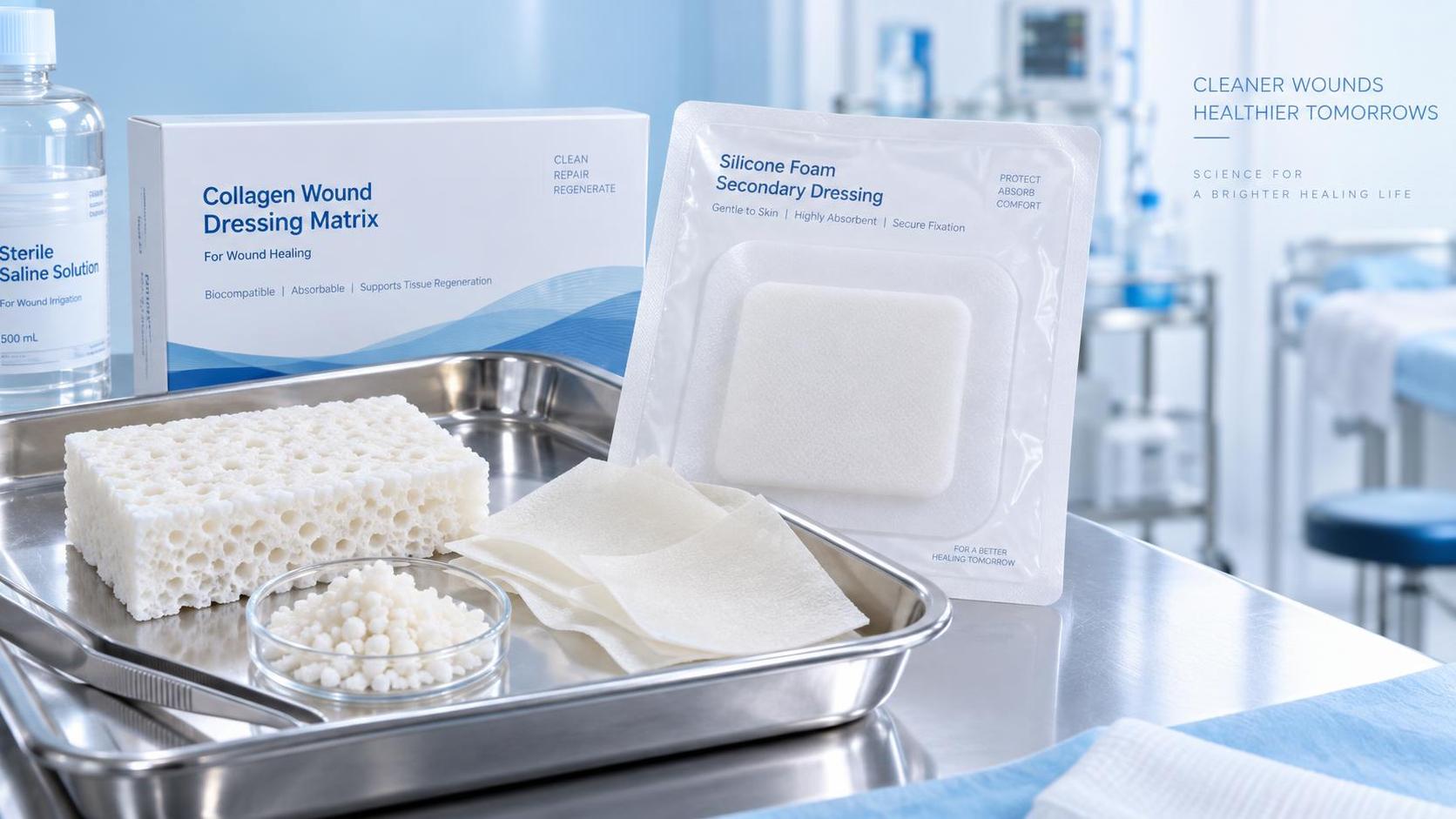
A wound-facing regenerative matrix adds another layer because tissue healing itself may change exposure behavior.
The more reliable approach is to build the evaluation around questions, not checkboxes.
- What chemicals can migrate after final sterilization?
- Does processing create new residuals or degradation products?
- Is literature being used appropriately, or as a substitute for device-specific evidence?
- Do extraction conditions reflect worst-case patient exposure?
This point is often underestimated.
Biocompatibility is not only about passing tests.
It is about showing why the selected tests, methods, and limits are scientifically appropriate.
That is also why toxicology review, extractables assessment, and clinical logic must speak the same language.
Where do traceability and process validation usually break down?
Many teams focus on the final device report and miss upstream drift.
For implantable biomaterials, traceability should begin with raw material release and continue through every transformation step.
That sounds straightforward, but the failure points are familiar.
A machining coolant changes.
A 3D printing parameter is tightened for strength.
A coating supplier updates a formulation quietly under the same commercial name.
Each change may look operational, yet it can affect biological risk or submission comparability.
More mature files usually answer four practical questions early.
- Can every finished lot be traced to a specific raw material lot?
- Are critical process parameters linked to material performance and safety outcomes?
- Do cleaning, packaging, and sterilization validations represent routine production?
- Is change assessment documented before implementation, not after deviation?
This matters even more in global supply conditions shaped by price pressure and VBP dynamics.
Cost control can drive supplier or process adjustments.
Without disciplined comparability rules, compliance risk rises long before authorities ask questions.
How do you judge whether the evidence is strong enough for high-risk review?
A useful way is to read the file as a reviewer would.
Not by asking whether documents exist, but whether the story holds together under pressure.
For implantable biomaterials, strong evidence usually has three qualities.
It is representative, justified, and internally consistent.
Representative means test samples match the final device state.
Justified means methods, limits, and omissions are explained scientifically.
Internally consistent means risk management, verification, clinical reasoning, and labeling do not contradict each other.
In actual review preparation, this short checklist helps.
For Class III pathways, this discipline becomes decisive.
Clinical evaluation, toxicology interpretation, and manufacturing evidence must reinforce the same safety conclusion.
That cross-functional stitching is exactly where many high-value implant submissions win or stall.
What should be done before the submission clock starts?
The smartest move is not adding more reports at the end.
It is running a structured readiness check before the dossier is locked.
For implantable biomaterials, that review should cover material identity, biological rationale, process representativeness, and unresolved changes.
In practical terms, start with the evidence gaps that can still be fixed efficiently.
- Reconcile supplier documents with internal specifications and purchasing controls.
- Confirm that all biocompatibility conclusions map to the final sterilized product.
- Review extractables, residues, and degradation assumptions against current process reality.
- Check whether risk files, validation reports, and clinical claims tell the same story.
- Flag any late material or process change that lacks formal comparability assessment.
If the device sits in orthopedics, cardiovascular intervention, MIS consumables, or tissue regeneration, the details differ.
The principle does not.
Implantable biomaterials are judged not only by what they are, but by how convincingly their lifecycle is controlled.
A solid next step is to build a pre-submission review grid, then test every claim against evidence, traceability, and patient exposure logic.
That usually saves more time than reacting to review questions later.
Get weekly intelligence in your inbox.
No noise. No sponsored content. Pure intelligence.
News Recommendations
 Sep 14, 2026High value consumables insights for evaluating total cost of careHigh value consumables insights for evaluating total cost of care
 Sep 13, 2026What a medical device market insights platform reveals about market accessWhat a medical device market insights platform reveals about market access
 Sep 12, 2026When are collagen-based tissue healing materials suitable for wound care?When are collagen-based tissue healing materials suitable for wound care?
 Sep 11, 2026How catheter material selection affects total cost of ownershipHow catheter material selection affects total cost of ownership
 Sep 10, 2026What FDA clearance means for medical grade PEEK implantsWhat FDA clearance means for medical grade PEEK implants
 Sep 09, 2026When do hydrogel wound healing technologies suit dry wounds?When do hydrogel wound healing technologies suit dry wounds?
 Sep 07, 2026How to assess medical consumables for surgical useHow to assess medical consumables for surgical use
 Sep 07, 2026How to verify CE MDR compliance for single-use medical consumablesHow to verify CE MDR compliance for single-use medical consumables
 Sep 05, 2026How to evaluate an antithrombotic catheter factory for qualityHow to evaluate an antithrombotic catheter factory for quality
 Sep 04, 2026When do minimally invasive surgical staplers improve GI access?When do minimally invasive surgical staplers improve GI access?
 Sep 03, 2026When are foam moist wound healing dressings appropriate for exuding wounds?When are foam moist wound healing dressings appropriate for exuding wounds?
 Sep 02, 2026How implant pricing affects access to advanced medical careHow implant pricing affects access to advanced medical care
 Sep 01, 2026What is driving price pressure in the North American medical consumables market?What is driving price pressure in the North American medical consumables market?
 Aug 31, 2026Comparing medical devices in Southeast Asia when market access differsComparing medical devices in Southeast Asia when market access differs
 Aug 30, 2026When are 3D printed PEEK implants suitable for spinal reconstruction?When are 3D printed PEEK implants suitable for spinal reconstruction?
 Aug 29, 2026How global medical device regulations shape clinical evidence requirementsHow global medical device regulations shape clinical evidence requirements
 Aug 28, 2026How to verify a burn care dressings exporter meets EU MDR requirementsHow to verify a burn care dressings exporter meets EU MDR requirements
 Aug 27, 2026How to verify a diabetic foot wound care supplier’s clinical evidenceHow to verify a diabetic foot wound care supplier’s clinical evidence
 Aug 26, 2026What drives spinal implants price differences across implant typesWhat drives spinal implants price differences across implant types
 Aug 25, 2026What matters most in a medical consumables platform comparisonWhat matters most in a medical consumables platform comparison
 Aug 24, 2026What a medical device intelligence guide should cover before market accessWhat a medical device intelligence guide should cover before market access
 Aug 23, 2026What drives catheter coating technology cost in early device designWhat drives catheter coating technology cost in early device design
 Aug 22, 2026How custom 3D printed medical implants meet biocompatibility requirementsHow custom 3D printed medical implants meet biocompatibility requirements
 Aug 21, 2026What makes an implant commercialization strategy in Europe fail at market accessWhat makes an implant commercialization strategy in Europe fail at market access
 Aug 20, 2026What drives catheter coating technology cost in product developmentWhat drives catheter coating technology cost in product development
 Aug 19, 2026What drives medical device compliance cost during market entryWhat drives medical device compliance cost during market entry
 Aug 18, 2026When does an antimicrobial central venous catheter lower infection risk?When does an antimicrobial central venous catheter lower infection risk?