Biodegradable Implants: How to Assess Strength, Degradation, and Fit
Biodegradable Implants: A Practical Framework for Strength, Degradation, and Fit
Evaluating biodegradable implants starts with one simple truth.
A device can look promising on paper and still fail in use.
That is why technical assessment must go beyond material labels.
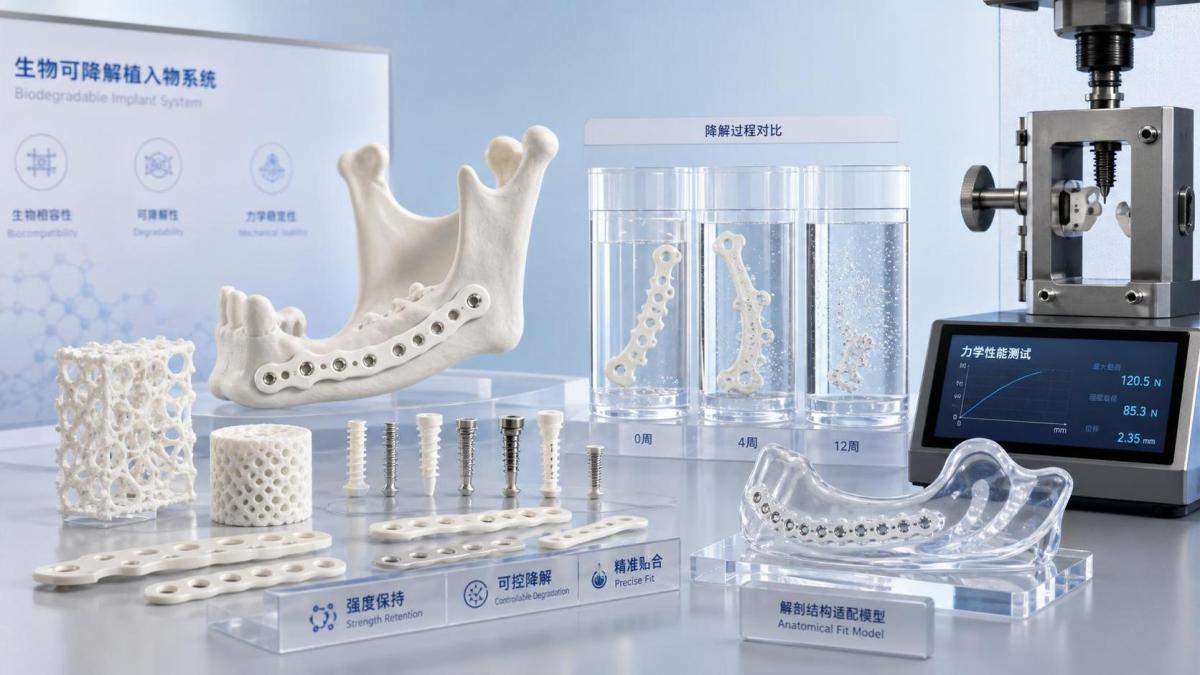
The real question is whether biodegradable implants keep enough strength, degrade at the right pace, and fit the anatomy they serve.
In practical selection work, these three factors are tightly connected.
If one is misjudged, the whole risk profile changes.
This matters even more as resorbable fixation, polymer scaffolds, and temporary support devices move into broader clinical use.
From recent market shifts, the stronger signal is clear.
Buyers and evaluators want biodegradable implants that reduce long-term foreign body burden without creating short-term instability.
That also means assessment has to bridge engineering data, biological response, regulatory evidence, and manufacturing consistency.
Why biodegradable implants need a different evaluation logic
Traditional permanent implants are judged by long-term stability and durability.
Biodegradable implants follow a different performance curve.
They are expected to support tissue during healing, then gradually disappear.
That sounds attractive, but it creates a moving target.
Mechanical strength changes over time.
Surface chemistry changes over time.
The local tissue environment also changes over time.
Because of this, a solid review process should ask three linked questions.
- Does the implant provide enough initial support for the specific indication?
- Does degradation match the tissue healing window instead of racing ahead or lingering too long?
- Does the geometry fit the anatomy and the surgical workflow with minimal compromise?
If the answer to any one of these is weak, biodegradable implants become a liability rather than an upgrade.
How to assess strength in biodegradable implants
The first screen is never absolute strength alone.
The better question is functional strength over the support period.
For biodegradable implants, that period may be weeks or months, depending on tissue type and load profile.
Key mechanical checks
Start with the use case, not the marketing claim.
A craniofacial plate, interference screw, vascular scaffold, or soft tissue anchor will not share the same loading pattern.
- Check tensile, compressive, bending, and torsional performance against the real indication.
- Review fatigue behavior under cyclic loading, especially in active anatomical sites.
- Compare wet-state performance with dry-state results.
- Look for retention of strength at clinically relevant timepoints.
This point is often underestimated.
Some biodegradable implants perform well at implantation, then lose strength too quickly in fluid exposure.
That gap can trigger fixation failure before tissue consolidation.
Material and structure both matter
Mechanical performance is shaped by more than polymer family or alloy type.
Crystallinity, molecular weight, porosity, fiber orientation, wall thickness, and processing method all matter.
In practical evaluation, biodegradable implants made from similar base materials can behave very differently after molding, extrusion, printing, or sterilization.
That is why lot consistency and process validation deserve close attention.
How to assess degradation without guesswork
Degradation is where many reviews become too theoretical.
In reality, degradation is not just about whether the implant disappears.
It is about how, when, and what it leaves behind during the process.
Focus on the degradation profile
A useful review looks at several layers together.
- Mass loss over time.
- Molecular weight reduction over time.
- Loss of mechanical integrity before full absorption.
- Local pH change and inflammatory response.
- Byproducts, particle release, and clearance pathways.
This is especially important for biodegradable implants used in enclosed spaces or poorly perfused tissues.
Acidic byproducts or fragmented residues may create local complications even when systemic risk looks low.
Match degradation to healing biology
The right degradation timeline depends on the tissue.
Bone, ligament, vessel wall, and dermal tissue all remodel on different schedules.
A strong selection decision compares device resorption curves with expected healing milestones.
If biodegradable implants lose support too early, the repair may collapse.
If they persist too long, they may delay remodeling or trigger chronic irritation.
How to assess fit in real clinical conditions
Fit is often reduced to dimensions.
That is too narrow for good decision-making.
For biodegradable implants, fit includes anatomy, handling, fixation behavior, and deployment accuracy.
What fit should include
- Geometric conformity to target anatomy.
- Ease of insertion through the intended surgical approach.
- Resistance to cracking, deformation, or deployment error during placement.
- Compatibility with instruments, imaging, and surrounding tissues.
A technically sound implant can still underperform if surgeons must force placement or over-modify the site.
That usually increases procedural variability and complication risk.
This is where user evaluation, simulated use, and cadaveric or benchtop anatomical models become valuable.
They reveal issues that static drawings rarely show.
A practical decision checklist for biodegradable implants
In day-to-day assessment, a structured shortlist saves time and improves consistency.
Common red flags during selection
Several warning signs tend to repeat across biodegradable implants.
- Strong early bench data, but limited wet aging or fatigue evidence.
- Degradation claims based on accelerated models only.
- Biocompatibility files that do not fully address degradation products.
- Poor fit data for anatomical variation or minimally invasive access.
- Clinical studies with short follow-up compared with the stated resorption timeline.
When these gaps appear together, the selection risk increases quickly.
A lower purchase price or a novel material story should not override missing evidence.
Turning assessment into a better decision
The best decisions on biodegradable implants come from integration, not isolated review.
Mechanical data should be read next to degradation curves.
Degradation data should be read next to tissue biology.
Fit data should be read next to surgical workflow and user variability.
That joined-up view is what separates a compliant file from a truly reliable choice.
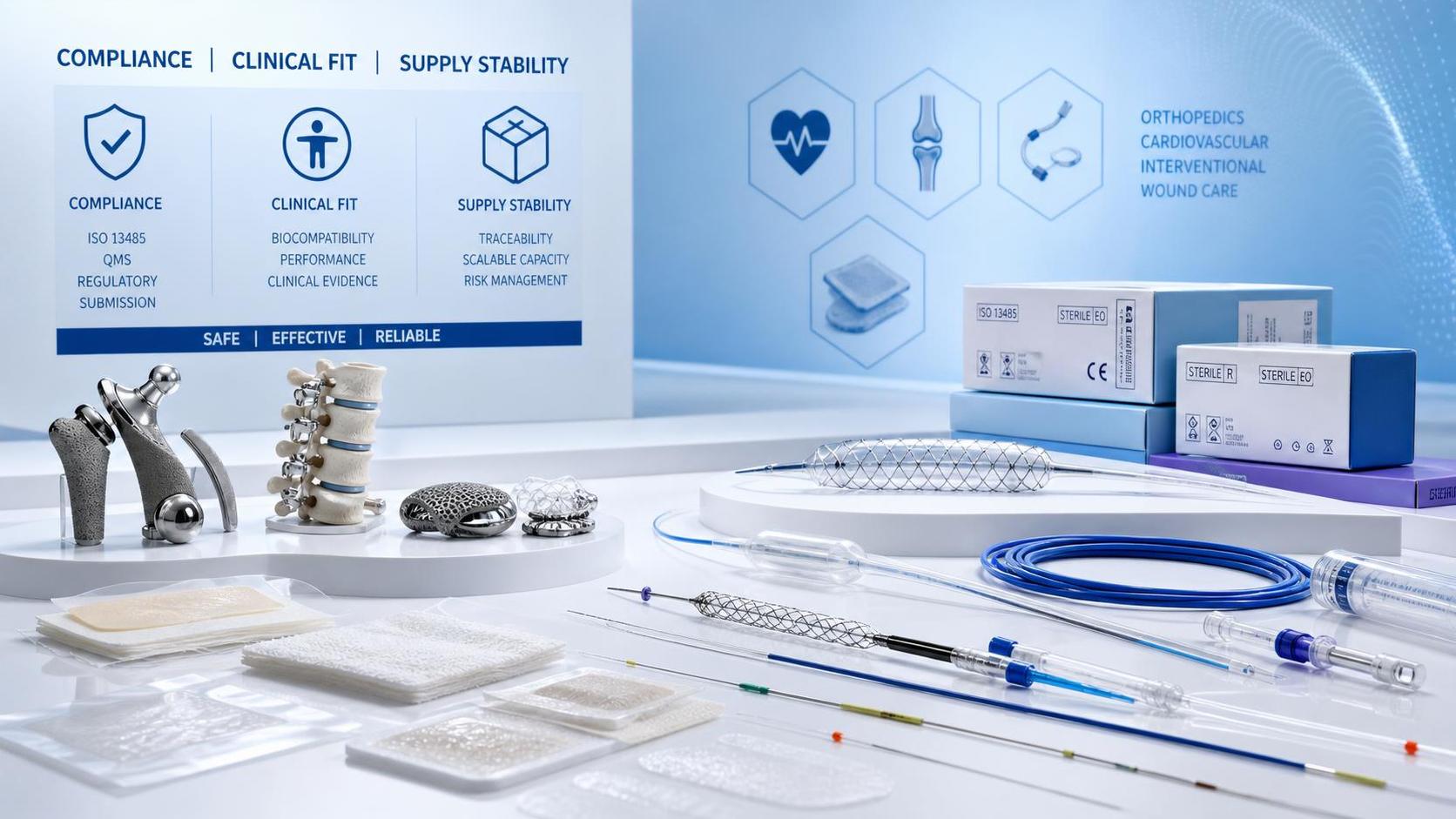
For teams tracking orthopedic implants, cardiovascular consumables, tissue regeneration materials, and advanced device regulation, this broader lens is becoming essential.
Biodegradable implants can offer real clinical value when their support profile, resorption behavior, and anatomical performance are aligned.
So the practical next step is clear.
Build every review around strength retention, controlled degradation, and real-world fit, then pressure-test the evidence before moving to adoption.
That approach gives biodegradable implants a fair evaluation and gives decision-makers a stronger basis for long-term device selection.
Get weekly intelligence in your inbox.
No noise. No sponsored content. Pure intelligence.
News Recommendations
 Sep 14, 2026High value consumables insights for evaluating total cost of careHigh value consumables insights for evaluating total cost of care
 Sep 13, 2026What a medical device market insights platform reveals about market accessWhat a medical device market insights platform reveals about market access
 Sep 12, 2026When are collagen-based tissue healing materials suitable for wound care?When are collagen-based tissue healing materials suitable for wound care?
 Sep 11, 2026How catheter material selection affects total cost of ownershipHow catheter material selection affects total cost of ownership
 Sep 10, 2026What FDA clearance means for medical grade PEEK implantsWhat FDA clearance means for medical grade PEEK implants
 Sep 09, 2026When do hydrogel wound healing technologies suit dry wounds?When do hydrogel wound healing technologies suit dry wounds?
 Sep 07, 2026How to assess medical consumables for surgical useHow to assess medical consumables for surgical use
 Sep 07, 2026How to verify CE MDR compliance for single-use medical consumablesHow to verify CE MDR compliance for single-use medical consumables
 Sep 05, 2026How to evaluate an antithrombotic catheter factory for qualityHow to evaluate an antithrombotic catheter factory for quality
 Sep 04, 2026When do minimally invasive surgical staplers improve GI access?When do minimally invasive surgical staplers improve GI access?
 Sep 03, 2026When are foam moist wound healing dressings appropriate for exuding wounds?When are foam moist wound healing dressings appropriate for exuding wounds?
 Sep 02, 2026How implant pricing affects access to advanced medical careHow implant pricing affects access to advanced medical care
 Sep 01, 2026What is driving price pressure in the North American medical consumables market?What is driving price pressure in the North American medical consumables market?
 Aug 31, 2026Comparing medical devices in Southeast Asia when market access differsComparing medical devices in Southeast Asia when market access differs
 Aug 30, 2026When are 3D printed PEEK implants suitable for spinal reconstruction?When are 3D printed PEEK implants suitable for spinal reconstruction?
 Aug 29, 2026How global medical device regulations shape clinical evidence requirementsHow global medical device regulations shape clinical evidence requirements
 Aug 28, 2026How to verify a burn care dressings exporter meets EU MDR requirementsHow to verify a burn care dressings exporter meets EU MDR requirements
 Aug 27, 2026How to verify a diabetic foot wound care supplier’s clinical evidenceHow to verify a diabetic foot wound care supplier’s clinical evidence
 Aug 26, 2026What drives spinal implants price differences across implant typesWhat drives spinal implants price differences across implant types
 Aug 25, 2026What matters most in a medical consumables platform comparisonWhat matters most in a medical consumables platform comparison
 Aug 24, 2026What a medical device intelligence guide should cover before market accessWhat a medical device intelligence guide should cover before market access
 Aug 23, 2026What drives catheter coating technology cost in early device designWhat drives catheter coating technology cost in early device design
 Aug 22, 2026How custom 3D printed medical implants meet biocompatibility requirementsHow custom 3D printed medical implants meet biocompatibility requirements
 Aug 21, 2026What makes an implant commercialization strategy in Europe fail at market accessWhat makes an implant commercialization strategy in Europe fail at market access
 Aug 20, 2026What drives catheter coating technology cost in product developmentWhat drives catheter coating technology cost in product development
 Aug 19, 2026What drives medical device compliance cost during market entryWhat drives medical device compliance cost during market entry
 Aug 18, 2026When does an antimicrobial central venous catheter lower infection risk?When does an antimicrobial central venous catheter lower infection risk?