When NPWT Systems Improve Wound Healing Technologies Outcomes
Why NPWT changes decisions inside modern wound healing technologies
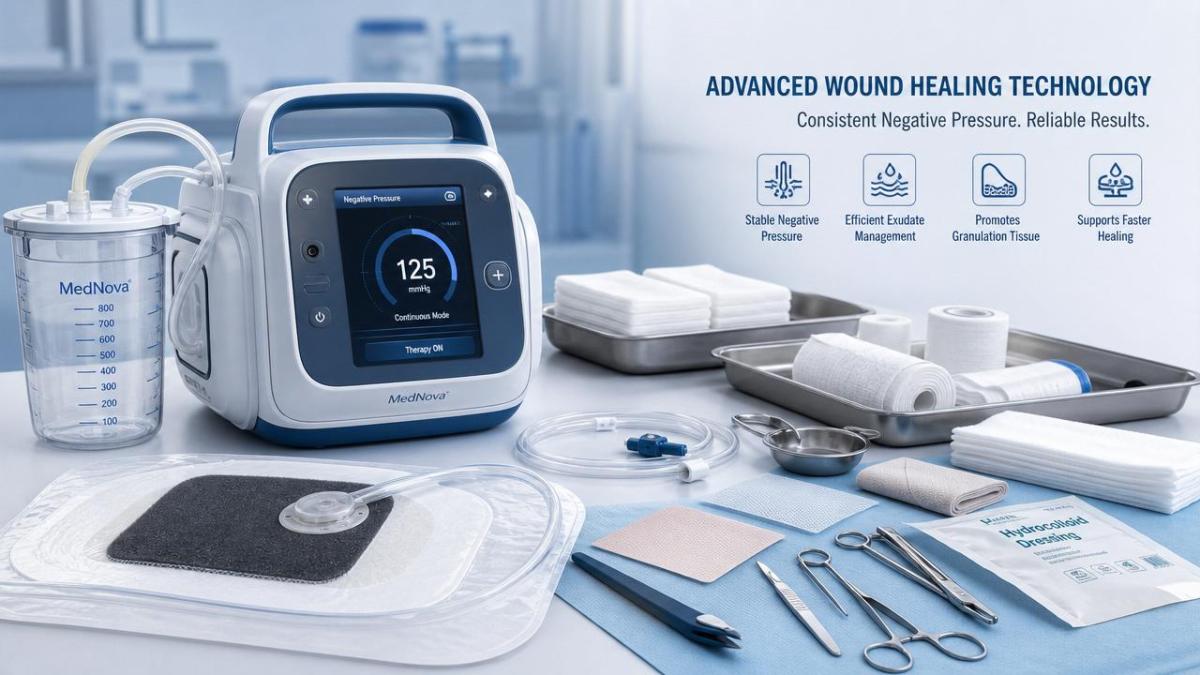
When wound closure is delayed, dressing choice stops being a routine task and becomes a recovery decision.
That is where NPWT often reshapes wound healing technologies outcomes.
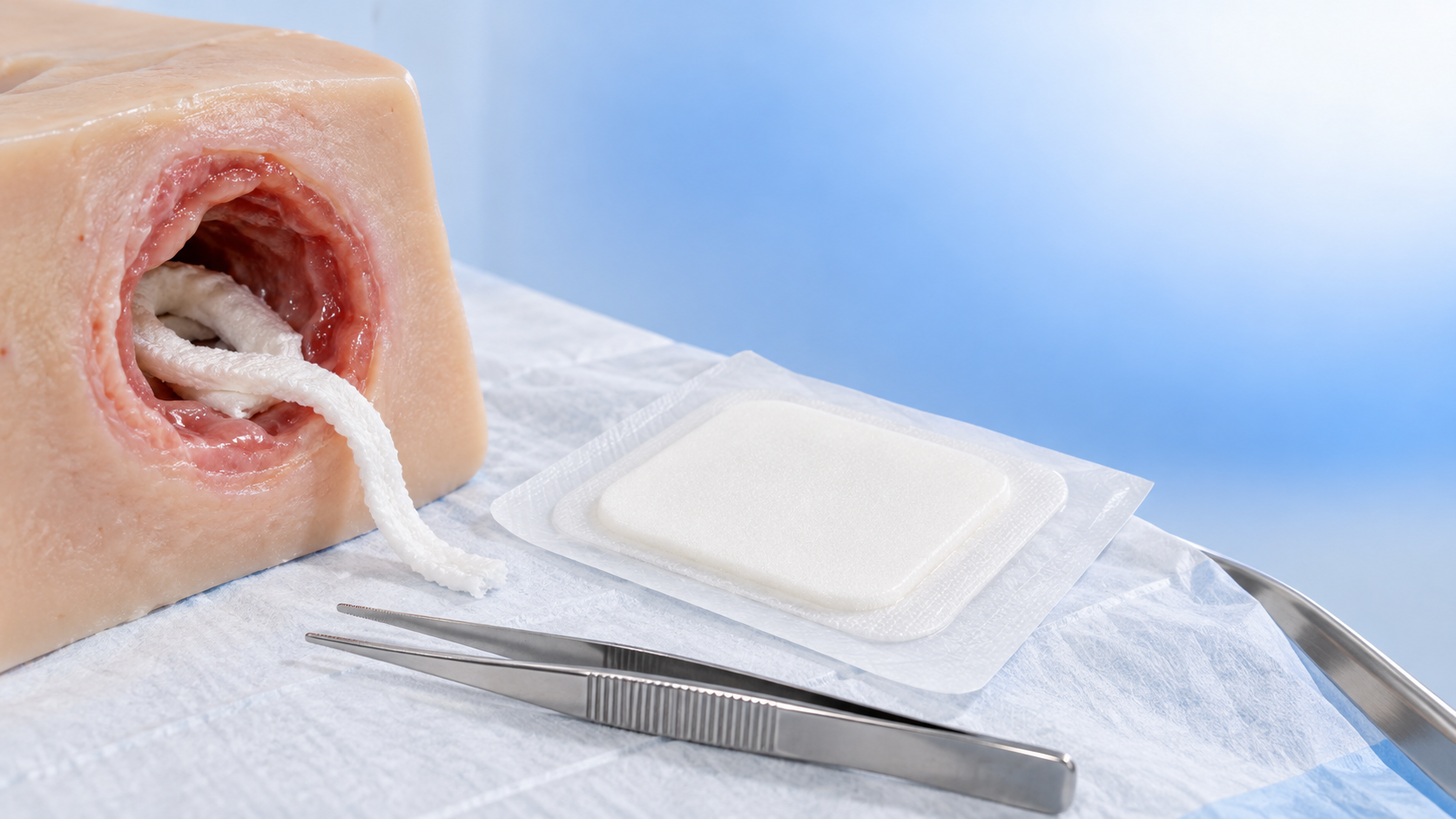
Negative pressure does more than remove fluid.
Used correctly, it stabilizes the wound bed, protects fragile tissue, and supports granulation where standard dressings struggle.
In the broader IMCS view of advanced medical dressings, NPWT sits at the meeting point of material science, biocompatibility, and clinical practicality.
That matters because wound healing technologies are no longer judged only by absorption capacity or unit cost.
They are judged by tissue response, infection control support, ease of use, and whether they fit strict regulatory pathways.
In actual care settings, the same NPWT system can perform very differently across burns, diabetic foot ulcers, and postoperative wounds.
The important question is not whether NPWT is advanced.
The real question is when it improves wound healing technologies outcomes enough to justify its clinical and operational demands.
Actual use starts with understanding why wound scenarios diverge
Different wounds fail for different reasons.
Some are driven by heavy exudate, some by poor perfusion, and others by mechanical tension or contamination risk.
Because of that, wound healing technologies cannot be evaluated through a single performance lens.
A foam interface that works well after minimally invasive surgery may be less suitable for irregular diabetic wounds with undermining.
A pressure setting that supports one tissue type may over-stress another.
This is also why IMCS places advanced dressings beside implants, catheters, and interventional consumables.
Across all of these categories, performance depends on interface quality with the human body.
For NPWT, that interface includes foam or gauze choice, seal reliability, pressure consistency, and compatibility with surrounding skin.
The best wound healing technologies therefore balance engineering precision with biologic restraint.
Postoperative wounds need control, not just coverage
Postoperative wounds are often seen as simpler because they start in controlled environments.
In practice, they can shift quickly when drainage increases or edge tension rises.
This is especially relevant after orthopedic procedures, abdominal closure, and revision surgery.
Here, NPWT improves wound healing technologies outcomes when the main goal is incision stabilization and fluid management.
The judgment point is not only exudate volume.
It is whether controlled negative pressure can reduce local stress before dehiscence risk escalates.
For wounds near implants, clinicians also tend to focus more on protecting the surrounding environment.
A poorly managed postoperative wound can affect the success of much more expensive technologies upstream.
That is one reason wound healing technologies are increasingly discussed within the same intelligence framework as orthopedic biomaterials.
Diabetic foot cases demand closer judgment on tissue viability
Diabetic foot management looks similar on the surface, but the treatment logic is very different.
The issue is not just moisture balance.
Perfusion limits, neuropathy, bioburden, and repeated pressure loading all change the value of NPWT.
In these wounds, NPWT improves wound healing technologies outcomes when debridement is adequate and ischemia has been realistically assessed.
Without that foundation, suction can create a false sense of progress.
The wound may look cleaner while the underlying tissue remains compromised.
A more reliable approach is to judge depth, pocketing, peri-wound maceration, and offloading compliance together.
In other words, wound healing technologies work best here when they are integrated with pressure redistribution and vascular thinking.
Burn and graft settings focus on protection of fragile tissue
Burn care brings another layer of complexity.
The wound surface can be broad, irregular, painful, and highly sensitive to dressing changes.
In this setting, NPWT may support graft fixation and exudate control.
But the margin for technical error is smaller.
Too much interface pressure, poor seal placement, or infrequent reassessment can damage tissue that already has limited resilience.
The best wound healing technologies decisions in burn pathways usually consider dressing conformability and skin tolerance first.
That often means looking beyond machine specifications and checking how the full dressing system behaves during movement, pain management, and graft observation.
Different scenarios rarely need the same NPWT setup
A practical comparison helps clarify where wound healing technologies should be adapted rather than copied across cases.
The table also shows why wound healing technologies should be reviewed as systems, not isolated products.
Where teams often misjudge wound healing technologies
One common mistake is choosing NPWT because the wound looks complex, not because the wound biology supports it.
Another is focusing on pressure range and pump features while ignoring seal durability on difficult anatomy.
There is also a cost misconception.
Low acquisition cost does not guarantee better wound healing technologies value if dressing failures increase changes and delay closure.
In regulated medical consumables, technical fit and implementation burden must be considered together.
That is consistent with the IMCS perspective across Class III device ecosystems.
Whether the product is a stent, catheter, stapler, or advanced dressing, durable outcomes depend on real-world compatibility, not brochure claims alone.
How to match NPWT with the right wound healing technologies pathway
A useful matching process usually starts with a few grounded checks.
- Confirm whether the wound problem is mostly fluid, instability, tissue deficit, or contamination risk.
- Review local tissue quality before deciding pressure level and contact material.
- Check whether surrounding skin can tolerate repeated sealing and removal.
- Compare expected dressing change frequency with staffing and monitoring realities.
- Look at the total pathway, including debridement, offloading, grafting, and infection control support.
These steps sound basic, but they are often what separate strong wound healing technologies outcomes from uneven ones.
In more advanced programs, the next step is to align NPWT selection with documentation needs, clinical evidence expectations, and long-term consumables strategy.
That wider view is increasingly relevant as reimbursement pressure and VBP logic reshape purchasing decisions across medical consumables.
A more reliable next step is to build scenario-based selection rules
NPWT improves wound healing technologies outcomes most clearly when it is chosen for the right wound, not simply the most difficult-looking one.
The practical lesson across postoperative care, diabetic foot management, and burn treatment is straightforward.
Different tissues create different risks, so the same dressing logic should not be repeated unchanged.
A better next move is to map actual wound types, compare dressing system demands, and define a few non-negotiable selection criteria.
That means clarifying tissue condition, exudate behavior, seal difficulty, reassessment frequency, and downstream healing goals.
When wound healing technologies are assessed through that scenario-based lens, NPWT becomes easier to place, easier to justify, and more likely to deliver measurable recovery value.
Get weekly intelligence in your inbox.
No noise. No sponsored content. Pure intelligence.
News Recommendations
 Oct 26, 2026Can a single approval cover life science product sales worldwide?Can a single approval cover life science product sales worldwide?
 Oct 25, 2026When is sensitization testing needed for medical device biocompatibility?When is sensitization testing needed for medical device biocompatibility?
 Oct 24, 2026How is biocompatibility tested for implantable polymer biomaterials?How is biocompatibility tested for implantable polymer biomaterials?
 Oct 23, 2026How to build reimbursement into an implant commercialization strategyHow to build reimbursement into an implant commercialization strategy
 Oct 22, 2026What clinical evidence do implants need for CE marking under EU MDR?What clinical evidence do implants need for CE marking under EU MDR?
 Oct 21, 2026How to choose disposable laparoscopic stapler reloads for thick tissueHow to choose disposable laparoscopic stapler reloads for thick tissue
 Oct 20, 2026How to assess medical polymer biocompatibility under ISO 10993How to assess medical polymer biocompatibility under ISO 10993
 Oct 19, 2026How do interventional device categories differ in clinical use?How do interventional device categories differ in clinical use?
 Oct 18, 2026When to choose alginate dressings for heavily exuding chronic woundsWhen to choose alginate dressings for heavily exuding chronic wounds
 Oct 17, 2026How is biocompatibility tested for custom medical-grade PEEK implants?How is biocompatibility tested for custom medical-grade PEEK implants?
 Oct 16, 2026How to check a wound healing materials supplier’s biocompatibility dataHow to check a wound healing materials supplier’s biocompatibility data
 Oct 15, 2026How to verify the FDA clearance status of silver wound dressingsHow to verify the FDA clearance status of silver wound dressings
 Oct 14, 2026How to register orthopedic implants and instruments in Latin AmericaHow to register orthopedic implants and instruments in Latin America
 Oct 13, 2026How to use a device market intelligence database to benchmark VBP pricesHow to use a device market intelligence database to benchmark VBP prices
 Oct 12, 2026When should stainless steel orthopedic instruments be replaced?When should stainless steel orthopedic instruments be replaced?
 Oct 11, 2026When are alginate dressings rope the right choice for cavity wounds?When are alginate dressings rope the right choice for cavity wounds?
 Oct 10, 2026When smart minimally invasive technology improves catheter accessWhen smart minimally invasive technology improves catheter access
 Oct 08, 2026Clinical evaluation requirements for cardiovascular implant devices in EuropeClinical evaluation requirements for cardiovascular implant devices in Europe
 Oct 07, 2026What to verify before appointing an artificial joint implants distributorWhat to verify before appointing an artificial joint implants distributor
 Oct 06, 2026How ISO 10993 guides biocompatibility testing for medical materialsHow ISO 10993 guides biocompatibility testing for medical materials
 Oct 05, 2026How to verify an orthopedic implants and instruments exporterHow to verify an orthopedic implants and instruments exporter
 Oct 04, 2026What drives surgical stapling devices price differences in hospital tenders?What drives surgical stapling devices price differences in hospital tenders?
 Oct 03, 2026How to assess a central venous catheter manufacturer's infection-control evidenceHow to assess a central venous catheter manufacturer's infection-control evidence
 Oct 02, 2026How to assess an advanced wound care factory’s quality systemHow to assess an advanced wound care factory’s quality system
 Oct 01, 2026What is driving global medical consumables demand in emerging markets?What is driving global medical consumables demand in emerging markets?
 Sep 30, 2026Implant Material Compliance Testing: Evidence Needed for Regulatory SubmissionImplant Material Compliance Testing: Evidence Needed for Regulatory Submission
 Sep 30, 2026From Corrosion to Fatigue: What Implant Materials Testing Should MeasureFrom Corrosion to Fatigue: What Implant Materials Testing Should Measure