How a medical device registration strategy can reduce approval delays
Approval delays usually begin long before a dossier reaches a regulator. They begin when the intended use is still broad, when a material change is treated as a sourcing detail, or when verification evidence is planned around engineering milestones rather than the claims that will appear in the submission. A medical device registration strategy reduces delay by turning those early decisions into controlled regulatory inputs: intended use, risk classification, device configuration, evidence requirements, and target-market sequence.
For high-risk implants, cardiovascular devices, and advanced surgical consumables, this discipline prevents a common failure pattern: a technically mature device reaches the submission stage, then evidence gaps force redesign, repeat testing, or a narrower claim than the commercial plan assumed. The time lost is rarely caused by document formatting. It comes from discovering too late that the device description, test article, clinical rationale, manufacturing process, and labeling describe slightly different products.
Start with the version of the device that will actually be registered
A registration plan cannot be built around a concept device. It needs a controlled representation of the product family, including its materials, dimensions, accessories, sterile barrier, manufacturing route, and intended clinical use. This sounds elementary, yet product teams frequently move forward with a “representative” configuration that later stops representing the commercial device.
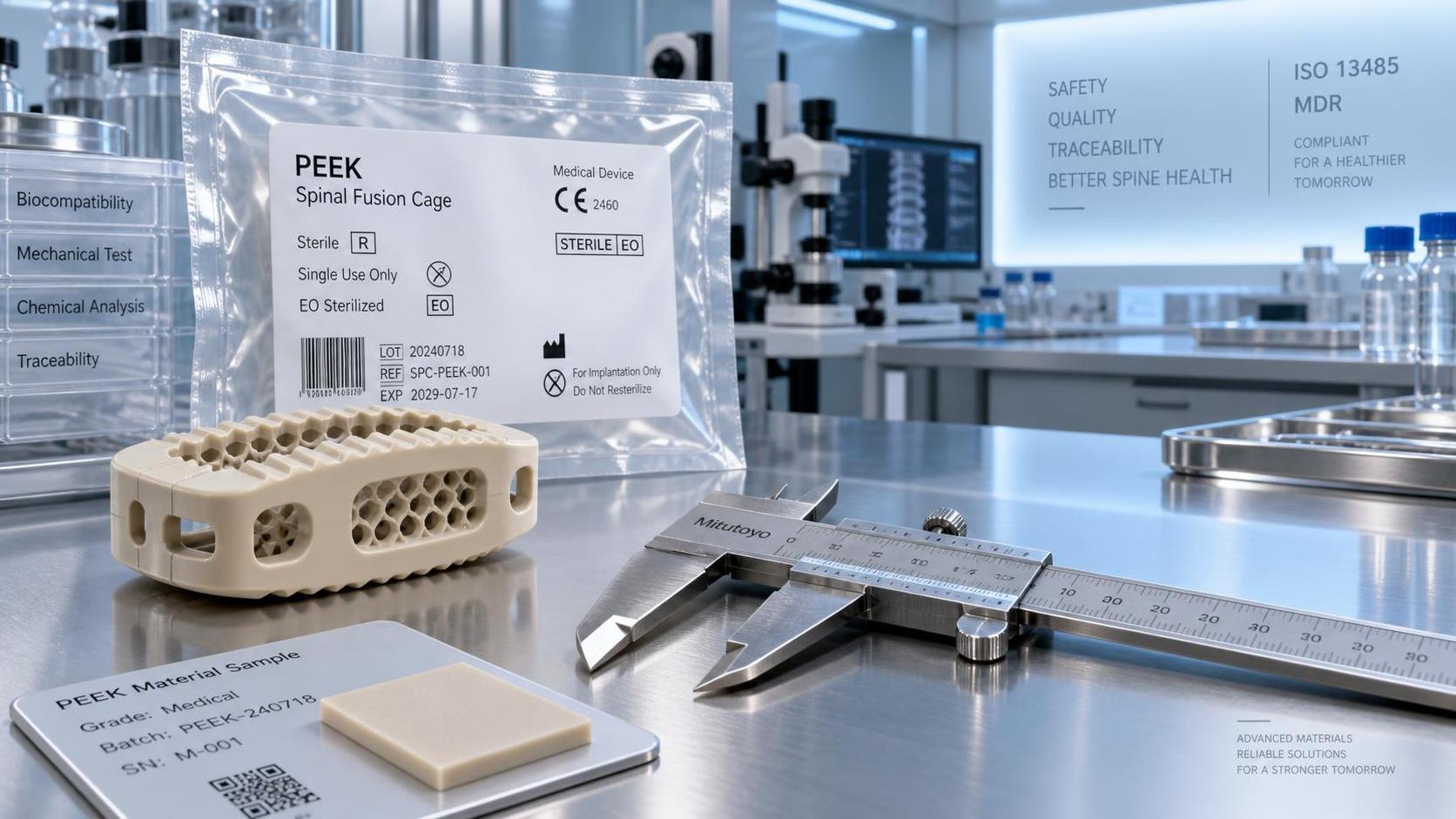
Consider an orthopedic implant available in multiple sizes and surface treatments. A polished cobalt-chromium component, a porous titanium component, and a PEEK component may share a product name while creating very different evidence questions. Surface area, porosity, particle release potential, cleaning validation, and bone-contact behavior can change the rationale for biological evaluation and mechanical testing. Treating all variants as administrative extensions of one reference device may invite questions that are difficult to close after formal review has started.
The same issue appears in cardiovascular products. A catheter with a different hydrophilic coating, braid construction, distal tip geometry, or sterilization method may have similar handling intent but a different material-contact profile and performance envelope. For a drug-eluting stent, the platform, polymer, drug coating process, and coating integrity after crimping and expansion should be linked clearly. A clinical claim cannot be separated from these physical characteristics.
Before committing to testing, establish a configuration matrix that identifies which variants are covered by each evidence package and why. The matrix should distinguish between changes that are cosmetic or administrative and changes that affect patient contact, mechanical load, delivered energy, sterility, dosage, tissue interaction, or clinical use. It becomes the reference point for development, quality, clinical, and regulatory decisions. Without it, teams often create evidence for an outdated configuration and then spend weeks explaining equivalence that was never planned.
Translate claims into evidence before the design is locked
Registration delay often follows a mismatch between promotional language, instructions for use, and available proof. “Improved access,” “reduced trauma,” “enhanced healing,” or “precise closure” can appear harmless in an early product brief, but each phrase may imply a performance or clinical benefit that must be supported. The earlier claims are mapped to evidence, the easier it is to adjust them while design options remain open.
A useful approach is to write a claim-evidence map alongside the product requirements. Each proposed statement should point to its evidence source: bench testing, simulated-use testing, biological evaluation, literature, clinical investigation, post-market information from an appropriate comparable device, or a justified combination. The map should also identify the conditions under which the claim holds true.
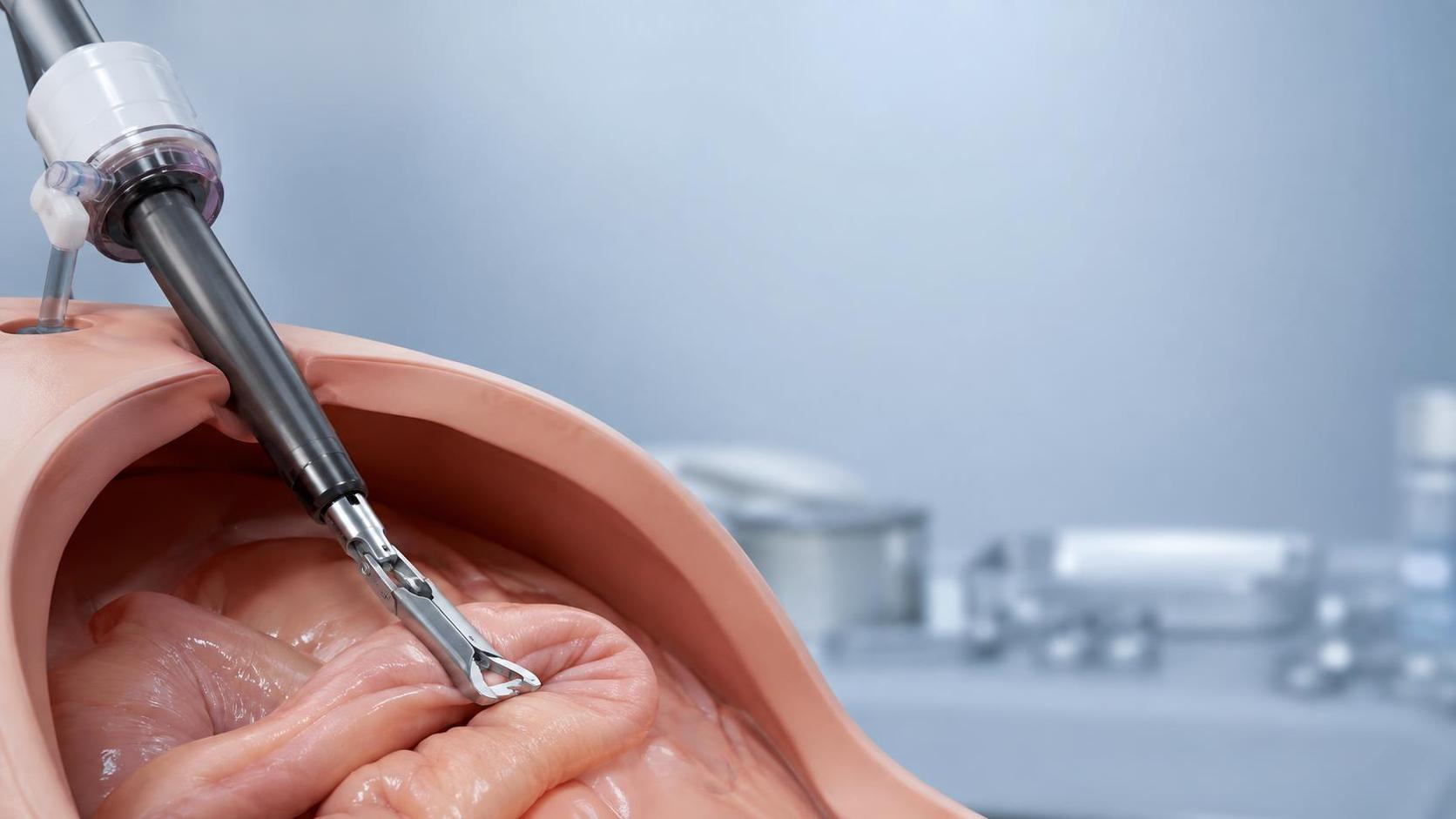
For example, a minimally invasive stapler’s claim about secure tissue closure cannot rest solely on staple formation under a single benchtop condition. Tissue thickness range, compression time, cartridge selection, jaw geometry, firing force, tissue type, and staple line integrity all influence the result. If the instructions permit broad tissue applications but validation covers only a narrow thickness range, the claim and use conditions are misaligned. Expanding the clinical statement after verification is complete can therefore reopen design validation.
- Functional claims need defined endpoints. A catheter described as kink-resistant should have a relevant bend or torque condition, rather than an undefined comparison.
- Safety-related claims need exposure context. A dressing’s antimicrobial statement, for example, is different from a claim that it improves wound healing or is suitable for prolonged contact with vulnerable tissue.
- Comparative claims require a stable comparator and a meaningful basis of comparison. Bench performance alone may not support a broad clinical superiority implication.
Claims should also be reviewed after design transfer. Small wording changes introduced during labeling, translation, distributor preparation, or market-access planning can quietly enlarge the evidence burden. A controlled claim library avoids allowing a late commercial phrase to become a regulatory problem.

Build biological safety around the finished, clinically relevant article
Biological evaluation becomes a delay driver when it is treated as a list of laboratory tests rather than an assessment of the finished device in contact with the body. Material data sheets are useful inputs, but they do not automatically represent the final device after machining, cleaning, passivation, additive manufacturing, coating, packaging, sterilization, and aging.
For permanent implants, surface finish and manufacturing residues deserve as much attention as the base alloy or polymer. A porous structure produced by additive manufacturing has a substantially different accessible surface and cleaning challenge from a solid machined component. A change in blasting media, detergent, cutting fluid, or post-processing can introduce residues that are absent from a raw-material certificate. For polymer catheters, extractables can be affected by pigments, plasticizers, adhesives, radiopaque fillers, lubricious coatings, and sterilization exposure. The biological safety rationale should describe those realities rather than relying on generic material identity.
Test article selection must be defensible. A sample made before final cleaning or before final sterilization can be useful for development learning, but it may not support the final biological evaluation. Conversely, repeating every study after a minor adjustment is not automatically necessary when the change is understood, risk assessed, and supported by chemistry or process evidence. The difference lies in whether the change could alter patient exposure.
A practical strategy links the biological evaluation plan to a materials and process inventory. For every patient-contacting component, record the contact type and duration, material composition, additives, processing aids, surface treatments, residual-risk controls, and final sterilization state. This inventory should be updated through design changes, supplier changes, and process validation. It prevents the late discovery that a critical adhesive, coating primer, or pigment was never included in the original assessment.
Use equivalence carefully in clinical evaluation
Clinical evidence planning is strongest when it begins by asking what uncertainty remains after non-clinical testing. Equivalence is not a shortcut for avoiding that question. It is a structured argument that the reference device and the subject device are sufficiently similar in the characteristics that matter to safety, performance, and clinical outcome.
High-risk devices commonly fail equivalence arguments because the comparison focuses on a few visible features while omitting clinically meaningful differences. A similar indication does not erase a different fixation mechanism in an implant. Comparable delivery access does not establish equivalence for a transcatheter valve with a distinct frame geometry, leaflet material, sealing design, or deployment behavior. A staple cartridge may look familiar but require different evidence when staple material, formed height, tissue compression profile, or intended tissue range has changed.
The most efficient clinical strategy separates three questions. First, what evidence is needed to show the device performs as designed? Second, what evidence supports the claimed clinical benefit and acceptable risk profile? Third, which unresolved differences from any comparator cannot be addressed through bench, animal, or literature evidence alone? This separation keeps the clinical plan focused. It also prevents a literature review from being asked to prove a claim that is actually specific to a new design feature.
Clinical evaluation should be refreshed when the device changes, not only when the report is due. A revised sterilization process, modified coating, altered implant surface, new anatomical indication, or expanded size range can change the relevance of prior evidence. Recording the impact at the time of change is much easier than reconstructing the rationale after the design history has become fragmented.
Make verification sequencing reflect regulatory dependencies
Testing programs often slip because laboratories are booked before the inputs are stable. The result is a technically valid report that cannot be used without qualification. A registration strategy places dependency gates ahead of irreversible work: final drawings, material specifications, critical suppliers, packaging configuration, sterilization cycle, and labeling conditions.
Not every activity needs to wait for every detail. Early feasibility work, method development, and risk-driven screening can proceed while the design is evolving. Formal validation, however, should use units that represent the intended production process as closely as possible. For a sterile implant, packaging integrity and shelf-life evidence are tied to the final sterile barrier, sealing parameters, transport conditions, and sterilization method. If the tray geometry or pouch material changes after aging begins, the original package evidence may no longer cover the finished presentation.
Scheduling should account for review cycles as well as laboratory lead times. When a report identifies an anomaly, the next action may involve root-cause analysis, a design correction, test method review, and a repeat run. A plan that assumes every test passes once offers no room for normal development learning. Contingency is most useful when assigned to high-impact uncertainties, such as coating durability after simulated use, long-term fatigue performance, sterilization compatibility, or clinically relevant delivery performance.
Control change as a submission-impact decision
Change control is where a registration strategy proves its value. The question is not simply whether a change requires a document update. The question is whether the change affects the registered device, evidence applicability, risk controls, or statements made in labeling.
A supplier substitution can be low impact when the supplied component is fully specified and the new source demonstrably meets the same requirements. It becomes more complex when the supplier controls a proprietary polymer formulation, coating process, implant surface treatment, or sterilization service. Even when incoming inspection results remain within specification, the underlying process shift can affect characteristics that routine inspection does not capture.
Each significant change record should identify the affected device configurations, risk-file entries, verification evidence, biological evaluation, clinical rationale, manufacturing documentation, and labeling. Assigning this assessment to a cross-functional review early avoids a familiar late-stage dispute: engineering considers the change equivalent, quality sees a process deviation, and regulatory evidence has already been finalized against the earlier version.
Traceability matters here. A clean link from user needs through design inputs, outputs, risk controls, verification, validation, and final claims enables a reviewer to understand why the evidence is relevant. It also allows internal teams to find the specific impact of a change without reopening an entire development archive.
Prepare the dossier as an argument, not a document collection
A complete submission can still invite questions when its logic is difficult to follow. Reviewers need to see one consistent story: the device is clearly defined; risks are identified; controls are implemented; testing addresses the controls; remaining risks are clinically acceptable in light of the intended use; and labeling states the supported conditions of use.
Document drafting should begin before all reports are final. Early dossier assembly exposes missing links, inconsistent terminology, and unexplained design evolution while there is still time to correct them. The device description should use the same names, materials, dimensions, and accessories found in drawings, specifications, test reports, clinical evaluation, and labeling. A discrepancy that appears trivial internally can prompt a question because it obscures which configuration was actually evaluated.
Clear justifications are preferable to excessive volume. When a test method differs from a recognized approach, explain why it reflects the device’s loading condition or use environment. When a worst-case sample is selected, define the attributes that make it worst case and show that the selection covers the remaining variants. When existing clinical data are used, state precisely which characteristics and claims that evidence supports.
The most effective registration strategy is therefore a development control system with regulatory timing built into it. It does not eliminate technical uncertainty or review questions. It makes uncertainty visible early enough that evidence, design, and claims can be aligned before they become approval delays.
Get weekly intelligence in your inbox.
No noise. No sponsored content. Pure intelligence.
News Recommendations
 Sep 29, 2026How a medical device registration strategy can reduce approval delaysHow a medical device registration strategy can reduce approval delays
 Sep 28, 2026How to verify a medical device specification database before useHow to verify a medical device specification database before use
 Sep 27, 2026What to verify before selecting a microcatheters manufacturerWhat to verify before selecting a microcatheters manufacturer
 Sep 26, 2026How to verify FDA compliance for medical device materialsHow to verify FDA compliance for medical device materials
 Sep 25, 2026When does a porous 3D-printed cranial implant improve fixation?When does a porous 3D-printed cranial implant improve fixation?
 Sep 24, 2026When are bovine pericardial valves suitable for transcatheter aortic valve replacement?When are bovine pericardial valves suitable for transcatheter aortic valve replacement?
 Sep 23, 2026How to verify the sterility assurance of surgical devicesHow to verify the sterility assurance of surgical devices
 Sep 22, 2026How to assess a spinal implants manufacturer’s quality systemHow to assess a spinal implants manufacturer’s quality system
 Sep 21, 2026How to assess an osseointegration technology manufacturer’s quality systemHow to assess an osseointegration technology manufacturer’s quality system
 Sep 20, 2026Medical material science trends reshaping biocompatibility testingMedical material science trends reshaping biocompatibility testing
 Sep 19, 2026What North American regulators expect in implant clinical evaluationsWhat North American regulators expect in implant clinical evaluations
 Sep 18, 2026When should plate and screw systems be selected for fracture fixation?When should plate and screw systems be selected for fracture fixation?
 Sep 17, 2026How a medical device sourcing strategy can reduce total acquisition costHow a medical device sourcing strategy can reduce total acquisition cost
 Sep 16, 2026When are silver foam burn care dressings appropriate for exuding burns?When are silver foam burn care dressings appropriate for exuding burns?
 Sep 15, 2026What drives medical device category pricing in value-based purchasing?What drives medical device category pricing in value-based purchasing?
 Sep 14, 2026High value consumables insights for evaluating total cost of careHigh value consumables insights for evaluating total cost of care
 Sep 13, 2026What a medical device market insights platform reveals about market accessWhat a medical device market insights platform reveals about market access
 Sep 12, 2026When are collagen-based tissue healing materials suitable for wound care?When are collagen-based tissue healing materials suitable for wound care?
 Sep 11, 2026How catheter material selection affects total cost of ownershipHow catheter material selection affects total cost of ownership
 Sep 10, 2026What FDA clearance means for medical grade PEEK implantsWhat FDA clearance means for medical grade PEEK implants
 Sep 09, 2026When do hydrogel wound healing technologies suit dry wounds?When do hydrogel wound healing technologies suit dry wounds?
 Sep 07, 2026How to assess medical consumables for surgical useHow to assess medical consumables for surgical use
 Sep 07, 2026How to verify CE MDR compliance for single-use medical consumablesHow to verify CE MDR compliance for single-use medical consumables
 Sep 05, 2026How to evaluate an antithrombotic catheter factory for qualityHow to evaluate an antithrombotic catheter factory for quality
 Sep 04, 2026When do minimally invasive surgical staplers improve GI access?When do minimally invasive surgical staplers improve GI access?
 Sep 03, 2026When are foam moist wound healing dressings appropriate for exuding wounds?When are foam moist wound healing dressings appropriate for exuding wounds?
 Sep 02, 2026How implant pricing affects access to advanced medical careHow implant pricing affects access to advanced medical care