When do hydrogel wound healing technologies suit dry wounds?
A dry wound with a firm, yellow-brown surface can look protected, yet the lack of moisture may slow the natural repair process. This is often seen in shallow pressure injuries, minor traumatic wounds, skin tears with dry exposed tissue, or wounds covered by adherent slough. In these situations, hydrogel wound healing technologies may be suitable when the main clinical need is to donate moisture to a dry wound bed, soften non-viable tissue, and support gentle autolytic debridement.
They are not the default answer for every wound that appears dry. The decision depends on whether the wound is truly low-exudate, whether circulation is adequate, whether infection is suspected, and whether the surrounding skin can tolerate added moisture. A hydrogel can help a dry wound progress, but the same moisture-donating effect can macerate the wound edge or trap problematic drainage when used in the wrong setting.
Start by deciding whether the wound is dry, stable, or simply poorly assessed
Before selecting a hydrogel, inspect the wound bed rather than relying only on the appearance of the outer dressing. A wound may look dry because its cover dressing has absorbed the available fluid, because it has been exposed to air between dressing changes, or because thick necrotic tissue is masking drainage underneath. The treatment direction changes depending on which of these conditions is present.
Hydrogels are most often considered when the wound bed has little or no visible exudate and contains dry devitalized tissue, fibrin, crusting, or a hard eschar that is appropriate to soften. They may also be useful when painful dressing removal is a concern, because hydrated gels can reduce adherence to exposed tissue.
A dry wound is not automatically a wound that should be rehydrated. A dry, stable eschar on an ischemic heel, for example, may serve as a protective cover when there is no drainage, redness, fluctuance, or other indication of infection. Introducing moisture to tissue with poor blood supply can change the local environment without addressing the underlying perfusion problem. When arterial insufficiency is possible, wound status and circulation need assessment before moisture-donating dressings are applied.
Signs that a hydrogel may fit the wound condition
- The wound bed is visibly dry, with minimal drainage on the removed dressing.
- Slough, fibrin, dried blood, or non-viable tissue is adherent and difficult to lift without trauma.
- Granulation tissue appears dry or fragile rather than moist and healthy.
- The wound is shallow enough that a gel can contact the intended tissue surface without being packed excessively.
- The surrounding skin is intact or can be protected from excess moisture.
- There are no untreated signs suggesting spreading infection or a deeper collection of fluid.
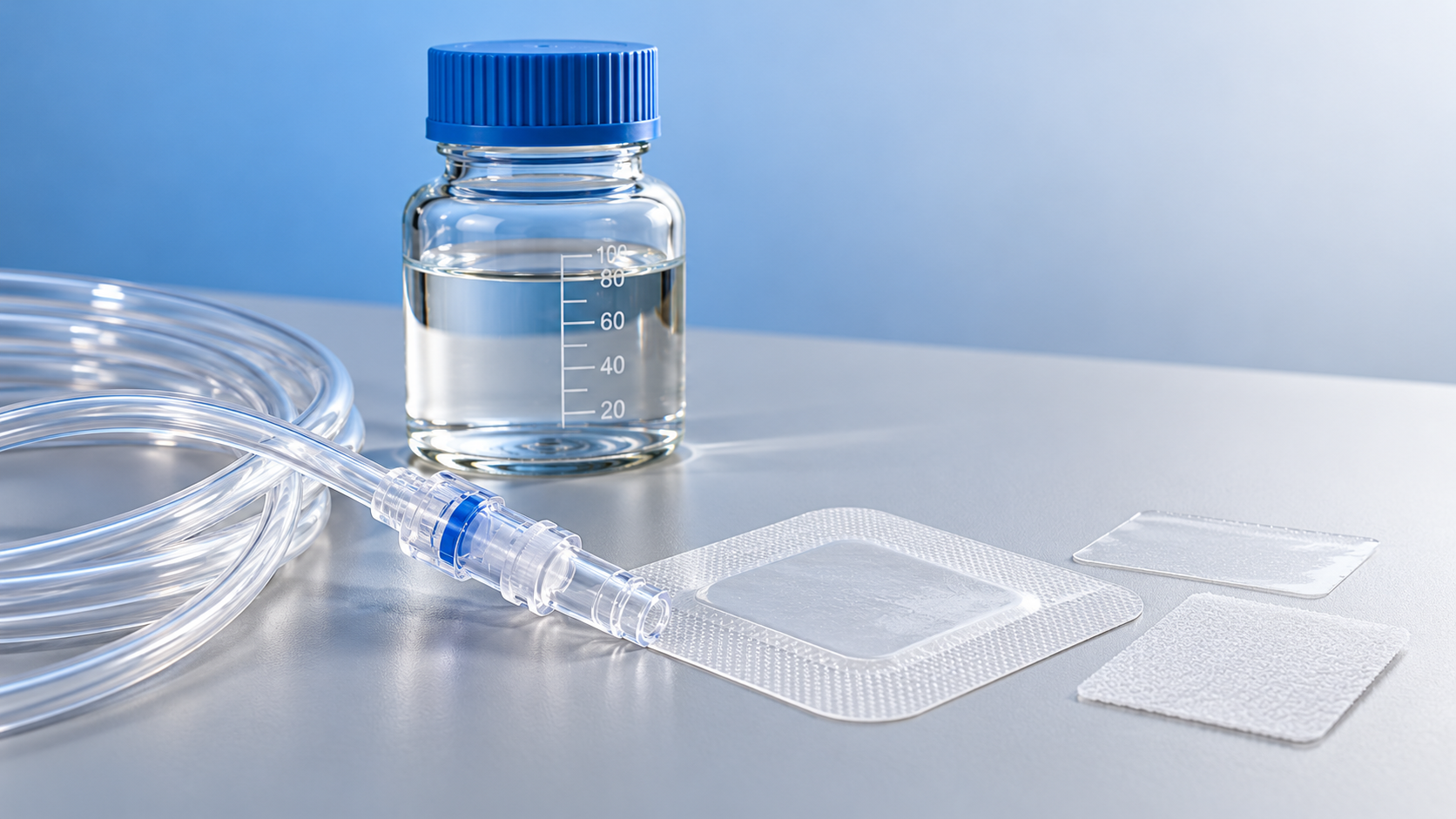
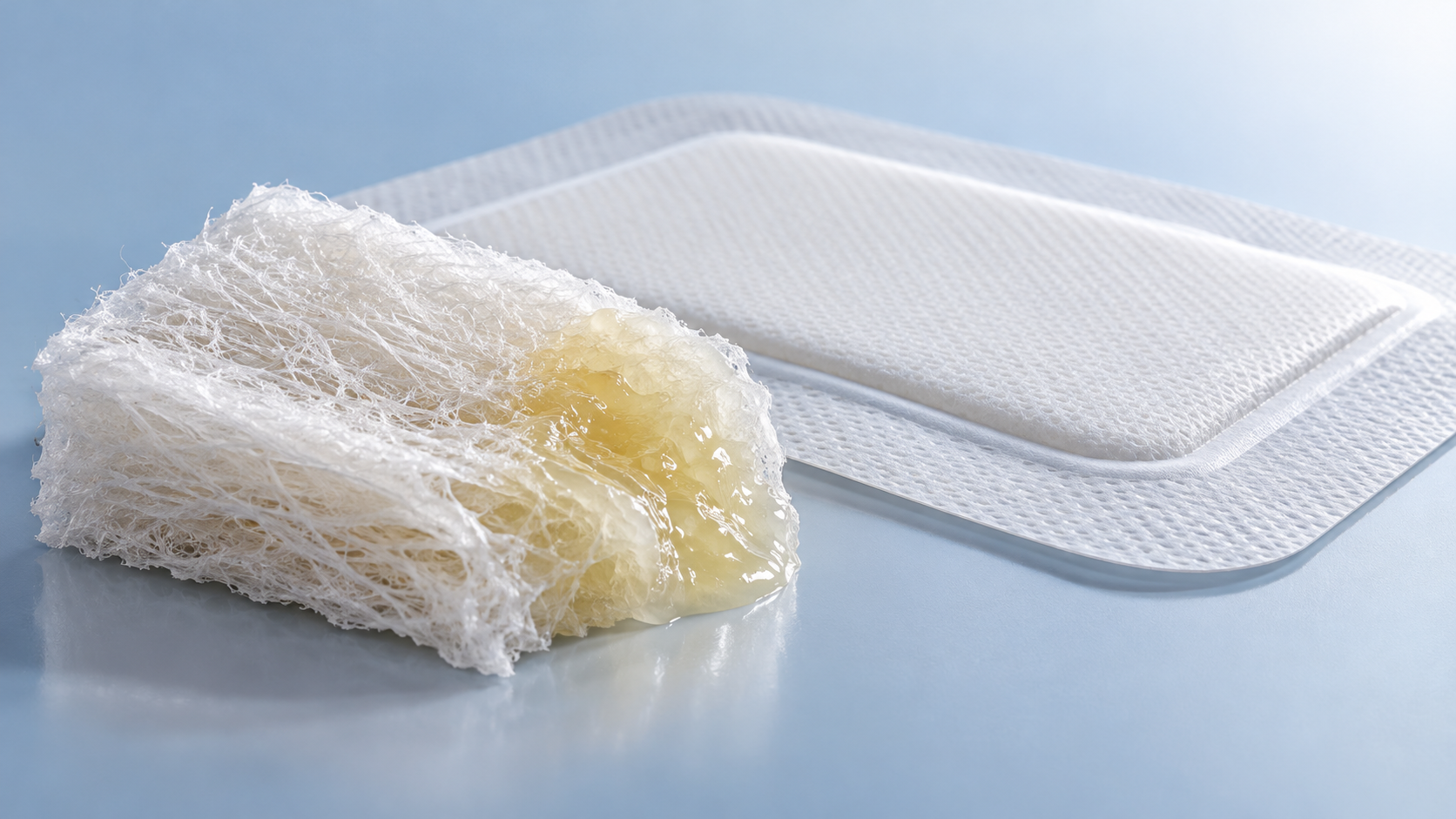
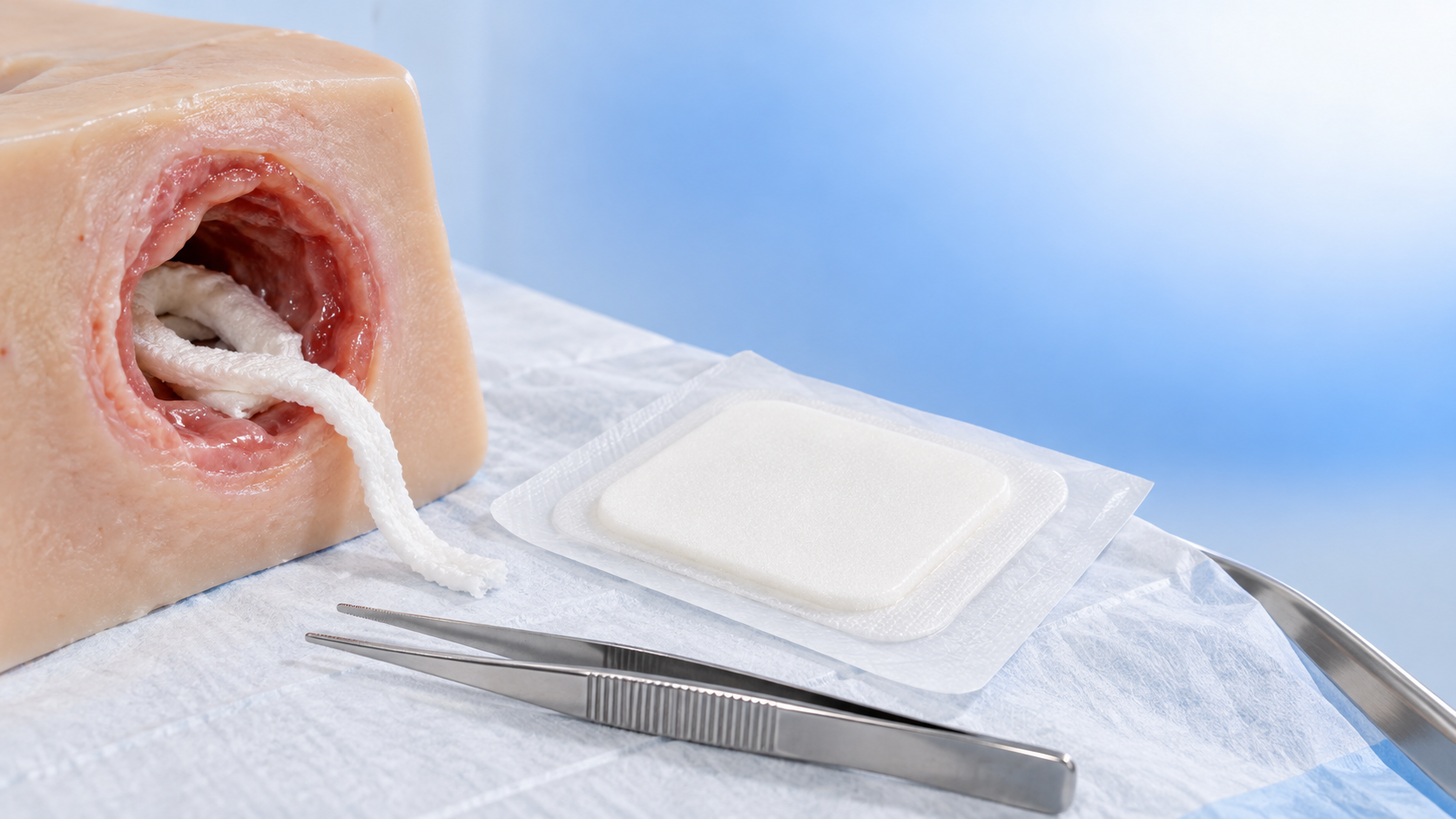
Hydrogel formulations vary. An amorphous gel can conform to an irregular wound bed, while sheet hydrogel may be useful on relatively flat areas. Some products include a gauze or fiber support structure that makes removal easier. The clinical aim remains the same: provide controlled hydration rather than create a wet, occluded environment around a wound that cannot manage additional fluid.
Where moisture donation helps the healing process
Wound repair generally benefits from an environment that is moist but not saturated. In a dry wound, cells involved in repair may have difficulty migrating across the surface. Desiccated tissue can also bind tightly to the wound bed, making dressing changes uncomfortable and increasing the chance that newly forming tissue will be disturbed.
A hydrogel releases water into dry tissue. This can soften slough and necrotic material, allowing the body’s own enzymes and moisture to separate non-viable tissue over time. This process is known as autolytic debridement. It is usually gentler than mechanical removal, but it is not fast in every wound and should not be treated as a substitute for more urgent debridement when infection, extensive necrosis, or rapid deterioration is present.
For a wound with dry exposed tissue but no significant drainage, the gel may also reduce friction between the wound surface and the secondary dressing. This can make dressing removal less disruptive. The result to look for is not a flooded wound; it is a wound bed that becomes softer, more pliable, and easier to reassess while the periwound skin remains protected.
Situations where hydrogels are usually a poor match
Hydrogel wound healing technologies have limited absorptive capacity. They should generally not be the primary dressing choice for wounds producing moderate or heavy exudate. In that setting, the added water can overwhelm the dressing system, increase leakage, and leave the skin around the wound pale, wrinkled, tender, or broken down.
Do not assume that odor by itself confirms infection. Odor can arise from retained exudate, old dressing material, or tissue breakdown. However, an odor that is new or worsening, especially with increasing drainage, pain, warmth, redness, swelling, fever, or a sudden decline in the wound bed, requires timely escalation. A hydrogel should not be used to delay evaluation of a wound that may be infected.
A practical application sequence
Correct use matters as much as dressing selection. Applying a large amount of gel to a small dry area can lead to leakage and periwound maceration, while using too little may leave hardened tissue unchanged. Follow the selected product’s instructions for use, because compatibility, contact time, and recommended secondary dressings differ by formulation.
- Confirm the treatment objective. Identify whether the goal is hydration of dry tissue, support for autolytic debridement, comfort during dressing removal, or temporary moisture balance. If the wound is already moist or draining, reassess whether an absorbent approach is more appropriate.
- Cleanse according to the wound-care plan. Remove loose debris and old dressing residue without aggressively scraping viable tissue. The wound should be visible enough to assess its color, drainage, edge condition, and depth.
- Protect vulnerable surrounding skin. Where the wound margin is prone to moisture damage, use the protective method specified in the care plan before placing the gel. Avoid spreading gel across intact skin unless the product instructions specifically allow it.
- Apply only enough hydrogel to contact the dry tissue. A thin, even layer is often sufficient for a superficial wound. For irregular areas, place the gel so that it contacts the dry surface without forcing material into narrow tunnels or tightly packing a cavity.
- Select a secondary dressing that keeps the gel in place. The cover dressing should be compatible with the wound’s expected moisture level. It should secure the hydrogel while allowing regular inspection and not compressing vulnerable tissue.
- Document the response at each change. Note whether slough is softening, whether drainage has increased, whether the wound edge remains intact, and whether the patient reports new pain. These observations determine whether the plan should continue or change.
The interval between dressing changes should be based on product directions and the wound response, not a fixed habit. A dressing that becomes displaced, dries out, leaks, or creates visible maceration should be changed and the dressing strategy reviewed. Conversely, removing a well-functioning dressing too frequently may disturb the wound surface and undermine the purpose of maintaining a controlled moist environment.
How to tell whether the hydrogel is helping
Improvement may first appear as a change in tissue texture rather than a rapid reduction in wound size. Dry slough may become softer and easier to separate. A crusted surface may lift at the margins. The wound bed may look more evenly moist, while the dressing removal process becomes less traumatic. These are useful signs only when the wound edge is not becoming overly wet and there is no new evidence of infection or pressure-related damage.
Track the wound consistently. Observe tissue type, drainage amount and character, odor after cleansing, edge condition, surrounding skin, pain during and after care, and any change in depth or undermining. A wound that becomes wetter after hydrogel use is not necessarily improving; the key question is whether the added moisture is controlled and whether the tissue is progressing toward a cleaner, viable wound bed.
Stop and reassess the plan when the periwound becomes macerated, drainage rises beyond what the cover dressing can handle, gel repeatedly leaks, pain increases, or the wound shows no meaningful movement after an appropriate review period. Failure to progress can reflect pressure, friction, infection, poor nutrition, edema, diabetes-related factors, inadequate circulation, or an unrecognized deeper wound issue. Changing the dressing alone may not correct these drivers.
Choosing between hydrogel and other advanced dressings
The practical distinction is simple: hydrogels donate moisture, while many other dressings primarily absorb, protect, or manage bioburden. A dry wound with adherent slough may benefit from a hydrogel. A wound with substantial fluid often needs an absorbent material, such as a foam or other dressing selected for exudate management. A cavity wound may require a material designed to fill dead space safely while managing drainage. When infection risk is being addressed, the decision should consider the clinical plan rather than selecting a dressing solely because it contains an antimicrobial component.
Do not combine products merely to create a more advanced-looking dressing stack. Each layer should have a purpose: moisture donation, contact protection, absorption, fixation, or skin protection. Layering a hydrogel beneath a highly occlusive dressing on a wound with uncertain drainage can make it difficult to notice deterioration early. A simpler arrangement that permits reassessment is often safer during the first dressing changes.
Questions that arise during use
Can hydrogel be used on a wound with a small amount of drainage?
It may be possible when the drainage is minimal and the main wound-bed issue remains dryness or adherent slough. The secondary dressing must manage the available fluid, and the wound edge should be checked closely for maceration. Once exudate becomes more than minimal, a moisture-donating gel may no longer be the best primary choice.
Should a hydrogel be used on every black eschar?
No. Black eschar requires assessment of location, perfusion, stability, drainage, and infection signs. In particular, dry stable eschar on an ischemic heel may need a different approach. Moistening tissue without confirming the healing potential can create avoidable complications.
Is autolytic debridement appropriate when the wound is infected?
Autolytic debridement may be too slow or insufficient when infection is suspected or the wound is deteriorating. Increasing redness, warmth, swelling, pain, purulent drainage, systemic symptoms, or rapidly changing tissue should prompt clinical review rather than continued routine hydrogel use.
A hydrogel is best viewed as a targeted moisture tool, not a universal dressing. It suits dry, low-exudate wounds when hydration and gentle softening of non-viable tissue are appropriate, the surrounding skin can be protected, and the wound can be monitored. When drainage, infection risk, ischemia, or wound depth changes the clinical picture, the dressing choice must change with it.
Get weekly intelligence in your inbox.
No noise. No sponsored content. Pure intelligence.
News Recommendations
 Oct 26, 2026Can a single approval cover life science product sales worldwide?Can a single approval cover life science product sales worldwide?
 Oct 25, 2026When is sensitization testing needed for medical device biocompatibility?When is sensitization testing needed for medical device biocompatibility?
 Oct 24, 2026How is biocompatibility tested for implantable polymer biomaterials?How is biocompatibility tested for implantable polymer biomaterials?
 Oct 23, 2026How to build reimbursement into an implant commercialization strategyHow to build reimbursement into an implant commercialization strategy
 Oct 22, 2026What clinical evidence do implants need for CE marking under EU MDR?What clinical evidence do implants need for CE marking under EU MDR?
 Oct 21, 2026How to choose disposable laparoscopic stapler reloads for thick tissueHow to choose disposable laparoscopic stapler reloads for thick tissue
 Oct 20, 2026How to assess medical polymer biocompatibility under ISO 10993How to assess medical polymer biocompatibility under ISO 10993
 Oct 19, 2026How do interventional device categories differ in clinical use?How do interventional device categories differ in clinical use?
 Oct 18, 2026When to choose alginate dressings for heavily exuding chronic woundsWhen to choose alginate dressings for heavily exuding chronic wounds
 Oct 17, 2026How is biocompatibility tested for custom medical-grade PEEK implants?How is biocompatibility tested for custom medical-grade PEEK implants?
 Oct 16, 2026How to check a wound healing materials supplier’s biocompatibility dataHow to check a wound healing materials supplier’s biocompatibility data
 Oct 15, 2026How to verify the FDA clearance status of silver wound dressingsHow to verify the FDA clearance status of silver wound dressings
 Oct 14, 2026How to register orthopedic implants and instruments in Latin AmericaHow to register orthopedic implants and instruments in Latin America
 Oct 13, 2026How to use a device market intelligence database to benchmark VBP pricesHow to use a device market intelligence database to benchmark VBP prices
 Oct 12, 2026When should stainless steel orthopedic instruments be replaced?When should stainless steel orthopedic instruments be replaced?
 Oct 11, 2026When are alginate dressings rope the right choice for cavity wounds?When are alginate dressings rope the right choice for cavity wounds?
 Oct 10, 2026When smart minimally invasive technology improves catheter accessWhen smart minimally invasive technology improves catheter access
 Oct 08, 2026Clinical evaluation requirements for cardiovascular implant devices in EuropeClinical evaluation requirements for cardiovascular implant devices in Europe
 Oct 07, 2026What to verify before appointing an artificial joint implants distributorWhat to verify before appointing an artificial joint implants distributor
 Oct 06, 2026How ISO 10993 guides biocompatibility testing for medical materialsHow ISO 10993 guides biocompatibility testing for medical materials
 Oct 05, 2026How to verify an orthopedic implants and instruments exporterHow to verify an orthopedic implants and instruments exporter
 Oct 04, 2026What drives surgical stapling devices price differences in hospital tenders?What drives surgical stapling devices price differences in hospital tenders?
 Oct 03, 2026How to assess a central venous catheter manufacturer's infection-control evidenceHow to assess a central venous catheter manufacturer's infection-control evidence
 Oct 02, 2026How to assess an advanced wound care factory’s quality systemHow to assess an advanced wound care factory’s quality system
 Oct 01, 2026What is driving global medical consumables demand in emerging markets?What is driving global medical consumables demand in emerging markets?
 Sep 30, 2026Implant Material Compliance Testing: Evidence Needed for Regulatory SubmissionImplant Material Compliance Testing: Evidence Needed for Regulatory Submission
 Sep 30, 2026From Corrosion to Fatigue: What Implant Materials Testing Should MeasureFrom Corrosion to Fatigue: What Implant Materials Testing Should Measure