Cardiovascular Interventional Devices: 2026 Access and Adoption Trends
Cardiovascular interventional devices are moving into a more demanding commercial environment in 2026. Pricing discipline, tighter evidence standards, and faster product cycles are reshaping how these technologies reach hospitals and scale across markets.
That shift matters well beyond cardiology. It affects regulatory planning, manufacturing investment, reimbursement timing, distributor strategy, and procurement design across the broader medical consumables industry.
For organizations tracking high-value implants and minimally invasive care, the real question is no longer whether cardiovascular interventional devices will grow. It is which products can secure access, prove value, and remain commercially resilient under policy pressure.
Why 2026 looks different

The next phase of market competition is defined by three forces moving at the same time. Clinical innovation continues, but market entry now depends on more than technical novelty.
Hospitals are under budget pressure. Regulators expect stronger clinical and post-market evidence. Procurement systems increasingly reward suppliers that can combine performance, scale, and price discipline.
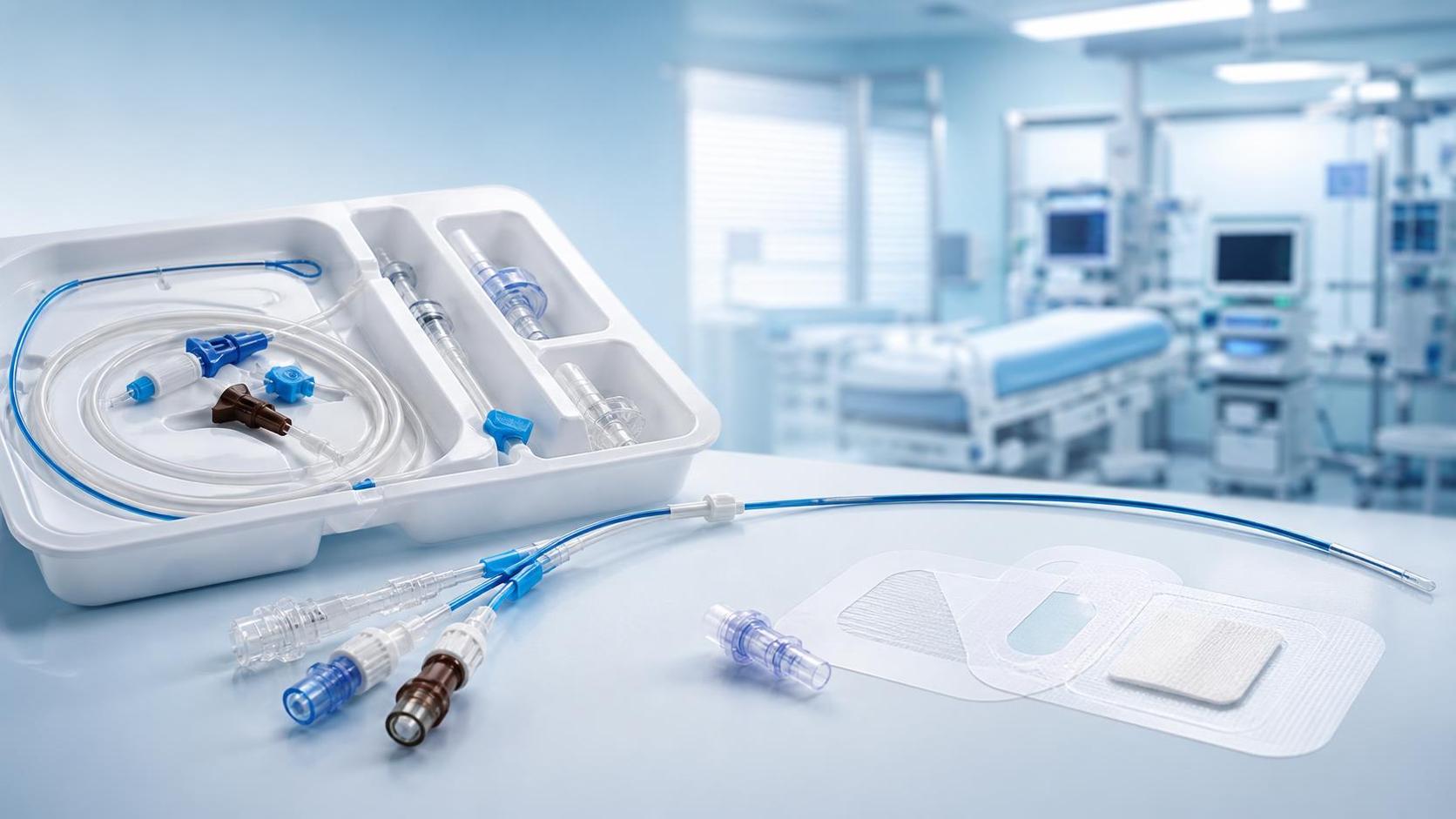
In this context, cardiovascular interventional devices include coronary stents, structural heart systems, balloons, guidewires, catheters, embolic protection tools, and related delivery platforms. Their value comes from restoring blood flow or structural function through minimally invasive pathways.
The business stakes are high because these products sit at the intersection of clinical urgency and capital-intensive manufacturing. Small differences in design, biocompatibility, and delivery precision can determine both patient outcomes and procurement success.
Access is no longer a single approval event
In practical terms, access now unfolds in layers. Regulatory clearance opens the door, but hospital listing, reimbursement recognition, physician confidence, and tender participation decide the commercial result.
This is where intelligence-led assessment becomes essential. IMCS has positioned its analysis around biocompatibility, precision manufacturing, Class III regulatory logic, and Volume-Based Procurement dynamics because these factors increasingly move together.
For cardiovascular interventional devices, access depends on whether the product can answer several questions at once. Is the material platform safe over time? Is the delivery performance reproducible? Can the manufacturer support evidence generation and supply continuity?
A device with strong engineering but weak market access planning may still stall. Equally, a lower-priced product without robust clinical positioning may struggle to win durable physician adoption.
The main access filters in 2026
- Regulatory evidence quality, especially for safety, durability, and real-world follow-up.
- Alignment with local reimbursement and coding pathways.
- Tender readiness, including pricing architecture and supply assurance.
- Hospital usability, training burden, and procedural fit.
- Manufacturing consistency for critical components and coatings.
What hospitals are really adopting
Adoption is becoming more selective. Hospitals still value innovation, but they are prioritizing technologies that reduce procedural uncertainty and support predictable care pathways.
For coronary and structural heart segments, the winning profile is increasingly clear. Cardiovascular interventional devices must show measurable clinical advantage, smooth handling, and compatibility with established cath lab workflows.
Products that require extensive retraining or create reimbursement ambiguity face slower uptake. By contrast, systems that integrate easily into existing practice often gain traction faster, even in price-sensitive environments.
This matters for upstream strategy. A launch plan should not only describe what a device does, but also how it fits the real operating environment of interventional teams.
Key adoption signals to monitor
Procurement pressure is changing portfolio logic
Volume-based and centralized purchasing mechanisms are no longer isolated regional events. They are influencing global pricing expectations, channel margins, and product portfolio design.
For cardiovascular interventional devices, this creates a split market. Mature categories face stronger price compression, while differentiated technologies still have room to preserve value if evidence and access strategy are well aligned.
The implication is straightforward. Companies cannot treat every SKU the same way. Some devices should compete on scale efficiency, while others require a premium strategy built on clinical differentiation and targeted access pathways.
This is one reason IMCS emphasizes market intelligence stitching across regulation, toxicology validation, and VBP simulation. A device may succeed technically yet underperform if its commercial model ignores price cliffs or tender sequencing.
Where portfolio decisions usually go wrong
- Treating all cardiovascular interventional devices as equally price elastic.
- Overestimating first approval and underestimating post-approval access work.
- Ignoring supply resilience during aggressive bid planning.
- Underfunding physician education for technically advanced systems.
- Separating regulatory strategy from commercialization timing.
Where value still holds in cardiovascular intervention
Even in a constrained market, value remains available where devices solve difficult clinical or workflow problems. That often includes complex lesions, structural heart procedures, high-risk anatomy, and settings where procedural precision reduces downstream cost.
Drug-eluting technologies, TAVR systems, advanced catheter platforms, and specialty access tools illustrate this point. Their commercial durability depends on more than innovation headlines. It depends on whether the outcome gain is visible to hospitals, payers, and clinical reviewers.
Material science also remains central. Biocompatibility, coating durability, thrombosis control, flexibility, and kink resistance are not merely engineering details. They influence safety narratives, regulatory review depth, and long-term market credibility.
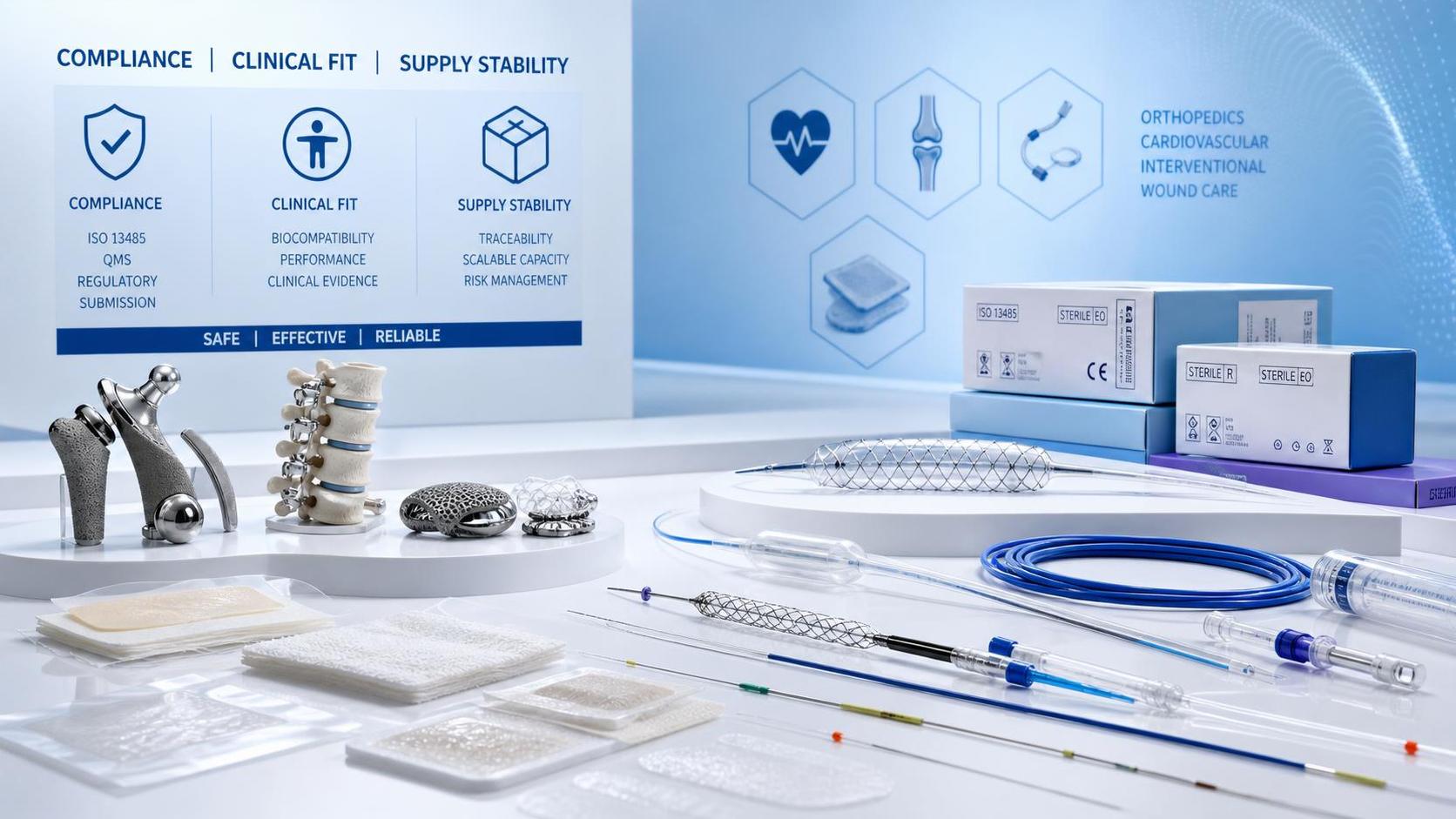
Seen this way, cardiovascular interventional devices are part of a wider medical consumables transition. The same discipline shaping orthopedic implants, polymer catheters, and minimally invasive consumables is now defining competitive advantage in cardiac intervention.
A practical lens for 2026 decisions
A useful framework is to judge cardiovascular interventional devices through five linked dimensions rather than one headline metric. This creates a more realistic picture of market readiness.
- Clinical strength: endpoint relevance, comparator quality, and follow-up duration.
- Access fit: reimbursement clarity, registration path, and hospital entry barriers.
- Operational viability: manufacturing precision, supply continuity, and service support.
- Economic resilience: tender position, pricing logic, and margin sustainability.
- Strategic role: whether the device anchors a broader platform or stands alone.
This lens is especially relevant when comparing opportunities across regions. A product can be clinically attractive in one market but commercially misaligned in another because evidence standards, VBP exposure, and channel economics differ.
That is why 2026 planning should connect regulatory timing, pricing scenarios, evidence generation, and hospital adoption strategy from the beginning. Fragmented planning usually shows up later as delayed rollout or weaker-than-expected uptake.
What to watch next
The most important next step is not to chase every growth signal. It is to build a sharper decision map for which cardiovascular interventional devices can defend value under real access conditions.
That means tracking policy movement, reassessing evidence gaps, testing pricing assumptions, and reviewing how each device performs within actual hospital workflows. Markets are still growing, but not every growth segment is equally durable.
A disciplined approach usually starts with three questions. Which categories face pure price competition? Which products can sustain premium positioning? Which access barriers can be solved early rather than after launch?
Organizations that answer those questions clearly will be better placed to navigate 2026, especially where cardiovascular interventional devices sit inside broader portfolios of implants, catheters, and minimally invasive consumables. In a market shaped by evidence and efficiency, clarity becomes a competitive asset.
Get weekly intelligence in your inbox.
No noise. No sponsored content. Pure intelligence.
News Recommendations
 Sep 13, 2026What a medical device market insights platform reveals about market accessWhat a medical device market insights platform reveals about market access
 Sep 12, 2026When are collagen-based tissue healing materials suitable for wound care?When are collagen-based tissue healing materials suitable for wound care?
 Sep 11, 2026How catheter material selection affects total cost of ownershipHow catheter material selection affects total cost of ownership
 Sep 10, 2026What FDA clearance means for medical grade PEEK implantsWhat FDA clearance means for medical grade PEEK implants
 Sep 09, 2026When do hydrogel wound healing technologies suit dry wounds?When do hydrogel wound healing technologies suit dry wounds?
 Sep 07, 2026How to assess medical consumables for surgical useHow to assess medical consumables for surgical use
 Sep 07, 2026How to verify CE MDR compliance for single-use medical consumablesHow to verify CE MDR compliance for single-use medical consumables
 Sep 05, 2026How to evaluate an antithrombotic catheter factory for qualityHow to evaluate an antithrombotic catheter factory for quality
 Sep 04, 2026When do minimally invasive surgical staplers improve GI access?When do minimally invasive surgical staplers improve GI access?
 Sep 03, 2026When are foam moist wound healing dressings appropriate for exuding wounds?When are foam moist wound healing dressings appropriate for exuding wounds?
 Sep 02, 2026How implant pricing affects access to advanced medical careHow implant pricing affects access to advanced medical care
 Sep 01, 2026What is driving price pressure in the North American medical consumables market?What is driving price pressure in the North American medical consumables market?
 Aug 31, 2026Comparing medical devices in Southeast Asia when market access differsComparing medical devices in Southeast Asia when market access differs
 Aug 30, 2026When are 3D printed PEEK implants suitable for spinal reconstruction?When are 3D printed PEEK implants suitable for spinal reconstruction?
 Aug 29, 2026How global medical device regulations shape clinical evidence requirementsHow global medical device regulations shape clinical evidence requirements
 Aug 28, 2026How to verify a burn care dressings exporter meets EU MDR requirementsHow to verify a burn care dressings exporter meets EU MDR requirements
 Aug 27, 2026How to verify a diabetic foot wound care supplier’s clinical evidenceHow to verify a diabetic foot wound care supplier’s clinical evidence
 Aug 26, 2026What drives spinal implants price differences across implant typesWhat drives spinal implants price differences across implant types
 Aug 25, 2026What matters most in a medical consumables platform comparisonWhat matters most in a medical consumables platform comparison
 Aug 24, 2026What a medical device intelligence guide should cover before market accessWhat a medical device intelligence guide should cover before market access
 Aug 23, 2026What drives catheter coating technology cost in early device designWhat drives catheter coating technology cost in early device design
 Aug 22, 2026How custom 3D printed medical implants meet biocompatibility requirementsHow custom 3D printed medical implants meet biocompatibility requirements
 Aug 21, 2026What makes an implant commercialization strategy in Europe fail at market accessWhat makes an implant commercialization strategy in Europe fail at market access
 Aug 20, 2026What drives catheter coating technology cost in product developmentWhat drives catheter coating technology cost in product development
 Aug 19, 2026What drives medical device compliance cost during market entryWhat drives medical device compliance cost during market entry
 Aug 18, 2026When does an antimicrobial central venous catheter lower infection risk?When does an antimicrobial central venous catheter lower infection risk?
 Aug 17, 2026What ISO 13485 means for medical precision machining suppliersWhat ISO 13485 means for medical precision machining suppliers