When is sensitization testing needed for medical device biocompatibility?
Sensitization testing is needed when a medical device presents a relevant patient exposure and the available evidence does not adequately resolve the potential for allergic sensitization. For devices with direct or indirect body contact, sensitization must be considered within the biological evaluation. A new laboratory study becomes necessary when material information, chemical characterization, existing test results, and exposure assessment leave an unresolved concern. Device classification alone does not determine that decision.
ISO 10993-1 provides the framework for biological evaluation within risk management, while ISO 10993-10 addresses testing for skin sensitization. These standards distinguish the need to evaluate a biological effect from the need to generate new test data. A defensible medical device biocompatibility sensitization assessment explains both the exposure pathway and why the selected evidence is sufficient for the finished device.
Patient contact establishes the starting point
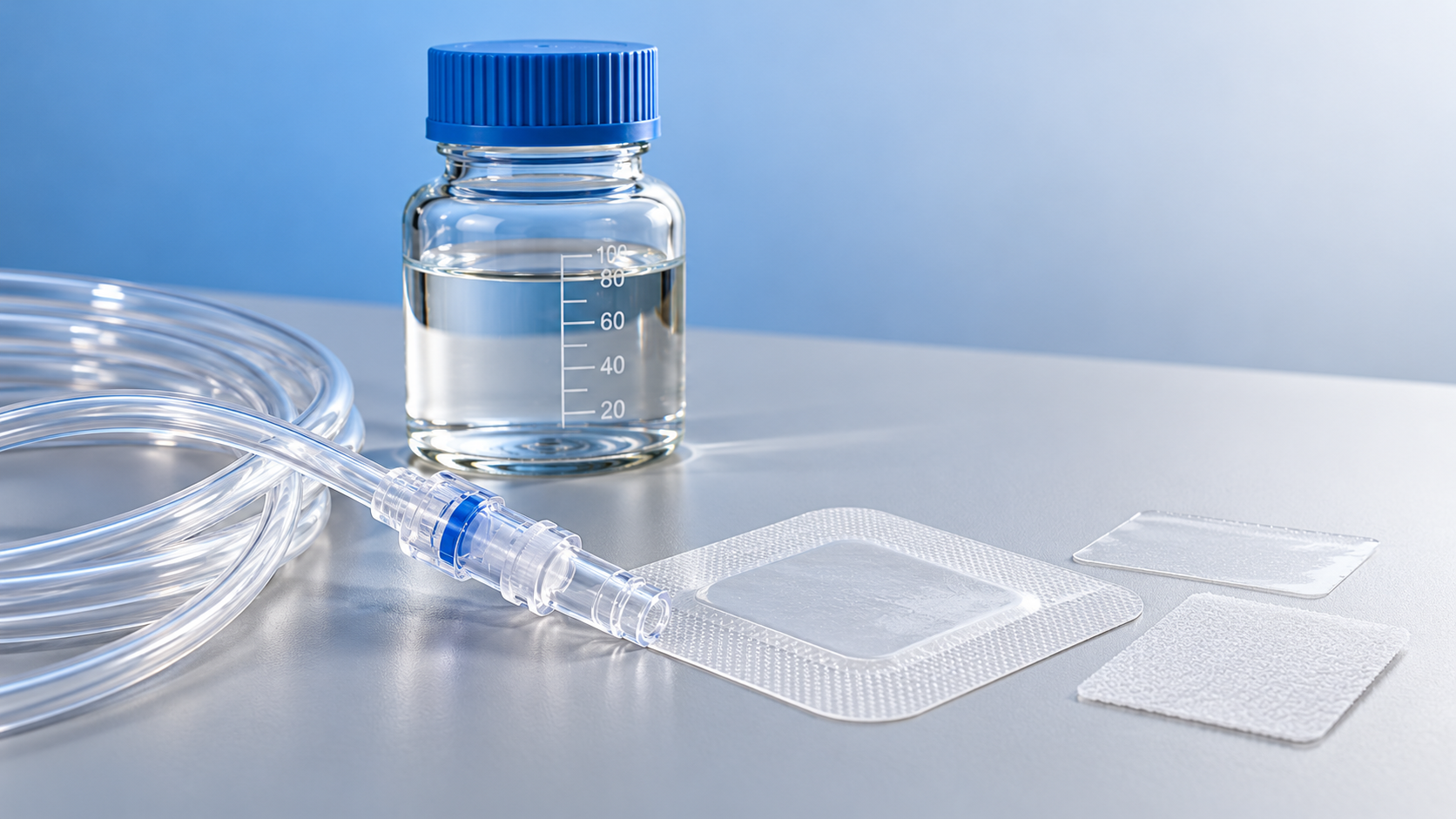
Begin with the device’s intended contact, including materials that contact the body indirectly through a fluid pathway. An external pump housing with no plausible transfer of substances to a patient has a different biological evaluation scope from tubing carrying an infusion. A component need not physically touch tissue to contribute substances to patient exposure.
Contact with intact skin, breached skin, mucosa, blood, or implanted tissue changes the exposure conditions. An adhesive dressing creates sustained contact with the skin surface; a wound dressing also exposes damaged tissue; an intravascular catheter introduces a different route through its external surface and fluid pathway. These distinctions affect the evaluation and the relevance of supporting evidence.
Duration includes the intended contact pattern and repeated exposure. Short individual applications do not necessarily represent a low overall concern when a device is used repeatedly. Sensitization involves immune induction, followed by a possible allergic response on subsequent exposure. Consequently, an absence of visible irritation after one brief contact does not establish the absence of sensitization potential.
A device without direct or indirect body contact generally does not need sensitization testing under the patient biological evaluation. That conclusion requires a credible contact assessment, including foreseeable substance transfer during intended use. Occupational exposure during production is a separate question.
When existing evidence can support avoiding a new test
The strongest justification connects existing evidence to the finished device’s composition, processing, and exposure conditions. A supplier statement that a polymer is “medical grade” establishes neither the sensitization profile of its additives nor the acceptability of residues introduced during assembly. Likewise, a published result for a base resin has limited value if the device contains a different colorant, adhesive, coating, or curing system.
Existing sensitization data become more useful when the tested article represents the current device in all characteristics relevant to biological safety. That includes formulation, contact surfaces, manufacturing aids, cleaning, sterilization, packaging interactions, and changes during storage. Differences do not automatically require retesting, but their biological significance needs an explicit assessment.
An evidence-based justification should identify the specific gap that has been closed. For example, prior testing plus documented formulation continuity can support a different conclusion from prior testing accompanied only by an unchanged commercial material name. The latter leaves open whether additives or processing aids have changed.
Chemical characterization helps, but does not automatically close the endpoint
Chemical characterization under ISO 10993-18 can identify extractable constituents and help determine which substances require further evaluation. For sensitization, relevant constituents include residual monomers, adhesive ingredients, curing agents, processing aids, and substances released from coatings or metal surfaces. The assessment must also consider degradation when it is relevant to intended exposure.
Analytical coverage matters. A method optimized for one group of compounds can miss substances with different volatility, polarity, or elemental composition. An unidentified peak is an unresolved constituent, not evidence of biological safety. Interpretation therefore needs the extraction conditions, detection capability, identification confidence, and rationale for the analytical methods selected.
Systemic toxicity calculations alone cannot establish an acceptable sensitization profile. Sensitization is a distinct endpoint, and systemic exposure thresholds are not automatically protective against allergic responses. Similarly, a reporting threshold used in chemical analysis is not a universal sensitization threshold. Any argument based on low exposure needs evidence relevant to the substance, route, and endpoint.
Chemistry can support avoiding additional testing when it establishes a sufficiently understood composition and exposure profile, supported by applicable sensitization evidence. If a new adhesive introduces poorly characterized reactive constituents, chemistry instead helps define the remaining question and select an appropriate testing strategy.
Changes that reopen a previously acceptable assessment
A completed biological evaluation remains applicable only while its underlying assumptions remain valid. Change assessment should focus on what can alter patient exposure, even when the device’s dimensions and intended function remain unchanged.
- Adhesive or coating changes: a new formulation, primer, photoinitiator, or cure condition can change residual reactive substances. Equivalent bond strength or lubricity does not demonstrate equivalent biological properties.
- A resin supplier change requires enough information to compare additives, catalysts, and processing aids. Matching the nominal polymer is only part of that comparison.
- Cleaning and sterilization: changed detergents, rinse conditions, sterilization exposure, or aeration can alter residues and reaction products. The significance depends on the material and process involved.
- Longer shelf life, different packaging, or revised storage conditions can introduce migration or degradation questions that were absent from the original evaluation.
These changes trigger reassessment, rather than an automatic requirement to repeat the same animal study. The outcome can be a documented rationale, additional analytical work, targeted testing, or a broader biological evaluation when several assumptions have changed.
For example, an unchanged catheter polymer does not preserve the original assessment if a new hydrophilic coating introduces different residual constituents. Conversely, a tooling adjustment with no credible effect on composition, residues, or contact conditions can be addressed through a documented change analysis.
Select a test that answers the unresolved question
When testing is justified, ISO 10993-10 provides the relevant sensitization testing framework. Method selection must reflect the test article, extraction characteristics, scientific applicability, and requirements of the intended regulatory submission. The edition recognized by the relevant authority and any applicable transition arrangements should be established before the study is commissioned.
Established animal methods include the guinea pig maximization test and the Buehler test. Alternative approaches, including in chemico and in vitro methods associated with skin sensitization pathways, require careful consideration of their applicability to medical device extracts. A method validated for individual chemicals is not automatically suitable for a complex extract containing unidentified constituents or substances outside its applicability domain.
Where an alternative method or defined approach is proposed, the rationale needs to address mixture complexity, extraction vehicles, detection limits, and possible interference. Compatibility with the assay is especially important: an extract that damages the test system or disrupts its readout can produce an uninterpretable result. Acceptance for the intended submission should be resolved before relying on that approach to close the endpoint.
Sensitization and irritation also require separate interpretation. Irritation concerns local inflammatory effects; sensitization concerns an acquired immune response. ISO 10993-23 addresses irritation testing. A negative irritation result, like a negative cytotoxicity result, does not substitute for a sensitization assessment.
Test article preparation can determine whether the result is useful
Testing should represent the finished device, including relevant manufacturing and sterilization effects. Raw-material testing alone can omit residues from molding, machining, bonding, cleaning, or packaging. If a representative component or specially prepared sample is used, the relationship to the finished device needs to be documented.
Extraction planning under ISO 10993-12 requires attention to the material, exposed surface, extraction vehicle, time, temperature, and sample-to-extract ratio. These choices influence which constituents reach the test system. Extraction should adequately challenge the device while avoiding unjustified conditions that create substances unrelated to the intended evaluation. Aggressive extraction is not automatically more informative if it produces an unrepresentative degradation profile.
Devices containing absorbent foams, porous coatings, narrow lumens, or large noncontact components require particular care. Absorption can reduce recoverable extract volume, while incomplete access to a lumen can leave a relevant surface insufficiently extracted. Including unnecessary noncontact material can also distort the relationship between the test sample and patient exposure.
Bracketing several device variants requires a biological rationale. The largest device is not always the most challenging: a smaller variant might contain more adhesive relative to its contact area, while another color introduces a unique additive. A defensible representative configuration accounts for composition, processing, exposed quantity, and release potential together.
What a reviewable sensitization conclusion contains
The biological evaluation report should make the decision traceable from contact conditions to evidence and conclusion. It needs to identify the relevant materials and processes, explain the applicability of existing data, and address uncertainty that remains after chemical and toxicological assessment. Where testing was performed, the report should connect the tested configuration and extraction conditions to the marketed device.
A negative sensitization study supports a conclusion within the conditions and limitations of that study. It does not guarantee that no individual will experience an allergic reaction. This distinction matters for devices containing known allergens and for interpreting later clinical reports. A negative extract result also does not, by itself, resolve every question concerning metal allergy or immune responses around an implant.
When additional testing is omitted, “no new materials” is too narrow a justification unless processing, residues, exposure, and the relevance of prior evidence have also been addressed. A useful conclusion states which evidence resolves sensitization potential, which device configurations it covers, and which future changes would require the assessment to be reopened.
Get weekly intelligence in your inbox.
No noise. No sponsored content. Pure intelligence.
News Recommendations
 Oct 26, 2026Can a single approval cover life science product sales worldwide?Can a single approval cover life science product sales worldwide?
 Oct 25, 2026When is sensitization testing needed for medical device biocompatibility?When is sensitization testing needed for medical device biocompatibility?
 Oct 24, 2026How is biocompatibility tested for implantable polymer biomaterials?How is biocompatibility tested for implantable polymer biomaterials?
 Oct 23, 2026How to build reimbursement into an implant commercialization strategyHow to build reimbursement into an implant commercialization strategy
 Oct 22, 2026What clinical evidence do implants need for CE marking under EU MDR?What clinical evidence do implants need for CE marking under EU MDR?
 Oct 21, 2026How to choose disposable laparoscopic stapler reloads for thick tissueHow to choose disposable laparoscopic stapler reloads for thick tissue
 Oct 20, 2026How to assess medical polymer biocompatibility under ISO 10993How to assess medical polymer biocompatibility under ISO 10993
 Oct 19, 2026How do interventional device categories differ in clinical use?How do interventional device categories differ in clinical use?
 Oct 18, 2026When to choose alginate dressings for heavily exuding chronic woundsWhen to choose alginate dressings for heavily exuding chronic wounds
 Oct 17, 2026How is biocompatibility tested for custom medical-grade PEEK implants?How is biocompatibility tested for custom medical-grade PEEK implants?
 Oct 16, 2026How to check a wound healing materials supplier’s biocompatibility dataHow to check a wound healing materials supplier’s biocompatibility data
 Oct 15, 2026How to verify the FDA clearance status of silver wound dressingsHow to verify the FDA clearance status of silver wound dressings
 Oct 14, 2026How to register orthopedic implants and instruments in Latin AmericaHow to register orthopedic implants and instruments in Latin America
 Oct 13, 2026How to use a device market intelligence database to benchmark VBP pricesHow to use a device market intelligence database to benchmark VBP prices
 Oct 12, 2026When should stainless steel orthopedic instruments be replaced?When should stainless steel orthopedic instruments be replaced?
 Oct 11, 2026When are alginate dressings rope the right choice for cavity wounds?When are alginate dressings rope the right choice for cavity wounds?
 Oct 10, 2026When smart minimally invasive technology improves catheter accessWhen smart minimally invasive technology improves catheter access
 Oct 08, 2026Clinical evaluation requirements for cardiovascular implant devices in EuropeClinical evaluation requirements for cardiovascular implant devices in Europe
 Oct 07, 2026What to verify before appointing an artificial joint implants distributorWhat to verify before appointing an artificial joint implants distributor
 Oct 06, 2026How ISO 10993 guides biocompatibility testing for medical materialsHow ISO 10993 guides biocompatibility testing for medical materials
 Oct 05, 2026How to verify an orthopedic implants and instruments exporterHow to verify an orthopedic implants and instruments exporter
 Oct 04, 2026What drives surgical stapling devices price differences in hospital tenders?What drives surgical stapling devices price differences in hospital tenders?
 Oct 03, 2026How to assess a central venous catheter manufacturer's infection-control evidenceHow to assess a central venous catheter manufacturer's infection-control evidence
 Oct 02, 2026How to assess an advanced wound care factory’s quality systemHow to assess an advanced wound care factory’s quality system
 Oct 01, 2026What is driving global medical consumables demand in emerging markets?What is driving global medical consumables demand in emerging markets?
 Sep 30, 2026Implant Material Compliance Testing: Evidence Needed for Regulatory SubmissionImplant Material Compliance Testing: Evidence Needed for Regulatory Submission
 Sep 30, 2026From Corrosion to Fatigue: What Implant Materials Testing Should MeasureFrom Corrosion to Fatigue: What Implant Materials Testing Should Measure