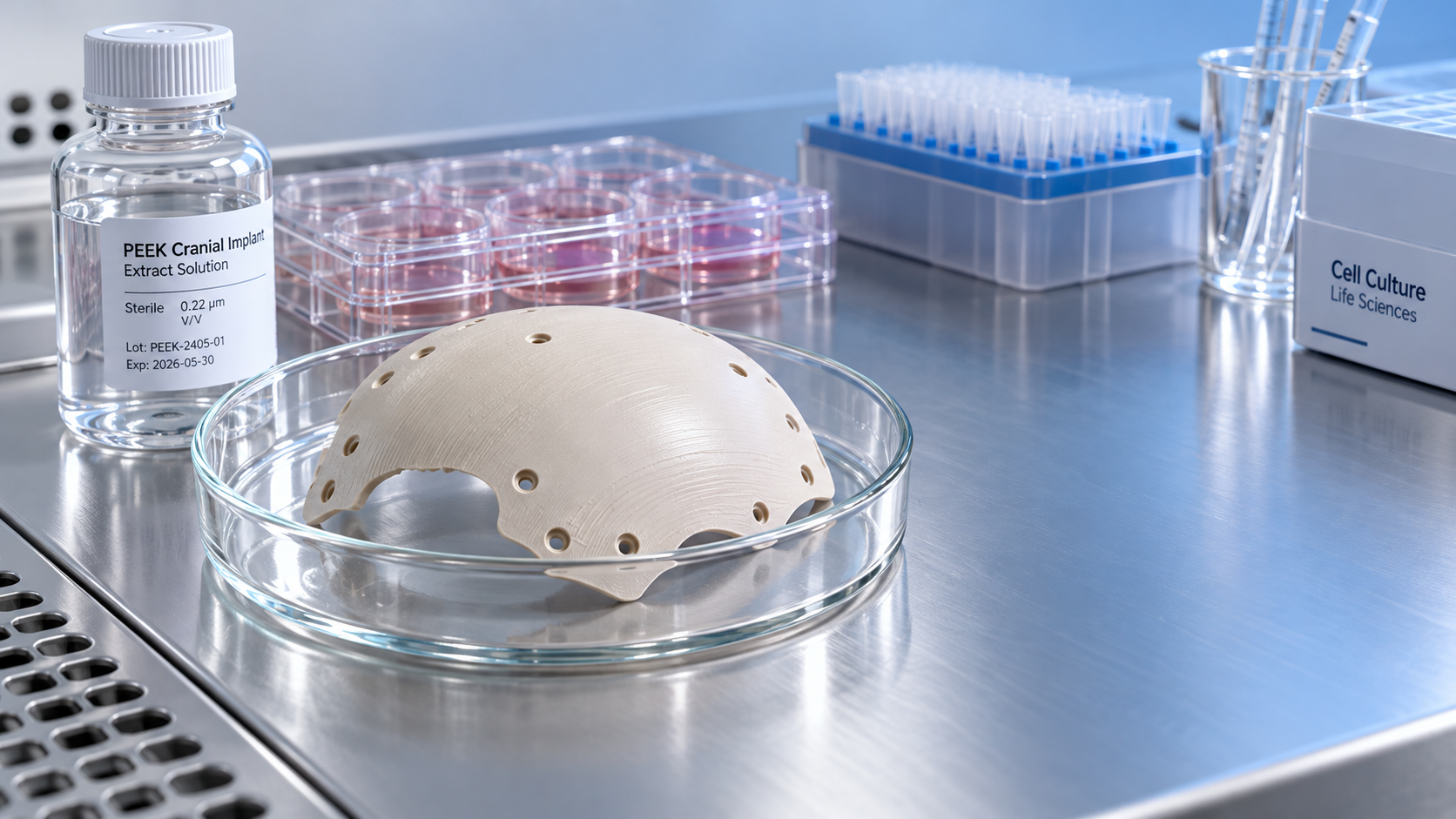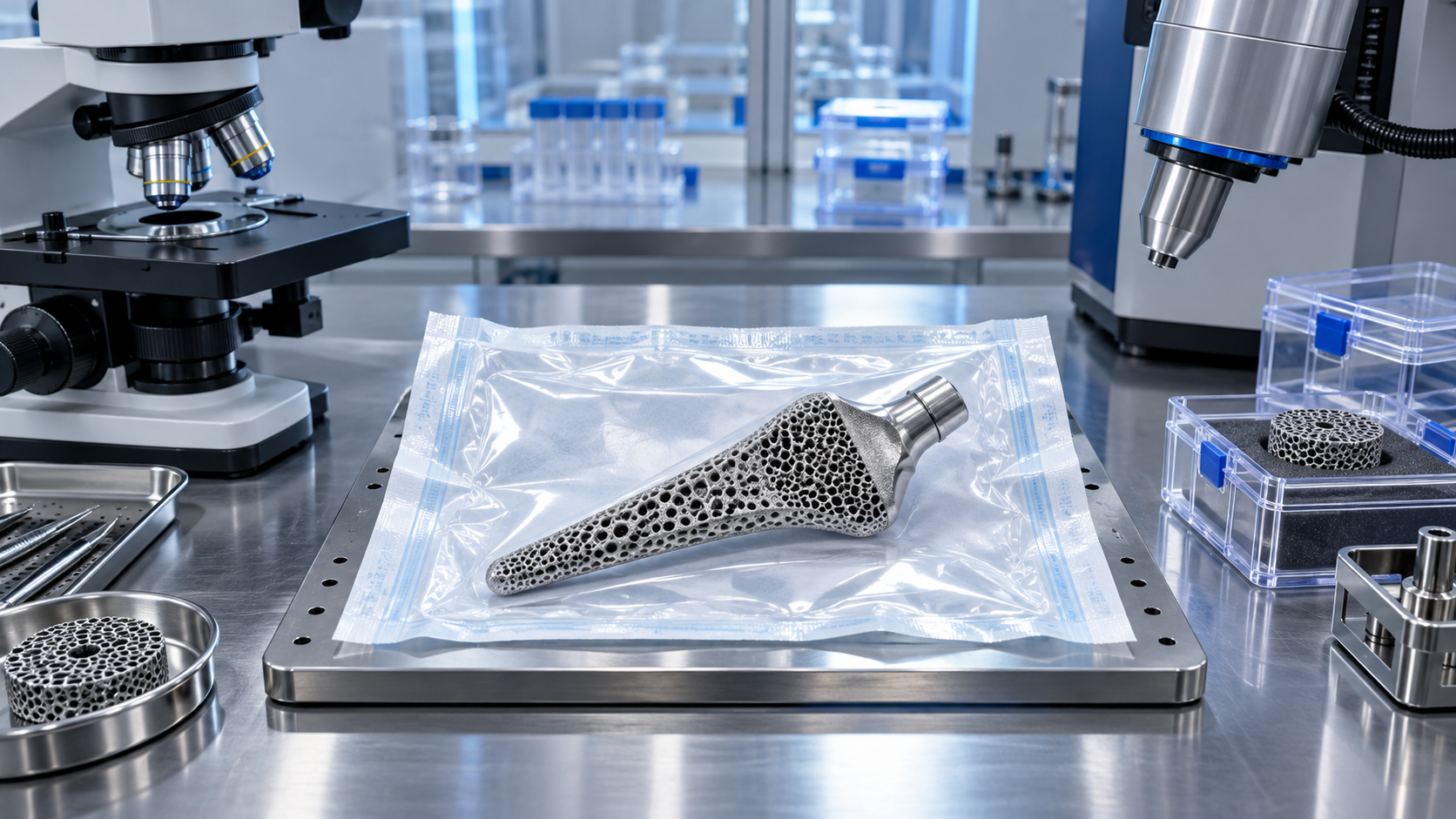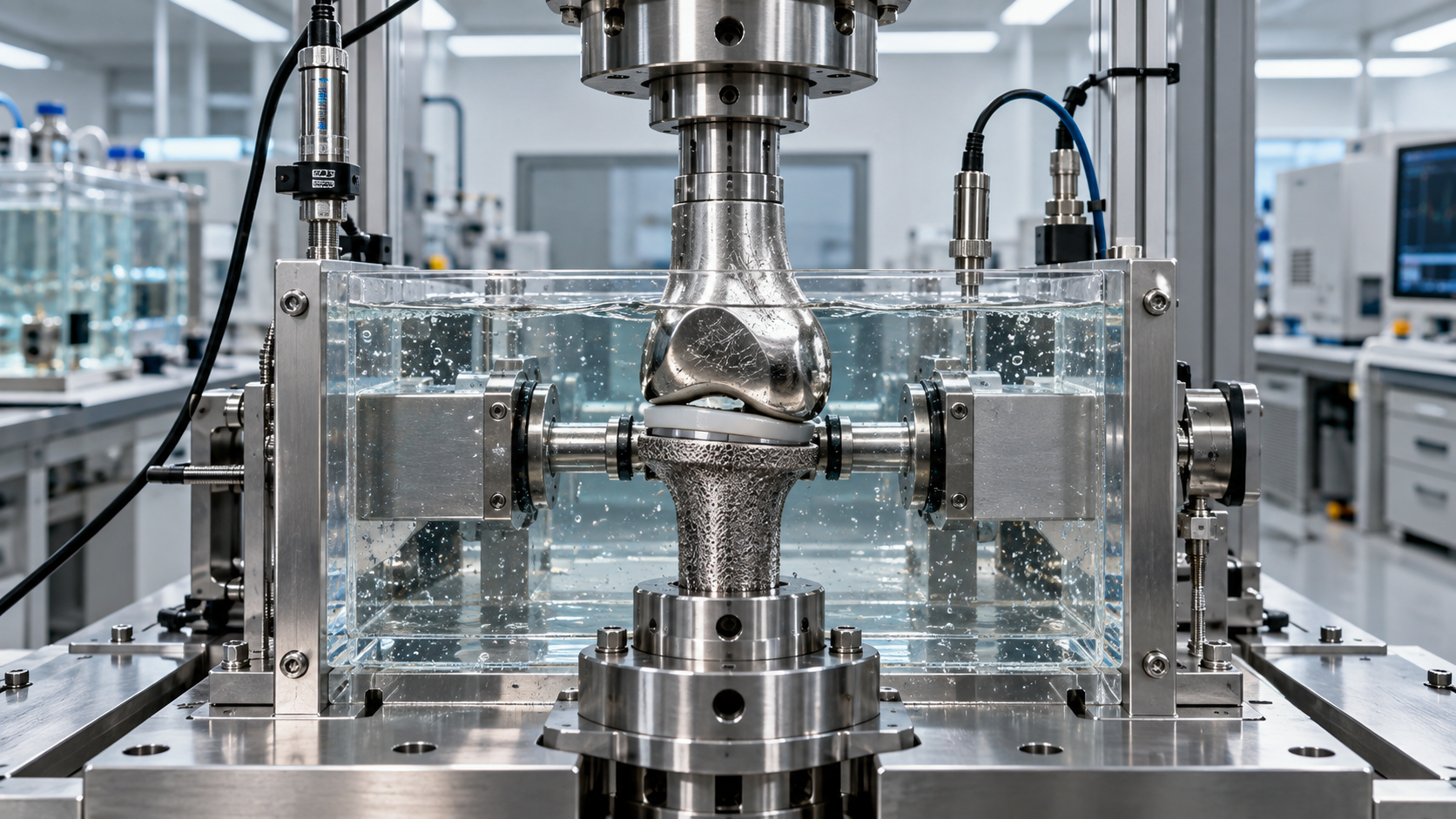
Biocompatibility testing for custom medical grade PEEK implants must demonstrate biological safety of the finished device, including effects from machining, cleaning, surface modification, and sterilization.
For technical evaluators, the central question is whether the evidence supports the intended tissue contact, implantation duration, and manufacturing conditions across the proposed customization range.
An ISO 10993-based evaluation combines existing evidence, chemical characterization, toxicological assessment, and targeted biological testing. A resin certificate alone cannot establish finished implant biological safety.
The practical objective is a justified evidence package: identify potential biological hazards, resolve relevant uncertainties, and explain why the evaluated samples represent devices supplied clinically.
What exactly needs to be evaluated?
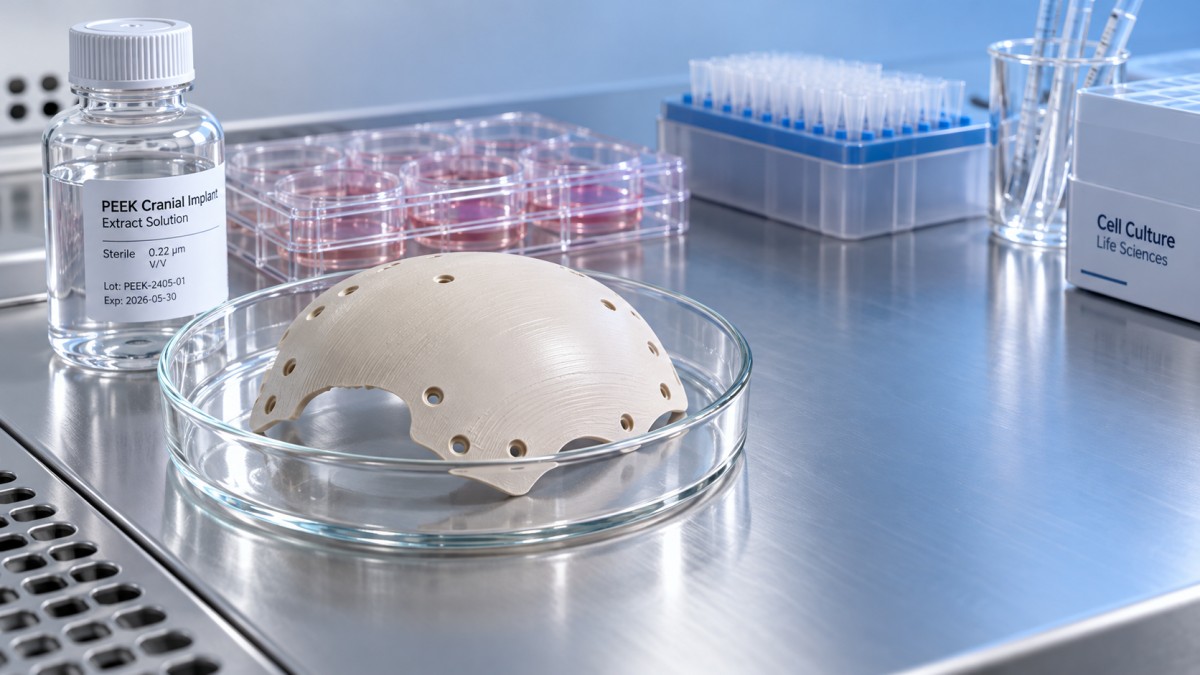
Evaluation begins with the intended clinical application. A cranial plate, spinal interbody implant, and patient-specific reconstruction component can present different exposure conditions and biological concerns.
Document every patient-contacting material, the tissues contacted, and cumulative contact duration. Most permanent PEEK implants fall within long-term contact, meaning exposure exceeding 30 days.
The assessment must also include associated components, such as markers, fixation elements, coatings, adhesives, and processing aids that could contribute substances to patient exposure.
PEEK’s established use provides useful background evidence, but formulation, additives, manufacturing history, and surface condition determine how directly published findings apply to a specific implant.
Unfilled PEEK, carbon-fiber-reinforced PEEK, and coated PEEK require distinct consideration. Evidence for one configuration does not automatically establish biological safety for another finished configuration.
A biological evaluation plan should connect these characteristics to identified hazards, available evidence, remaining gaps, and proposed methods for resolving those gaps before testing begins.
Which ISO 10993 endpoints should technical evaluators expect?
ISO 10993-1 provides the overarching risk-management framework. Its endpoint considerations guide evaluation, but they do not require an identical laboratory test package for every implant.
Relevant endpoints may be addressed through suitable existing data, chemical and toxicological evidence, biological testing, or a justified combination, depending on applicable regulatory expectations.
For long-term implants, chronic toxicity, carcinogenicity, and other relevant effects require explicit consideration. This does not mean each endpoint necessarily requires a dedicated animal study.
Selection depends on exposure, constituent hazards, existing knowledge, and unresolved risks. Reproductive or developmental toxicity also requires consideration when material characteristics or exposure make it relevant.
Hemocompatibility testing should follow actual blood-contact conditions. Incidental blood exposure during surgery should not automatically be treated as equivalent to sustained circulating blood contact.
Evaluators should request an endpoint rationale explaining both included assessments and justified omissions. A checklist without supporting reasoning provides limited assurance of biological safety.
How do chemical characterization and toxicology guide testing?
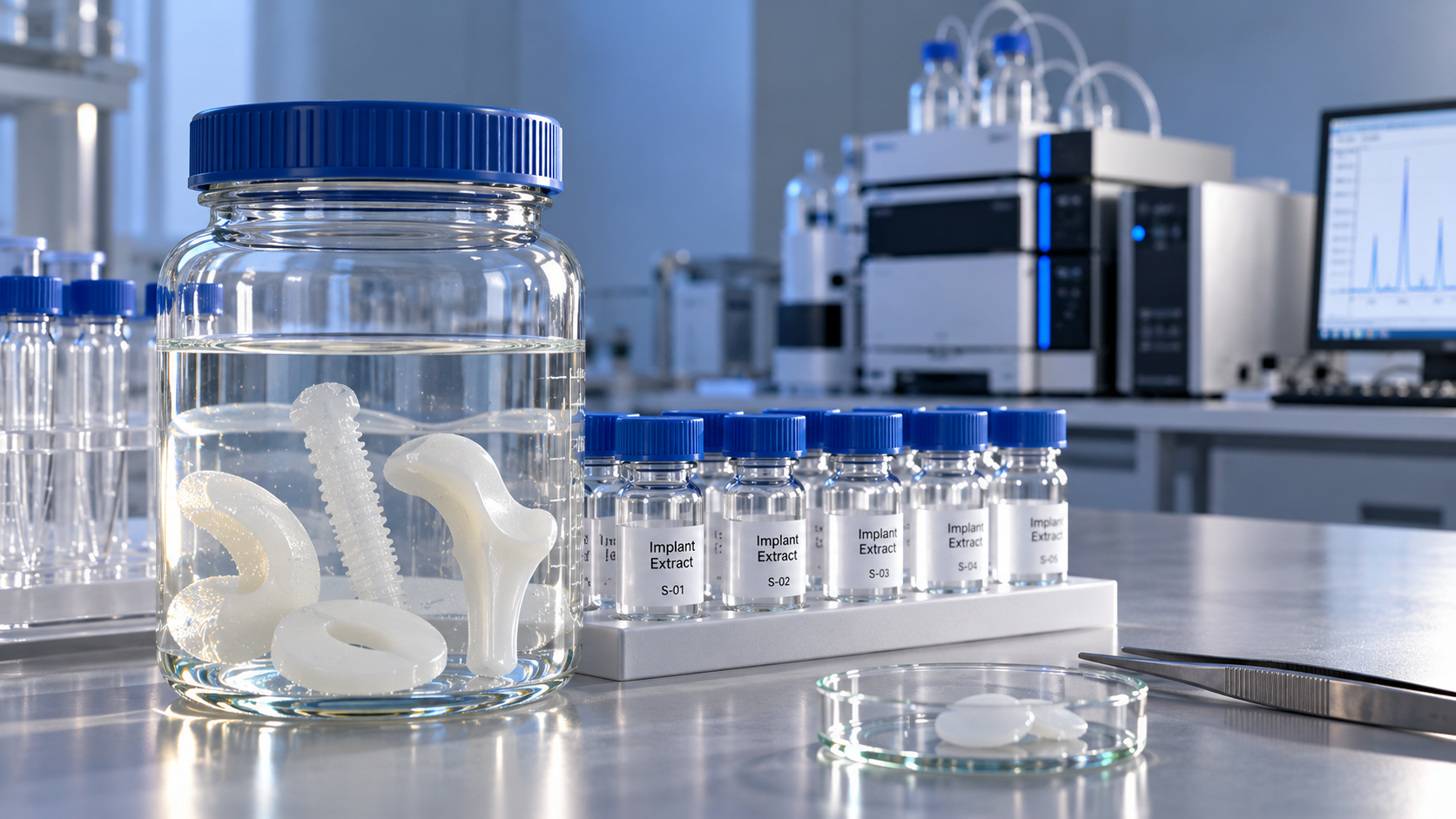
Chemical characterization under ISO 10993-18 investigates substances associated with the device. These may include polymer-related constituents, additives, processing residues, contaminants, and products generated during manufacturing.
For machined implants, plausible sources include cutting fluids, cleaning agents, polishing materials, and handling contamination. Additive manufacturing introduces additional questions about thermal history and feedstock reuse.
Extraction design should reflect material properties and clinical exposure while supporting hazard identification. Solvents, temperature, duration, extraction ratio, and sample preparation all require documented justification.
Exaggerated or exhaustive extraction can help identify potential hazards, but resulting chemical quantities should not automatically be interpreted as realistic daily exposure throughout implantation.
Analytical methods should cover relevant volatile, semi-volatile, nonvolatile, and elemental constituents. Method suitability, detection capability, analytical thresholds, and uncertainty determine how informative the results are.
Detected substances then undergo toxicological risk assessment using ISO 10993-17 principles. Assessors estimate patient exposure and compare it with appropriate toxicological reference values where available.
Body weight, implantation site, device quantity, release duration, and simultaneous implants can influence exposure estimates. Assumptions must fit the intended patient population and clinical use.
Unidentified compounds and missing toxicity data require investigation or justified treatment of uncertainty. A laboratory report stating “no significant peaks” cannot replace a transparent assessment.
Chemical evidence can reduce unnecessary biological testing when sufficiently informative. It cannot independently resolve every concern, particularly local responses to surface structure, particles, or mechanical irritation.
What do biological tests actually demonstrate?
Cytotoxicity testing evaluates whether device extracts or direct contact adversely affect cultured cells. It can reveal problematic residues, but it cannot establish overall implant safety.
A passing result does not exclude sensitization, chronic toxicity, or adverse local tissue responses. Conversely, an unexpected failure should trigger investigation before repeating the test.
Sensitization and irritation assessments address different biological effects. Method selection should reflect device applicability, validated alternatives, and acceptance within the intended regulatory submission pathway.
Implantation studies examine local tissue responses under defined conditions, commonly using histopathology and suitable controls. Relevant observations include inflammation, necrosis, fibrosis, and tissue integration.
Study site, sample geometry, implantation duration, and comparator selection affect interpretation. A simplified specimen may be appropriate only when its relevance to the finished implant is justified.
PEEK is generally considered bioinert, and unmodified surfaces may show limited direct bone bonding. Biological compatibility therefore does not, by itself, demonstrate effective osseointegration.
Claims about enhanced bone integration require supporting evidence appropriate to the modification and clinical function. Mechanical stability, fusion performance, and clinical benefit need separate evaluation.
How should customized implants be represented in testing?
Patient-specific geometry does not automatically require a complete new biological test package for every implant. Grouping can be justified within a defined, controlled design envelope.
The manufacturer must demonstrate that tested samples represent relevant biological risks across that envelope. Selecting the largest implant alone may miss other important worst-case characteristics.
Consider exposed surface area, surface finish, inaccessible recesses, residual powder, cleaning difficulty, coating coverage, and the number of components implanted during one surgical procedure.
A smaller device with narrow internal channels may retain more contamination than a larger, simpler component. Representativeness should therefore follow evidence about manufacturing and exposure.
Samples should reflect the finished clinical condition, including relevant cleaning, sterilization, and permitted reprocessing. Aging should be considered where storage could affect biological safety.
Test coupons can support evaluation when their material, processing, surface condition, and extraction behavior adequately represent the implant. Convenient specimen preparation alone is insufficient justification.
The resulting sampling rationale should state which configurations are covered and what boundaries apply. Designs outside those boundaries require documented assessment before relying on existing results.
When can existing evidence be reused, and when is more needed?
Existing supplier data, published literature, and previous device studies can support evaluation when their relevance is demonstrated. Reviewers need access to sufficient underlying technical detail.
Material designation alone is inadequate for bridging. Compare formulation, supplier specifications, processing conditions, patient-contact characteristics, surface treatments, sterilization, and the quality of supporting evidence.
A geometry change within a validated manufacturing envelope may be supportable without new biological testing. The conclusion should address whether exposure or residue retention changes.
By contrast, a new colorant, reinforcing constituent, coating, cleaning chemistry, or sterilization method can introduce hazards that existing evidence does not adequately address.
Changing from machining to additive manufacturing also warrants reassessment because thermal processing, porosity, surface condition, and cleaning challenges may alter the biological risk profile.
Reassessment does not always mean repeating every test. Targeted chemistry, residue analysis, additional toxicological work, or focused biological testing may resolve the specific evidence gap.
What should a reviewer verify before accepting the evidence?
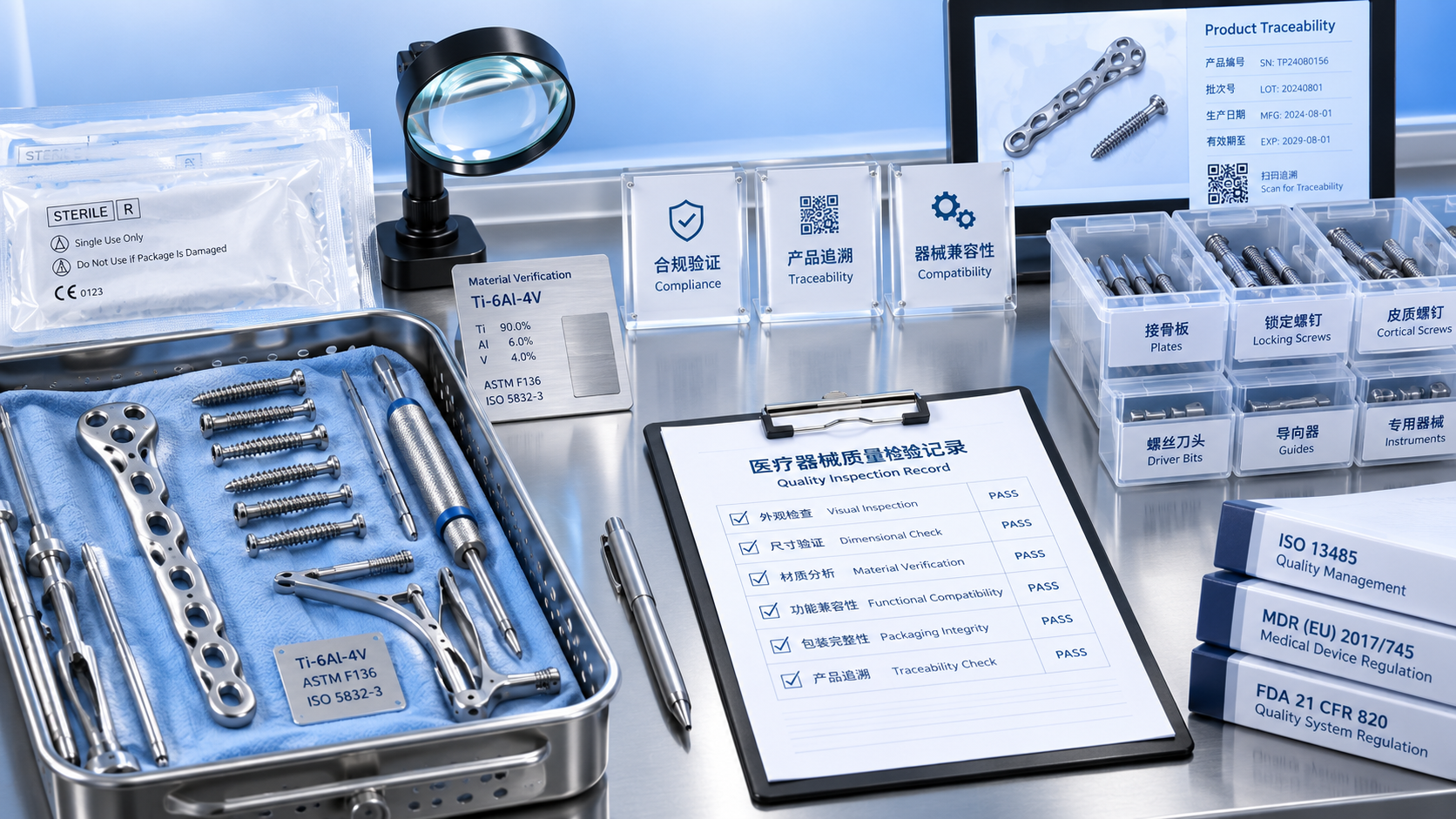
Begin with traceability. The biological evaluation report should identify the evaluated device configuration, material specifications, manufacturing route, sample batches, sterilization condition, and supporting reports.
Next, confirm that study methods match their stated purpose. Extraction conditions, controls, acceptance criteria, deviations, and laboratory competence should be clearly documented and scientifically defensible.
Check whether chemical findings and biological results agree. Unexpected cytotoxicity alongside apparently low chemical exposure requires investigation into extraction differences, analytical coverage, or sample variability.
Also review manufacturing controls. A successful evaluation of one batch provides limited confidence if subsequent production cannot consistently control residues, material identity, and surface condition.
Sterility assurance, endotoxin control where applicable, and particulate cleanliness need appropriate evidence alongside biocompatibility. Routine biological testing does not establish these separate device quality attributes.
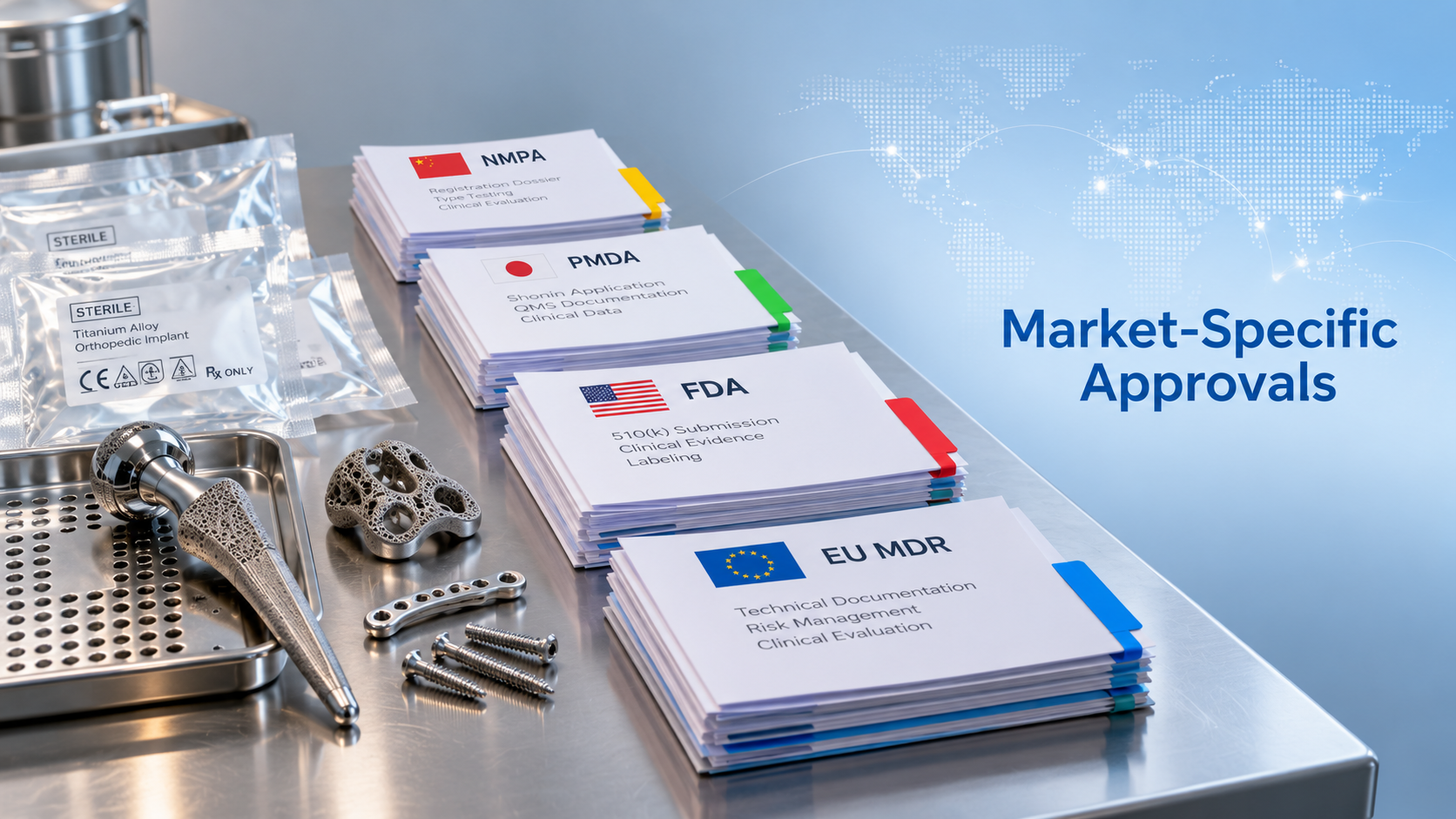
For regulatory submissions, confirm the currently recognized or accepted standard editions and jurisdiction-specific expectations. ISO alignment supports a submission but does not independently establish authorization.
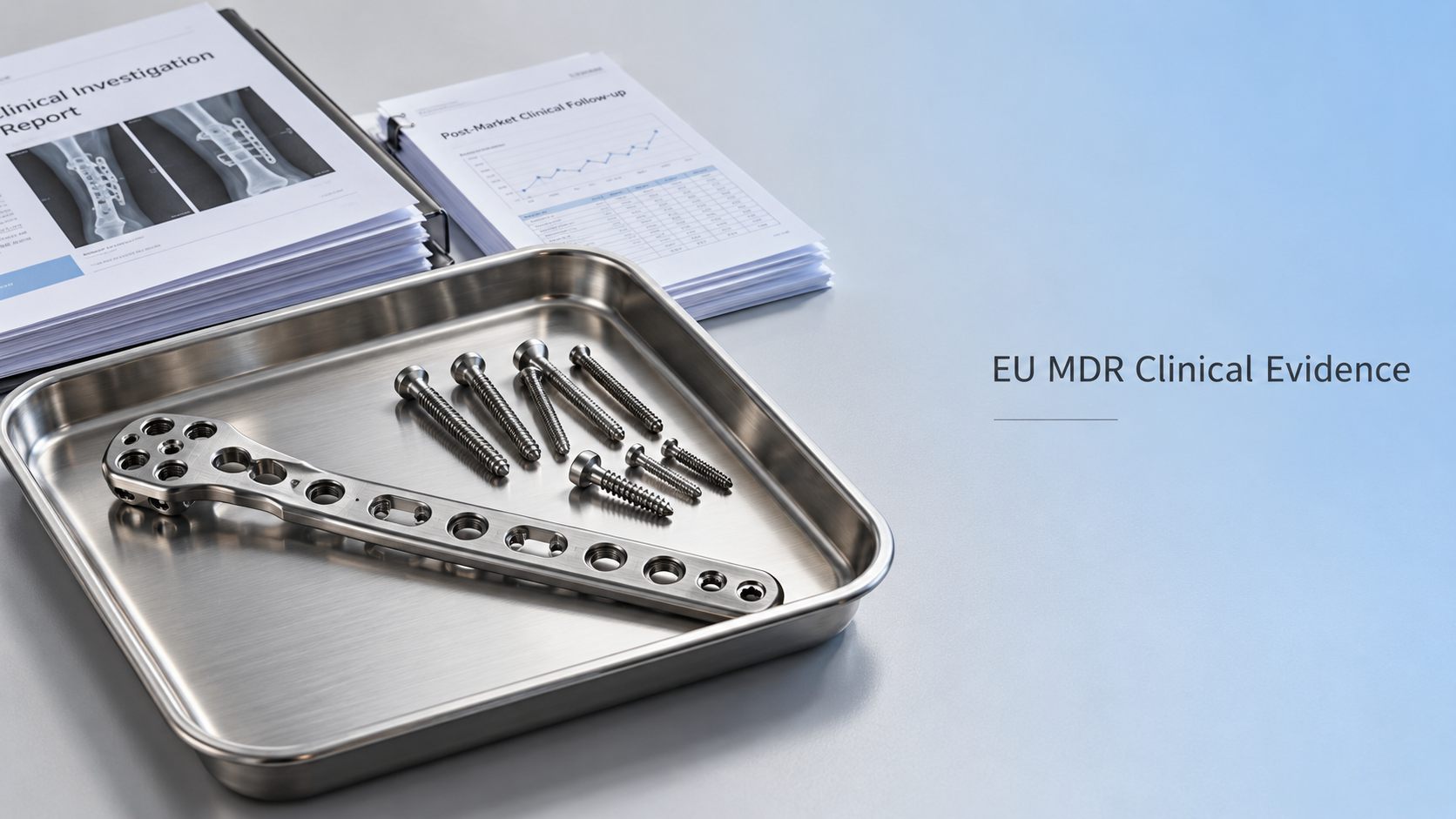
In the United States, assess applicable FDA guidance and submission requirements. In the European Union, connect biological evidence with MDR risk management and clinical evaluation.
Finally, require a clear residual-risk conclusion and change-control triggers. The report should explain why remaining uncertainties are acceptable for the intended application and patient population.
What is the practical acceptance standard?
A credible package for custom medical grade PEEK implants connects the finished device, representative samples, chemical exposure, biological endpoints, and manufacturing controls into one defensible assessment.
Technical evaluators should accept evidence when its scope matches the proposed implant family and unresolved risks are adequately addressed, with conclusions supported by traceable data.
The decisive question is whether the delivered implant is biologically safe under its intended conditions of use. Material certification contributes evidence; the finished-device evaluation establishes its relevance.